
Greece Travel Guide
 Go Back
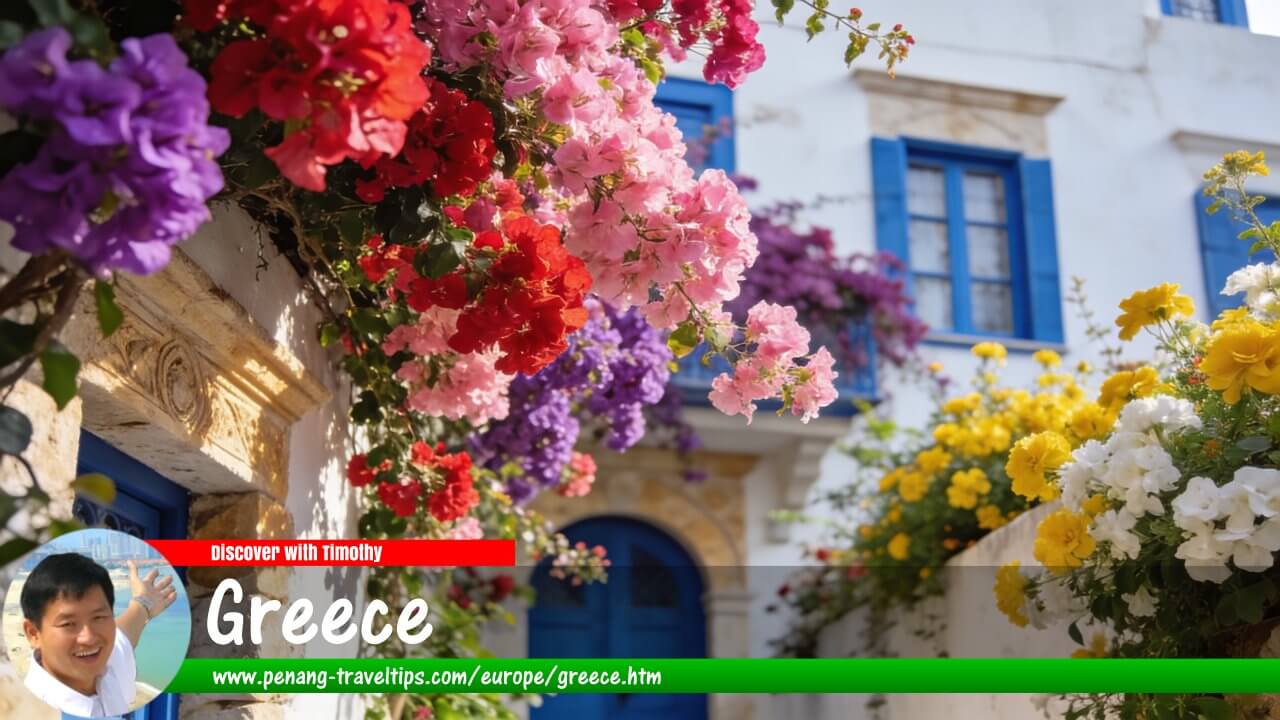 Greece Travel Guide (AI Image generated on 2 September 2026)
Also available: Panduan Melawat Yunani
Greece is a country in southeastern Europe known for its ancient civilisation, classical ruins, beautiful islands, Mediterranean coastline and distinctive food culture. Its history has had a profound influence on Western philosophy, politics, science, literature, art and architecture.
The country combines ancient archaeological sites with lively modern cities, traditional villages, beaches and mountainous landscapes. From the historic capital of Athens to the islands of Santorini, Mykonos, Crete, Rhodes and Corfu, Greece offers a wide variety of experiences for travellers.
Geography of Greece
Greece lies at the southern end of the Balkan Peninsula. It has land borders with Albania, North Macedonia, Bulgaria and Turkey. The country faces the Aegean Sea to the east, the Ionian Sea to the west and the Mediterranean Sea to the south.
Greece has an extensive coastline and thousands of islands and islets, although only a relatively small number are permanently inhabited. The islands are traditionally grouped into several major island groups, including the Cyclades, Dodecanese, Ionian Islands, North Aegean Islands and Sporades.
The mainland is predominantly mountainous. The Pindus Mountains form an important mountain system running through much of the country, while Mount Olympus, traditionally associated with the gods of ancient Greek mythology, is the highest mountain in Greece.
The largest Greek island is Crete, located south of the mainland. Other important islands include Rhodes, Corfu, Kos, Lesbos, Chios and Kefalonia.
Capital and Major Cities
Athens is the capital and largest city of Greece. It is the country's principal centre of government, business, culture and tourism. The Acropolis and Parthenon dominate the historic centre and are among the most recognisable monuments of the ancient world.
Other important cities and destinations include:
- Thessaloniki – Greece's second-largest city and an important cultural, commercial and university centre in northern Greece.
- Patras – A major port city in western Greece and an important gateway to the Ionian Islands and Italy.
- Heraklion – The main urban centre of Crete and an important base for visiting the archaeological site of Knossos.
- Chania – A historic city in western Crete known for its old harbour and Venetian architecture.
- Rhodes – The principal city of Rhodes island, with a remarkably preserved medieval old town.
- Corfu Town – The historic capital of Corfu, distinguished by its Venetian influence and old fortifications.
- Larissa – An important inland city in central Greece.
- Volos – A coastal city and gateway to the Pelion region and nearby islands.
Regions and Island Groups
Greece is divided into several administrative regions, while travellers commonly think of the country in terms of mainland areas and island groups.
Mainland Greece
Mainland Greece includes regions such as Attica, Central Greece, the Peloponnese, Epirus, Thessaly and Macedonia. Each has its own landscapes, traditions and historical sites.
Peloponnese
The Peloponnese is a large peninsula in southern Greece containing important archaeological sites such as Olympia, Epidaurus, Mycenae and the medieval city of Mystras. It also has mountains, beaches and traditional towns.
Cyclades
The Cyclades are among the most famous Greek islands. Santorini and Mykonos are particularly popular with international visitors, while islands such as Naxos, Paros, Milos and Tinos offer different combinations of beaches, villages, food and cultural attractions.
Ionian Islands
The Ionian Islands lie off the western coast of mainland Greece. Corfu, Kefalonia, Zakynthos, Lefkada and Ithaca are among the best-known islands. Their landscapes and architecture have been influenced by centuries of contact with Venice and other western European powers.
Dodecanese
The Dodecanese are located in the southeastern Aegean near the coast of Turkey. Rhodes and Kos are major tourist destinations, while smaller islands offer a quieter experience.
Crete
Crete is both the largest Greek island and one of the country's most historically important regions. It is associated with the ancient Minoan civilisation and contains archaeological sites, mountains, beaches, traditional villages and several distinctive regional cuisines.
Ancient Greek Civilisation
Greece is internationally famous for the civilisation that developed in the ancient Greek world. Ancient Greek societies were not organised as a single unified nation in the modern sense. Instead, the region contained numerous independent city-states, including Athens, Sparta, Corinth and Thebes.
Ancient Greece made major contributions to philosophy, mathematics, medicine, literature, drama, architecture and political thought. The ideas developed by figures such as Socrates, Plato and Aristotle continue to influence education and intellectual life today.
Athens is particularly associated with the development of democracy, although ancient Athenian democracy was very different from modern democratic systems and did not include the entire population.
The Legacy of Alexander the Great
Alexander the Great, king of Macedon, created one of the largest empires of the ancient world during the fourth century BC. His conquests extended Greek cultural and political influence across much of the eastern Mediterranean, Egypt and parts of Asia.
The period following his conquests is known as the Hellenistic period. Greek language, art and ideas spread widely, interacting with the cultures of Egypt, Persia and other regions.
Greece and the Roman World
Greek territories eventually came under Roman control, but Greek culture continued to exert a powerful influence on the Roman world. Roman elites greatly admired Greek literature, philosophy, art and education.
Many important Greek cities remained prosperous during the Roman period. Greece later became part of the eastern Roman Empire, which is commonly known as the Byzantine Empire.
Byzantine and Ottoman Greece
For many centuries, much of present-day Greece was part of the Byzantine Empire. Christianity became central to the region's cultural and architectural heritage, leaving numerous churches, monasteries and religious artworks.
From the 15th century, most of Greece gradually came under the rule of the Ottoman Empire. Ottoman influence can still be seen in elements of architecture, food and cultural traditions in parts of Greece.
Modern Greece
The Greek War of Independence began in 1821 against Ottoman rule. An independent Greek state was established during the 19th century, although the borders of modern Greece developed gradually over subsequent decades.
During the 20th century, Greece experienced political changes, wars, economic development and periods of instability. After the Second World War and the Greek Civil War, the country eventually became a stable parliamentary democracy.
Greece joined the European Economic Community in 1981 and later became a member of the European Union. It adopted the euro as its currency in 2001.
Greek Culture and Heritage
Greek culture has developed over thousands of years, incorporating influences from the ancient Greek, Roman, Byzantine and Ottoman periods as well as from modern European society.
Architecture
Ancient Greek architecture is famous for its columns and carefully proportioned temples. The Doric, Ionic and Corinthian orders became influential architectural traditions that were later adopted and adapted throughout Europe and beyond.
Greece also has substantial Byzantine, Venetian and Ottoman architectural heritage. In many towns, these different layers of history can be seen alongside modern buildings.
Religion
Greek Orthodox Christianity has played an important role in the country's history and cultural identity. Churches and monasteries are found throughout the mainland and islands, and religious festivals remain important in many communities.
Music and Dance
Traditional Greek music and dance vary from one region to another. Local festivals often feature live music, dancing and communal meals, particularly during religious celebrations and summer events.
Language
Greek is the official language of Greece and has one of Europe's longest documented literary histories. Modern Greek developed through a long linguistic tradition extending back to ancient Greek.
English is widely spoken in tourist destinations, hotels, restaurants and major cities. Nevertheless, learning a few basic Greek expressions can be useful and is generally appreciated by local people.
Greek Food Culture
Greek cuisine is part of the wider Mediterranean food tradition and commonly uses olive oil, vegetables, herbs, grains, legumes, seafood and dairy products.
Well-known Greek foods include moussaka, souvlaki, tzatziki, Greek salad, spanakopita and baklava. Regional cuisines vary considerably between the mainland and islands.
Olives and olive oil are particularly important to Greek food culture. Seafood is also prominent in coastal communities and on the islands.
Greece as a Travel Destination
Greece offers a combination that is difficult to find elsewhere: ancient archaeological heritage, island scenery, beaches, mountains, traditional villages, vibrant cities and Mediterranean food.
For a first visit, Athens provides an introduction to ancient Greek history and modern Greek life. Travellers can then choose between an island holiday, a mainland road trip, an archaeological journey or a combination of several experiences.
The Greek islands should not all be viewed as interchangeable. Santorini is famous for its volcanic landscape and caldera views, Mykonos for its cosmopolitan atmosphere and nightlife, Crete for its size and historical depth, Corfu for its Ionian and Venetian heritage, while smaller islands can provide a quieter experience.
Why Visit Greece?
- Explore the Acropolis and other monuments of ancient Athens.
- Visit important archaeological sites such as Delphi, Olympia, Mycenae and Epidaurus.
- Enjoy the beaches and scenery of the Greek islands.
- Experience the distinctive landscapes of Santorini and the Cyclades.
- Discover the history and culture of Crete.
- Explore medieval and Venetian heritage in places such as Rhodes and Corfu.
- Enjoy Greek food, including regional specialities and fresh Mediterranean ingredients.
- Experience traditional villages, local festivals and island communities.
- Combine historical sightseeing with a relaxing beach holiday.
- Explore a country whose ancient cultural legacy continues to influence the modern world.
For Malaysian travellers, Greece offers a particularly interesting combination of history, scenery, food and island experiences. A well-planned journey can combine Athens with one or more islands, while a longer trip can include the Peloponnese, northern Greece or Crete. Muslim travellers may need to plan ahead for halal food and prayer facilities, particularly when visiting smaller islands and rural areas.
History and Cultural Heritage of Greece
Greece has one of the world's longest and most influential cultural histories. Its heritage includes the Bronze Age civilisations of the Aegean, the city-states of ancient Greece, the Macedonian and Hellenistic kingdoms, the Roman and Byzantine periods, centuries under Ottoman rule, and the development of the modern Greek state.
These different periods have left their mark on Greece's architecture, language, religion, literature, food, music and traditions. Travelling through Greece often feels like moving through several layers of history at once.
The Bronze Age Civilisations
The history of Greek civilisation reaches back thousands of years before the classical period. Two important Bronze Age cultures developed in the Aegean: the Minoan civilisation on Crete and the Mycenaean civilisation on mainland Greece.
Minoan Civilisation
The Minoans flourished on Crete from around the third millennium BC. Their civilisation is associated with large palace complexes, sophisticated artwork, maritime trade and distinctive architecture.
Knossos, near present-day Heraklion, is the best-known Minoan archaeological site. Its remains provide an insight into a society that existed long before classical Athens.
Mycenaean Civilisation
The Mycenaeans developed a powerful civilisation on mainland Greece during the second millennium BC. Important centres included Mycenae, Tiryns and Pylos.
The archaeological site of Mycenae is particularly famous for its massive stone walls, monumental gateways and royal tombs. The Mycenaean world is also associated with the heroic traditions later recorded in ancient Greek literature.
The Greek Dark Age and Archaic Period
After the decline of the Mycenaean civilisation around the end of the Bronze Age, the Greek world went through a period of significant disruption. Over the following centuries, population centres and political institutions gradually developed again.
During the Archaic Period, Greek communities established independent city-states, known as poleis. Greek colonies were also established around the Mediterranean and Black Sea, extending Greek language and cultural influence beyond mainland Greece.
The City-States of Ancient Greece
Ancient Greece was not a single unified country. Instead, it consisted of many independent city-states that shared language, religion and aspects of culture but often had different political systems and interests.
Athens
Athens became one of the most important city-states. It developed a form of direct democracy in which eligible male citizens participated in political decision-making. Athens also became a major centre of philosophy, drama, art and architecture.
Sparta
Sparta developed a very different social and political system. It was particularly famous for its highly organised military society and rivalry with Athens.
Other City-States
Corinth, Thebes, Argos and many other city-states played important roles at different times. Their rivalries and alliances shaped the political history of ancient Greece.
The Persian Wars
During the early fifth century BC, several Greek city-states fought against the Persian Empire. Major events included the Battle of Marathon, the Battle of Thermopylae, the naval Battle of Salamis and the Battle of Plataea.
The conflicts became an important part of Greek historical memory. Athens subsequently became especially powerful and expanded its influence over other Greek communities.
The Golden Age of Athens
The fifth century BC is often regarded as a particularly important period in Athenian history. Under leaders such as Pericles, Athens experienced major developments in architecture, political thought, philosophy, drama and the arts.
The Parthenon on the Acropolis was constructed during this period. The monument was dedicated to Athena, the city's patron goddess, and became one of the most influential examples of classical Greek architecture.
Athens was also associated with philosophers such as Socrates, Plato and Aristotle. Their ideas concerning ethics, politics, logic, education and philosophy have had a lasting influence on Western intellectual traditions.
The Peloponnesian War
Athens and Sparta eventually became involved in a prolonged conflict known as the Peloponnesian War. The war lasted from 431 to 404 BC and ended with the defeat of Athens.
The conflict weakened the major Greek city-states and contributed to a period of political instability. This created conditions in which the kingdom of Macedon could eventually become the dominant power in the Greek world.
Macedon and Alexander the Great
Philip II of Macedon brought much of the Greek world under Macedonian leadership in the fourth century BC. His son, Alexander the Great, then embarked on a remarkable series of military campaigns.
Alexander defeated the Persian Empire and established an enormous empire extending from Greece and Egypt to Central Asia and northwestern India. Although his empire was short-lived as a unified political entity, Greek language and culture spread widely.
The Hellenistic World
The period following Alexander's death is known as the Hellenistic period. Greek became an important language of administration, trade, education and culture across a large part of the eastern Mediterranean and Near East.
Major centres of Hellenistic culture included Alexandria in Egypt, Antioch and Pergamon, as well as cities within the Greek mainland and Aegean world.
Hellenistic civilisation produced important advances in mathematics, astronomy, engineering, medicine and philosophy. Greek cultural traditions also interacted with Egyptian, Persian and other local traditions.
Greece under Roman Rule
Greek territories gradually came under Roman control during the second century BC. Greece became part of the Roman world, but Roman rule did not eliminate Greek cultural influence.
Roman elites greatly admired Greek philosophy, literature, education and art. Greek continued to be an important language in the eastern Mediterranean, while many Roman intellectuals studied Greek culture.
Important ancient sites such as Delphi, Olympia and Athens continued to attract visitors during the Roman period.
The Byzantine Era
Following the division of the Roman Empire, the eastern part continued as what is commonly called the Byzantine Empire. Greek language and culture became increasingly prominent within the eastern Roman world.
Christianity became central to Byzantine society. Churches, monasteries, religious art and theological traditions developed throughout the Greek-speaking world.
Byzantine heritage can still be seen in many Greek churches and monasteries, including religious buildings decorated with icons, frescoes and mosaics.
Venetian and Western Influence
Parts of Greece came under the control of western European powers at different times. The Republic of Venice controlled several islands and coastal territories, particularly in the Ionian and Aegean regions.
Venetian influence remains especially visible in places such as Corfu, where fortifications, public buildings and parts of the old town reflect centuries of Venetian rule.
Ottoman Greece
After the fall of Constantinople in 1453, much of the Greek world gradually came under the rule of the Ottoman Empire. Ottoman control lasted for several centuries, although the timing and extent of Ottoman rule varied from one region and island to another.
During this period, Orthodox Christian communities retained their religious traditions and institutions. Greek merchants and intellectuals also maintained cultural and commercial links across the Mediterranean and beyond.
Ottoman influence can still be found in aspects of Greek architecture, food and urban history.
The Greek War of Independence
The Greek War of Independence began in 1821. Greek revolutionaries fought against Ottoman rule, receiving support and sympathy from parts of Europe.
The struggle eventually resulted in the creation of an independent Greek state. Greece's borders at that time were considerably smaller than those of the modern country, and additional territories were incorporated during the following decades.
The Modern Greek State
During the 19th and early 20th centuries, Greece continued to expand its territory. The country also experienced political changes as it developed its modern institutions.
The Balkan Wars of 1912–1913 resulted in major territorial changes in southeastern Europe and significantly expanded the Greek state.
Greece experienced further upheaval during the First World War, the Greco-Turkish War and the population exchange between Greece and Turkey in the 1920s.
Greece in the Second World War
Greece was invaded by Axis forces during the Second World War. The country experienced occupation, resistance, famine and severe economic and social hardship.
The war was followed by the Greek Civil War, which lasted from 1946 to 1949 and had a major impact on postwar Greek politics and society.
Modern Greece and European Integration
Greece became a parliamentary democracy after the end of military rule in 1974. The country joined the European Economic Community in 1981 and subsequently became part of the European Union.
Greece adopted the euro as its currency in 2001. Today it is a member of the European Union and NATO and remains an important cultural and tourism destination in southeastern Europe.
Greek Language and Literature
The Greek language has one of the longest documented histories of any living European language. Ancient Greek developed through several historical forms, eventually leading to Medieval and Modern Greek.
Greek literature includes epic poetry, philosophy, historical writing, drama, poetry and modern fiction. The works traditionally associated with Homer, including the Iliad and Odyssey, have had an enormous influence on European literature.
Greek Mythology
Greek mythology forms an important part of Greece's cultural legacy. Stories about Zeus, Athena, Apollo, Poseidon, Aphrodite and other gods and heroes have survived for thousands of years.
Mount Olympus was traditionally regarded as the home of the principal Greek gods. Myths were closely connected with ancient religious practices, temples and festivals.
Today, Greek mythology remains visible throughout the tourism industry, literature, art, museums and popular culture.
Greek Orthodox Heritage
The Greek Orthodox Church has played a major role in the history and cultural identity of Greece. Churches and monasteries are found throughout the country, from major cities to remote islands and mountain villages.
Religious festivals are particularly important in many communities. Local celebrations may combine church services with music, dancing, food and gatherings of families and neighbours.
Greek Art and Architecture
Greek artistic traditions have influenced architecture throughout the world. The classical orders of Doric, Ionic and Corinthian architecture were later adopted and adapted by Roman and modern architects.
Greek sculpture is also famous for its emphasis on proportion, anatomy and idealised human forms. Later periods introduced Byzantine religious art, Venetian architecture and Ottoman influences.
Greek Food Heritage
Food is an important part of Greek cultural identity. Olive oil, olives, grains, vegetables, legumes, herbs, cheese and seafood have traditionally played major roles in the Greek diet.
Regional differences are significant. Island communities have developed cuisines based heavily on seafood and local produce, while mainland mountain regions have distinctive meat, cheese and slow-cooked dishes.
Many Greek meals are also social occasions in which family and friends spend considerable time eating and talking together.
Music and Dance
Traditional Greek music varies considerably between regions and islands. Instruments such as the bouzouki are strongly associated with modern Greek popular music, while local traditions use a wide variety of string, wind and percussion instruments.
Traditional dances remain an important part of festivals and celebrations. Different regions have their own dances, costumes and musical traditions.
Archaeological Heritage
Greece contains an extraordinary concentration of archaeological sites. These include the Acropolis of Athens, Delphi, Olympia, Mycenae, Epidaurus, Knossos and many smaller sites throughout the mainland and islands.
Greek archaeological heritage is not limited to the classical period. Visitors can encounter remains from the Minoan, Mycenaean, Hellenistic, Roman and Byzantine eras, often within relatively short distances of one another.
World Heritage
Greece has numerous sites recognised by UNESCO for their cultural or natural importance. These include the Acropolis of Athens, Delphi, Olympia, Meteora, medieval Rhodes, the archaeological site of Mycenae and Tiryns, and several other important locations.
These sites demonstrate the remarkable range of Greek heritage, extending from prehistoric settlements and ancient temples to Byzantine monasteries and medieval towns.
Living Cultural Heritage
Greek heritage is not confined to archaeological ruins and museums. Traditional food, religious festivals, music, dance, crafts, village life and family traditions remain important parts of contemporary Greek society.
This combination of ancient monuments and living traditions is one of the reasons Greece remains such a distinctive destination. A visit can involve studying classical architecture in the morning, eating a traditional meal in the afternoon and attending a local festival in the evening.
Major Attractions and Destinations in Greece
Greece offers a remarkable variety of attractions, ranging from ancient temples and archaeological sites to islands, beaches, mountains, medieval towns and lively modern cities. While Athens is the main gateway for many visitors, the country's islands and mainland regions each offer a different experience.
Athens
Athens is the capital and the most important starting point for exploring Greece's ancient heritage. The city combines archaeological monuments with museums, neighbourhoods, markets, restaurants and modern urban life.
Acropolis
The Acropolis is the most famous landmark in Athens. Perched on a rocky hill above the city, it contains several important ancient monuments, the most famous being the Parthenon.
Parthenon
The Parthenon was built in the fifth century BC as a temple dedicated to Athena, the patron goddess of Athens. Its architecture has become one of the most influential symbols of classical Greece.
Acropolis Museum
The Acropolis Museum houses archaeological discoveries from the Acropolis and surrounding areas. Its galleries provide useful context for understanding the monuments on the hill itself.
Ancient Agora
The Ancient Agora was an important centre of political, commercial and social activity in ancient Athens. The well-preserved Temple of Hephaestus is one of its most impressive surviving monuments.
Plaka
Plaka is one of the most atmospheric neighbourhoods in central Athens. Its narrow streets, traditional-looking buildings, shops, restaurants and proximity to the Acropolis make it popular with visitors.
Monastiraki
Monastiraki is known for its lively square, markets, restaurants and views towards the Acropolis. It is also a convenient area for exploring central Athens on foot.
Delphi
Delphi, located on the slopes of Mount Parnassus, was one of the most important religious centres of ancient Greece. The sanctuary was associated with Apollo and the famous Oracle of Delphi.
The archaeological site contains the remains of temples, treasuries, theatres and other structures. Its mountain setting also makes Delphi one of Greece's most scenic ancient sites.
Olympia
Olympia in the Peloponnese was the birthplace of the ancient Olympic Games. The sanctuary was dedicated primarily to Zeus and contained temples, athletic facilities and other religious buildings.
The site is particularly interesting for travellers who want to understand the origins of the Olympic tradition.
Mycenae
Mycenae was one of the major centres of the Mycenaean civilisation. The archaeological site is famous for its massive defensive walls, the Lion Gate and monumental tombs.
Mycenae is especially valuable for visitors interested in the Bronze Age history that preceded classical Greece.
Epidaurus
Epidaurus was an important sanctuary dedicated to Asclepius, the ancient Greek god associated with healing. It is particularly famous for its remarkably preserved ancient theatre.
The theatre is renowned for its acoustics and remains one of the best-known examples of ancient Greek theatre architecture.
Meteora
Meteora is one of the most spectacular landscapes in mainland Greece. Byzantine monasteries were built on top of enormous sandstone rock formations, creating an extraordinary combination of natural scenery and religious architecture.
Several monasteries remain active and can be visited by travellers, although visitors should observe appropriate dress and behaviour at religious sites.
Thessaloniki
Thessaloniki is Greece's second-largest city and the main urban centre of northern Greece. It has a long history stretching from ancient Macedonia through the Roman and Byzantine periods to the modern era.
White Tower
The White Tower is Thessaloniki's best-known landmark. Located beside the waterfront, it is closely associated with the city's Ottoman and later history.
Aristotelous Square
Aristotelous Square is the main central square of Thessaloniki and opens towards the waterfront. Cafés and restaurants make it a popular place to experience the city's contemporary atmosphere.
Byzantine Churches
Thessaloniki contains numerous Byzantine churches and monuments. These provide an important contrast to the classical Greek sites more commonly associated with tourism in southern Greece.
Peloponnese
The Peloponnese is a large peninsula containing some of Greece's most important archaeological sites as well as mountains, beaches and traditional towns.
Nafplio
Nafplio is one of the most attractive historic towns in Greece. Its old town contains neoclassical buildings, narrow streets and waterfront promenades, while the Palamidi fortress overlooks the town from above.
Monemvasia
Monemvasia is a medieval fortified settlement built on a rocky island-like outcrop connected to the mainland by a causeway. Its stone streets and historic buildings create a distinctive atmosphere.
Mystras
Mystras is a remarkable Byzantine archaeological site near Sparta. Its churches, monasteries, palaces and ruined settlements occupy a hillside overlooking the surrounding landscape.
Santorini
Santorini is one of the world's best-known Greek islands. It was shaped by a major volcanic eruption and is famous for its caldera, whitewashed settlements and dramatic views over the Aegean Sea.
Oia
Oia is famous for its whitewashed buildings, blue-domed churches and spectacular sunset views. It is one of the most photographed places in Greece.
Fira
Fira is the island's main town and is situated along the caldera cliffs. It has shops, restaurants, museums and accommodation overlooking the sea.
Akrotiri
Akrotiri is an important archaeological site containing the remains of a Bronze Age settlement preserved by volcanic ash. It provides an unusual opportunity to see a prehistoric settlement on a volcanic island.
Mykonos
Mykonos is famous for its beaches, whitewashed architecture, windmills and cosmopolitan atmosphere. It is particularly popular with visitors seeking nightlife, restaurants and upscale accommodation.
Mykonos Town
Mykonos Town, also known as Chora, is characterised by narrow whitewashed streets, small chapels, shops and restaurants.
Windmills
The historic windmills overlooking the sea have become one of the island's most recognisable landmarks.
Crete
Crete is Greece's largest island and offers enough attractions for an extended holiday. Its landscape includes beaches, mountains, gorges, archaeological sites and traditional villages.
Knossos
Knossos near Heraklion is the most famous archaeological site in Crete. It was an important centre of the Minoan civilisation and is associated with the legendary stories of King Minos and the Minotaur.
Heraklion
Heraklion is the main urban centre of Crete. The city provides access to Knossos as well as museums, historic buildings and the island's central and eastern regions.
Chania
Chania is known for its attractive old town and Venetian harbour. Its architecture reflects the island's long history of interaction with Venice and other Mediterranean powers.
Samaria Gorge
Samaria Gorge is one of Europe's best-known hiking destinations. The long gorge passes through spectacular mountain scenery and is particularly suitable for travellers interested in nature and outdoor activities.
Rhodes
Rhodes combines beaches, ancient history and an exceptionally well-preserved medieval town.
Medieval City of Rhodes
The Medieval City of Rhodes is surrounded by substantial fortifications and contains medieval streets, churches, palaces and public buildings. It reflects the island's importance during the era of the Knights of St John.
Lindos
Lindos is a picturesque village beneath an ancient acropolis. The combination of whitewashed buildings, archaeological remains and sea views makes it one of the island's most popular destinations.
Corfu
Corfu is one of the principal Ionian Islands. Its culture and architecture show particularly strong Venetian influence.
Corfu Old Town
Corfu Old Town contains narrow streets, elegant buildings, churches, squares and fortifications. It provides a very different architectural experience from the whitewashed Cycladic islands.
Achilleion
The Achilleion Palace is a historic villa associated with Empress Elisabeth of Austria, commonly known as Sisi. Its gardens and architecture reflect the European fascination with classical Greek culture.
Zakynthos
Zakynthos is known for its turquoise waters, dramatic cliffs and beaches. The island is also associated with marine conservation because of the loggerhead sea turtle nesting areas around Laganas Bay.
Navagio, or Shipwreck Beach, became internationally famous for its dramatic setting beneath high cliffs, although access to the beach itself may vary according to safety and local conditions.
Naxos and Paros
Naxos and Paros are popular Cycladic islands that offer a balance between beaches, villages, food and cultural attractions.
Naxos is the largest island in the Cyclades and has fertile agricultural areas as well as mountain villages. Paros is known for its attractive villages, beaches and traditional Cycladic architecture.
Other Greek Islands
Greece has many other islands suitable for different types of travellers.
- Milos – Known for unusual volcanic landscapes and attractive beaches.
- Ios – Known particularly for its beaches and nightlife.
- Paros – Popular for beaches, villages and water sports.
- Kos – Offers beaches, cycling routes and ancient and medieval sites.
- Lesbos – Known for its natural scenery, traditional communities and food culture.
- Chios – Famous for its distinctive villages and mastic production.
- Kefalonia – Known for mountains, caves, beaches and coastal scenery.
- Ithaca – Traditionally associated with Odysseus and the Homeric Odyssey.
Athens Riviera
The Athens Riviera extends along the coast south of central Athens. It offers beaches, marinas, restaurants and seaside resorts within relatively easy reach of the capital.
Areas such as Glyfada, Vouliagmeni and Varkiza can be useful for travellers who want to combine sightseeing in Athens with time beside the sea.
Mount Olympus
Mount Olympus is the highest mountain in Greece and is traditionally regarded in Greek mythology as the home of the gods. Today it is a popular destination for hiking and mountain activities.
The surrounding area offers forests, gorges and mountain scenery, providing a very different experience from the country's archaeological sites and islands.
Attractions by Interest
For Ancient History
Athens, Delphi, Olympia, Mycenae, Epidaurus, Knossos and the archaeological sites of the Peloponnese are particularly suitable for travellers interested in ancient Greece.
For Beaches
Santorini, Mykonos, Crete, Rhodes, Corfu, Zakynthos, Kefalonia, Naxos, Paros and Milos all offer beaches, although their scenery and atmosphere vary considerably.
For Medieval History
Rhodes, Corfu, Monemvasia, Mystras and several towns in the Ionian Islands offer important medieval or Venetian heritage.
For Nature and Hiking
Crete, Mount Olympus, Meteora, the Peloponnese and the Ionian Islands offer opportunities for hiking, mountain scenery, gorges and outdoor activities.
For Food and Local Culture
Crete, Thessaloniki, the Peloponnese, Corfu and the smaller islands are particularly rewarding for travellers who want to explore regional food traditions and local lifestyles.
Choosing Where to Go
For a first visit, Athens combined with one Greek island is a straightforward introduction to the country. Santorini is a popular choice for scenery, while Crete offers considerably more variety and can justify several days by itself.
Travellers interested primarily in ancient history may prefer Athens, Delphi and the Peloponnese. Those seeking beaches and relaxation may choose one or two islands and spend more time there rather than constantly changing destinations.
Greece is best experienced without trying to see every famous island in one trip. Each island group has its own character, and allowing enough time to explore a destination at a relaxed pace often produces a much more rewarding experience.
Food and Dining in Greece
Greek cuisine is one of the best-known traditions of Mediterranean food. It is built around olive oil, vegetables, grains, legumes, herbs, cheese, seafood and meat, with recipes and ingredients varying considerably from one region to another.
Greek food is generally straightforward rather than heavily complicated. Fresh ingredients, good olive oil, herbs and careful cooking are often more important than elaborate preparation. Meals are also an important part of social life, with families and friends commonly spending considerable time eating and talking together.
Greek Meals
A traditional Greek meal may consist of several dishes shared at the table rather than a strict sequence of courses. Meze are small dishes that can be served together or before the main meal.
- Meze – Small savoury dishes shared among diners.
- Salad – Fresh vegetables and herbs, often dressed with olive oil.
- Main dishes – Meat, seafood, vegetables, legumes or baked dishes.
- Bread – Commonly served alongside meals.
- Dessert – Often fruit, yoghurt, pastries or sweets.
- Coffee – Commonly enjoyed after a meal or later in the day.
Greek Salad
Greek salad, traditionally known as horiatiki, is one of the country's best-known dishes. It commonly contains tomatoes, cucumber, onion, olives and feta cheese, dressed with olive oil.
Traditional Greek salad does not necessarily contain lettuce. The exact ingredients can vary, but the emphasis is on fresh seasonal produce.
Feta Cheese
Feta is a brined cheese strongly associated with Greek cuisine. It is traditionally made from sheep's milk, or from a mixture of sheep's and goat's milk.
Feta can be served in salads, baked dishes, pastries and as part of a selection of meze. It is an important ingredient in many regional Greek recipes.
Tzatziki
Tzatziki is a cold yoghurt-based dip made with ingredients such as cucumber, garlic and herbs. It is commonly served alongside grilled meat, bread or other dishes.
Because it is refreshing and relatively light, tzatziki is particularly popular during the warm summer months.
Moussaka
Moussaka is one of Greece's most famous baked dishes. The commonly known version consists of layers of eggplant, minced meat and a creamy béchamel topping.
Recipes vary, and vegetarian versions are also available. Muslim travellers should ask about the meat used, as the traditional version commonly contains beef or lamb but recipes can differ between restaurants.
Souvlaki and Gyros
Souvlaki consists of small pieces of grilled meat, commonly served on skewers or in a pita with accompanying ingredients.
Gyros consists of meat cooked on a vertical rotating spit and traditionally served in pita with ingredients such as tomato, onion and sauce. These foods are widely available as inexpensive meals throughout Greece.
Because pork is commonly used in Greek versions of souvlaki and gyros, Muslim travellers should specifically ask whether the meat is chicken, lamb or another halal option.
Grilled Meat
Grilled meats are common in Greek cuisine. Chicken, lamb and pork are widely used, while beef is also found in various dishes.
Grilled meat is often served with lemon, herbs, salad, potatoes, rice or bread. Restaurants may also offer mixed grills containing several types of meat.
Seafood
Seafood is particularly important in coastal areas and on the islands. Fish, octopus, squid, prawns, mussels and other seafood may be grilled, fried or prepared in stews and other dishes.
Simple grilled fish served with olive oil, lemon and vegetables is a classic Mediterranean meal. Island destinations are especially suitable for travellers who enjoy fresh seafood.
Dolmades
Dolmades are grape leaves stuffed with a mixture that may include rice, herbs and other ingredients. Some versions contain meat while others are vegetarian.
They are commonly served as a meze or appetiser and are found in many parts of Greece.
Spanakopita
Spanakopita is a savoury pastry traditionally filled with spinach, feta and herbs. The filling is enclosed in layers of thin pastry and baked until crisp.
It is commonly eaten as a snack, light meal or part of a selection of meze.
Pastitsio
Pastitsio is a baked pasta dish consisting of layers of pasta, minced meat and a creamy sauce. It is sometimes described as a Greek-style baked pasta casserole.
As with moussaka, the meat and other ingredients should be checked by Muslim travellers if halal requirements are important.
Legumes and Vegetarian Food
Legumes have traditionally been important in the Greek diet. Beans, lentils and chickpeas are used in soups, stews, salads and other dishes.
Vegetarian choices can therefore be relatively easy to find. Dishes based on vegetables, beans, lentils, grains and cheese are common in traditional Greek cooking.
Olives and Olive Oil
Olives and olive oil are fundamental to Greek food culture. Greece is one of the world's important olive-growing countries, and different regions produce oils with distinctive characteristics.
Olive oil is used for cooking, dressings, marinades and finishing dishes. Visitors may encounter local olive oils at markets, farms and specialty food shops.
Greek Bread
Bread is commonly served with Greek meals. Different regions have their own breads and baked products, while bakeries throughout the country offer a wide variety of savoury and sweet items.
Flatbreads and pita are particularly familiar to visitors because they are often served with souvlaki, gyros, dips and other foods.
Greek Desserts
Baklava
Baklava is a sweet pastry made with layers of thin pastry, nuts and syrup or honey. It is found throughout Greece and other parts of the eastern Mediterranean.
Loukoumades
Loukoumades are small fried dough balls traditionally served with honey or syrup and sometimes sprinkled with cinnamon or nuts.
Galaktoboureko
Galaktoboureko is a pastry filled with semolina custard and covered with syrup. It is a popular Greek dessert with a crisp pastry exterior and creamy filling.
Greek Yoghurt
Greek yoghurt is thick and creamy and is commonly eaten with honey, fruit or nuts. It can also be used as an ingredient in savoury dishes and sauces.
Greek Coffee
Greek coffee is traditionally prepared by boiling finely ground coffee with water in a small pot known as a briki. The coffee is served unfiltered, leaving some grounds at the bottom of the cup.
Coffee culture is an important part of everyday life in Greece. Cafés are popular places for people to sit, talk and spend time with friends.
Frappé and Freddo Coffee
Frappé is a cold coffee drink made by mixing instant coffee with water and ice, often producing a layer of foam.
Freddo espresso and freddo cappuccino are also popular cold coffee drinks, particularly during the hot summer months.
Regional Greek Cuisine
Athens and Attica
Athens offers food from throughout Greece as well as international cuisines. Traditional tavernas can be found alongside modern restaurants, street-food shops and contemporary Greek establishments.
Crete
Cretan cuisine is particularly famous for its use of olive oil, vegetables, herbs, legumes, cheese and locally produced ingredients. The island also has distinctive breads, pastries and meat dishes.
Thessaloniki and Northern Greece
Thessaloniki's cuisine reflects centuries of interaction between Greek, Balkan, Ottoman, Jewish and other communities. The city is known for its vibrant food culture, bakeries, sweets and street food.
Peloponnese
The Peloponnese is an important agricultural region producing olives, olive oil, citrus fruits, vegetables and other local products. Traditional dishes often make extensive use of locally grown ingredients.
Ionian Islands
The Ionian Islands show strong Venetian influence in parts of their cuisine. Corfu in particular has dishes reflecting the island's long historical connections with Italy.
Greek Islands
Island cuisine varies from place to place. Seafood, locally grown vegetables, cheeses, herbs and olive oil are common, while some islands have distinctive wines, pastries and traditional specialities.
Greek Taverns
Tavernas are traditional restaurants that remain an important part of Greek dining culture. Many specialise in simple local dishes rather than elaborate fine dining.
Some tavernas display dishes in a counter or kitchen area, allowing diners to see what has been prepared that day. This can be useful for visitors who want to try several traditional foods.
Markets and Food Shopping
Local markets provide opportunities to see the ingredients used in Greek cooking. Visitors can find olives, olive oil, cheese, fruit, vegetables, herbs, bread, pastries and other regional products.
Athens has several well-known food markets, while smaller towns and islands often have local markets or grocery shops selling regional produce.
Dining Hours
Greeks often eat later than Malaysians may be accustomed to. Lunch can extend into the afternoon, while dinner may begin in the evening and continue quite late.
In tourist areas, restaurants may remain open throughout the day to accommodate international visitors. Outside major tourist destinations, opening hours can be more limited.
Halal Food in Greece
Muslim travellers can find halal food in Greece, particularly in Athens and areas with Muslim communities or international tourism. However, halal choices are generally less widespread than in countries with large Muslim populations.
Athens has restaurants serving Middle Eastern, Turkish, South Asian and other cuisines where halal food may be available. Travellers should confirm that the meat is halal rather than assuming that a restaurant serving Muslim cuisine is automatically halal.
In Thrace, particularly around Komotini and Xanthi, there is a historic Muslim population and a stronger presence of Muslim cultural traditions.
On smaller islands and in rural areas, halal restaurants may be difficult to find. Muslim travellers may therefore need to rely on vegetarian, seafood or suitable supermarket foods when halal meat is unavailable.
Food Tips for Muslim Travellers
- Ask whether meat is halal before ordering.
- Check whether dishes contain pork, ham, bacon or other pork products.
- Ask about cooking ingredients and sauces when necessary.
- Remember that seafood and vegetarian dishes may provide convenient alternatives.
- Be aware that some desserts and pastries may contain alcohol-based flavourings or other ingredients that require checking.
- In smaller towns and islands, consider purchasing suitable food from supermarkets when halal restaurants are unavailable.
- Use Greek or English phrases to explain dietary requirements when necessary.
Food Experiences in Greece
Food can be one of the most enjoyable ways to explore Greece. Visitors can join a cooking class, visit an olive farm, taste regional cheeses, explore a food market or enjoy a long meal at a traditional taverna.
Wine and local spirits are also part of Greek food culture, although Muslim travellers who avoid alcohol can simply choose non-alcoholic drinks such as water, coffee or soft drinks.
Rather than looking for the same famous dishes everywhere, travellers should try local specialities wherever they go. Greek cuisine changes considerably between the mainland, islands and different regions, making food an important part of discovering the country's regional identity.
Getting to and Around Greece
Getting to and around Greece is relatively straightforward once the country's geography is understood. Athens is the main international gateway, while the Greek islands are connected to the mainland by ferries and domestic flights. Buses are important for travelling around the mainland, while trains are useful on selected routes.
Getting to Greece from Malaysia
There are no regular direct flights from Kuala Lumpur to Athens, so travellers from Malaysia generally need to make at least one connection. Common connecting points include major cities in the Middle East, Turkey, Southeast Asia and Europe.
Athens International Airport is the principal international gateway to Greece. Travellers planning to visit the islands can either continue by domestic flight or travel by land and ferry from Athens or another mainland port.
For some itineraries, it may be convenient to fly into Athens and return from another Greek airport, particularly if the journey includes Crete, Rhodes or northern Greece.
Athens International Airport
Athens International Airport is located east of central Athens and is connected to the city by metro, suburban railway, buses and taxis.
The airport is the main gateway for international visitors and also serves as an important hub for domestic flights to the Greek islands and other parts of the country.
Domestic Flights
Domestic flights are useful when travelling between Athens and islands or distant destinations. Flights can save considerable time compared with long ferry journeys.
Air travel is particularly useful for reaching destinations such as Crete, Rhodes, Kos and Corfu. Some islands also have seasonal or limited connections to other Greek airports.
When planning a journey, compare the total travel time rather than looking only at flight duration. Airport transfers, check-in time and waiting time can make a short flight less convenient than it initially appears.
Ferries
Ferries are one of the most important forms of transport in Greece. They connect mainland ports with numerous islands and also connect islands with one another.
The main port of Athens is Piraeus, from which ferries serve many destinations in the Aegean. Other important ports include Rafina and Lavrio near Athens, as well as Patras and Igoumenitsa in western Greece.
Ferry journeys vary considerably in duration. High-speed ferries can be much faster than conventional ferries, while overnight services can be useful for longer journeys.
Travelling between the Greek Islands
Island-hopping is one of the most popular ways to travel around Greece. However, ferry networks differ between island groups and schedules can be seasonal.
It is generally easier to combine islands that belong to the same geographical group. For example, several Cycladic islands can be linked together by ferry, while the Ionian Islands have their own network of connections.
Do not assume that two islands that look close together on a map necessarily have a direct ferry connection. Some routes require travellers to return to a larger island or mainland port before continuing.
Ferry Tickets and Booking
Ferry tickets can be purchased online or through travel agencies and ticket offices. During the busy summer season, popular routes can become crowded, particularly around weekends and major holidays.
For important connections, it is sensible to book in advance. Check the departure port carefully because a journey advertised as departing from Athens may actually leave from Piraeus, Rafina or another port outside central Athens.
Weather can also affect ferry services. Strong winds in the Aegean can occasionally result in delays or cancellations, so avoid scheduling an extremely tight connection between a ferry and an international flight.
Trains
Trains are useful for selected journeys on the Greek mainland. The national railway network connects Athens with destinations including Thessaloniki and other parts of the mainland.
Rail travel can be comfortable for longer mainland journeys, although the network is not as extensive as those of countries such as Italy, France or Germany.
For some destinations, buses may offer a more practical connection than trains.
Travelling by Bus
Long-distance buses are an important means of transport in Greece. The KTEL system consists of regional bus operators serving cities, towns and rural areas throughout the country.
Buses can be particularly useful in areas where railway connections are limited. They are also commonly used for travelling within islands and between smaller towns.
Schedules and ticketing arrangements can vary between regional operators, so travellers should check the relevant local service when planning a journey.
Public Transport in Athens
Athens has an extensive public transport system consisting of metro lines, buses, trolleybuses, trams and suburban railway services.
The metro is particularly useful for reaching major areas of central Athens and connecting the city with the airport. Many important archaeological and tourist attractions can also be reached on foot after travelling to a central metro station.
Public transport is generally more practical than driving in central Athens, where traffic and limited parking can make a private car inconvenient.
Public Transport in Thessaloniki
Thessaloniki can be explored on foot in its central areas, while public transport is useful for longer journeys. The city has also developed a modern metro system, providing another option for travelling around the urban area.
Getting Around the Greek Islands
Transport varies considerably from one island to another. Larger islands such as Crete and Rhodes have extensive bus networks, while smaller islands may have fewer services.
Local buses are usually the most economical option. Taxis are available in tourist areas, although availability can be limited on smaller islands during busy periods.
Some islands are compact enough to explore partly on foot, while others are large enough that a vehicle is useful.
Renting a Car
Renting a car can be useful for exploring the Greek mainland and larger islands, particularly when visiting rural areas, beaches and archaeological sites that are not well served by public transport.
Drivers from Malaysia should check the requirements of the car-rental company and carry the appropriate driving licence and, where required, an International Driving Permit.
Driving conditions can vary considerably. Mountain roads may be narrow and winding, while villages can have restricted streets and limited parking.
Driving in Greece
Vehicles in Greece drive on the right-hand side of the road. This is different from Malaysia, where vehicles drive on the left.
Drivers should pay particular attention at roundabouts, intersections and narrow island roads. Motorcycles and scooters are common in many tourist destinations.
Speed limits and other road regulations should always be followed, and seat belts and appropriate safety equipment should be used.
Parking
Parking can be difficult in central Athens, historic towns and popular island settlements. Some hotels do not have their own parking facilities.
If renting a car, check the parking situation at your accommodation before arrival. In some historic centres, vehicles may not be permitted or streets may be too narrow for normal cars.
Taxis
Taxis are widely available in Athens and other major cities. They are particularly useful when carrying luggage or travelling to places not conveniently served by public transport.
Ride-hailing and taxi-booking services may also be available in larger cities. Travellers should use recognised taxi services and check the fare arrangements before beginning a journey.
Walking
Walking is one of the best ways to explore Greece's historic cities and villages. Central Athens, parts of Thessaloniki, the old towns of Rhodes and Corfu, and many island settlements can be explored on foot.
However, visitors should be prepared for uneven paving, stairs, steep streets and slippery surfaces, particularly in old towns and archaeological sites.
Comfortable walking shoes are strongly recommended.
Transport to Archaeological Sites
Many major archaeological sites can be reached by organised tours, public buses, taxis or rental cars. Sites outside the major cities may require more planning.
For example, Delphi is located away from Athens, while Olympia, Mycenae and Epidaurus are spread across the Peloponnese. Renting a car or joining an organised excursion can therefore be useful when visiting several archaeological sites in the same region.
Travelling Around Crete
Crete is large enough to require careful transport planning. Buses connect the main towns, but a rental car provides considerably more flexibility for reaching beaches, mountain villages, archaeological sites and remote areas.
Heraklion and Chania are the principal urban centres and transport hubs for many visitors. Travellers should avoid assuming that a short-looking journey on a map will necessarily be quick because mountain roads can make driving times longer than expected.
Travelling Around Rhodes
Rhodes has a useful bus network connecting Rhodes Town with several popular destinations. A rental car can be advantageous for exploring beaches, villages and archaeological sites at your own pace.
Rhodes Town itself is better explored on foot, particularly within the medieval city.
Travelling Around the Cyclades
In the Cyclades, ferries are the main way of moving between islands. Once on an island, visitors can use buses, taxis, rental cars, scooters or organised excursions depending on the destination.
Popular islands can become very busy during summer, so allow extra time when travelling to ports and airports.
Transport for Muslim Travellers
Muslim travellers may wish to plan transport around prayer times, particularly when taking long ferry or bus journeys. Larger airports and cities are more likely to offer suitable facilities than smaller islands.
When travelling between islands, it is useful to check the length of the journey in advance and carry suitable food and drinking water if halal options may not be available during the trip.
Choosing the Best Transport
- Athens to Thessaloniki: Train, bus or domestic flight.
- Athens to nearby islands: Ferry, depending on the island.
- Athens to Crete: Domestic flight or overnight/long-distance ferry.
- Athens to Rhodes: Domestic flight or ferry.
- Island-hopping: Ferry.
- Exploring large islands: Bus or rental car.
- Exploring historic city centres: Walking and public transport.
- Remote archaeological and rural areas: Rental car or organised tour.
Planning Connections
Greece's combination of flights, ferries, buses and trains makes it possible to create complicated itineraries, but complicated itineraries also create more opportunities for delays.
When connecting from an island to an international flight, allow plenty of time. If the journey involves a ferry, it is particularly wise to avoid scheduling the ferry to arrive only shortly before the flight.
For a relaxed holiday, it is often better to spend several nights on each island rather than changing islands every day.
Accessibility
Accessibility varies considerably throughout Greece. Modern hotels, airports and newer public transport facilities may provide good accessibility, while ancient archaeological sites, old towns, stairways and mountainous villages can present significant challenges.
Travellers with mobility requirements should check individual attractions and accommodation in advance rather than assuming that an entire destination will be accessible.
Practical Transport Tips
- Check the departure port carefully when booking a ferry from Athens.
- Book popular ferry routes in advance during the summer.
- Allow extra time for ferry journeys because weather can affect schedules.
- Do not schedule a tight ferry connection with an international flight.
- Compare domestic flights with ferries based on total travel time, not just journey duration.
- Use buses for mainland destinations where train services are limited.
- Consider renting a car when exploring large islands or rural regions.
- Remember that vehicles drive on the right-hand side of the road.
- Wear comfortable shoes when exploring archaeological sites and historic towns.
- Keep some flexibility in your itinerary, especially when travelling between islands.
For most first-time visitors, a combination of public transport, ferries, domestic flights and walking is sufficient. A rental car becomes more useful when exploring the countryside, larger islands or regions where public transport is infrequent. Choosing the right mode of transport for each part of the journey can make a Greek holiday considerably easier and more enjoyable.
Accommodation and Practical Travel Information
Accommodation and practical travel planning are important when visiting Greece because conditions can vary considerably between Athens, mainland destinations and the Greek islands. Greece offers everything from international hotels and boutique properties to family-run guesthouses, apartments and luxury resorts.
Types of Accommodation
Hotels are available in all major cities and tourist destinations. They range from simple budget hotels to international five-star properties. Many Greek hotels are independently owned and can offer a more local experience than large international chains.
Boutique hotels are particularly popular in historic areas and island towns. Some occupy restored traditional buildings and combine local architectural features with modern facilities.
Guesthouses and family-run pensions are common in smaller towns and islands. They can be a good choice for travellers who prefer a more personal atmosphere.
Apartments and holiday homes are useful for families and longer stays, particularly when a kitchen and additional living space are desirable.
Villas and resort hotels are widely available on islands such as Santorini, Mykonos, Crete, Rhodes and Corfu. These properties can range from modest holiday accommodation to highly luxurious retreats.
Hostels are available in Athens, Thessaloniki and some popular tourist destinations and are generally the most economical choice for solo travellers and backpackers.
Where to Stay in Athens
Central Athens is convenient for first-time visitors because many major attractions can be reached on foot or by metro. Areas around Syntagma Square, Plaka, Monastiraki and the Acropolis are particularly convenient for sightseeing.
Plaka offers a historic atmosphere close to the Acropolis, while Syntagma is useful for public transport and access to shopping and business areas. Monastiraki is lively and convenient for visitors interested in markets, restaurants and nightlife.
Travellers should consider the character of the surrounding neighbourhood when choosing accommodation, especially if returning late at night.
Where to Stay in Thessaloniki
Central Thessaloniki is generally the most convenient area for visitors. Staying near Aristotelous Square, the waterfront and the historic centre provides easy access to restaurants, shops, museums and major sights.
Where to Stay in Santorini
Oia is famous for its caldera views and sunsets, but accommodation can be expensive. Fira provides a central alternative with restaurants, shops and transport connections.
Other parts of Santorini can offer better value and a quieter atmosphere. Travellers who are primarily interested in beaches may prefer areas on the eastern or southern side of the island rather than the caldera settlements.
Where to Stay in Mykonos
Mykonos Town is convenient for visitors who want restaurants, shops and nightlife close at hand. Accommodation outside the town can provide a quieter environment and easier access to particular beaches.
During the summer high season, accommodation prices can rise substantially, so early booking is advisable.
Where to Stay in Crete
Crete offers a wide range of accommodation. Heraklion is convenient for visitors interested in Knossos and central Crete, while Chania is popular for its historic atmosphere and western Crete.
Beach resorts and smaller coastal towns provide alternatives for travellers who want a more relaxed holiday. Because Crete is a large island, the best location depends heavily on which attractions are included in the itinerary.
Where to Stay in Rhodes
Rhodes Town is convenient for sightseeing and transport, particularly for visitors interested in the medieval city. Resort areas elsewhere on the island are better suited to travellers looking primarily for beaches and relaxation.
Where to Stay in Corfu
Corfu Town is a good base for exploring the historic centre and experiencing the island's distinctive Venetian-influenced architecture. Beach resorts outside the town offer a different experience, particularly for travellers planning a seaside holiday.
When to Visit Greece
Greece can be visited throughout the year, but the best time depends on the type of holiday.
Spring is an excellent period for sightseeing, hiking and visiting archaeological sites. Temperatures are generally more comfortable than in the height of summer, and the countryside can be particularly attractive.
Summer is the busiest season, especially July and August. It is ideal for beach holidays and island travel, but popular destinations can be crowded and accommodation prices are usually higher.
Autumn offers warm weather, fewer visitors and good conditions for sightseeing. September can still feel like summer in many coastal destinations, while October is generally quieter.
Winter is the quietest season for much of Greece. Athens and other cities remain active, but some seasonal island businesses and tourist facilities may close or operate on reduced schedules.
Weather and What to Pack
Greece has a predominantly Mediterranean climate, with hot, dry summers and generally milder, wetter winters, although conditions vary between regions.
For summer travel, lightweight clothing, sunglasses, a hat, sunscreen and comfortable walking shoes are useful. A reusable water bottle is also helpful because sightseeing in strong sunlight can be tiring.
Visitors travelling in spring, autumn or winter should bring layers because temperatures can vary between daytime and evening and between coastal and mountainous areas.
Anyone visiting monasteries or churches should also have clothing suitable for places of worship. Some religious sites may require shoulders and knees to be covered.
Currency
The euro (€) is the official currency of Greece. Greece is part of the euro area, making it particularly convenient for travellers combining Greece with other eurozone countries.
Credit and debit cards are widely accepted in hotels, restaurants, shops and larger businesses. Cash remains useful for small purchases, local markets, small establishments and some rural areas.
ATMs and Cash
ATMs are widely available in cities and tourist destinations. Travellers should nevertheless avoid relying entirely on a single card or carrying no cash at all.
When an ATM or card terminal offers a choice between paying in euros and converting the transaction into Malaysian ringgit, choosing euros will often avoid the potentially unfavourable exchange rate associated with dynamic currency conversion.
Tipping
Tipping in Greece is customary but is generally less rigid than in countries where a large service charge is expected.
In restaurants and tavernas, rounding up the bill or leaving a modest tip is appreciated when the service has been good. A small tip can also be given to taxi drivers, hotel staff and other service providers when appropriate.
Language
Greek is the official language of Greece. English is widely spoken in tourist areas, hotels, restaurants and major cities.
Learning a few Greek words can nevertheless be useful and is usually appreciated by local residents.
- Hello: Yia sou / Yia sas
- Good morning: Kalimera
- Good evening: Kalispera
- Thank you: Efharisto
- Please / You're welcome: Parakalo
- Yes: Nai
- No: Ohi
- How much?: Poso?
Internet and Mobile Connectivity
Mobile coverage is generally good in cities and populated tourist areas, although coverage can become weaker in remote mountainous regions and some smaller islands.
Malaysian visitors can use international roaming or purchase a local or travel eSIM. Before travelling, check whether the mobile plan provides sufficient data for maps, translation, transport information and communication.
Wi-Fi is widely available in hotels, cafés and restaurants.
Electricity
Greece uses 230 volts at 50 hertz. Electrical outlets commonly accept Type C and Type F plugs.
Travellers from Malaysia use Type G plugs, so a travel adaptor is normally required. Most modern phone and laptop chargers accept 100–240 volts, but the voltage rating should always be checked before connecting an appliance.
Safety
Greece is generally a safe destination for tourists, but normal precautions are advisable.
Pickpocketing can occur in crowded tourist areas and on public transport, particularly in Athens. Keep passports, phones, wallets and other valuables secure.
During summer, the combination of strong sunlight, high temperatures and physical activity can also create health risks. Drink sufficient water, use sun protection and avoid prolonged exposure during the hottest part of the day.
When hiking, swimming or visiting remote areas, follow local safety advice and pay attention to weather conditions.
Travel Insurance
Travel insurance is strongly recommended for a trip to Greece. A suitable policy should cover medical treatment, emergency assistance, trip interruption and cancellation where appropriate.
Travellers taking part in activities such as hiking, diving, sailing or other adventure activities should check whether these activities are covered by their policy.
Emergency Services
112 is the European emergency number and can be used in Greece for urgent assistance. Travellers should keep their accommodation address and important contact information readily available.
Public Holidays and Opening Hours
Greek public holidays can affect the opening hours of shops, museums, archaeological sites and government services. Some attractions may also have seasonal opening hours.
Travellers should check opening arrangements before making a special journey to an archaeological site or museum, particularly when travelling during the winter or around major public holidays.
Religion and Etiquette
Greek Orthodox Christianity has a major influence on Greek culture and everyday life. Visitors will encounter churches, monasteries, religious festivals and icons throughout the country.
When entering churches and monasteries, visitors should behave respectfully and follow any local dress requirements. Photography may also be restricted in some religious buildings.
At archaeological sites, museums and historic buildings, follow signs and instructions regarding photography, touching objects and restricted areas.
Muslim Travellers in Greece
Greece is not a predominantly Muslim country, but Muslim travellers can find halal and Muslim-friendly options, particularly in Athens and areas with established Muslim communities.
Athens has restaurants serving Middle Eastern, South Asian and other cuisines where halal food may be available. Travellers should confirm that meat is halal rather than assuming that a restaurant serving Muslim cuisine is necessarily halal.
The region of Western Thrace, particularly around Komotini and Xanthi, has a historic Muslim population and a stronger Islamic cultural presence than most other parts of Greece.
On smaller islands and in rural areas, dedicated halal restaurants may be difficult to find. Seafood, vegetarian dishes and food purchased from supermarkets can therefore be useful alternatives.
Muslim travellers who require regular prayer facilities should plan ahead, particularly when visiting smaller islands. In major cities, mosques and Islamic prayer facilities may be available, but their locations and arrangements should be checked before travelling.
Halal Food Precautions
- Ask whether meat is halal before ordering.
- Check dishes for pork, including pork-based ingredients and cured meats.
- Ask about sauces and marinades, which may contain alcohol or other ingredients you wish to avoid.
- Remember that traditional Greek dishes such as moussaka, souvlaki and gyros may contain pork or non-halal meat.
- Seafood and vegetarian dishes can provide convenient alternatives.
- Check desserts and drinks for alcohol-based ingredients when necessary.
- Supermarkets can be useful for obtaining fruit, bread, dairy products and other simple foods.
Travelling with Children
Greece can be an enjoyable destination for families, with beaches, boat trips, archaeological sites, museums and outdoor activities.
Parents should take particular care with young children around the sea, swimming pools, cliffs, steep streets and busy roads. The intense summer sun also makes sun protection and hydration especially important.
Responsible Tourism
Greece receives large numbers of visitors, particularly during the summer. Travellers can help protect the country's environment and heritage by avoiding littering, respecting archaeological sites and following restrictions in protected natural areas.
On islands where water and other resources can be limited, conserving water and electricity is particularly worthwhile.
Supporting locally owned accommodation, restaurants, shops and tour operators can also help tourism revenue remain within local communities.
Practical Tips for Malaysian Travellers
- Plan island travel carefully because ferry schedules can vary by season and weather.
- Carry a small amount of euros for situations where cards are not accepted.
- Bring a Type G to Type C/F travel adaptor.
- Wear comfortable shoes because many attractions involve walking on uneven surfaces.
- Protect yourself from strong summer sunlight.
- Book accommodation early if travelling during July or August.
- Allow extra time when connecting between ferries, domestic flights and international flights.
- Check whether your accommodation has air-conditioning when travelling during the hottest months.
- Muslim travellers should research halal restaurants and prayer facilities before visiting smaller islands.
- Keep some flexibility in the itinerary because ferry and weather conditions can occasionally change.
With sensible planning, Greece is a relatively easy country to explore. Choosing accommodation close to transport and attractions, travelling during a suitable season and planning around ferry schedules can make the journey considerably more comfortable.
Suggested Itineraries and Travel Budget
Planning a trip to Greece is largely a matter of deciding how much time to spend in Athens, the mainland and the islands. Greece is too large and geographically diverse to see everything in one visit, so first-time visitors are usually better served by combining a few destinations rather than trying to cover the entire country.
7-Day Greece Itinerary
A week is enough for a first introduction to Greece, combining Athens with one Greek island.
Days 1–3: Athens
Spend the first three days exploring Athens. Visit the Acropolis and Parthenon, Acropolis Museum, Ancient Agora, Plaka and Monastiraki. Allow time to walk through the historic centre and enjoy traditional Greek food.
Days 4–6: Santorini
Travel to Santorini by domestic flight or ferry. Spend several days exploring Fira, Oia and the island's archaeological and volcanic landscapes. Enjoy the caldera views and visit some of the island's beaches and villages.
Day 7: Return to Athens
Return to Athens for your international flight, preferably allowing sufficient time between the island connection and the departure of the long-haul flight.
This itinerary is suitable for first-time visitors who want to experience both ancient Greece and the country's famous islands.
10-Day Greece Itinerary
A 10-day trip allows a more balanced combination of Athens and two island destinations.
Days 1–3: Athens
Explore the Acropolis, Ancient Agora, Acropolis Museum, Plaka, Monastiraki and central Athens.
Days 4–6: Santorini
Spend three days exploring Santorini, including Oia, Fira, Akrotiri and the island's volcanic landscape.
Days 7–9: Crete
Fly to Crete and choose either Heraklion or Chania as a base. Visit Knossos if staying near Heraklion, or explore the historic centre and surrounding countryside from Chania.
Day 10: Return to Athens
Return to Athens for the international journey home.
14-Day Greece Itinerary
Two weeks allow visitors to combine ancient sites, mainland scenery and the islands without moving accommodation every day.
Days 1–3: Athens
Explore the principal historical and cultural attractions of Athens.
Days 4–6: Peloponnese
Travel through the Peloponnese, visiting destinations such as Nafplio, Mycenae and Epidaurus. Depending on the route, Olympia or other historic sites can also be included.
Days 7–9: Santorini
Travel to Santorini and spend three nights exploring the island.
Days 10–13: Crete
Continue to Crete for four days. Visit Knossos and explore either the Heraklion region, Chania or other parts of the island.
Day 14: Return to Athens
Return to Athens and connect with the international flight home.
Three-Week Greece Itinerary
A three-week journey provides enough time to explore several different regions at a more relaxed pace.
- Athens: 3 days.
- Delphi and Meteora: 2–3 days.
- Peloponnese: 4 days.
- Santorini: 3 days.
- Another Cycladic island: 2–3 days.
- Crete: 5–6 days.
This itinerary involves several transport connections, so it is wise to build some flexibility into the schedule.
Greece Itinerary for Ancient History
Travellers primarily interested in ancient Greece should concentrate on Athens and the mainland rather than spending most of their time on the islands.
- Athens: Acropolis, Parthenon, Ancient Agora and Acropolis Museum.
- Delphi: Sanctuary of Apollo and archaeological museum.
- Mycenae: Bronze Age archaeological site.
- Epidaurus: Ancient theatre and sanctuary.
- Olympia: Sanctuary and ancient Olympic site.
- Knossos: Minoan archaeological site on Crete.
- Meteora: Byzantine monasteries and spectacular landscape.
Greece Itinerary for Beaches and Islands
Visitors whose priority is beaches and island scenery can spend more time in the Cyclades, Ionian Islands or larger islands such as Crete and Rhodes.
A possible route is Athens, Mykonos, Naxos, Santorini and Crete. Another option is to concentrate on the Ionian Islands, including Corfu, Kefalonia and Zakynthos.
Travellers should avoid adding too many islands to a short trip because ferry journeys and transfers can consume a substantial amount of holiday time.
Greece Itinerary for Food Lovers
A food-focused journey can be built around Athens, Thessaloniki, Crete and the Peloponnese. Visitors can combine restaurants and tavernas with food markets, bakeries, olive oil producers, wineries and local food traditions.
Crete is particularly interesting for visitors wanting to experience a distinctive regional cuisine, while Thessaloniki provides a strong mixture of Greek, Balkan, Ottoman and Eastern Mediterranean influences.
Greece Itinerary for Nature and Hiking
Greece offers considerably more than archaeological sites and beaches. Nature-focused travellers can include Meteora, Mount Olympus, the Samaria Gorge in Crete and mountainous areas of the mainland.
Hiking conditions vary considerably, and summer heat can make strenuous walks uncomfortable. Spring and autumn are often more suitable for extensive outdoor activities.
Choosing Destinations
Do not choose destinations simply because they are famous. Consider what you actually want from the trip.
- For ancient history, prioritise Athens and the mainland.
- For spectacular scenery and a romantic atmosphere, consider Santorini.
- For nightlife and beaches, consider Mykonos.
- For a mixture of history, beaches and food, consider Crete.
- For medieval heritage, consider Rhodes or Corfu.
- For monasteries and dramatic scenery, visit Meteora.
- For a quieter island experience, consider less heavily visited islands.
Estimated Travel Budget
The cost of travelling in Greece varies greatly according to the season, destination and standard of accommodation. Athens and the mainland can be relatively affordable, while popular islands such as Santorini and Mykonos can become considerably more expensive during the summer.
Budget Travel
Budget travellers can reduce costs by staying in hostels, guesthouses or simple apartments, using public transport and eating at inexpensive tavernas and bakeries.
Travelling during the shoulder seasons can also provide significantly better value than visiting during the peak summer months.
Mid-Range Travel
A mid-range traveller can choose comfortable three- or four-star hotels, eat in a mixture of tavernas and restaurants, use ferries and occasional domestic flights, and join selected tours or excursions.
Luxury Travel
Luxury travel in Greece can become very expensive, particularly in Santorini and Mykonos. Private villas, high-end resorts, private transfers, yacht excursions and premium dining can substantially increase the overall cost.
Main Travel Expenses
- International flights: Usually one of the largest expenses for travellers from Malaysia.
- Accommodation: Highly dependent on destination and season.
- Domestic flights: Useful for longer distances and some islands.
- Ferries: Essential for many island itineraries, with prices varying according to route and vessel.
- Food: Bakeries, casual eateries and tavernas can keep costs moderate, while tourist-oriented and fine-dining restaurants cost more.
- Attractions: Archaeological sites, museums and organised excursions add to the budget.
- Car rental: Useful for exploring larger islands and rural areas but involves fuel, parking, insurance and sometimes toll costs.
- Shopping: Souvenirs, local food products, jewellery and handicrafts can add considerably to spending.
Ways to Save Money
- Travel during spring or autumn rather than the peak summer months.
- Book flights and accommodation early for July and August.
- Compare ferry and domestic flight prices before deciding how to travel.
- Stay outside the most expensive tourist centres when practical.
- Eat where local residents eat rather than relying entirely on restaurants in major tourist areas.
- Use public transport in Athens and other cities.
- Choose fewer islands and spend more nights in each destination.
- Book accommodation with breakfast or cooking facilities when this suits your travel style.
Planning a Trip from Malaysia
For Malaysian travellers, Greece is best approached as a longer-haul holiday rather than a destination to squeeze into a few days. The flight journey and time spent changing destinations make a trip of 10 to 14 days particularly suitable for a first visit.
Travellers combining Greece with other European countries can also use Greece as part of a wider Mediterranean itinerary. Greece pairs naturally with destinations such as Italy and Turkey, although additional border crossings and flights should be considered when planning the route.
Planning for Muslim Travellers
Muslim travellers should research halal restaurants and prayer facilities before travelling, especially when planning to visit smaller islands.
Athens and areas with established Muslim communities generally provide more options than remote islands. Travellers may find it useful to carry some suitable food for long ferry journeys and to use supermarkets when halal restaurant choices are limited.
When selecting accommodation, facilities such as a private bathroom, refrigerator and kettle can be useful for travellers with particular dietary requirements.
Booking Strategy
Book the most important parts of the journey first. International flights, accommodation in popular islands and essential ferry or domestic flight connections should be secured before less critical activities.
For a multi-island itinerary, avoid booking every connection so tightly that one delayed ferry could disrupt the entire trip. Leaving some flexibility can make the holiday considerably less stressful.
How Much Time Should You Spend in Each Place?
As a general guideline, allow at least two or three nights for a major destination. Athens deserves several days because of the number of historical sites, museums and neighbourhoods worth exploring.
Large islands such as Crete deserve considerably more time. Trying to explore Crete in two days, for example, can result in spending more time travelling than enjoying the destination.
Smaller islands can be visited in two or three nights, although travellers who prefer a slower pace may wish to stay longer.
Keeping the Itinerary Flexible
Greece is a country where flexibility can be valuable. Ferry schedules can be affected by weather, while summer crowds can cause delays at airports, ports and popular attractions.
Avoid planning important international connections immediately after a ferry journey whenever possible. If an international flight is particularly important, spending the final night near Athens is often a safer choice than relying on a same-day island-to-airport connection.
Emergency Information
112 is the European emergency number used in Greece. It can be used to request emergency assistance from the appropriate services.
Travellers should also keep their passport details, travel insurance information, accommodation addresses and important contact numbers accessible during the journey.
With a sensible itinerary, Greece can offer an unusually rich combination of ancient history, island scenery, beaches, food and living culture. For a first visit, it is generally better to experience a few destinations well than to race through a long list of famous places. Allowing enough time for travel between destinations will make the holiday more relaxed and leave more time to enjoy Greece itself.
References
- Visit Greece – Official tourism information for Greece, including destinations, attractions and travel planning.
- UNESCO World Heritage Centre – Greece – Information on Greece's World Heritage sites and cultural heritage.
- Your Europe – Emergency number 112 – European Union information on the European emergency number.
Page Details
This page was created on 2 September 2026. Hi, my name is Timothy and created it from my research, for my own entertainment, knowledge and to satisfy my curiosity. I am providing the information to you in good faith and hope it is useful. I try to get the details as accurate as possible. I also try to update the page whenever I stumble on new details. So this and all my other pages are perpetual work in progress. If you discover any error, please politely inform me, pointing out where the error lies, and I will correct it as soon as possible. Your helpfulness will keep this page accurate, relevant and helpful to those who need the information.Buy Me A Coffee
If you enjoy the information I provide and want to support the work I do, please buy me a coffee! I appreciate it immensely, thank you so much!
