
Kelantan Travel Guide
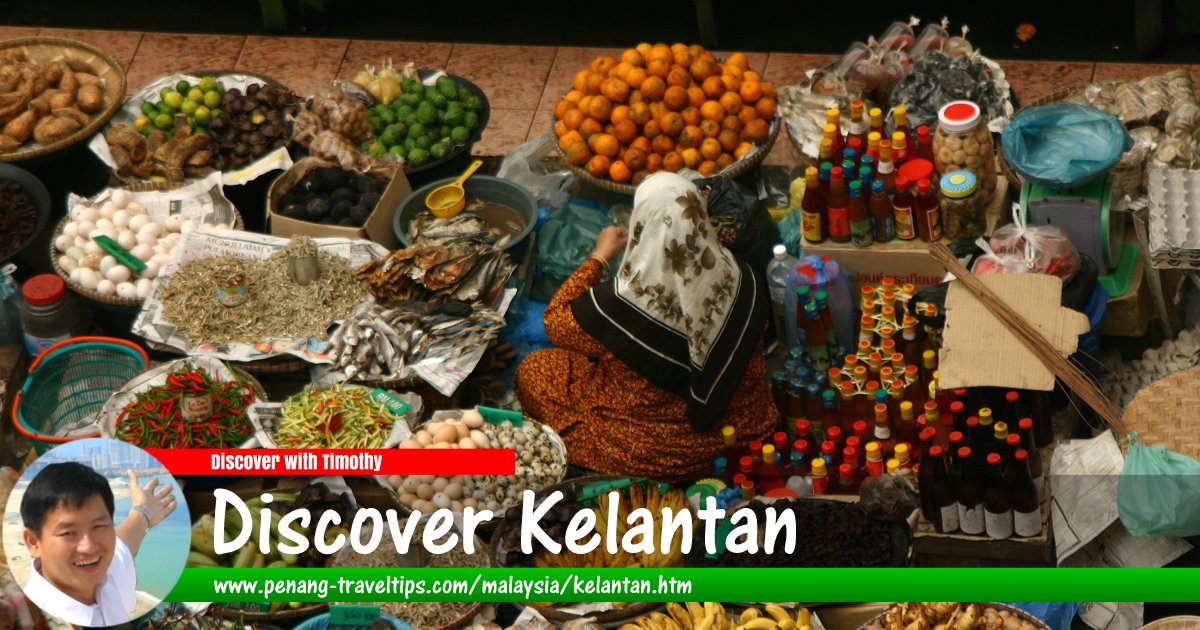 Discover Kelantan (11 February, 2006)
Also available: Panduan Melawat Kelantan
Kelantan is one of the most culturally distinct states in Malaysia, located on the northeastern corner of the Malay Peninsula along the South China Sea. Known as the "Cradle of Malay Culture," Kelantan offers visitors an authentic glimpse into traditional Malay life, arts, and Islamic heritage that has been preserved for centuries. The state is bordered by Terengganu to the south, Perak to the west, Pahang to the southwest, and Thailand to the north. Its capital, Kota Bharu, serves as the administrative, cultural, and economic heart of the state, blending modern development with deep-rooted traditions. For travelers seeking an experience beyond the typical tourist trail, Kelantan presents a fascinating destination where ancient crafts, vibrant markets, pristine beaches, and warm hospitality converge1.
Quick Facts
- State Name: Kelantan Darul Naim
- Capital: Kota Bharu
- Area: 15,040 square kilometers
- Population: Approximately 1.9 million (2020 estimate)
- Official Language: Malay (Kelantanese dialect widely spoken)
- Religion: Predominantly Islam (over 95% of population)
- Royal Capital: Kubang Kerian
- Time Zone: UTC+8 (Malaysia Standard Time)
- Currency: Malaysian Ringgit (MYR)
- State Flower: Common Rose (Pachliopta aristolochiae)
- Known For: Traditional Malay arts, Islamic culture, batik, songket, wayang kulit, and Kelantanese cuisine
History of Kelantan
Ancient and Early History
The history of Kelantan stretches back thousands of years, with archaeological evidence suggesting human habitation in the region since prehistoric times. The name "Kelantan" is believed to derive from the Malay word gelam hutan, referring to the melaleuca or paperbark trees that once grew abundantly along the state's coastline. Another theory suggests it comes from kilatan, meaning "lightning," possibly alluding to the frequent thunderstorms in the area2.
In ancient times, Kelantan was part of various Malay kingdoms and served as an important trading port along the maritime Silk Road. The state's strategic location on the eastern coast of the Malay Peninsula made it a natural gateway for trade between the Malay world, China, India, and the Middle East. By the 13th century, Kelantan had come under the influence of the Srivijaya Empire, followed by the Majapahit Empire of Java. The spread of Islam to the region during this period fundamentally shaped Kelantan's cultural and religious identity, a legacy that remains deeply embedded in the state's character today3.
Pre-Colonial and Sultanate Era
Kelantan emerged as an independent sultanate in the 15th century, though it maintained complex relationships with neighboring powers including Siam (modern-day Thailand) and the Melaka Sultanate. The state was often caught in the geopolitical struggles between these regional powers, leading to periods of vassalage and autonomy. In the 18th century, Kelantan came under the loose suzerainty of Siam, which exerted influence over the northern Malay states. Despite this external pressure, the Kelantan Sultanate managed to preserve its internal administration and cultural traditions4.
The pre-colonial era saw the flourishing of Kelantan's distinctive cultural expressions, including the development of its unique dialect, artistic traditions, and Islamic scholarship. The state became renowned throughout the Malay world for its religious schools (pondok) and learned scholars, earning it a reputation as a center of Islamic education and thought. This intellectual heritage continues to influence Kelantan's society and contributes to its conservative religious character5.
British Colonial Period
The late 19th century brought significant changes to Kelantan as British colonial influence expanded across the Malay Peninsula. In 1909, the Anglo-Siamese Treaty transferred Siamese suzerainty over Kelantan, Terengganu, Kedah, and Perlis to British control. Kelantan thus became one of the Unfederated Malay States, maintaining its own sultan but coming under British protection and administrative guidance. The British introduced modern infrastructure, including roads, railways, and administrative systems, while generally respecting the state's traditional social structure6.
During the colonial period, Kelantan's economy remained predominantly agricultural, with rice cultivation, fishing, and small-scale trade forming the backbone of livelihoods. The British encouraged the development of rubber plantations and tin mining in other parts of Malaya, but Kelantan's less accessible terrain and different soil conditions meant it remained less affected by these industries. This relative isolation helped preserve the state's traditional culture, though it also meant Kelantan developed more slowly economically compared to the west coast states7.
Japanese Occupation and Post-War Era
Like the rest of Malaya, Kelantan experienced the harsh realities of Japanese occupation during World War II from 1941 to 1945. The Japanese military administration brought significant hardship, including food shortages, forced labor, and the suppression of local political activities. The occupation period left deep scars on the collective memory of Kelantan's population and contributed to post-war political awakening across the Malay Peninsula8.
Following Japan's surrender, Kelantan, along with other Malay states, navigated the complex transition toward independence. The state joined the Federation of Malaya in 1948 and achieved independence with the rest of the country on 31 August 1957. In the post-independence era, Kelantan became known for its distinct political trajectory, often electing opposition parties that reflected the state's conservative Islamic character and desire for greater autonomy in religious and cultural matters9.
Modern Developments
In recent decades, Kelantan has experienced gradual modernization while striving to maintain its cultural identity. Infrastructure development has improved connectivity, though the state remains less economically developed than Malaysia's west coast. The state government has actively promoted Kelantan's cultural heritage as a tourism asset, recognizing the value of its traditional arts, crafts, and Islamic heritage in attracting visitors. Challenges remain, including managing development pressures, preserving traditional livelihoods, and addressing economic disparities, but Kelantan continues to evolve as a unique cultural destination within Malaysia10.
Geography and Climate
Physical Landscape
Kelantan occupies a diverse geographical area of approximately 15,040 square kilometers, making it one of the larger states in Peninsular Malaysia. The state's topography varies dramatically from west to east, creating distinct environmental zones that influence settlement patterns, economic activities, and tourism potential. The western interior is dominated by the rugged Titiwangsa Mountain Range, which forms a natural boundary with neighboring Pahang and Perak. These mountains include several peaks exceeding 1,500 meters in elevation, covered in dense tropical rainforest that remains largely undeveloped11.
Moving eastward, the terrain gradually transitions to rolling hills and fertile plains before reaching the coastal lowlands along the South China Sea. The state is drained by several major river systems, with the Kelantan River being the most significant. This river flows approximately 248 kilometers from its headwaters in the mountains to the sea near Kota Bharu, providing water for agriculture, transportation, and daily life for communities along its banks. The river delta region around Kota Bharu is particularly fertile and supports intensive rice cultivation12.
The coastline of Kelantan stretches for about 96 kilometers, featuring sandy beaches, estuaries, and mangrove forests. The coastal zone is relatively flat and susceptible to flooding during the monsoon season, which has shaped settlement patterns and agricultural practices. Offshore, the waters remain relatively shallow, supporting fishing activities but limiting large-scale port development. The state's northern border with Thailand follows natural geographical features, creating a porous boundary that has facilitated cross-border trade and cultural exchange for centuries13.
Climate and Weather Patterns
Kelantan experiences a tropical monsoon climate characterized by high temperatures and significant rainfall throughout the year. Average temperatures range between 21°C and 32°C, with minimal seasonal variation. Humidity levels remain consistently high, typically between 80% and 90%, which can make the heat feel more intense for visitors unaccustomed to tropical conditions. The state receives abundant sunshine, with annual averages of 6 to 7 hours of bright sunshine per day14.
The rainfall pattern follows the northeast monsoon, with the wettest period occurring from November to January. During these months, the state can experience heavy and prolonged rainfall, sometimes leading to flooding in low-lying areas. The northeast monsoon also brings rough seas to the east coast, making swimming and water activities dangerous during this period. The drier months from February to October offer more favorable conditions for outdoor activities, beach visits, and exploration of the state's attractions. However, even during the drier season, brief afternoon thunderstorms are common15.
Visitors planning trips to Kelantan should consider the monsoon timing carefully. The period from March to September generally offers the best weather for tourism, with calmer seas, less rainfall, and more predictable conditions. However, the monsoon season has its own appeal for those interested in experiencing the dramatic tropical storms and quieter tourist atmosphere. Regardless of timing, visitors should pack lightweight, breathable clothing, rain protection, and sun protection to cope with the tropical climate16.
Administrative Divisions
Kelantan is divided into ten districts (jajahan), each administered by a District Officer. These districts are further subdivided into mukim (sub-districts) and villages. The administrative structure reflects both modern governance needs and traditional Malay community organization. Understanding these divisions helps visitors navigate the state and appreciate the distribution of attractions, population centers, and economic activities17.
- Kota Bharu — The capital district, encompassing the city and surrounding areas. This is the most populous and developed district, serving as the state's political, economic, and cultural center.
- Pasir Mas — Located northwest of Kota Bharu, this district borders Thailand and serves as an important cross-border trade zone.
- Tumpat — The northernmost district, known for its fishing villages, Buddhist temples, and coastal attractions.
- Pasir Puteh — Situated to the south of Kota Bharu, featuring agricultural landscapes and emerging coastal tourism.
- Bachok — A coastal district south of Kota Bharu, popular for beaches and traditional fishing communities.
- Tanah Merah — An inland district with historical significance and rural character.
- Machang — Located in the central part of the state, known for agricultural activities and natural scenery.
- Kuala Krai — An interior district along the Kelantan River, serving as a gateway to the state's highland areas.
- Gua Musang — The largest district by area, encompassing mountainous terrain, limestone formations, and the northern entrance to Taman Negara National Park.
- Jeli — The westernmost district, bordering Thailand and Perak, characterized by rural landscapes and border communities.
Kota Bharu deserves special mention as the state's principal city. With a population exceeding 300,000 in its greater metropolitan area, Kota Bharu functions as the main entry point for most visitors. The city center features a mix of modern commercial buildings, traditional markets, historical structures, and government offices. Notable areas within Kota Bharu include the old city center near the Kelantan River, the modern commercial district along Jalan Sultan Yahya Petra, and the cultural zone around Istana Jahar and the central market. The city maintains a distinctly Malay character, with Islamic influences visible in architecture, dress codes, and daily life18.
Demographics and Culture
Population and Ethnic Composition
Kelantan has a population of approximately 1.9 million people, making it one of the more populous states in the northern region of Peninsular Malaysia. The demographic composition differs significantly from the national average, with ethnic Malays comprising approximately 95% of the population. This contrasts sharply with states like Penang or Selangor, which have more diverse ethnic mixes including substantial Chinese and Indian communities. The relative homogeneity of Kelantan's population contributes to the state's strong cultural identity and conservative social norms19.
The remaining population includes small communities of Chinese, Indians, Orang Asli (indigenous peoples), and Thai-Buddhists, primarily concentrated in specific areas. The Chinese community, though small, has historically played important roles in trade and commerce, particularly in urban centers. The Orang Asli communities in the interior highlands maintain traditional lifestyles closely connected to the forest environment. The Thai-Buddhist communities, mainly in Tumpat district near the Thai border, add a fascinating religious and cultural dimension to the state's diversity, with their temples and festivals attracting visitors interested in this unique heritage20.
Language and Dialect
The official language of Kelantan is Malay, as throughout Malaysia, but visitors will quickly notice that locals speak a distinctive Kelantanese dialect that can be challenging for speakers of standard Malay to understand. This dialect, known locally as loghat Kelate, features unique vocabulary, pronunciation patterns, and grammatical structures that set it apart from other Malay dialects. The Kelantanese dialect is famous throughout Malaysia for its melodic, rapid-fire delivery and distinctive expressions, often featured in Malaysian media and comedy21.
Despite the strong local dialect, most Kelantanese are bilingual in standard Malay and can communicate effectively with visitors from other parts of Malaysia. English proficiency varies, with younger people and those in tourism-related businesses generally having better English skills than older generations or rural residents. In areas near the Thai border, some locals also speak Thai or Pattani Malay, reflecting historical cross-border connections. Visitors should not be discouraged by language barriers, as the warm hospitality of Kelantanese people often transcends verbal communication22.
Cultural Identity and Social Norms
Kelantan prides itself on being the guardian of traditional Malay culture, a claim supported by the continued practice of arts, crafts, and customs that have declined in more urbanized parts of Malaysia. The state government has actively promoted this cultural heritage, establishing institutions to preserve and showcase traditional arts. This emphasis on cultural preservation has earned Kelantan the nickname "Serambi Mekah" (Verandah of Mecca), reflecting both its Islamic devotion and its role as a center of Malay-Islamic learning23.
Social norms in Kelantan tend to be more conservative than in Malaysia's west coast states, reflecting the strong Islamic influence on daily life. Dress codes are generally modest, particularly for women, and public behavior is expected to conform to Islamic values. Visitors should be respectful of these norms, dressing modestly (covering shoulders and knees) and refraining from public displays of affection. Alcohol is not widely available, and Friday prayer times see many businesses temporarily closing. These cultural differences, while requiring some adjustment for visitors, contribute to the authentic and distinctive atmosphere that makes Kelantan unique24.
Religion and Society
Islam is the dominant religion in Kelantan, practiced by over 95% of the population and deeply intertwined with the state's social, political, and cultural fabric. The state's administration of Islamic affairs is particularly prominent, with Kelantan having implemented Islamic criminal law provisions (hudud) in certain aspects of its legal system, though these remain subject to federal constitutional limitations. The numerous mosques throughout the state, from grand central mosques to humble village prayer houses, serve as community centers and architectural landmarks25.
The religious character of Kelantan is evident in daily life, from the call to prayer that echoes across cities and villages five times daily, to the prevalence of Islamic schools and religious institutions. The state has a long tradition of Islamic scholarship, with many prominent Malaysian religious figures hailing from Kelantan. This intellectual heritage continues through modern religious schools and higher education institutions, attracting students from across Malaysia and beyond. Visitors interested in Islamic architecture and heritage will find much to appreciate, including historic mosques, royal mausoleums, and religious manuscripts26.
Despite the Islamic dominance, Kelantan maintains a tradition of religious tolerance, particularly evident in the Tumpat district where several ancient Buddhist temples stand as testament to the area's diverse heritage. These temples, some dating back centuries, continue to serve Thai-Buddhist communities and attract Buddhist pilgrims from Thailand and elsewhere. The coexistence of these religious sites within Kelantan's Islamic society demonstrates a pragmatic tolerance that has evolved over generations of interaction. Visitors should approach all religious sites with respect, regardless of their own beliefs, and observe any dress codes or behavioral guidelines27.
Economy
Agriculture and Fishing
The economy of Kelantan remains heavily based on agriculture, reflecting both the state's fertile land and its relative lack of industrial development. Rice cultivation is the most important agricultural activity, with the Kelantan River delta and surrounding plains supporting extensive paddy fields. The state produces a significant portion of Malaysia's rice, though output remains insufficient to meet national demand. Traditional farming methods persist alongside modern techniques, with many smallholders continuing to cultivate their plots using practices passed down through generations28.
Fishing represents another crucial economic sector, with coastal communities depending on marine catches for both subsistence and income. The fishing villages along Kelantan's coastline maintain traditional ways of life closely tied to the sea and monsoon cycles. In addition to marine fishing, freshwater fishing in rivers and fish farming in ponds contribute to local food security and livelihoods. The seasonal nature of fishing, particularly affected by the northeast monsoon, creates economic vulnerabilities that many families manage through supplementary agricultural activities29.
Other agricultural products include rubber, oil palm, coconut, and various fruits. The interior highlands support the cultivation of durian and other tropical fruits, while the cooler mountain areas have potential for highland vegetable farming. Livestock rearing, particularly of cattle and goats, is practiced in rural areas. Despite the agricultural diversity, productivity and incomes remain relatively low compared to Malaysia's industrialized states, contributing to economic challenges and out-migration of younger people seeking better opportunities elsewhere30.
Cottage Industries and Traditional Crafts
Kelantan's traditional crafts represent both a cultural heritage and an economic resource. Batik production, songket weaving, silverwork, and wood carving provide employment for thousands of artisans, particularly in rural areas where alternative income sources are limited. These crafts have evolved from purely domestic production to commercial enterprises, with products sold throughout Malaysia and exported internationally. Government support through craft centers, training programs, and marketing assistance has helped sustain these industries, though they face challenges from cheaper mass-produced alternatives and declining interest among younger generations31.
The batik industry deserves particular mention, as Kelantan is one of Malaysia's major batik-producing states. Unlike the wax-resist batik of Indonesia, Kelantanese batik often uses a canting (hand-drawn) or stamp method, producing distinctive designs that reflect local aesthetic preferences. The town of Kota Bharu and surrounding villages contain numerous batik workshops where visitors can observe the production process and purchase fabrics ranging from affordable printed batik to exquisite hand-drawn pieces costing hundreds of ringgit. Similarly, songket weaving — the intricate production of brocaded textiles using gold or silver threads — continues in specialized workshops, preserving a craft that once adorned Malay royalty32.
Tourism and Economic Challenges
Tourism has been identified as a key sector for Kelantan's economic development, with the state government investing in infrastructure and promotion to attract visitors. The state's unique cultural offerings, pristine beaches, and natural attractions provide a strong foundation for tourism growth. However, the industry faces several challenges, including limited international accessibility, conservative social norms that may not appeal to all tourists, and seasonal weather constraints. The lack of large-scale resort development, while preserving the state's authentic character, also limits the high-spending tourist market33.
Kelantan remains one of Malaysia's less economically developed states, with lower average incomes and fewer employment opportunities compared to the west coast. The state has historically received less industrial investment, partly due to infrastructure limitations and partly due to policy preferences that prioritize cultural and religious values over rapid economic growth. Out-migration of educated young people to Kuala Lumpur and other urban centers represents a significant brain drain. Addressing these economic challenges while preserving Kelantan's unique cultural identity remains an ongoing balancing act for state planners34.
Tourism and Attractions
Beaches and Islands
Kelantan's coastline offers some of the most unspoiled beaches in Peninsular Malaysia, though they remain less developed than those in Terengganu or Langkawi. Pantai Cahaya Bulan (Moonlight Beach), formerly known as Pantai Cinta Berahi, is the most accessible beach from Kota Bharu, located just a few kilometers from the city center. Despite its proximity to the capital, the beach maintains a relatively undeveloped character, with local food stalls, horse riding activities, and views of fishing boats against the South China Sea horizon. The beach is particularly popular during weekends and school holidays when local families gather for picnics and relaxation35.
Further south, Pantai Irama (Melody Beach) in Bachok district offers a longer stretch of sandy coastline with calmer waters suitable for swimming during the non-monsoon months. The beach's name derives from the melodious sound of waves, and it provides a more tranquil alternative to the busier Pantai Cahaya Bulan. Pantai Bisikan Bayu (Beach of the Whispering Breeze) near Semerak offers another scenic coastal destination, named for the gentle sea breezes that characterize the area. These beaches, while lacking the resort infrastructure of more touristy destinations, offer authentic experiences of Malaysia's east coast maritime culture36.
Offshore, the Perhentian Islands and Redang Island technically fall under Terengganu state, but many visitors access them through Kelantan, particularly via the Kuala Besut jetty which is close to the Kelantan border. Within Kelantan waters, smaller islands and coral formations exist, though they remain largely undeveloped for tourism. The state's marine ecosystem includes coral reefs, sea turtle nesting sites, and diverse fish populations, offering potential for future marine tourism development if managed sustainably37.
Cultural and Historical Sites
Kelantan's rich cultural heritage is showcased in numerous museums, palaces, and historical buildings, particularly in and around Kota Bharu. The Istana Jahar (Jahar Palace) stands as one of the finest examples of traditional Malay architecture, built in 1887 by Sultan Muhammad II. This wooden palace, featuring intricate carvings and distinctive roof architecture, now functions as the Museum of Royal Traditions and Customs, displaying artifacts related to Kelantan's royal ceremonies, weaponry, and traditional costumes. The building itself is a masterpiece of craftsmanship, with no nails used in its original construction38.
The Istana Batu (Stone Palace), built in 1939, serves as the Royal Museum, housing collections of royal regalia, photographs, and personal items belonging to former sultans. Unlike Istana Jahar's traditional wooden construction, Istana Batu features colonial-influenced architecture with brick walls, reflecting the changing architectural tastes of the early 20th century. Together, these royal museums offer fascinating insights into the history and traditions of the Kelantan Sultanate, one of the oldest continuous monarchies in the Malay world39.
The State Museum (Muzium Negeri Kelantan) provides a broader overview of the state's history, culture, and natural environment. Housed in a colonial-era building, the museum's collections include archaeological artifacts, ethnographic materials, and historical documents. For those interested in World War II history, the Bank Kerapu building in Kota Bharu holds significance as the site where Japanese forces first landed in Malaya on 8 December 1941, marking the beginning of the Pacific War's Malayan campaign. The building now serves as a war museum with exhibits related to the Japanese occupation40.
Markets and Shopping
No visit to Kelantan is complete without experiencing its vibrant markets, which serve as social and commercial hubs for local communities. The Siti Khadijah Market (Pasar Besar Siti Khadijah) in the heart of Kota Bharu is the state's most famous market, named after the Prophet Muhammad's first wife, a successful businesswoman. This multi-story market features hundreds of vendors selling fresh produce, local foods, textiles, batik, handicrafts, and household goods. The market is particularly notable for being dominated by female traders, continuing a tradition of women's economic participation in Kelantanese society41.
The Pasar Malam (night markets) that rotate through different neighborhoods offer evening shopping and dining experiences. These markets feature street food, clothing, accessories, and various goods at affordable prices. The atmosphere is lively and social, with families strolling among stalls and sampling local delicacies. For batik enthusiasts, the Kota Bharu Batik Market and workshops in nearby villages such as Kampung Puteh and Kampung Badang offer opportunities to purchase authentic hand-drawn batik directly from producers. Visitors can observe the waxing, dyeing, and finishing processes before selecting their preferred designs42.
Natural Attractions
Beyond the beaches, Kelantan offers diverse natural attractions for outdoor enthusiasts. The Stong State Park (Taman Negeri Stong) in the interior highlands features the impressive Jelawang Waterfall, one of the highest waterfalls in Southeast Asia with a total drop of approximately 305 meters. The park offers trekking trails through primary rainforest, camping areas, and opportunities to observe wildlife including hornbills, monkeys, and various bird species. The cool mountain climate provides relief from the coastal heat, making it an ideal destination for nature lovers43.
The Gua Musang district takes its name from the civet cat caves (gua musang), limestone formations that dot the landscape. These caves, formed over millions of years, contain impressive stalactite and stalagmite formations, underground rivers, and archaeological evidence of prehistoric human habitation. The limestone hills themselves create a dramatic landscape quite different from the coastal plains. The district also serves as the northern gateway to Taman Negara National Park, Malaysia's largest national park, accessible via the Gua Musang railway station and connecting roads44.
In the Tumpat district, visitors can explore a unique cultural landscape where Buddhist temples stand amidst Malay villages. The Wat Photivihan temple houses a 40-meter reclining Buddha statue, one of the largest in Southeast Asia. Other notable temples include Wat Machimmaram with its sitting Buddha and Wat Phit Phum Phuang with its intricate Thai architecture. These temples reflect the historical ties between Kelantan and the Pattani region of southern Thailand, and their continued presence demonstrates the religious tolerance that exists within the state's predominantly Muslim society45.
Food and Cuisine
Kelantanese cuisine is renowned throughout Malaysia for its distinctive flavors, which differ noticeably from the food of other regions. The cuisine reflects the state's agricultural base, coastal location, and Thai culinary influences, resulting in dishes that are often sweeter, richer in coconut milk, and more intensely spiced than those found on the west coast. Food plays a central role in Kelantanese culture, with eating being both a social activity and an expression of hospitality46.
Nasi Kerabu is perhaps Kelantan's most famous dish, a vibrant rice salad featuring blue-colored rice (naturally dyed with butterfly pea flowers), shredded vegetables, fish floss, crackers, and a variety of spicy sauces. The dish exemplifies Kelantanese culinary aesthetics, with its striking colors and complex combination of textures and flavors. Nasi Dagang, though also associated with Terengganu, is widely enjoyed in Kelantan — this dish of rice steamed in coconut milk and served with fish curry (typically tuna) represents a hearty meal that has sustained generations of fishermen and farmers47.
Other signature dishes include Ayam Percik, grilled chicken basted with a rich coconut cream sauce that creates a distinctive sweet and savory flavor profile. Laksam features wide rice noodle rolls in a creamy white gravy made from coconut milk and fish, quite different from the tangy assam laksa of Penang. Keropok Lekor, fish crackers made from pounded fish and sago flour, are popular snacks available at markets and street stalls throughout the state. Budu, a pungent fermented anchovy sauce, accompanies many meals and exemplifies the bold flavors that characterize Kelantanese palates48.
Sweet treats are particularly prominent in Kelantanese cuisine, reflecting the region's sugar production history. Akok is a dense, sweet egg cake traditionally cooked in a special molded pan, while Jala Mas consists of intricate net-like pancakes made from egg yolk and sugar syrup. Tepung Pelita offers a two-layered dessert of pandan-flavored custard and coconut cream steamed in banana leaf cups. These desserts, along with numerous kuih (traditional cakes and pastries), are widely available at markets and specialty shops, providing visitors with ample opportunities to satisfy their sweet tooth49.
For the most authentic culinary experiences, visitors should explore the food sections of Siti Khadijah Market, the various Pasar Malam around Kota Bharu, and local restaurants specializing in traditional cuisine. Many dishes are best enjoyed in the morning, as Kelantanese traditionally eat their main meal early. Food stalls and restaurants typically close earlier than in west coast cities, with many shutting by mid-evening. Visitors should also note that during the fasting month of Ramadan, daytime eating options become limited, though the evening breaking of fast (berbuka puasa) creates spectacular food markets and communal dining experiences50.
Arts and Crafts
Batik and Textiles
Kelantan is synonymous with batik in Malaysia, producing some of the finest hand-drawn and block-printed fabrics in the country. The state's batik tradition dates back generations, with techniques and designs passed down through family workshops. Kelantanese batik is distinguished by its floral and geometric motifs, vibrant colors, and the quality of its hand-drawn (canting) work. The production process involves applying hot wax to fabric to create resist patterns, dyeing the cloth, and then removing the wax through boiling. Multiple waxing and dyeing stages create complex multi-colored designs that command premium prices51.
Songket weaving represents another pinnacle of Kelantanese textile art. This ancient technique involves weaving supplementary weft threads of gold or silver silk or metallic threads into a base fabric of cotton or silk, creating intricate brocaded patterns. Traditionally reserved for royalty and ceremonial occasions, songket remains highly valued for weddings, official functions, and as luxury items. The weaving process is labor-intensive, with complex pieces taking months to complete. Visitors can observe songket weaving at specialized workshops and purchase pieces ranging from small samples to elaborate full-length fabrics costing thousands of ringgit52.
Silverwork and Wood Carving
Silverwork has flourished in Kelantan for centuries, with the state's artisans producing exquisite items ranging from jewelry and ornaments to ceremonial weapons and household items. The village of Kampung Sireh near Kota Bharu is particularly famous for its silver craftsmen. Traditional Kelantanese silverwork features intricate filigree and repoussé techniques, creating delicate patterns inspired by nature and Islamic geometry. While modern production has introduced some mechanization, the finest pieces continue to be handcrafted by skilled artisans whose expertise represents intangible cultural heritage53.
Wood carving (ukiran kayu) represents another important craft tradition, with Kelantanese carvers producing everything from architectural elements for traditional houses to decorative panels, furniture, and ceremonial objects. The carvings typically feature floral motifs, geometric patterns, and calligraphic inscriptions, reflecting Islamic artistic principles that avoid figurative representation. The traditional Malay houses of Kelantan showcase this carving heritage, with elaborate door frames, window shutters, and roof decorations demonstrating the skill of master craftsmen. While modern construction has reduced demand for architectural carving, the tradition continues through production of decorative items for the tourist and collector markets54.
Wayang Kulit and Performing Arts
Wayang Kulit (shadow puppet theatre) holds a special place in Kelantan's cultural heritage, though its practice has declined significantly in recent decades. This traditional performance art involves manipulating leather puppets behind a backlit screen, accompanied by music and narration of stories from the Ramayana and Mahabharata epics. While wayang kulit has Hindu-Buddhist origins, it was adapted into a distinctively Malay art form in Kelantan, with local stories, music, and puppet designs. Religious and social changes have reduced the frequency of performances, but cultural preservation efforts maintain the tradition through special shows and training programs55.
Main Puteri (Princess Play) is a unique Kelantanese healing ritual that combines elements of theatre, music, and traditional medicine. This performance, traditionally conducted by a shaman (tok puteri) and musicians, involves invoking spirits to diagnose and treat illnesses. While less commonly practiced today due to religious sensitivities, main puteri represents an important aspect of Kelantan's pre-Islamic and syncretic cultural heritage. Other performing arts include dikir barat, a form of choral singing and rhythmic movement performed by groups, and various forms of traditional Malay music featuring drums, gongs, and reed instruments56.
Transportation
Getting to Kelantan
The most convenient way to reach Kelantan is by air. Sultan Ismail Petra Airport (KBR) in Pengkalan Chepa, approximately 8 kilometers from Kota Bharu city center, serves as the state's main aviation gateway. The airport handles flights from Kuala Lumpur (multiple daily flights by Malaysia Airlines, AirAsia, and Malindo Air), Penang, Johor Bahru, and Kuching, as well as seasonal international flights. The airport terminal, while modest in size, provides essential facilities including car rental services, taxis, and food outlets. Flight duration from Kuala Lumpur is approximately one hour, making air travel the fastest option for visitors from Peninsular Malaysia's west coast57.
Rail travel offers a scenic alternative for reaching Kelantan. The East Coast Rail Line operated by Keretapi Tanah Melayu (KTM) connects Kelantan to the rest of Peninsular Malaysia, with the final stop at Wakaf Bharu station near Kota Bharu. The Jungle Railway route from Gemas or Kuala Lipis passes through spectacular rainforest scenery, limestone formations, and rural landscapes, offering one of Malaysia's most memorable train journeys. The overnight sleeper service from Kuala Lumpur provides a comfortable and economical option, though journey times are significantly longer than flying. The railway also connects Kelantan to Taman Negara National Park via the Gua Musang route58.
Long-distance buses connect Kota Bharu to major cities including Kuala Lumpur, Penang, Johor Bahru, and Singapore. The journey from Kuala Lumpur takes approximately 8 to 10 hours depending on traffic and route, with buses departing from various terminals including Terminal Bersepadu Selatan (TBS). While bus travel is economical, the long journey time and potential for traffic delays make it less attractive than flying for most visitors. Self-driving is possible via the East Coast Expressway and connecting roads, though the drive from Kuala Lumpur takes 6 to 8 hours and requires navigating mountain roads and potential monsoon-related hazards59.
Getting Around Kelantan
Within Kota Bharu, taxis and e-hailing services like Grab provide the most convenient transportation for visitors. Traditional taxis can be found at the airport, bus terminal, and major hotels, though they generally do not use meters, so fares should be negotiated in advance. Grab services are widely available and offer more transparent pricing. For short distances within the city center, trishaws (bicycle rickshaws) provide a charming if slow mode of transport, particularly popular for sightseeing around the central market and cultural zone60.
Car rental is recommended for visitors wishing to explore beyond Kota Bharu, as public transportation to beaches, interior attractions, and border areas is limited. Several rental agencies operate at the airport and in the city. Driving in Kelantan is generally straightforward, with less traffic congestion than major west coast cities. However, visitors should be prepared for different driving styles and should exercise caution on rural roads, particularly during the monsoon season when flooding can occur. Motorcycle rental offers an alternative for adventurous travelers comfortable with two-wheeled transport61.
Local buses serve routes within Kota Bharu and connect the city to nearby towns, but schedules can be irregular and routes confusing for non-locals. For travel to more distant attractions such as the Perhentian Islands jetty at Kuala Besut, shared taxis or bus services operate from the city center. When visiting the Thai border area, local buses and shared taxis provide connections to Rantau Panjang and other border crossings. Visitors should allow extra time for local transportation, as services may not run strictly according to published schedules62.
Practical Information
Best Time to Visit
The optimal period for visiting Kelantan is from March to October, when the northeast monsoon has subsided and the weather is relatively dry and sunny. During these months, sea conditions are calmer, making beach activities and island access more feasible. The months of June to August offer particularly good weather, though this coincides with Malaysian school holidays, meaning some attractions may be more crowded. The Ramadan month (dates vary according to the Islamic lunar calendar) presents unique cultural experiences but also practical challenges, as many daytime eateries close and business hours may be reduced63.
The northeast monsoon season from November to February is generally best avoided for beach-focused holidays, as heavy rainfall, rough seas, and potential flooding can disrupt travel plans. However, this period offers advantages for budget travelers and those interested in experiencing the dramatic tropical weather. Accommodation prices may be lower, attractions less crowded, and the intense storms create spectacular natural displays. Visitors during monsoon should monitor weather forecasts, pack appropriate rain gear, and maintain flexible itineraries to accommodate weather-related disruptions64.
Dress Code and Local Customs
Visitors to Kelantan should dress modestly out of respect for local customs and the state's conservative Islamic character. For women, this means covering shoulders, avoiding low necklines, and wearing clothing that covers at least to the knees. Men should also avoid wearing shorts in town areas and religious sites. When visiting mosques, more conservative dress is required, with women covering their hair and all visitors removing footwear. Beachwear is acceptable at beaches but should not be worn when returning through town areas. Carrying a light scarf or sarong provides versatility for adjusting dress as needed65.
Social etiquette in Kelantan follows general Malay customs with additional conservative elements. Greetings are typically conducted with a slight bow or nod rather than handshakes, particularly between genders. Public displays of affection should be avoided. When entering homes, shoes are removed. The right hand is used for giving and receiving items, as the left hand is considered unclean in Islamic tradition. During the call to prayer and Friday congregational prayers, visitors should avoid loud activities near mosques. Photography of people, particularly women, should be done with permission. These courtesies, while requiring some adjustment, are generally appreciated and help ensure positive interactions with locals66.
Health and Safety
Kelantan is generally a safe destination for travelers, with low rates of violent crime. However, standard precautions apply, including safeguarding valuables, avoiding isolated areas at night, and being aware of surroundings. The tropical climate presents health considerations, including the risk of mosquito-borne diseases such as dengue fever. Visitors should use insect repellent, wear long sleeves during dawn and dusk, and ensure accommodation has mosquito screening or nets. Tap water is not recommended for drinking; bottled water is widely available. Sun protection is essential given the intense tropical sun67.
Medical facilities in Kota Bharu are adequate for most needs, with Hospital Universiti Sains Malaysia (HUSM) and Hospital Raja Perempuan Zainab II providing comprehensive services. Rural areas have more limited facilities, so travelers venturing into the interior should carry basic medical supplies and ensure they have appropriate travel insurance. During the monsoon season, flash flooding can occur, particularly in low-lying areas and near rivers. Visitors should heed local warnings, avoid floodwaters, and follow advice from accommodation providers and local authorities if severe weather occurs68.
Language and Communication
While the Kelantanese dialect can be challenging, most people in tourism-related businesses and younger generations speak adequate standard Malay and some English. Attempting a few Malay phrases is appreciated and can facilitate warmer interactions. English-language signage is limited compared to tourist areas on the west coast, so having destinations written in Malay can help with taxi directions. Mobile phone coverage is generally good in urban and coastal areas but may be patchy in mountainous interior regions. Internet access is available at most accommodations and many cafes, though speeds may vary69.
Map of Kelantan
Towns in Kelantan
For a more comprehensive list, go to Towns in Kelantan.- Kota Bharu - state capital (GPS: 6.13127, 102.23666)

- Bachok (GPS: 6.06109, 102.40126)

- Gua Musang (GPS: 4.88126, 101.96426)

- Jeli (GPS: 5.70141, 101.84376)

- Pengkalan Kubor (GPS: 6.23319, 102.09161)

- Tok Bali (GPS: 5.89762, 102.47403)

- Tumpat (GPS: 6.19852, 102.16942)

Airports in Kelantan
- Sultan Ismail Petra Airport (GPS: 6.16986, 102.29475)

Tourist Attractions of Kelantan
- Friendship Bridge (GPS: 5.83905, 101.89263)

- Gunung Stong (GPS: 5.33952, 101.97486)

- Jeram Lenang Waterfall (GPS: 5.74323, 102.37407)

- Jeram Pasu Waterfall (GPS: 5.79433, 102.33671)

- Masjid Kampung Laut (GPS: 6.02742, 102.24075)

- Pantai Bisikan Bayu (GPS: 5.86341, 102.51634)

- Pantai Irama

- Pantai Seri Tujuh (GPS: 6.2171, 102.12679)

- Wat Pathumvihara (GPS: 6.1073, 102.37487)

- Wat Phothikyan Phutthaktham, Bachok (GPS: 6.10907, 102.37184)
- Wat Phothivihan (GPS: 6.13025, 102.13738)

- Wat Uttamaram (GPS: 6.02182, 102.08718)

Tourist Attractions of Kelantan
- Pasir Mas Railway Station (GPS: 6.04254, 102.14252)
- Tumpat Railway Station (GPS: 6.199, 102.16764)
Sights in Kelantan
- Jambatan Sungai Raja Gali (GPS: 6.1741, 102.32466)

- Tumpat Railway Station (GPS: 6.199, 102.16764)
State Roads in Kelantan
Categories of sights in Kelantan
- TOWNS IN KELANTAN
- Beaches in Kelantan
- Chinese Temples in Kelantan
- Clock Towers in Kelantan
- Hotels in Kelantan
- Mosques in Kelantan
- Museums in Kelantan
- Palaces in Kelantan
- Rivers in Kelantan
- Streets in Kelantan
- Thai Buddhist Temples in Kelantan
- Tourist Attractions in Kelantan
- Waterfalls in Kelantan
Districts of Kelantan
- Jajahan Bachok
- Jajahan Gua Musang
- Jajahan Jeli
- Jajahan Kuala Krai
- Jajahan Kota Bharu
- Jajahan Machang
- Jajahan Pasir Mas
- Jajahan Pasir Puteh
- Jajahan Tanah Merah
- Jajahan Tumpat
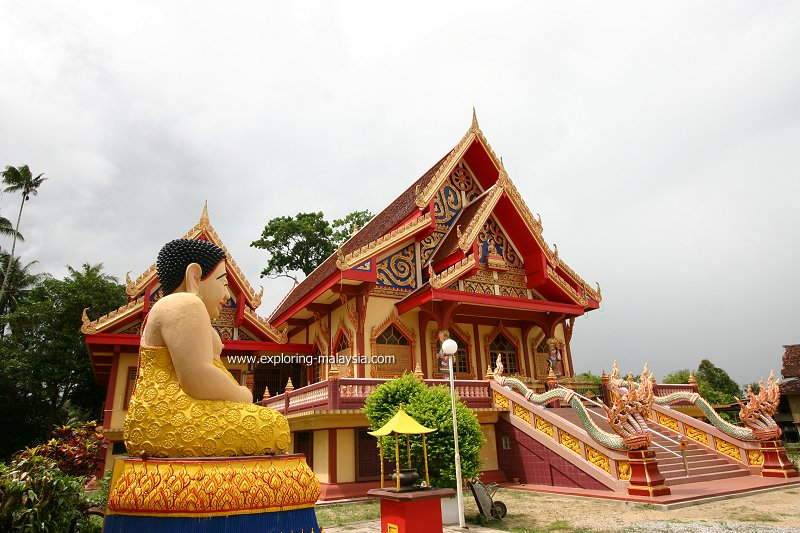 Wat Puchumthat Chanaram, Jong Bakar, Tumpat (12 February, 2006)
References
- Tourism Malaysia Official Website
- Kelantan State Government Portal
- Andaya, Barbara Watson. "The Indian Ocean in the Malay World." Journal of the Economic and Social History of the Orient
- Encyclopaedia Britannica - Kelantan
- Milner, Anthony. "Kelantan." The Oxford Companion to Malaysian Literature
- Tarling, Nicholas. The Cambridge History of Southeast Asia
- Hassan, Ahmad. "Economic Development and Regional Disparities in Malaysia." Local Economy
- National Library Board Singapore - The Japanese Occupation of Malaya
- Funston, John. "Malaysia: Developmental State Challenged." Southeast Asian Affairs
- Tourism Malaysia - Kelantan Destination Guide
- Malaysia Department of Survey and Mapping
- Malaysia Department of Irrigation and Drainage
- Department of Statistics Malaysia
- Malaysian Meteorological Department
- Malaysian Meteorological Department - Climate of Malaysia
- Tourism Malaysia - Best Time to Visit
- Kelantan State Government - Administrative Divisions
- Department of Statistics Malaysia - Population and Housing Census
- Department of Statistics Malaysia - Kelantan State Profile
- Kahn, Joel S. "Other Malays: Nationalism and Cosmopolitanism in the Modern Malay World."
- Prentice, David J. "Malay (Kelantan-Pattani)." The Austronesian Languages of Asia and Madagascar
- Ethnologue - Standard Malay
- Mohamed, Anis. "Islamic Education and Tradition in Kelantan." Southeast Asian Studies
- Tourism Malaysia - Cultural Guidelines
- Encyclopaedia Britannica - Hudud
- Roff, William R. "The Origins of Malay Nationalism."
- Tourism Malaysia - Religious Sites in Kelantan
- Malaysia Department of Agriculture
- Malaysia Department of Fisheries
- Department of Statistics Malaysia - Agricultural Statistics
- Malaysian Handicraft Development Corporation
- Malaysian Handicraft Development Corporation - Batik and Songket
- Tourism Malaysia - Kelantan Tourism Development
- Department of Statistics Malaysia - Economic Indicators
- Tourism Malaysia - Pantai Cahaya Bulan
- Tourism Malaysia - Kelantan Beaches
- Malaysia Department of Fisheries - Marine Parks
- Kelantan State Museum Department - Istana Jahar
- Kelantan State Museum Department - Royal Museums
- Bank Kerapu War Museum
- Tourism Malaysia - Siti Khadijah Market
- Malaysian Handicraft Development Corporation - Batik Villages
- Malaysia Forestry Department - Stong State Park
- Tourism Malaysia - Gua Musang and Caves
- Tourism Malaysia - Tumpat Buddhist Temples
- Tourism Malaysia - Kelantan Cuisine
- Food and Agriculture Organization of the United Nations - Malaysian Rice Production
- Tourism Malaysia - Kelantan Food Specialties
- Tourism Malaysia - Traditional Kelantanese Desserts
- Tourism Malaysia - Dining in Kelantan
- Malaysian Handicraft Development Corporation - Kelantan Batik
- Malaysian Handicraft Development Corporation - Songket Weaving
- Malaysian Handicraft Development Corporation - Silverwork
- Malaysian Handicraft Development Corporation - Wood Carving
- UNESCO - Wayang Kulit Shadow Puppet Theatre
- Skeat, Walter William. "Malay Magic: An Introduction to the Folklore and Popular Religion of the Malay Peninsula."
- Malaysia Airports Holdings Berhad - Sultan Ismail Petra Airport
- Keretapi Tanah Melayu Berhad - East Coast Rail Line
- PLUS Malaysia Berhad - East Coast Expressway
- Tourism Malaysia - Getting Around Kelantan
- Tourism Malaysia - Transportation in Kelantan
- Tourism Malaysia - Local Transport Options
- Tourism Malaysia - Best Time to Visit Malaysia
- Malaysian Meteorological Department - Monsoon Information
- Tourism Malaysia - Dress Code Guidelines
- Tourism Malaysia - Malaysian Etiquette and Customs
- Ministry of Health Malaysia - Travel Health Advice
- Ministry of Health Malaysia - Hospital Directory
- Malaysian Communications and Multimedia Commission - Coverage Maps
Page Details
This page was created on 22 July 2026. Hi, my name is Timothy and created it from my research, for my own entertainment, knowledge and to satisfy my curiosity. I am providing the information to you in good faith and hope it is useful. I try to get the details as accurate as possible. I also try to update the page whenever I stumble on new details. So this and all my other pages are perpetual work in progress. If you discover any error, please politely inform me, pointing out where the error lies, and I will correct it as soon as possible. Your helpfulness will keep this page accurate, relevant and helpful to those who need the information.My Videos of Malaysia
 Latest Pages & Updates
Buy Me A Coffee
If you enjoy the information I provide and want to support the work I do, please buy me a coffee! I appreciate it immensely, thank you so much!
