
Jalan Hang Jebat, Malacca
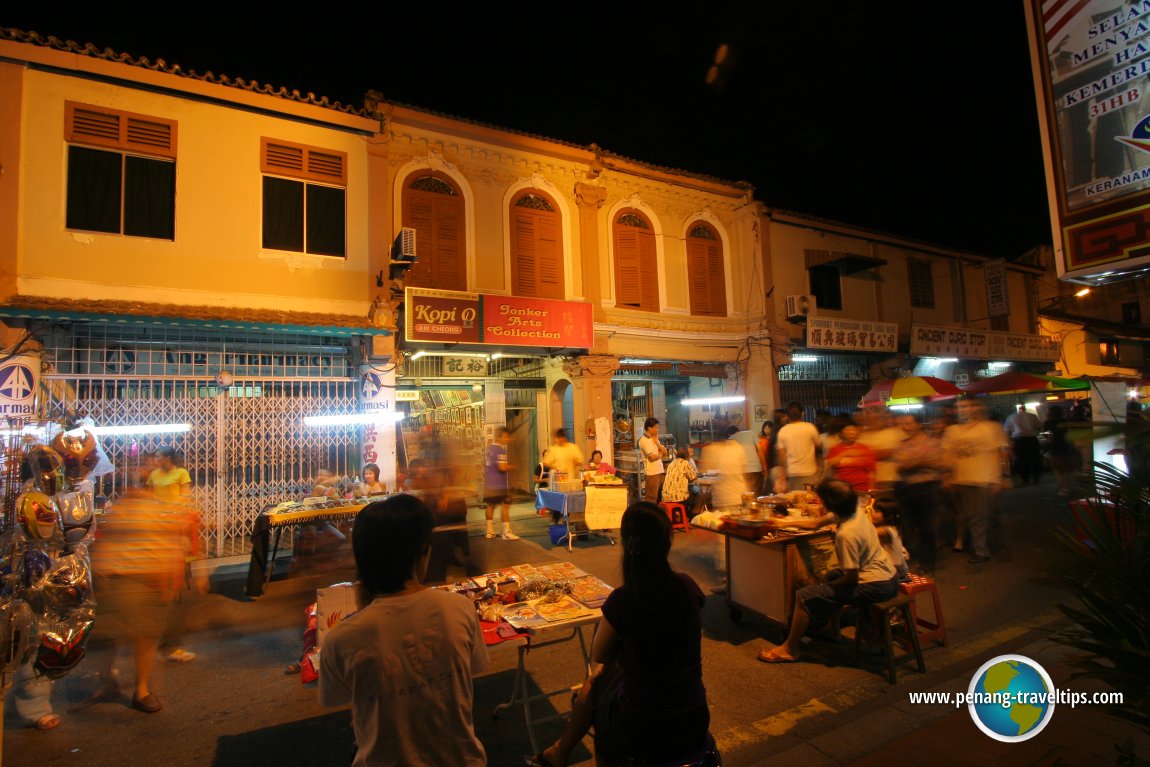 Jonker Street (29 December, 2006)
Also available: Jalan Hang Jebat (Malay Edition)
Jalan Hang Jebat is the principal historic commercial street within the old town of Malacca City, Malaysia, occupying a central position in the UNESCO World Heritage Site core zone. Formerly known as Jonker Street during the British period and Jonkerstraat during Dutch rule, the street developed as the main thoroughfare of the Chinese merchant quarter, where traders, craftsmen, clan associations and residents shaped one of the most distinctive urban landscapes in historic Malacca.1
Running approximately 500 metres through the historic centre, Jalan Hang Jebat extends roughly in an east–west direction, linking the area around the Melaka River with the network of streets leading towards the former residential quarters of the old town. Today, it is internationally recognised as the location of Jonker Walk, the pedestrianised night-market area that attracts large numbers of visitors, but its significance predates tourism by several centuries. Historically, the street was a place of commerce, community organisation and everyday life for the Chinese population of Malacca.1
Quick Facts
- Location: Historic core of Malacca City, Malaysia
- Former names: Jonkerstraat (Dutch period), Jonker Street (British period)
- Current name: Jalan Hang Jebat
- Historical role: Principal commercial street of the Chinese quarter
- Heritage status: Located within the UNESCO World Heritage Site core zone
- Approximate length: About 500 metres
- Known today for: Jonker Walk Night Market, heritage shophouses and cultural attractions
- Main architectural character: 19th- and early 20th-century shophouses
Historical Development of Jalan Hang Jebat
The origins of Jalan Hang Jebat are closely connected with the growth of Malacca as a maritime trading centre. Unlike planned colonial capitals created from scratch, old Malacca developed organically around the Melaka River, where warehouses, markets, religious institutions and residential quarters emerged according to trade patterns and community needs. The street formed part of the dense urban fabric that developed around the river and commercial waterfront during the centuries when Malacca served as a regional entrepôt connecting China, India, the Middle East and Europe.2
During the Dutch administration after 1641, the street became known as Jonkerstraat. The Dutch reorganised parts of the old town, introducing a more formal street hierarchy while retaining the existing settlement pattern. The area around Jonkerstraat became associated with merchants and craftsmen, particularly members of the Chinese community who played an important role in Malacca’s economy through trade, retail, finance and artisanal production.3
The street’s development reflected the multicultural nature of Dutch Malacca. While the nearby Heerenstraat (present-day Jalan Tun Tan Cheng Lock) became associated with wealthier residents and prominent families, Jonkerstraat evolved into a more commercially oriented area where merchants, shopkeepers and community organisations operated. However, the distinction between the two streets should not be interpreted too simply: by the 18th and 19th centuries, many affluent Chinese merchants also lived and conducted business along Jonker Street.3
The Meaning and Evolution of the Name
The origin of the name Jonker has been the subject of different interpretations. One popular explanation claims that it was derived from the Chinese trading vessels known as junks, reflecting Malacca’s maritime role. However, historical studies generally regard this explanation as unlikely.4
The more widely accepted interpretation is that Jonker originated from the Dutch term jonkheer, referring to a young gentleman or member of the minor nobility. In Dutch colonial usage, Heerenstraat meant “Gentlemen’s Street”, while Jonkerstraat referred to a related but socially different urban area. Over time, these names became associated with the contrasting functions of the two streets: Heerenstraat with prominent residences and Jonkerstraat with commercial activity and merchant communities.4
During the British administration following the Anglo-Dutch Treaty of 1824, the street continued to be known as Jonker Street. The name remained in common usage for more than a century and became deeply associated with Malacca’s Chinese heritage. Following Malaysia’s independence, many colonial-era street names were replaced with Malay names, and Jonker Street was renamed Jalan Hang Jebat, honouring one of the legendary warriors from Malay literary tradition.5
Jalan Hang Jebat and the Chinese Merchant Community
By the 19th century, Jalan Hang Jebat had become one of the most important streets for Malacca’s Chinese community. The street was not merely a marketplace but also a centre for community organisation, with clan associations established to provide social support, maintain ancestral traditions and represent the interests of their members.
Among the important associations connected with the street was the Hokkien Huay Kuan, established in 1837. Other Chinese clan organisations, including associations representing the Tan, Lee and other surnames, also developed in this vicinity. These institutions reflected the importance of clan identity among Chinese migrants, many of whom originated from different parts of southern China and maintained strong regional affiliations.6
The presence of clan associations transformed Jalan Hang Jebat into more than a commercial street. It became a centre of social life where merchants conducted business, community leaders met, festivals were organised and cultural traditions were preserved. This combination of commerce and community functions remains one of the defining characteristics of the street’s historical identity.
The Historic Streetscape
The present appearance of Jalan Hang Jebat is largely shaped by its collection of traditional shophouses, many of which were constructed during the late 19th and early 20th centuries. These buildings combined commercial activity on the ground floor with residential accommodation above, reflecting the practical needs of merchant families who lived close to their businesses.7
Although many buildings along the street date from the early 20th century, some earlier structures survive from the 19th century. Their architectural features include narrow frontages, long interior plots, covered five-foot walkways, timber shutters, decorative plasterwork and tiled façades. Together, these buildings form one of the most recognisable examples of Malacca’s historic shophouse landscape.7
In the modern era, Jalan Hang Jebat has undergone a major transformation from a traditional commercial street into a heritage and tourism corridor. However, its historical importance lies not only in its current popularity, but in the centuries of trade, migration and community life that shaped the street before it became known worldwide as Jonker Walk.
Clan Associations and Community Institutions
The importance of Jalan Hang Jebat in Malacca’s history is closely connected with the development of Chinese community organisations along the street. During the 19th century, as Chinese migration increased and commercial activity expanded, clan associations became essential institutions providing social welfare, dispute resolution, cultural preservation and assistance to newcomers from the same ancestral regions of China.
These associations were commonly organised according to surname, dialect group or place of origin. Along Jalan Hang Jebat and its surrounding streets, associations representing different Chinese communities established premises that served both practical and symbolic purposes. They functioned as meeting halls, ancestral worship spaces and centres for maintaining cultural traditions among the Chinese population of Malacca.8
The establishment of the Hokkien Huay Kuan in 1837 was particularly significant, reflecting the economic influence of the Hokkien community, who became one of the most prominent Chinese groups in Malacca. Other surname associations, including those representing the Tan, Lee and other clans, also formed part of the network of Chinese institutions around the old commercial district.8
These associations were not isolated organisations but part of a wider urban system. Their proximity to merchant houses, shops and places of worship reinforced Jalan Hang Jebat’s role as a centre of Chinese commercial and social life. The street therefore represented not only a marketplace but also a place where community identity was physically expressed through buildings and institutions.
The Architecture of Jalan Hang Jebat
The built environment of Jalan Hang Jebat is dominated by traditional shophouses, a building type that shaped the urban character of Malacca’s historic centre. These narrow, elongated buildings were designed for mixed commercial and residential use, with shops or workshops facing the street and living quarters located on upper floors or towards the rear.
The typical shophouse plot reflects the historical economics of the old town. Land along important commercial streets was valuable, resulting in narrow frontages but deep interiors. This arrangement allowed merchants to maximise usable space while maintaining direct access to customers along the street frontage.9
The shophouses along Jalan Hang Jebat display architectural influences from several periods. Earlier buildings often feature simpler façades influenced by Chinese construction traditions, while later examples incorporate European decorative elements, reflecting the Straits Eclectic style that developed during the late 19th and early 20th centuries. Some later buildings show Art Deco influences, demonstrating the continued evolution of the street into the modern era.9
Common features include timber shutters, ornamental plasterwork, ceramic tiles, ventilation openings and the characteristic covered five-foot walkway. These features were not merely decorative but responded to local climatic conditions, providing shade, ventilation and protection from tropical rainfall.
From Merchant Street to Heritage Corridor
For much of its history, Jalan Hang Jebat functioned primarily as a working commercial street. Its shops served local residents as well as merchants and visitors arriving through Malacca’s trading networks. Businesses included textile shops, traditional medicine stores, grocery shops, food establishments, hardware suppliers and specialist traders.
Unlike modern commercial streets designed around large retail premises, Jalan Hang Jebat developed through a fine-grained pattern of small businesses. Individual shophouses were often operated by family enterprises, allowing commercial knowledge and ownership to pass through generations.
The late 20th century brought significant changes. As traditional retail patterns declined and younger generations moved into different occupations, many historic shophouses faced pressure from changing economic conditions. However, growing interest in heritage conservation and cultural tourism created new opportunities for adaptive reuse. Former residences and shops were converted into boutique hotels, cafés, restaurants, galleries and cultural businesses while retaining their historic façades.10
This transformation created a new identity for Jalan Hang Jebat. It remained a commercial street, but its commercial function shifted from serving primarily local daily needs to supporting heritage tourism, cultural activities and visitor-oriented businesses.
Relationship with Surrounding Streets
Jalan Hang Jebat cannot be understood in isolation. Its historical importance comes from its relationship with the surrounding network of streets that together formed the old town’s commercial and residential districts.
To the south, Jalan Tun Tan Cheng Lock (formerly Heerenstraat) represents a contrasting historical environment. While Jalan Hang Jebat developed as a commercial street associated strongly with Chinese merchants, Heerenstraat was historically associated with wealthier residences and prominent families. The contrast between these two streets illustrates the social and spatial organisation of colonial-era Malacca.4
To the north and east, smaller streets such as Jalan Hang Kasturi, Jalan Hang Lekiu, Jalan Tukang Emas and Jalan Tukang Besi connect Jalan Hang Jebat to other parts of the historic district. These narrower lanes traditionally supported specialised trades, religious institutions and residential communities.
The proximity of these streets created a compact urban environment where commerce, worship and daily life existed within walking distance. This arrangement remains one of the defining characteristics of historic Malacca’s townscape.
Jonker Walk Night Market
The modern identity of Jalan Hang Jebat is closely associated with Jonker Walk, the pedestrianised night market held along the street. Introduced as a heritage tourism initiative, the market transformed the street into a major evening attraction, with stalls selling food, handicrafts, souvenirs, antiques and local products.
The night market operates mainly on weekends, when Jalan Hang Jebat is closed to vehicular traffic and converted into a pedestrian zone. The initiative has contributed significantly to the economic revival of the historic district by attracting visitors, supporting small businesses and increasing public awareness of Malacca’s heritage streetscape.11
However, the popularity of Jonker Walk has also generated challenges. For long-term residents, the large crowds, traffic restrictions, noise and increased commercial activity have altered the everyday character of the street. Some residents have expressed concerns that tourism pressure has affected traditional neighbourhood life, particularly as residential properties are increasingly converted into visitor-oriented businesses.12
The impact of Jonker Walk therefore represents a broader heritage-management issue: how to balance economic benefits from tourism with the preservation of a living historic community. Jalan Hang Jebat remains both a tourist landmark and a residential neighbourhood, and maintaining this balance is central to the future of the street.
Jalan Hang Jebat as a Living Heritage Street
Despite its transformation into one of Malacca’s most recognisable heritage destinations, Jalan Hang Jebat has retained many characteristics of its historical identity. Its significance lies not only in its architecture or popularity but in the continuity of activity along the street over several centuries.
The street represents layers of Malacca’s history: a trading route during the port era, a centre of Chinese merchant activity, a neighbourhood of clan associations and family businesses, and today a heritage corridor where conservation, tourism and everyday urban life intersect.
Unlike a museum district preserved as a static display, Jalan Hang Jebat remains a functioning street. Its shops, residents, visitors and cultural institutions continue to shape its character, ensuring that the street remains part of the living fabric of historic Malacca rather than merely a monument to the past.
Heritage Sites and Points of Interest Along Jalan Hang Jebat
The significance of Jalan Hang Jebat extends beyond the street itself, as it forms part of a closely interconnected heritage landscape containing religious buildings, merchant houses, museums and historic commercial premises. The surrounding area preserves evidence of the multicultural society that developed in Malacca over several centuries.
One of the most prominent landmarks near Jalan Hang Jebat is Cheng Hoon Teng Temple, located along nearby Jalan Tokong. Established in the 17th century, it is regarded as the oldest functioning Chinese temple in Malaysia. Its location within the historic Chinese quarter reflects the close relationship between religious institutions and the merchant communities that developed around Jalan Hang Jebat and neighbouring streets.13
Another important landmark nearby is Kampung Kling Mosque, located along Jalan Tukang Emas. Built in the 18th century, the mosque represents the multicultural character of old Malacca, where Muslim traders, Chinese merchants, Indian communities and European colonial authorities shared the same urban environment.14
The concentration of temples, mosques, clan associations and traditional shophouses around Jalan Hang Jebat illustrates one of the defining features of historic Malacca: different communities developed distinct institutions while remaining physically close within the compact urban centre.
Property and Real Estate Character
The property market along Jalan Hang Jebat differs significantly from conventional residential areas because most buildings are located within a protected heritage zone. Properties here are predominantly traditional shophouses, many of which have been adapted for commercial, hospitality or mixed-use purposes rather than functioning purely as private residences.
As of 2025, conserved heritage shophouses along Jalan Hang Jebat and nearby streets commonly command prices ranging from approximately RM2 million to RM8 million or more, depending on factors such as frontage, condition, heritage value, location within the street and suitability for commercial use. Larger or exceptionally preserved properties can exceed these figures.15
A typical heritage shophouse may have a frontage of around 15 to 25 feet and a depth of 70 to 120 feet, giving an approximate floor area of 1,000 to 3,000 square feet (93 to 279 square metres), although larger examples exist. These properties are generally much smaller than landed residential properties in many parts of Singapore, but their scarcity, historical character and commercial potential give them a distinctive market value.
For comparison, residential properties in Singapore are among the most expensive in Southeast Asia. A condominium apartment of around 800 to 1,000 square feet (74 to 93 square metres) in many established districts can cost well above S$1 million, while landed properties are considerably more expensive. In contrast, a heritage shophouse in Jalan Hang Jebat may offer several thousand square feet of usable floor area at a lower absolute price, although ownership involves conservation obligations and renovation considerations.
Rental values vary greatly depending on use. As of 2025, a renovated heritage shophouse suitable for boutique accommodation, retail or food and beverage use may command several thousand ringgit per month, while smaller upper-floor residential units may rent for several hundred to a few thousand ringgit monthly depending on size and condition. These figures reflect the mixed-use nature of the street rather than a conventional residential neighbourhood.15
Public Transport and Accessibility
Jalan Hang Jebat is located within the pedestrian-friendly historic centre of Malacca City. Most visitors reach the street by walking from nearby heritage attractions, parking areas or public transport connections rather than travelling directly along the street itself.
The nearest bus services operate along surrounding roads rather than directly through the pedestrianised sections of Jalan Hang Jebat. Nearby bus stops include those along Jalan Kubu, Jalan Bendahara and the Melaka Sentral–city centre routes serving the historic district. These stops provide connections between the heritage area and other parts of Malacca City.16
Because the historic core consists of narrow streets originally designed before modern motor vehicles, walking remains the most practical way to explore Jalan Hang Jebat and its surrounding streets. This pedestrian scale is an important part of the area's heritage character.
Interesting Facts About Jalan Hang Jebat
Jalan Hang Jebat is one of the best-known historic streets in Malaysia because it preserves the physical environment of a traditional Straits Chinese commercial district.
The street's former name, Jonker Street, remains more internationally recognised than its official Malay name, Jalan Hang Jebat, especially among visitors familiar with Malacca's heritage area.
The street demonstrates how heritage conservation can transform an old commercial district. Buildings originally designed for merchants and residents now serve a combination of retail, hospitality, dining and cultural functions.
The popularity of Jonker Walk has made Jalan Hang Jebat one of the most photographed streets in Malacca, although its historical significance predates tourism by several hundred years.
Conclusion
Jalan Hang Jebat is more than a famous heritage street or a weekend night-market venue. Its importance lies in its continuity as a place of commerce, migration, community organisation and cultural exchange. From its origins as Jonkerstraat during the Dutch period to its modern identity as Jonker Walk, the street reflects the changing economic and social life of Malacca.
The survival of its shophouses, clan associations and surrounding historic institutions allows Jalan Hang Jebat to serve as a record of how Malacca developed as a multicultural trading city. Its future depends on maintaining a careful balance between conservation, tourism and the needs of the residents who continue to give the street its living character.
Map of Jalan Hang Jebat (Jonker Street), Malacca
Sights along Jalan Hang Jebat
- Eng Choon Association Funeral Parlour (GPS: 2.1954, 102.24776)

- Hang Kasturi Mausoleum (GPS: 2.1972, 102.24613)

- Hokkien Huay Kuan (GPS: 2.19586, 102.24736)

- Jinxing Shang Ren Memorial Library (GPS: 2.19698, 102.24638)

- Jonker Walk Stage (GPS: 2.19782, 102.24548)

- Kwan Im Temple (GPS: 2.19787, 102.24521)

- Melaka Hainan Association (GPS: 2.19753, 102.24553)

- Melaka Saw Clan Association (GPS: 2.1963, 102.24713)

- Taman Warisan Dunia Jonker Walk (GPS: 2.19683, 102.24662)

- Teo Chew Hui Kuan (GPS: 2.19728, 102.24586)

- Thean Teik Keong Temple (GPS: 2.19717, 102.24616)

Eateries along Jalan Hang Jebat
- Bistro 1673 (GPS: 2.19551, 102.24796)

- Heng Huat Coffee Shop (GPS: 2.19767, 102.24537)

- Kafe Ochado (GPS: 2.19496, 102.24821)

- Low Kong Jong Ice Cafe (GPS: 2.19688, 102.24624)

- Mamee Jonker House (GPS: 2.19605, 102.24739)

- Nasi Ayam Hoe Kee (GPS: 2.1952, 102.24819)

- Nyonya Story (GPS: 2.19736, 102.24599)

- Restoran Famosa Chicken Rice Ball (GPS: 2.1954, 102.24776)

- Taste Better (GPS: 2.1954, 102.24776)

Businesses along Jalan Hang Jebat
- Abdul Antiques (GPS: 2.19566, 102.24782)
- Amore Bakery pastry shop (GPS: 2.1974, 102.24597)
- Ancient Curio Store (GPS: 2.19648, 102.24695)

- Beyond Treasures (GPS: 2.19634, 102.24679)

- Gold Moon Coins & Curios Trading (GPS: 2.19672, 102.2464)

- Huo Long Foot Reflexology (GPS: 2.19655, 102.24687)

- Kedai Antik Lagenda antique shop (GPS: 2.1962, 102.24723)

- Kong Tailor antique shop (GPS: 2.19662, 102.24679)

- Malacca Antiques & Curios antique shop (GPS: 2.19589, 102.24733)

- Malacca Art Store antique shop (GPS: 2.19702, 102.24634)

- Mei Zhong Yuan Confectionery pastry shop (GPS: 2.19763, 102.24543)

- Ming Style Antique antique shop (GPS: 2.19653, 102.24661)

- Old Street Dumpling antique shop (GPS: 2.19707, 102.24626)

- Oriental Collections antique shop (GPS: 2.196, 102.24744)

- Poh Keon Enterprise biscuit shop (GPS: 2.19623, 102.24693)

- Putuo Traditional Medical Therapy Centre biscuit shop (GPS: 2.19746, 102.24591)

- San Shu Gong (GPS: 2.1951, 102.24836)

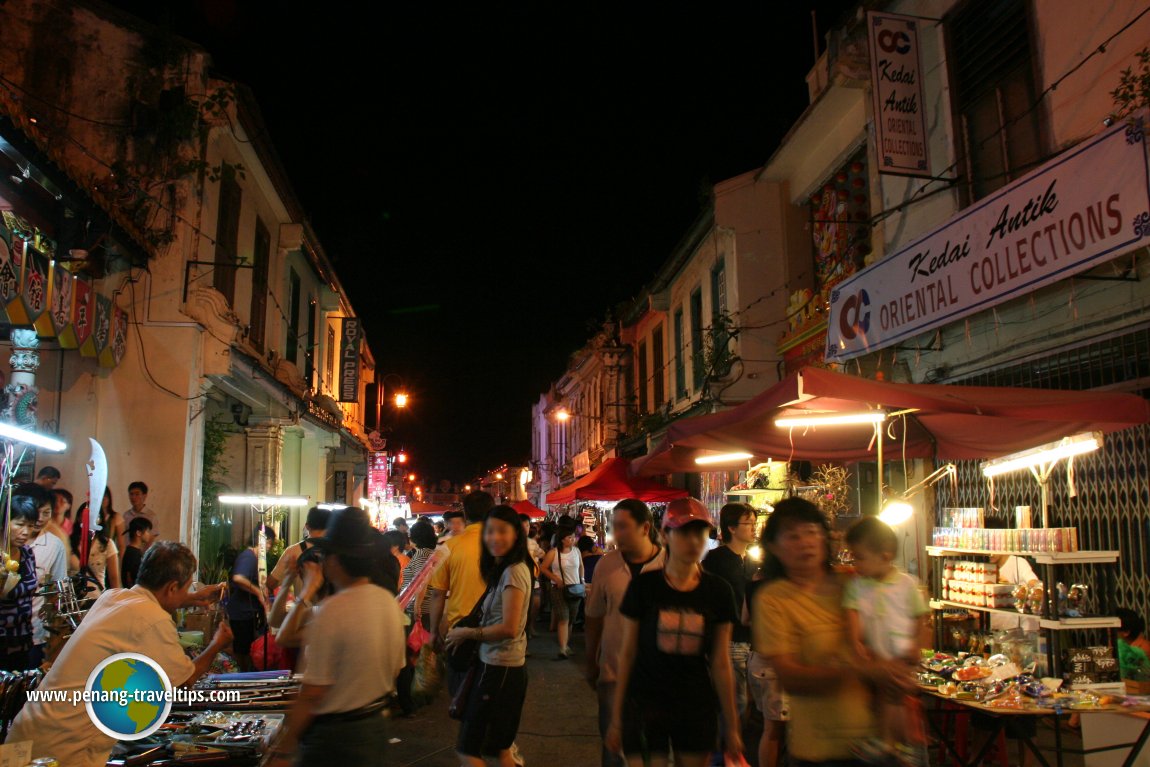 The Jonker Walk Night Market at Jalan Hang Jebat (1 May, 2009)
References
- UNESCO World Heritage Centre – Melaka and George Town, Historic Cities of the Straits of Malacca
- Melaka State Government – Historical and Heritage Information
- George Town World Heritage Incorporated – Historic Cities of the Straits of Malacca Resources
- Melaka World Heritage Office – Heritage Information
- National Archives of Malaysia – Historical Records of Malacca
- Perbadanan Muzium Melaka (PERZIM) – Malacca Museums and Heritage Information
- Department of National Heritage Malaysia – Conservation Information
- Cheng Hoon Teng Temple – History and Background
- National Heritage Department Malaysia – Heritage Building Documentation
- Melaka State Government – Heritage Conservation Information
- Tourism Malaysia – Jonker Walk and Malacca Heritage Information
- The Star Malaysia – Reports on Heritage Conservation and Jonker Walk Issues
- Cheng Hoon Teng Temple – Historical Background
- Department of National Heritage Malaysia – Kampung Kling Mosque Heritage Information
- PropertyGuru Malaysia – Heritage Property Market Information
- Malacca Bus Services and Public Transport Information
Page Details
This page was created on 17 July 2026. Hi, my name is Timothy and created it from my research, for my own entertainment, knowledge and to satisfy my curiosity. I am providing the information to you in good faith and hope it is useful. I try to get the details as accurate as possible. I also try to update the page whenever I stumble on new details. So this and all my other pages are perpetual work in progress. If you discover any error, please politely inform me, pointing out where the error lies, and I will correct it as soon as possible. Your helpfulness will keep this page accurate, relevant and helpful to those who need the information.Streets of Malacca Directory
Want to share your Malacca travel experiences or get tips from fellow travellers?
Join the Malacca Travel Tips Facebook GroupInformation for visiting Malacca
Here are some related articles to help you get to know Malacca better.Introduction to Malacca
Information on buying property or renting in Malacca
 Latest Pages & Updates
Buy Me A Coffee
If you enjoy the information I provide and want to support the work I do, please buy me a coffee! I appreciate it immensely, thank you so much!
