
Cameron Highlands Travel Guide
 Cameron Highlands Travel Guide (24 April 2004)
Also available: Panduan Melawat Cameron Highlands
Introduction to Cameron Highlands
Cameron Highlands is a hill station in the state of Pahang, Malaysia, renowned for its cool climate, tea plantations, strawberry farms, vegetable farms and scenic mountain landscapes. Located at an elevation of more than 1,000 metres above sea level, it provides a refreshing escape from the heat of the lowlands.
The highlands were developed during the British colonial period and were named after William Cameron, a British surveyor who mapped the area in 1885. Today, Cameron Highlands is one of Malaysia's most popular highland destinations and attracts visitors throughout the year.
The main settlements include Ringlet, Tanah Rata and Brinchang. Tanah Rata serves as the principal town and has the widest selection of accommodation, restaurants and other visitor facilities, while Brinchang is particularly associated with farms, markets and tourist attractions.
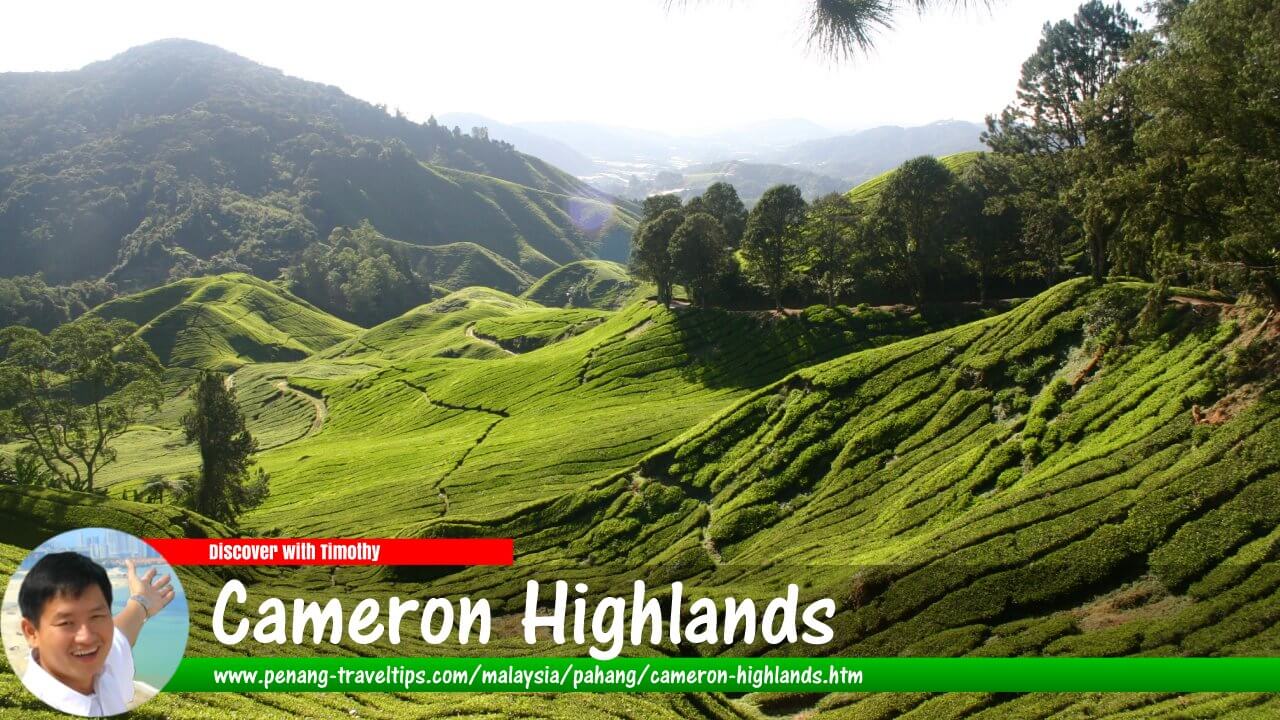
Cameron Highlands is best known for its tea-growing landscape. The cool temperatures and fertile mountain slopes are well suited to tea cultivation, and visitors can explore tea estates, enjoy freshly brewed tea and admire panoramic views across the plantations.
Agriculture is another important part of the Cameron Highlands experience. The area is a major producer of vegetables, flowers and strawberries, and many farms are open to visitors. Travellers can pick strawberries, visit flower gardens and see how crops are cultivated on the steep mountain slopes.
Beyond its farms and plantations, Cameron Highlands offers forests, waterfalls, hiking trails, gardens and other natural attractions. The combination of cool weather, mountain scenery, agricultural landscapes and colonial heritage makes it a distinctive destination within Malaysia.
Cameron Highlands is particularly popular with visitors from Kuala Lumpur, Penang and other parts of Malaysia seeking a cooler environment. It can be visited as a weekend getaway or explored over several days, with Tanah Rata and Brinchang serving as convenient bases for discovering the surrounding highlands.
History of Cameron Highlands
The history of Cameron Highlands began to take shape during the British colonial period. In 1885, British surveyor William Cameron explored and mapped the mountainous area while participating in a surveying expedition in the interior of Pahang. The highlands were subsequently named after him.
For several decades after Cameron's expedition, the area remained largely undeveloped because of its mountainous terrain and limited accessibility. Interest in developing it as a hill station grew in the early 20th century, when the cool climate was recognised as suitable for agriculture and as a retreat from the heat of the lowlands.
In the 1920s, the British began developing roads and other infrastructure to open up Cameron Highlands. The area was planned as a hill station, with land allocated for residential development, government facilities, farms and plantations. The cool environment also made it suitable for growing crops that were difficult to cultivate in the warmer lowlands.
Tea cultivation became one of the most important agricultural developments in Cameron Highlands. British planter J. A. Russell established the Boh Tea Estate in the 1920s, and tea production subsequently became closely associated with the identity and landscape of the highlands.
The development of vegetable farming was also significant. Farmers discovered that the cool climate was ideal for growing vegetables, strawberries and flowers, turning Cameron Highlands into an important agricultural region as well as a tourist destination.
After Malaya gained independence in 1957, Cameron Highlands continued to develop as both an agricultural centre and a holiday destination. Roads improved, more accommodation and visitor facilities were built, and increasing numbers of Malaysians began visiting the highlands for its cool climate and mountain scenery.
Today, Cameron Highlands retains traces of its colonial-era heritage while being firmly established as one of Malaysia's best-known highland destinations. Its tea estates, farms, old buildings and mountain landscapes reflect the different stages of its development from a remote highland area into an important agricultural and tourism centre.
Food in Cameron Highlands
Cameron Highlands has a distinctive food scene influenced by its cool climate, agricultural produce and multicultural population. Visitors can find a wide range of Malaysian, Chinese, Indian and Western dishes in Tanah Rata, Brinchang and the surrounding areas.
Freshly grown vegetables are among the highlights of eating in Cameron Highlands. Restaurants commonly serve vegetables such as cabbage, lettuce, broccoli, cauliflower and mushrooms, often prepared by stir-frying, steaming or cooking in soups. The freshness of the locally grown produce is one of the pleasures of dining in the highlands.
Strawberries are another local speciality. Fresh strawberries are sold at farms and markets and are also used in desserts, drinks, jams, cakes and other products. Visitors can also find locally produced honey, especially at shops and farms catering to tourists.
Tea is an essential part of the Cameron Highlands experience. Visitors can stop at tea plantations and tea shops to enjoy freshly brewed tea, often accompanied by cakes, scones or other light refreshments while taking in views of the surrounding plantations.
The highlands also have many restaurants serving steamboat, which is particularly enjoyable in the cool weather. Diners cook vegetables, meat, seafood, tofu and other ingredients in a pot of hot broth placed at the centre of the table.
For Muslim travellers, halal food is available in Cameron Highlands, particularly in Tanah Rata and Brinchang, where there are Malay and Indian Muslim restaurants. Nevertheless, visitors who require certified halal food should check the restaurant's current halal certification rather than relying solely on the type of cuisine served.
Visitors can also explore the local markets for fresh vegetables, strawberries, corn, flowers, tea and other agricultural products. These markets provide an opportunity to sample local produce and are popular places to buy edible souvenirs from Cameron Highlands.
Places to Visit in Cameron Highlands
Tea plantations are among the most iconic attractions in Cameron Highlands. Visitors can explore the tea-growing estates, learn about tea production and enjoy panoramic views of the neatly planted hillsides. The tea plantations are particularly attractive in the morning, when the mountain landscape is often cool and misty.
BOH Tea Centre at Sungai Palas is one of the best-known tea attractions in the highlands. Visitors can learn about the history and production of BOH tea, visit the tea shop and enjoy refreshments while overlooking the surrounding plantation.
Cameron Bharat Tea Valley near Tanah Rata is another popular place to experience the tea-growing landscape. Its tea shop and viewing areas provide opportunities to enjoy tea while taking in views of the plantation and surrounding hills.
Strawberry farms are another characteristic attraction of Cameron Highlands. Many farms allow visitors to see how strawberries are cultivated and, at selected farms, pick their own strawberries. Fresh strawberries and strawberry-based products are also widely sold throughout the highlands.
Keа Farm is an important agricultural area around Brinchang, with vegetable farms, flower nurseries and strawberry farms lining the mountain roads. It is a good place to see the agricultural side of Cameron Highlands and to buy locally grown produce.
Cameron Lavender Garden and other flower gardens showcase the variety of flowers that can be cultivated in the cool highland climate. These gardens are popular with visitors interested in photography and horticulture.
Mossy Forest, near the summit of Gunung Brinchang, is one of the most distinctive natural attractions in Cameron Highlands. The high-elevation forest is characterised by moss-covered trees, ferns and cool, misty conditions. Visitors should check current access arrangements and trail conditions before travelling there.
Gunung Brinchang is one of the highest accessible points in Cameron Highlands and offers mountain scenery and views over the surrounding area. Hiking opportunities are available in the highlands, ranging from relatively easy walks to more demanding forest trails.
Time Tunnel Museum in Brinchang presents collections and memorabilia relating to Cameron Highlands and Malaysia's past. It provides a different experience from the area's natural and agricultural attractions.
Tanah Rata is also worth exploring for its shops, restaurants, parks and access to nearby walking trails. Visitors can use the town as a base for exploring the surrounding attractions and return there for meals and accommodation.
Where to Stay in Cameron Highlands
Cameron Highlands has a wide range of accommodation, from budget guesthouses and homestays to comfortable hotels, resorts and apartments. The largest concentration of accommodation is found in Tanah Rata and Brinchang, making these two townships the most convenient bases for visitors.
Tanah Rata is generally the best choice for visitors who prefer a lively town environment. It has numerous hotels, guesthouses, restaurants, cafes, shops and other facilities, while also providing convenient access to walking trails and attractions in the surrounding area.
Brinchang is suitable for visitors who want to be closer to the farms, markets and attractions around Kea Farm. It has a good selection of hotels, apartments and holiday accommodation and is particularly popular with families and groups.
Ringlet, located farther south, has fewer accommodation options but provides a quieter setting. It can appeal to visitors who prefer to stay away from the busier tourist areas and is also convenient for exploring attractions in the southern part of Cameron Highlands.
Visitors travelling as a family or group may find apartments and holiday homes particularly practical because they can provide more living space and cooking facilities. Couples and solo travellers have a wider choice of hotels, guesthouses and smaller accommodation in Tanah Rata.
It is advisable to book accommodation in advance during weekends, school holidays and public holidays, when Cameron Highlands can become very busy. Visitors should also consider the location of their accommodation carefully, as traffic congestion can make journeys between the different parts of the highlands considerably longer during peak periods.
Practical Information for Visiting Cameron Highlands
Cameron Highlands can be visited throughout the year because of its relatively cool climate, although weather conditions can change quickly in the mountains. Temperatures are generally much lower than in the lowlands, making the highlands a comfortable destination for visitors seeking relief from Malaysia's tropical heat.
The dry season is generally more suitable for outdoor activities, sightseeing and hiking, although rain can occur at any time. During wet weather, mountain roads and jungle trails can become slippery, while heavy rain may affect visibility and travelling conditions.
Visitors should bring a light jacket or sweater, particularly for the evenings and early mornings. Comfortable walking shoes are useful for visiting farms, tea plantations and gardens, while proper trekking footwear is recommended for jungle trails.
Cameron Highlands can become very busy during weekends, school holidays and public holidays. Traffic congestion is particularly common around Tanah Rata, Brinchang, Kea Farm and the main access roads. Visitors who want to explore several attractions should allow extra time for travelling between them.
For hiking and jungle trails, it is advisable to start early in the day and check the weather conditions beforehand. Some trails can be challenging, and visitors should inform their accommodation or another responsible person of their planned route when undertaking longer hikes.
The highlands are well suited to a two- or three-day visit. A short trip can cover the major tea plantations, farms and markets, while a longer stay allows time for hiking, visiting the Mossy Forest and exploring the different townships at a more relaxed pace.
Cameron Highlands is also a good destination for families, couples and senior travellers, although some attractions involve steep slopes, uneven surfaces or walking. Visitors should choose activities according to their physical ability and allow sufficient time to rest between excursions.
For a first visit, a practical itinerary is to stay in Tanah Rata or Brinchang, explore the tea plantations and agricultural attractions during the day, and leave some time to enjoy the cool weather, local food and scenery without rushing from one attraction to another.
Map of Cameron Highlands
Main Towns in Cameron Highlands
Cameron Highlands comprise a number of towns and agricultural settlements. These are the main towns in the highlands.Sights in Cameron Highlands
- Bharat Tea Plantation (GPS: 4.45736, 101.36585)

- Cameron Highlands Butterfly Garden (GPS: 4.5076, 101.40751)

- Cameron Lavender Garden (GPS: 4.52687, 101.4266)

- Cameron Square (GPS: 4.50821, 101.40792)

- Convent Tanah Rata (GPS: 4.47078, 101.37411)

- Ee Feng Gu Bee Farm (GPS: 4.50893, 101.40857)

- Gunung Brinchang (GPS: 4.51777, 101.38286)
- Gunung Irau (GPS: 4.51696, 101.36209)

- Lakehouse Cameron Highlands (GPS: 4.43097, 101.38709)

- Lata Iskandar (GPS: 4.32544, 101.32432)

- Mossy Forest (GPS: 4.52386, 101.38099)

- Multicrops Central Market (GPS: 4.4949, 101.39305)

- Rose Valley (GPS: 4.51236, 101.42857)

- Sam Poh Temple (GPS: 4.48875, 101.39064)

- S'Corner Central Market (GPS: 4.50193, 101.40238)

- Sungei Palas Boh Tea Centre (GPS: 4.5161, 101.41608)

- The Smokehouse Hotel (GPS: 4.48406, 101.37868)

- Time Tunnel Museum (GPS: 4.49715, 101.39528)

- Unc Sam Farm (GPS: 4.49491, 101.39328)

Categories of sights in Cameron Highlands
- TOWNS in Cameron Highlands
- STREETS in Cameron Highlands
- Apartments in Cameron Highlands
- Banks in Cameron Highlands
- Bee Farms in Cameron Highlands
- Cemeteries in Cameron Highlands
- Chinese Temples in Cameron Highlands
- Churches in Cameron Highlands
- Clan Associations in Cameron Highlands
- Clinics in Cameron Highlands
- Commercial Properties in Cameron Highlands
- Flower & Vegetable Farms in Cameron Highlands
- Forest Parks in Cameron Highlands
- Government Buildings in Cameron Highlands
- Hawker Centres in Cameron Highlands
- Hindu Temples in Cameron Highlands
- Hotels in Cameron Highlands
- Housing Estates in Cameron Highlands
- Markets in Cameron Highlands
- Mini Markets in Cameron Highlands
- Mosques in Cameron Highlands
- Museums in Cameron Highlands
- Orang Asli Villages in Cameron Highlands
- Parks in Cameron Highlands
- Petrol Stations in Cameron Highlands
- Police Stations in Cameron Highlands
- Rest Houses in Cameron Highlands
- Restaurants in Cameron Highlands
- Rivers in Cameron Highlands
- Schools in Cameron Highlands
- Shops in Cameron Highlands
- Shopping Malls in Cameron Highlands
- Stationery Shops in Cameron Highlands
- Strawberry Farms in Cameron Highlands
- Supermarkets in Cameron Highlands
- Suraus in Cameron Highlands
- Tea Plantations in Cameron Highlands
- Tourist Attractions in Cameron Highlands
- Villages in Cameron Highlands
References
- Tourism Malaysia, Cameron Highlands.
- Tourism Malaysia, Cool Highlands: Cameron Highlands.
- Tourism Malaysia, Pahang Travel Guide.
- Tourism Malaysia, Mossy Forest Cameron Highlands.
- Tourism Malaysia, The Best of Cameron Highlands: A 3D2N Exploration of Sights and Senses.
Page Details
This page was created on 8 September 2026. Hi, my name is Timothy and created it from my research, for my own entertainment, knowledge and to satisfy my curiosity. I am providing the information to you in good faith and hope it is useful. I try to get the details as accurate as possible. I also try to update the page whenever I stumble on new details. So this and all my other pages are perpetual work in progress. If you discover any error, please politely inform me, pointing out where the error lies, and I will correct it as soon as possible. Your helpfulness will keep this page accurate, relevant and helpful to those who need the information.Buy Me A Coffee
If you enjoy the information I provide and want to support the work I do, please buy me a coffee! I appreciate it immensely, thank you so much!
