
Jerantut Travel Guide
 Jerantut Travel Guide (AI generated on 9 September 2026)
Also available: Panduan Melawat Jerantut
Introduction to Jerantut
Jerantut is a town in Pahang, Malaysia, best known as the main gateway to Taman Negara, one of the country's most important protected rainforest areas. The town serves as a service centre and transportation hub for visitors heading into the forests and river valleys of central Pahang.
Jerantut developed at an important location within the interior of Pahang, where roads and waterways provide access to surrounding rural communities and natural areas. The nearby Kuala Tembeling area, where the Tembeling and Jelai rivers meet to form the Pahang River, has long been an important river junction and route into the interior.
The town also has a connection with the East Coast Railway, commonly known as the Jungle Railway. Jerantut Railway Station is one of the stations on this historic railway route, providing an alternative way of reaching the town from other parts of Peninsular Malaysia.
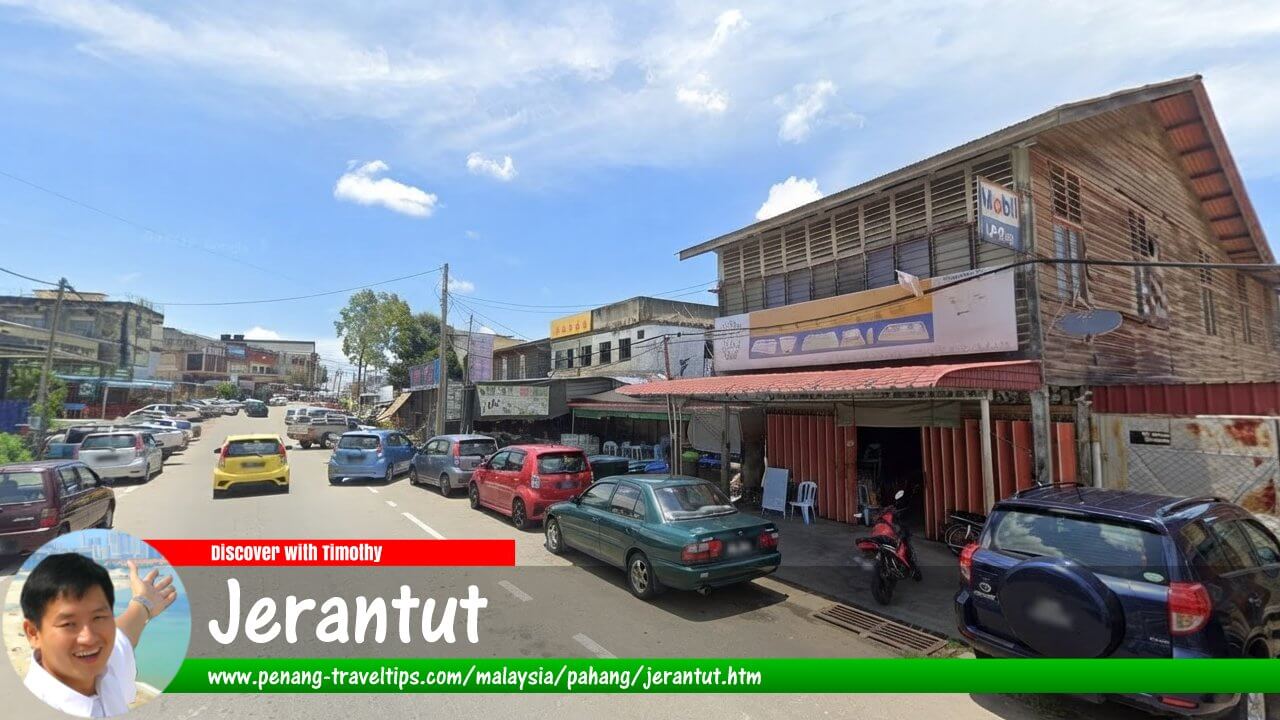
Although many travellers use Jerantut primarily as a stopping point on their way to Taman Negara, the town and its surrounding district have attractions of their own. The old town contains traditional shophouses and streets, while the surrounding countryside offers rivers, waterfalls, forests, limestone formations and rural villages.
Jerantut is also associated with the history of Mat Kilau, one of the Malay resistance leaders who fought against British rule in Pahang. His connection with the area is commemorated through historical sites and attractions in the district.
For nature enthusiasts, the wider Jerantut district provides access to a variety of outdoor activities. These include jungle trekking, river activities, waterfalls, caving and adventure sports, while areas such as Paya Gunung offer opportunities for more specialised outdoor pursuits.
Jerantut has a quieter and more practical atmosphere than Pahang's major tourist centres. Its importance lies largely in its strategic location between the settled areas of the state and the vast forests of the interior. For travellers heading to Taman Negara, it is both a useful gateway and a destination worth exploring in its own right.
History of Jerantut
The history of Jerantut is closely connected with the rivers, forests and settlements of the interior of Pahang. Its location in the central part of the state made the area an important route for movement between communities along the rivers and the surrounding forested districts.
Before the development of modern roads and railways, the Pahang River and its tributaries provided important routes for transportation. The nearby Kuala Tembeling area, where the Tembeling River meets the Jelai River, was particularly significant as a river junction leading towards the interior.
Jerantut gradually developed as a settlement and administrative centre as the interior of Pahang became more closely connected with the rest of the state. Agriculture, forestry, river transport and small-scale trading contributed to the development of the local economy.
The district also has an important place in the history of resistance to British rule in Pahang. Mat Kilau, a prominent Malay resistance leader, was associated with the Jerantut area. His struggle, together with that of other local leaders, forms an important part of the historical heritage of Pahang.
The construction of the East Coast Railway brought another major change to Jerantut. The railway, later known as part of the Jungle Railway, connected the interior of Pahang with other parts of Peninsular Malaysia and provided a more efficient means of transporting passengers and goods.
During the Japanese occupation of Malaya from 1941 to 1945, Jerantut and the surrounding district came under Japanese administration. The occupation disrupted normal economic and administrative activities before British rule was restored following the end of the Second World War.
In the decades after the war, Jerantut continued to develop as a district centre. Roads and other infrastructure improved, while agriculture and forestry remained important to the local economy. The growing popularity of Taman Negara also increased Jerantut's importance as a gateway for visitors travelling into the rainforest.
Today, Jerantut combines the character of a small Pahang town with its role as a gateway to some of the state's most important natural areas. Its railway heritage, river connections and association with the history of Pahang's resistance movement provide additional reasons to explore the town rather than simply passing through on the way to Taman Negara.
Getting to Jerantut
Jerantut can be reached by road and by train, making it a convenient transport point in the interior of Pahang. Its location also makes it an important starting point for travellers heading towards Taman Negara and other attractions in the surrounding district.
By car, Jerantut can be reached from Kuala Lumpur through the road network crossing central Pahang. The journey takes several hours, depending on the route and traffic conditions. From Kuantan, Jerantut can also be reached by road. Travelling by car is particularly convenient for visitors who plan to explore attractions outside the town or travel onwards to Taman Negara.
By train, Jerantut is served by Jerantut Railway Station on the East Coast Railway, operated by KTM. The railway provides connections with Gemas, Kuala Lumpur and other towns along the East Coast route. Travelling by train is a scenic way to reach Jerantut, particularly for visitors interested in experiencing the historic Jungle Railway.
By bus, express and local bus services connect Jerantut with other towns and cities in Pahang and neighbouring states. Bus services are useful for travellers arriving from Kuala Lumpur and other major centres, although schedules and frequencies may vary. It is advisable to check the latest timetable before travelling.
By air, Jerantut does not have a commercial airport. Visitors arriving by air need to continue their journey by road or rail from another city. Sultan Haji Ahmad Shah Airport in Kuantan is one possible gateway, although Jerantut is some distance inland from Kuantan.
Getting to Taman Negara from Jerantut generally involves continuing by road towards Kuala Tembeling and then travelling by boat along the Tembeling River, depending on the chosen route and current transport arrangements. Visitors should make advance arrangements with their accommodation or tour operator, particularly when travelling during busy periods.
Getting around Jerantut is relatively straightforward within the town, where shops, restaurants and basic facilities are concentrated. However, a private car or pre-arranged transport is more convenient for visiting attractions outside the town and for travelling to river jetties, rural areas and nature attractions.
For visitors travelling without a car, Jerantut can serve as a practical base before continuing into the surrounding countryside or Taman Negara. Those with their own vehicle have greater flexibility to combine Jerantut with other destinations in central Pahang.
Food in Jerantut
Food in Jerantut reflects the culinary traditions of Pahang and the multicultural character of a small inland town. Visitors can find Malay dishes, Chinese and Indian food, rice and noodle dishes, local snacks and everyday meals at restaurants, coffee shops, food stalls and markets around the town.
Masakan Melayu Pahang is worth exploring while visiting Jerantut. Traditional dishes often make use of freshwater fish, coconut milk, herbs and spices, reflecting the town's location near the rivers and forested interior of Pahang.
Ikan patin and other freshwater fish are associated with Pahang cuisine and may be prepared in a variety of ways. One preparation to look out for is fish cooked with tempoyak, a fermented durian paste that gives the dish a distinctive sour and fruity flavour. Visitors who enjoy strong local flavours may wish to try this Pahang speciality.
Nasi kerabu, nasi lemak, nasi dagang and various noodle dishes can also be found in Jerantut. These are commonly eaten for breakfast or lunch and may be served with chicken, fish, beef, vegetables, sambal and other side dishes.
Visitors should also look for traditional Malay kuih and local snacks at morning markets and food stalls. These may include sweet and savoury delicacies made from rice flour, glutinous rice, coconut and palm sugar.
Kedai kopi tradisional and simple coffee shops are another part of the town's everyday food culture. They provide coffee, tea, toast, noodles and uncomplicated rice dishes and are useful places to experience the daily rhythm of Jerantut. Chinese and Indian eateries add further variety to the local food scene.
For Muslim visitors, makanan halal is generally easy to find, particularly at Malay restaurants and food stalls. Visitors who require officially certified halal establishments should check the halal certification status of individual premises.
As Jerantut is a relatively small town, its food scene is more modest than that of larger cities such as Kuantan or Kuala Lumpur. Nevertheless, trying local Pahang dishes, visiting a morning market or having a meal at a traditional coffee shop can be a rewarding part of a visit to this gateway town.
Places to Visit in Jerantut
Jerantut is best known as the gateway to Taman Negara, but the town and its surrounding district offer a variety of historical, cultural and nature attractions. Visitors can combine a short stay in the town with excursions into the surrounding forests, rivers and rural areas.
Taman Negara is the main attraction associated with Jerantut. The national park protects a vast area of ancient tropical rainforest and offers activities such as jungle trekking, wildlife watching, river trips, fishing, caving and mountain climbing. Mount Tahan, the highest mountain in Peninsular Malaysia, is located within the park. From Jerantut, visitors can continue towards Kuala Tembeling or travel by road to Kuala Tahan, depending on their chosen route into the park.
Kuala Tembeling is an important river junction near Jerantut, where the Tembeling and Jelai rivers meet. The area is historically significant as a river transportation route into the interior and is also associated with journeys by boat towards Taman Negara. The surrounding rivers provide opportunities for boating, fishing and other recreational activities.
Mat Kilau Gallery presents the history of local Malay resistance leaders and the heritage of the Jerantut district. Exhibits include photographs, historical objects, weapons and other displays relating to figures such as Mat Kilau, Tok Gajah and Pawang Noh. It is a useful stop for visitors interested in the history of Pahang.
Makam Mat Kilau at Pulau Tawar is associated with Mat Kilau, one of the best-known Malay resistance leaders in Pahang. The site provides another opportunity to learn about the history of the local resistance movement and its place in the history of the state.
Paya Gunung Extreme Park offers outdoor adventure activities on a limestone outcrop east of Jerantut. Its attractions include a via ferrata, rappelling and abseiling. The site is particularly suitable for visitors looking for an active outdoor experience rather than conventional sightseeing.
Bukit Buloh and Bukit Seladang offer hiking opportunities in the hills northeast of Jerantut. The area is known for its unusual red-barked forest and provides panoramic views from the higher elevations. Visitors undertaking these hikes should make appropriate preparations and check local conditions before setting out.
Lata Meraung Forest Eco Park is one of the natural attractions in the Jerantut district, with waterfalls, rivers and forest surroundings. Other rural areas such as Ulu Cheka and Damak also provide opportunities to enjoy rivers, waterfalls and the natural environment.
Gua Kota Gelanggi is a limestone cave complex southeast of Jerantut associated with local legends and natural formations. Some parts of the cave system are accessible by vehicle, while other sections are more remote and may require a guide. The surrounding limestone landscape adds to its appeal as an excursion from the town.
Visitors can also explore the old town of Jerantut, with its traditional shophouses, local market and everyday commercial activity. The town's heritage is less monumental than that of some older Pahang towns, but walking through its streets provides a glimpse of local life and its role as a service centre for the surrounding district.
Jerantut is particularly rewarding for travellers interested in nature, adventure, history and rural Pahang. While many visitors pass through the town on their way to Taman Negara, allowing extra time to explore the surrounding district reveals a much wider range of attractions.
Where to Stay in Jerantut
Jerantut has a modest selection of accommodation, including town hotels, guesthouses, budget lodging and homestays. These options are suitable for travellers using Jerantut as a stopover before continuing to Taman Negara or exploring the surrounding district.
Jerantut town centre is the most convenient area to stay for visitors who want easy access to shops, restaurants and everyday facilities. Accommodation in the town is also practical for travellers arriving by public transport and those without their own vehicle.
Near Jerantut Railway Station may be considered by visitors travelling by train. Staying in or near the town makes it easier to continue the journey by rail, although visitors should consider the distance to restaurants and other facilities when choosing their accommodation.
Hotels and guesthouses in Jerantut generally provide simple and practical accommodation rather than resort-style facilities. They are suitable for travellers who intend to spend most of their time exploring the surrounding attractions or using the town as a base for further travel.
Homestays provide an alternative for visitors who prefer a more local experience. Some are located outside the town centre, where guests can enjoy a quieter rural environment. They may be particularly suitable for families and visitors travelling by car.
For visitors planning to explore Taman Negara, accommodation can also be considered in Kuala Tahan. Staying in Kuala Tahan provides closer access to the national park and its activities, while staying in Jerantut is more suitable for travellers who prefer the facilities of a town or are making their way through the interior of Pahang.
Visitors intending to explore the natural attractions around Jerantut should consider their transport arrangements when choosing accommodation. Staying in the town centre makes it easier to obtain food and everyday necessities, while accommodation in rural areas may offer a quieter setting but usually requires private transport.
It is advisable to book accommodation in advance during school holidays, weekends and periods when visitor numbers to Taman Negara are high. Travellers planning activities in forested or remote areas should also arrange their transport and activities before choosing where to stay.
For a short visit focused on Jerantut and its railway heritage, staying in the town centre is the most practical choice. If the main purpose of the trip is to explore Taman Negara, staying closer to the national park can reduce travelling time.
Practical Information for Visiting Jerantut
Best time to visit: Jerantut can be visited throughout the year. However, visitors planning activities in the forest or at Taman Negara should pay attention to weather conditions. Heavy rain can affect outdoor activities, trail conditions and river journeys. Check the weather forecast before setting out.
Climate: Jerantut has a hot and humid tropical climate. Daytime temperatures are generally high and rain can occur throughout the year. Lightweight clothing, comfortable footwear, sun protection and an umbrella or raincoat are useful.
How long to stay: One or two days is sufficient to explore Jerantut town and some nearby attractions. Visitors whose main purpose is to visit Taman Negara or explore the natural areas of the district should allow several days for a more relaxed trip.
Getting around: The town centre can be explored on foot, but having a car is more convenient for visiting attractions outside Jerantut. Visitors travelling to Taman Negara may need to arrange road transport and, depending on the route, a boat journey to reach their destination.
Money: The currency used is the Malaysian ringgit (RM). Cards may be accepted at some hotels and businesses, but cash remains useful for small shops, food stalls, markets and rural areas. Carry sufficient cash when travelling away from the town centre.
For Muslim visitors: Jerantut has a substantial Malay-Muslim community, and halal food is generally easy to find at Malay restaurants and food stalls. Mosques are also found in the town and surrounding areas. Visitors who require officially certified halal premises should check the certification status before choosing a restaurant.
Safety: Normal precautions are sufficient when staying in town. For activities in forests, rivers, caves or hilly areas, follow the instructions of local guides or activity operators, use appropriate equipment and check weather conditions. Avoid entering rivers or forest areas when conditions are unsafe.
Language: Bahasa Melayu is the main language spoken in Jerantut. English may be understood at some hotels, tourism-related establishments and businesses, but Malay is more useful when communicating with local residents.
What to bring: Comfortable footwear is important for exploring the town and natural attractions. Visitors entering forested areas should also bring insect repellent, sufficient drinking water, sun protection, suitable clothing and a waterproof bag to protect belongings from rain or splashing water.
Jerantut is best regarded as a gateway to the natural attractions of Pahang, particularly Taman Negara, but the town and its surrounding district also have their own history and attractions. With good transport planning, visitors can combine local heritage, railway experiences, Pahang history and outdoor adventures in a single trip.
References
- Tourism Pahang, Jerantut. https://www.pahangtourism.org.my/
- Department of Wildlife and National Parks Peninsular Malaysia (PERHILITAN), Taman Negara. https://www.wildlife.gov.my/
- Keretapi Tanah Melayu Berhad (KTM), Train Services. https://www.ktmb.com.my/
- Department of Museums Malaysia, Museum Information. https://www.jmm.gov.my/
Page Details
This page was created on 9 September 2026. Hi, my name is Timothy and created it from my research, for my own entertainment, knowledge and to satisfy my curiosity. I am providing the information to you in good faith and hope it is useful. I try to get the details as accurate as possible. I also try to update the page whenever I stumble on new details. So this and all my other pages are perpetual work in progress. If you discover any error, please politely inform me, pointing out where the error lies, and I will correct it as soon as possible. Your helpfulness will keep this page accurate, relevant and helpful to those who need the information.Buy Me A Coffee
If you enjoy the information I provide and want to support the work I do, please buy me a coffee! I appreciate it immensely, thank you so much!
