
Kuala Lipis Travel Guide
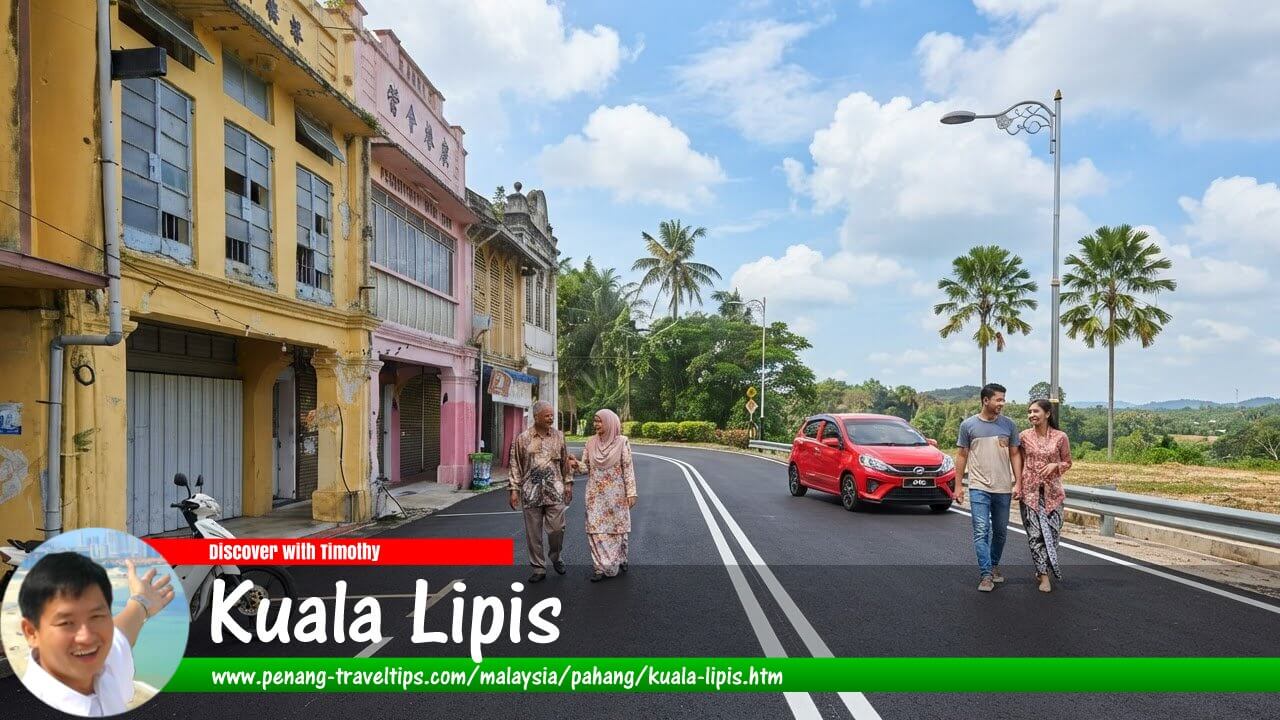 Kuala Lipis Travel Guide (AI generated on 9 September 2026)
Also available: Panduan Melawat Kuala Lipis
Introduction to Kuala Lipis
Kuala Lipis is a historic town in Pahang, Malaysia, situated at the confluence of the Jelai River and Lipis River. The town has a distinctive heritage character and is closely associated with the early development of Pahang's administration, mining and railway network.
Kuala Lipis served as the capital of Pahang during the British colonial period before the state administrative centre was moved to Kuantan in 1955. Many buildings from this period remain in and around the town, giving Kuala Lipis an architectural character that is quite different from the newer urban centres of Pahang.
The arrival of the railway played an important role in the development of Kuala Lipis. The town became an important stop on the railway connecting the interior of Pahang with Kuala Lumpur and the east coast. The historic railway station remains one of its most recognisable landmarks.
Visitors can explore Kuala Lipis through its collection of colonial-era buildings, government offices, schools, places of worship and traditional shophouses. The town is compact enough to explore at a leisurely pace, making it particularly appealing to travellers interested in history and heritage.
Kuala Lipis is also surrounded by the forested hills and rural landscapes of central Pahang. Its location makes it a useful base for exploring the natural environment and traditional villages of the surrounding district.
The town has a quieter atmosphere than Kuantan or Kuala Lumpur, and it receives fewer tourists than some of Pahang's better-known destinations. This makes Kuala Lipis suitable for travellers looking for a more relaxed experience away from the major tourist centres.
For visitors interested in the history of Pahang, Kuala Lipis offers an opportunity to see how a former state capital developed during the colonial era while retaining its connection with the rivers, forests and communities of the interior.
History of Kuala Lipis
The history of Kuala Lipis is closely connected with the development of the interior of Pahang. Its location at the confluence of the Jelai River and Lipis River made it a natural meeting point and route for movement between settlements in the interior and other parts of the state.
The area became increasingly important in the 19th century following the discovery and exploitation of gold and other mineral resources in the Lipis district. The growth of mining attracted traders and settlers and helped Kuala Lipis develop from a small riverside settlement into an important commercial centre.
British involvement in Pahang during the late 19th century brought further changes to Kuala Lipis. The town was selected as the administrative capital of Pahang, and government offices and other public buildings were established there. Kuala Lipis subsequently became an important centre of colonial administration in the state.
The construction of the railway further strengthened Kuala Lipis's importance. The railway connected the town with Kuala Lumpur and other parts of the Malay Peninsula, providing a more efficient means of transporting people and goods. Kuala Lipis became an important railway town in the interior of Pahang.
During the first half of the 20th century, Kuala Lipis developed with schools, government buildings, commercial premises, places of worship and residential areas. A number of buildings from this period have survived, contributing to the town's distinctive colonial and heritage character.
During the Japanese occupation of Malaya from 1941 to 1945, Kuala Lipis, like other towns in Pahang, came under Japanese administration. The occupation disrupted the town's economy and administration before British rule was restored after the end of the Second World War.
Kuala Lipis remained the capital of Pahang until 1955, when the state administrative centre was moved to Kuantan. The move reflected the growing importance of Kuantan as a coastal administrative and commercial centre, while Kuala Lipis gradually assumed a quieter role as a district town.
Today, Kuala Lipis retains many reminders of its former importance. Its railway station, colonial-era buildings, historic streets and riverside setting provide a glimpse into the development of Pahang during the late 19th and early 20th centuries. The town's history is an important part of Pahang's transition from a collection of river settlements and mining communities into a modern state.
Getting to Kuala Lipis
Kuala Lipis can be reached by road and by train, making it one of the more accessible historic towns in the interior of Pahang. Its railway connection is particularly useful for travellers coming from Kuala Lumpur and other towns along the East Coast railway line.
By car, Kuala Lipis can be reached from Kuala Lumpur through the road network crossing the central part of Peninsular Malaysia. The journey takes several hours, depending on the route and traffic conditions. From Kuantan, the journey also takes several hours by road. A car is useful for visitors who intend to explore attractions and rural areas outside the town centre.
By train, Kuala Lipis is served by Kuala Lipis railway station on the East Coast railway line operated by KTM. Train services connect the town with Gemas, Kuala Lumpur and other stations along the East Coast route, as well as destinations further north and east depending on the service. Travelling by train is a convenient way to experience the interior of Peninsular Malaysia.
By bus, long-distance and local bus services provide connections between Kuala Lipis and other towns in Pahang and neighbouring states. Services and schedules can vary, so visitors should check the current timetable before travelling.
By air, Kuala Lipis does not have a commercial airport. Travellers arriving by air generally need to continue their journey by road or rail from a larger town or city. Sultan Haji Ahmad Shah Airport in Kuantan is one possible gateway, although it is a considerable distance from Kuala Lipis.
Getting around Kuala Lipis is relatively easy because the historic town centre is compact. Some heritage buildings and attractions can be explored on foot. For destinations outside the centre, however, having a car or arranging a taxi or e-hailing service is more convenient.
Visitors travelling by train may find Kuala Lipis particularly suitable for a short heritage visit. Those arriving by car have greater flexibility to combine the town with nearby villages, forests and other attractions in the wider Lipis district.
Food in Kuala Lipis
Food in Kuala Lipis reflects the culinary traditions of Pahang and the multicultural character of a historic town. Visitors can find traditional Malay dishes, Chinese and Indian food, noodles, rice dishes, local snacks and everyday meals at restaurants, coffee shops, food stalls and markets around the town.
Masakan Melayu Pahang is worth exploring while visiting Kuala Lipis. Local dishes often make use of fish, freshwater ingredients, coconut milk, herbs and spices, reflecting the town's location near the rivers and forested interior of Pahang.
Ikan patin and other freshwater fish are commonly associated with Pahang cuisine. They may be prepared in different ways, including with tempoyak, a fermented durian paste that gives dishes a distinctive sour and fruity flavour. Visitors who enjoy strong local flavours should look out for traditional preparations of freshwater fish.
Nasi kerabu, nasi lemak, nasi dagang and various noodle dishes are also available in Kuala Lipis. These are commonly eaten for breakfast or lunch and can be accompanied by chicken, fish, beef, vegetables, sambal and other side dishes.
Visitors should also look for traditional Malay kuih and local snacks sold at morning markets and food stalls. These may include sweet and savoury delicacies made from rice flour, glutinous rice, coconut and palm sugar.
The town's coffee shops are another part of its food culture. Traditional kopitiams serve coffee, tea, toast, noodles and simple rice dishes and provide a glimpse into the everyday life of Kuala Lipis. Chinese and Indian eateries also contribute to the town's diverse food scene.
For Muslim visitors, halal food is generally easy to find, particularly at Malay restaurants and food stalls. Visitors who require officially certified halal establishments should check the halal certification status of individual premises.
Because Kuala Lipis is a relatively small town, its food scene is more modest than that of larger cities such as Kuantan or Kuala Lumpur. Nevertheless, exploring local restaurants, markets and traditional coffee shops is a useful way to experience the everyday culture of this historic Pahang town.
Places to Visit in Kuala Lipis
Kuala Lipis is best explored for its historic buildings, railway heritage, colonial-era architecture and riverside setting. Many of its attractions are concentrated around the old town, making it possible to explore the historic centre at a leisurely pace.
Kuala Lipis Railway Station is one of the town's most recognisable landmarks. The station reflects Kuala Lipis's important role in the development of the railway network in the interior of Peninsular Malaysia. Travellers arriving by train can begin exploring the town from this historic transport hub.
Old Kuala Lipis contains a collection of colonial-era buildings, traditional shophouses and former government premises. Walking through the older streets provides an opportunity to appreciate the architecture and layout of a town that once served as the capital of Pahang.
Clifford School is one of the historic educational institutions associated with Kuala Lipis. Established during the colonial period, the school reflects the town's former importance as an administrative centre and place of education in Pahang.
Former Pahang State Secretariat Building and other surviving colonial government buildings are reminders of the period when Kuala Lipis served as the state capital. Some buildings continue to serve public functions, while others are valued for their historical and architectural significance.
District Museum of Kuala Lipis provides an opportunity to learn more about the history and development of the Lipis district. Museum collections and exhibits help visitors understand the area's connections with mining, administration, transportation and local communities.
Jelai River is an important geographical feature of Kuala Lipis. The river joins the Lipis River at the town and historically provided a means of transportation and communication. The riverside area offers a quieter setting and helps visitors appreciate the geographical reasons for the town's development.
Warisan Kuala Lipis can also be experienced by walking through the historic streets and observing the town's old buildings, places of worship, shophouses and other surviving structures. Rather than being concentrated in a single attraction, much of Kuala Lipis's heritage is found throughout the old town.
For visitors interested in nature, the wider Lipis district offers forested landscapes, rivers and rural villages. These areas can be combined with a visit to the historic town, although travelling beyond the town centre generally requires private transport or advance arrangements.
Kuala Lipis is particularly rewarding for travellers interested in history, architecture and railway heritage. Its attractions are relatively modest in scale, but together they tell the story of a former Pahang capital and an important town in the development of the state's interior.
Where to Stay in Kuala Lipis
Kuala Lipis has a modest selection of accommodation, reflecting its status as a small district town. Visitors can choose from hotels, guesthouses, budget accommodation and homestays, while a wider range of hotels can be found in larger towns elsewhere in Pahang.
Town centre is the most convenient area to stay for visitors interested in the town's historic attractions. Staying near the old town provides easy access to heritage buildings, restaurants, shops and other facilities. It is also suitable for visitors who arrive by train and want to explore the centre on foot.
Near Kuala Lipis Railway Station is another practical choice, particularly for travellers using the East Coast railway service. Staying within or near the town centre makes it easier to combine a railway journey with a short heritage visit.
Hotels and guesthouses in Kuala Lipis generally cater to visitors looking for simple and practical accommodation rather than resort-style facilities. They are suitable for travellers who intend to spend most of their time exploring the town and surrounding district.
Homestays offer an alternative for visitors who prefer a more local experience. Some are located outside the town centre, where guests can enjoy the quieter rural surroundings of the Lipis district. They may be particularly suitable for families or visitors travelling by car.
Visitors planning to explore the forested and rural areas around Kuala Lipis should consider their transport arrangements when choosing accommodation. Staying in the town centre is convenient for access to shops and restaurants, while accommodation farther away may provide a quieter setting but require private transport.
Because Kuala Lipis is a relatively small destination, it is advisable to check accommodation availability before travelling, particularly during weekends, public holidays and local events. Facilities and services can vary considerably between properties.
For a short visit focused on Kuala Lipis's railway and colonial heritage, staying in the town itself is the most convenient option. Travellers undertaking a longer journey through central Pahang can also use Kuala Lipis as an overnight stop before continuing to other destinations in the state.
Practical Information for Visiting Kuala Lipis
Best time to visit: Kuala Lipis can be visited throughout the year. The east coast of Peninsular Malaysia experiences the northeast monsoon from roughly November to February, when rainfall can be heavier. Visitors planning outdoor activities should check the weather forecast before travelling.
Climate: Kuala Lipis has a hot and humid tropical climate. Rain can occur throughout the year, while temperatures are generally warm during the day. Lightweight clothing, comfortable walking shoes, sunscreen and an umbrella or raincoat are recommended.
How long to stay: One or two days is generally sufficient to explore the historic town, railway station, colonial-era buildings, museums and riverside areas. Visitors interested in exploring the wider Lipis district and its natural surroundings may wish to stay longer.
Getting around: The historic centre of Kuala Lipis is compact and can be explored partly on foot. A car is more convenient for visiting attractions outside the town centre and exploring the surrounding villages and countryside. E-hailing and taxi services may be available, but visitors should not rely on them as heavily as they would in larger Malaysian cities.
Money: The currency used is the Malaysian ringgit (RM). Cards are accepted at some hotels and larger businesses, but cash is useful for smaller shops, food stalls and local markets. Visitors should carry sufficient cash when travelling outside the town centre.
For Muslim visitors: Kuala Lipis has a substantial Malay-Muslim community, and halal food is generally available at Malay restaurants and food stalls. Mosques are also found in the town and surrounding communities. Visitors requiring officially certified halal food should check the certification status of individual establishments.
Safety: Kuala Lipis is generally a quiet town and normal travel precautions are sufficient. Take particular care when travelling in rural and forested areas, especially during heavy rain, and avoid approaching rivers or other waterways when conditions are unsafe.
Language: Bahasa Melayu is the main language used in Kuala Lipis. English is understood in some hotels and tourist-related establishments, while Malay is more useful when communicating with local businesses and residents.
What to bring: Comfortable walking shoes are useful for exploring the historic town. Visitors venturing into rural or forested areas should also bring insect repellent, sufficient drinking water, sun protection and suitable clothing.
Kuala Lipis is best appreciated as a relaxed heritage destination rather than a place for a packed sightseeing schedule. Its historic railway station, colonial buildings, old town and riverside setting provide a glimpse into the period when Kuala Lipis was an important administrative and commercial centre of Pahang.
References
- Tourism Pahang, Kuala Lipis. https://www.pahangtourism.org.my/
- Tourism Pahang, History of Pahang. https://www.pahangtourism.org.my/
- Keretapi Tanah Melayu Berhad (KTM), Train Services. https://www.ktmb.com.my/
- Department of Museums Malaysia, Museum Information. https://www.jmm.gov.my/
Page Details
This page was created on 9 September 2026. Hi, my name is Timothy and created it from my research, for my own entertainment, knowledge and to satisfy my curiosity. I am providing the information to you in good faith and hope it is useful. I try to get the details as accurate as possible. I also try to update the page whenever I stumble on new details. So this and all my other pages are perpetual work in progress. If you discover any error, please politely inform me, pointing out where the error lies, and I will correct it as soon as possible. Your helpfulness will keep this page accurate, relevant and helpful to those who need the information.Buy Me A Coffee
If you enjoy the information I provide and want to support the work I do, please buy me a coffee! I appreciate it immensely, thank you so much!
