
Raub Travel Guide
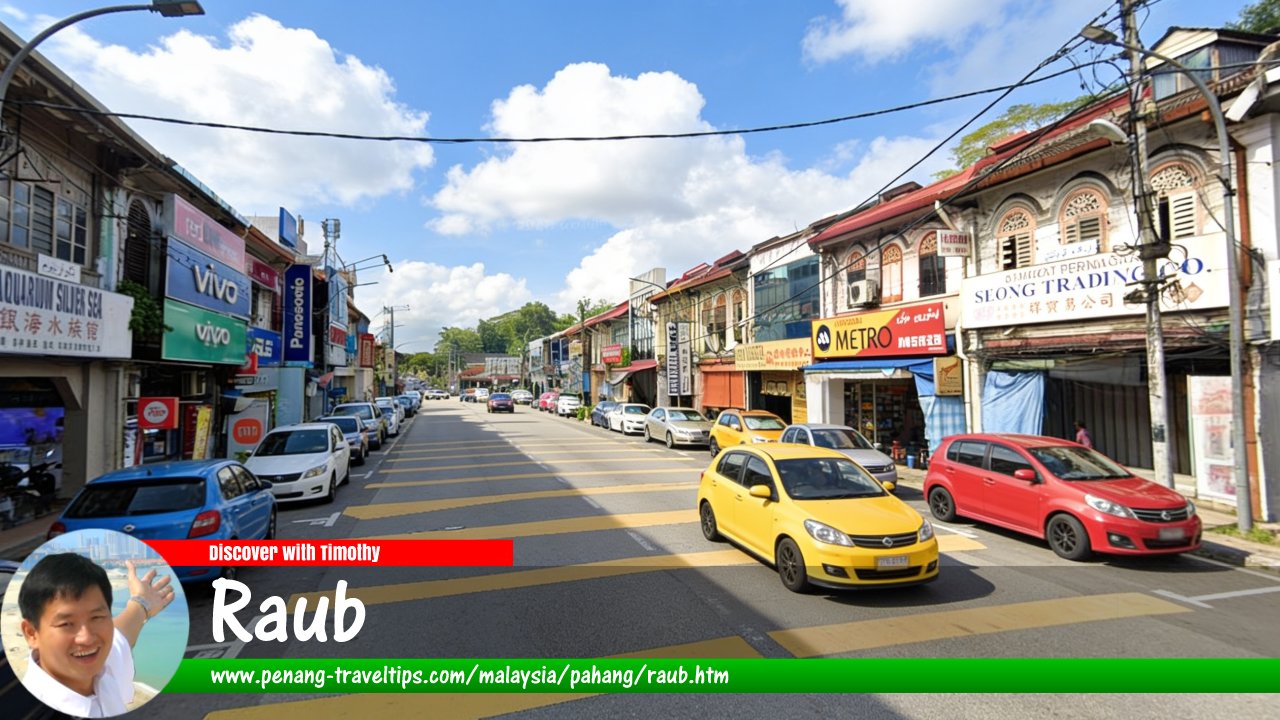 Raub Travel Guide (AI generated on 10 September 2026)
Also available: Panduan Melawat Raub
Raub is a historic town and district in western Pahang, Malaysia, best known for its gold-mining heritage, tropical landscapes and proximity to some of the state's most attractive natural destinations. Located between the mountain ranges of the interior, Raub combines the character of a small Malaysian town with access to waterfalls, rivers, forests, agricultural areas and the highland resort of Fraser's Hill.1
Quick Facts
- Location: Western Pahang, Peninsular Malaysia
- District: Raub District, Pahang
- Town: Raub
- Known for: Gold-mining history, durians, waterfalls, rainforest and Fraser's Hill
- Historic industry: Gold mining, including the Raub Australian Gold Mine
- Major natural attractions: Fraser's Hill, Jeram Besu, Lata Jarum, Lata Lembik, Pulau Chekas and Jeram Bangkin
- Agro-tourism: Raub durian orchards and Kacang Sempalit
- Main access: Road from Kuala Lumpur and Bentong, with onward connections towards Kuala Lipis and other parts of Pahang
- Best suited to: Road trips, nature trips, food trips, durian enthusiasts and visitors interested in local history
About Raub
Raub is one of the older settlements in Pahang and serves as the administrative centre of Raub District. Although the town itself is relatively small, the surrounding district is extensive and encompasses a varied landscape of hills, forests, rivers, agricultural land and rural settlements. The district also includes Fraser's Hill, one of Malaysia's best-known highland retreats.2
For travellers, Raub is particularly interesting because it provides a different experience from the larger tourist centres of Pahang. It is not primarily a resort town. Instead, it is a working district town where the attractions are spread across the surrounding countryside. A visit can therefore combine the old town centre and its mining history with a drive through villages and plantations, a meal at a local restaurant, a visit to a durian orchard or an excursion to a waterfall or forest recreation area.
Raub is also a useful base for exploring western Pahang. From the town, roads lead towards Bentong and Kuala Lumpur to the southwest, Kuala Lipis and the interior of Pahang to the northeast, and Fraser's Hill into the mountains. This position makes Raub particularly suitable as a stop on a road trip through the western and central parts of the state.
Geography and Landscape
Raub lies in the hilly interior of western Pahang, within a landscape strongly influenced by the mountain systems of Peninsular Malaysia. The Titiwangsa Range forms the principal mountain backbone of the peninsula, while the broader Raub district contains extensive forested hills and mountainous terrain.3
The physical character of the district changes considerably from place to place. Around Raub town, the landscape consists of relatively settled valleys and low hills, with roads, villages, orchards and agricultural land. Further away from the town, the terrain becomes increasingly rugged and forested. Rivers and streams descending from the surrounding hills have produced numerous rapids, pools and waterfalls, several of which have become recreational destinations.
The mountainous character of the district is especially apparent around Fraser's Hill, which stands at approximately 1,500 metres above sea level. The highland is considerably cooler than Raub town and has a different vegetation and climate, making it an attractive contrast to the warm lowlands.4
Raub's landscape is also closely associated with agriculture. Fruit cultivation, particularly durian, forms an important part of the rural economy and has increasingly become part of the visitor experience. The district administration lists both the Raub Durian Orchard and Kacang Sempalit among its agro-tourism destinations.5
History of Raub
Early settlement and the origin of the name
According to an oral tradition recorded by the Raub District Council, the area was opened in the 18th century. The story tells of a father and his two sons who travelled through the forest and eventually stopped beside a stream where water had been obstructed by a natural dam. They cleared the area, built a hut and began collecting forest products such as rattan, damar, rubber and jelutung.6
The same tradition associates the name Raub with the Malay word meraup, meaning to scoop or gather with the hands. According to the story, the men scooped sand from the stream and repeatedly found gold in it. The place consequently became known as Raub. The district council notes that the present spelling differs from the Malay root word raup, but that local pronunciation may have contributed to the spelling Raub.7
This account should be regarded as an oral tradition rather than a definitive explanation of the town's name. Nevertheless, it reflects the importance of gold to Raub's identity and helps explain why the town became one of the most important gold-mining centres in Pahang.
The gold-mining era
Gold was being worked in Pahang before the arrival of European mining companies. Historical records indicate that Malay and Chinese miners had already exploited gold deposits using relatively simple methods. From the late 19th century, however, European companies introduced more systematic mining operations.8
Raub became particularly important after the establishment of the Raub Australian Gold Mine. Systematic European mining at Raub began in 1889, when William Bibby, working with the Raub Australia Syndicate, established mining operations at the site. The enterprise subsequently developed into one of the most significant gold-mining operations in the peninsula.9
The mines helped transform Raub from a remote settlement into an important commercial centre. The town acquired roads, administrative buildings, commercial premises and other infrastructure associated with a growing mining community. Several present-day street names preserve traces of this history. For example, the former Bibby Road is now Jalan Tun Razak, while former Mason Road is now Jalan Dato' Abdullah.10
Gold mining remained central to Raub's economy for decades. The historical Raub mine eventually ceased underground operations, and the mining industry subsequently declined. The legacy of the industry, however, remains visible in the town's history, street names and identity.
Things to Do and Places to Visit
Explore Raub town
The town centre is a good place to begin a visit. Rather than expecting a large concentration of formal tourist attractions, visitors should explore the streets, public square, shops, restaurants and older buildings that reveal Raub's character as a former mining town and present-day district centre.
The old street names are particularly interesting for visitors interested in local history. The Raub District Council has documented the changes from colonial-era names to their present Malay names, providing useful clues to the people and institutions that shaped the town.11
A walk through the centre is best combined with breakfast or lunch at one of the local eateries. The town is compact enough for visitors to experience its central commercial area without needing to devote an entire day to sightseeing.
Fraser's Hill
Fraser's Hill, or Bukit Fraser, is the best-known destination within Raub District. At roughly 1,500 metres above sea level, the hill resort offers a cool climate, forest scenery and a collection of historic buildings influenced by British colonial architecture.4
The highland is especially popular with visitors interested in birdwatching and nature walks. Its forests support a wide variety of birds and other wildlife, while a network of trails provides opportunities for short walks and longer hikes. The resort is also known for its distinctive Tudor-style architectural character and quiet atmosphere.
Fraser's Hill can be visited as a day trip from Raub, but staying overnight makes more sense for travellers who want to experience the cooler evenings, early-morning bird activity and forest trails without rushing.
Jeram Besu
Jeram Besu is a river-based recreation area on the Lipis River, approximately 30 kilometres from Raub town. It is known for its rapids and outdoor activities, including rafting, canoeing, camping and jungle trekking.12
The rapids make Jeram Besu particularly suitable for visitors looking for a more adventurous experience. Travellers should use established operators for white-water activities and check river conditions before entering the water, particularly after heavy rain.
Lata Jarum
Lata Jarum is a waterfall and picnic destination surrounded by forest. The area includes rocky river sections, faster-flowing water and calmer pools with sandy banks. Facilities include toilets, changing rooms, a prayer room, camping space, seating, a hall and a cafeteria.13
Lata Jarum is only about 2 kilometres from Pulau Chekas, making it practical to combine the two destinations in one outing. Visitors who want a more immersive experience can also find camping and simple chalet accommodation in the area, subject to availability.
Lata Lembik
Lata Lembik is another forest recreation area known for clear, cool water and large boulders. It is situated approximately 22 kilometres from the Kampung Batu Malim junction and is primarily suited to picnicking, nature appreciation and spending time beside the river.14
As with other waterfall and river destinations around Raub, visitors should exercise caution during wet weather. Water levels and currents can change quickly following heavy rainfall upstream.
Pulau Chekas and Jeram Bangkin
Pulau Chekas is another nature-based recreation destination in the Raub district and is particularly convenient to combine with Lata Jarum. The district's official tourism listing groups Pulau Chekas together with Lata Jarum, Lata Lembik, Jeram Besu and Jeram Bangkin as its principal recreation areas.5
Jeram Bangkin, at Dong, is a more recently developed recreational area beside the Gunung Benom river system. It was developed as a family picnic destination and forms part of the wider network of riverside recreation areas in the district.15
Durian orchards and agro-tourism
Raub is particularly well known among Malaysians for its durians. During the fruiting season, the district's orchards become an important attraction for visitors travelling in search of locally grown durian.
Rather than treating the fruit simply as something to buy in town, travellers can include an orchard visit in their itinerary. The district officially identifies the Raub Durian Orchard and Kacang Sempalit as agro-tourism destinations.5
Durian availability is seasonal and varies from year to year. Visitors planning a trip specifically for the fruit should check with orchards or local sellers beforehand rather than assuming that a particular variety will be available on a particular date.
What to Eat in Raub
Food is an important part of the Raub experience, particularly for travellers who enjoy exploring the eating culture of smaller Malaysian towns. The town has a mixture of Malay restaurants, Chinese coffee shops, casual eateries and other local establishments.
Durian is naturally one of the foods most associated with a visit to Raub. During the season, visitors may encounter a range of locally grown varieties at orchards, roadside stalls and fruit sellers. Prices and availability can vary substantially according to variety, quality and season.
Visitors should also look beyond durian. Local Malay restaurants offer dishes such as rice-based meals, curries, grilled meats and freshwater fish, while Chinese-style coffee shops and restaurants provide noodles, rice dishes and other familiar Malaysian-Chinese fare. The Raub District Council maintains a list of restaurants in and around the town, including Malay, Chinese and other dining establishments.16
For a more local experience, consider having breakfast in town, followed by a simple lunch at a family-run restaurant, and then stopping at a fruit stall or orchard in the afternoon. This approach gives visitors a better sense of everyday Raub than relying solely on destination restaurants.
Where to Stay
Raub has a range of accommodation concentrated mainly around the town centre and along the principal roads. Choices include budget hotels, simple town hotels, guest accommodation and nature-oriented retreats outside the town.17
For a short stopover, staying in Raub town is the most convenient option. It places restaurants, shops, the bus terminal and the central streets within relatively easy reach. It is also the most practical choice for visitors who plan to continue their journey by public transport.
For a nature-oriented holiday, accommodation outside the town can be more suitable. Properties and retreats along the road towards the surrounding countryside provide a quieter setting, while Fraser's Hill offers a completely different highland accommodation experience.
Travellers should book ahead during weekends, public holidays and periods of strong durian demand. Accommodation around Fraser's Hill can also become busy during school holidays and other peak travel periods.
How to Get to Raub
By car
Driving is the most convenient way to explore Raub District. It provides flexibility for reaching attractions that are spread across the countryside and makes it much easier to combine several destinations in one day.
From Kuala Lumpur, the normal approach is through the Gombak and Bentong area before continuing eastwards towards Raub. The journey is generally around two hours under normal traffic conditions, although travel time can increase considerably during weekends, public holidays and periods of heavy traffic.
Road travellers coming from other parts of Pahang can approach Raub from the direction of Kuala Lipis, Benta and Jerantut, while the road network also connects the district with Bentong and the Klang Valley. The town is therefore well suited to an itinerary that links several destinations in western Pahang.
By bus
Raub has an express bus terminal and public bus services. The Raub District Council lists bus connections to Bentong, Kuala Lipis and Kuala Lumpur, as well as services towards other destinations in Pahang.18
Services from Kuala Lumpur operate from the capital's major bus terminals, including Terminal Bersepadu Gombak on some routes. Journey times are generally around two hours, but schedules and fares can change, so travellers should verify the departure time before travelling.
Bus travel is a practical option for visitors whose main objective is to explore Raub town. It is less convenient for visiting remote waterfalls, orchards and forest recreation areas, where having a private vehicle or arranging local transport becomes much more useful.
By train
Raub does not have a railway station in the town itself. Travellers using the East Coast railway should therefore plan an onward road or bus connection rather than expecting to arrive directly in Raub by train.
Getting Around Raub
A car is the best option for most visitors. The attractions of Raub District are dispersed over a large area, and some recreation sites are reached by smaller roads that are not served by regular public transport.
Taxis are available in Raub and the district has local bus services, but these are primarily designed around the needs of residents rather than sightseeing. The district council confirms the availability of both bus and taxi services.18
For visitors without a car, staying in the town centre and arranging a taxi or private-hire vehicle for specific day trips can be more practical than attempting to reach every attraction by public bus. This is especially true for Fraser's Hill, waterfalls and durian orchards.
Road conditions vary. Main roads are generally straightforward for normal cars, but roads approaching rural recreation areas can be narrower, winding and uneven. Drivers should reduce speed in wet weather and avoid entering rivers or streams when water levels are rising.
When to Visit Raub
Raub can be visited throughout the year, but the ideal timing depends on what you want to do. For general sightseeing, the town and surrounding countryside are accessible year-round. The wetter periods can make waterfalls more dramatic, but heavy rain may also make trails and river activities less suitable.
Durian season is the most important seasonal consideration for food-oriented travellers. The exact timing and intensity of the crop vary from year to year, so visitors should check current local conditions if durian is the main reason for their journey.
For outdoor activities such as rafting, hiking and river recreation, weather conditions should always be considered. Heavy rain can produce strong currents and slippery trails, while dry weather generally makes road trips and walking excursions easier.
How Long to Spend in Raub
A one-night stay is enough for a brief introduction to Raub town, a meal, some local sightseeing and perhaps a visit to a nearby orchard or recreation area.
A two- or three-day itinerary is more suitable for visitors who want to explore the wider district. One day can be devoted to Raub town and its food and mining heritage, another to waterfalls and rural attractions, and another to Fraser's Hill or an agro-tourism experience.
Visitors travelling by car can also incorporate Raub into a larger Pahang road trip linking destinations such as Bentong, Fraser's Hill, Kuala Lipis and other parts of the state's interior.
Suggested Raub Itineraries
One-day Raub visit
- Morning: Arrive in Raub and explore the town centre.
- Late morning: Have lunch at a local restaurant and learn about the town's gold-mining heritage.
- Afternoon: Visit a nearby durian orchard or agro-tourism destination when in season.
- Late afternoon: Continue to a nearby riverside recreation area if weather and road conditions permit.
- Evening: Return to Raub town for dinner before continuing your journey or staying overnight.
Two-day nature and food trip
- Day 1: Explore Raub town, sample local food and visit an orchard or Kacang Sempalit.
- Day 1 evening: Stay overnight in Raub.
- Day 2 morning: Travel to Lata Jarum, Pulau Chekas or Lata Lembik.
- Day 2 afternoon: Continue towards another recreation area or return to town for a late lunch.
- Day 2 evening: Depart Raub or continue towards another Pahang destination.
Raub and Fraser's Hill
For a more relaxed itinerary, combine Raub with Fraser's Hill. Spend the first day exploring Raub's town centre, food and countryside, then drive into the highlands for an overnight stay. The contrast between Raub's warm lowland environment and Fraser's Hill's cool mountain climate makes the combination particularly appealing.
Practical Travel Tips
- Bring cash: Smaller restaurants, stalls and rural attractions may not accept cards or mobile payments.
- Check weather conditions: This is particularly important before visiting waterfalls, rivers and jungle recreation areas.
- Wear suitable footwear: Trails and riverside areas can be slippery, especially after rain.
- Plan transport: Public transport is adequate for reaching Raub town but much less useful for exploring the wider district.
- Check durian availability: Fruit seasons vary, so confirm with orchards or local sellers before making a special trip.
- Book accommodation early: Weekends, public holidays, school holidays and popular fruit seasons can increase demand.
- Respect the environment: Take rubbish with you and avoid damaging vegetation or disturbing wildlife in forest and river areas.
- Use caution around rivers: Never assume that a calm-looking river is safe after heavy rain upstream.
Raub as a Travel Destination
Raub is best understood not as a single attraction but as a gateway to western Pahang. Its importance comes from the combination of history, landscape, food and access to the surrounding countryside. The former gold-mining town provides the historical foundation, while the forests, rivers, waterfalls, orchards and highlands provide the natural attractions.
For Malaysians, Raub is an accessible destination for a weekend road trip, particularly from Kuala Lumpur and the Klang Valley. For international visitors, it offers an opportunity to experience a quieter side of Peninsular Malaysia away from the country's major urban and beach destinations.
The town is also particularly rewarding for travellers who enjoy places with a strong sense of local identity. Its gold-mining past is still reflected in its streets and stories, while its present-day character is shaped by agriculture, small-town commerce and the natural environment. Add the nearby Fraser's Hill and the district's network of waterfalls and river recreation areas, and Raub becomes a useful base for exploring the interior of Pahang.
In short, Raub is a destination for travellers who prefer to explore rather than simply sightsee. A visit is best approached slowly: walk around the old town, eat where the locals eat, explore the countryside, stop at a durian orchard when the season is right, and allow time for the forests and rivers that surround the town.
References
- Raub District Council – Background.
- Official Portal of Raub District Council.
- Malaysia Biodiversity Information System – Geographical Information.
- Raub District Council – Fraser's Hill.
- Raub District Council – Places of Interest.
- Raub District Council – Raub Info.
- Raub District Council – Raub Info, History and Origin of the Name.
- Handbook of the Federated Malay States – Mining.
- Journal of Australasian Mining History – William Bibby: Gold Miner, Engineer & Pioneer.
- Raub District Council – History of Street Names in Raub.
- Raub District Council – Street Name Changes and Local History.
- Raub District Council – Jeram Besu.
- Raub District Council – Lata Jarum.
- Raub District Council – Lata Lembik.
- Raub District Council – Jeram Bangkin.
- Raub District Council – Food and Dining.
- Raub District Council – Accommodation.
- Raub District Council – Transportation.
Page Details
This page was created on 10 September 2026. Hi, my name is Timothy and created it from my research, for my own entertainment, knowledge and to satisfy my curiosity. I am providing the information to you in good faith and hope it is useful. I try to get the details as accurate as possible. I also try to update the page whenever I stumble on new details. So this and all my other pages are perpetual work in progress. If you discover any error, please politely inform me, pointing out where the error lies, and I will correct it as soon as possible. Your helpfulness will keep this page accurate, relevant and helpful to those who need the information.Buy Me A Coffee
If you enjoy the information I provide and want to support the work I do, please buy me a coffee! I appreciate it immensely, thank you so much!
