
Ipoh Travel Guide
 Ipoh Travel Guide (AI generated on 10 September 2026)
Also available: Panduan Melawat Ipoh
Ipoh is the capital city of Perak and the principal urban centre of Kinta District. Located in the Kinta Valley, the city developed rapidly during the late 19th and early 20th centuries as a major centre of tin mining and trade. Today, Ipoh is known for its historic town centre, colonial-era architecture, limestone hills and caves, Chinese cave temples, distinctive local food and coffee culture.
For travellers, Ipoh offers a combination of urban heritage and natural scenery that is unusual among Malaysian cities. The old town contains historic shophouses, government buildings and narrow lanes, while the outskirts are surrounded by limestone formations, former mining landscapes and recreational areas. Ipoh is also conveniently located between Kuala Lumpur and northern Peninsular Malaysia, making it a popular weekend destination and stopover.
Quick Facts
- City: Ipoh
- State: Perak, Malaysia
- District: Kinta
- Status: Capital city of Perak and city
- City status: 27 May 1988
- Local authority: Ipoh City Council (Majlis Bandaraya Ipoh)
- River: Kinta River
- Historic areas: Ipoh Old Town and Ipoh New Town
- Historical importance: Major centre of the Kinta Valley tin-mining industry
- Best known for: Heritage buildings, limestone caves, cave temples, Ipoh white coffee and local cuisine
- Major attractions: Ipoh Old Town, Concubine Lane, Ipoh Railway Station, Birch Memorial Clock Tower, Han Chin Pet Soo, Geological Museum, Tambun Cave, Gunung Lang Recreational Park, Kek Lok Tong and Sam Poh Tong
- Major local foods: Ipoh white coffee, bean sprout chicken, kai see hor fun, dim sum, salt-baked chicken and tau fu fah
Geography and Location
Ipoh is situated in the Kinta Valley in central Perak. The city lies along the Kinta River and is surrounded by a landscape of limestone hills, former mining areas and lowland plains. The limestone formations are particularly prominent around Gunung Rapat, Tambun and the southern and eastern parts of the city.
The Kinta Valley was one of the most important tin-producing regions in the Malay Peninsula. Its rich deposits of alluvial tin ore attracted miners, traders and investors from the late 19th century onwards. The geographical position of Ipoh, close to major mining areas and transportation routes, contributed significantly to its rapid growth.
Historically, the city developed on both sides of the Kinta River. The original commercial centre is generally referred to as Ipoh Old Town, while the area that developed east of the river became known as Ipoh New Town. This division remains useful when describing the historic urban landscape of the city.
Modern Ipoh extends considerably beyond the historic centre. The municipal area includes suburban and formerly separate settlements such as Tambun, Gunung Rapat, Menglembu, Jelapang, Chemor and Tanjung Rambutan. These areas contribute to the large urban footprint of present-day Ipoh.
History of Ipoh
Early Settlement
Before the development of the modern city, the Ipoh area consisted largely of small settlements associated with the Kinta River and surrounding countryside. The area was inhabited by local Malay communities and Orang Asli communities before the arrival of large-scale commercial mining.
The settlement that became Ipoh was strategically located within the Kinta Valley. As tin mining expanded, the settlement developed into a centre where mining supplies, food and other goods could be exchanged. Traders and workers increasingly gathered in the area, stimulating the growth of the town.
The Rise of Tin Mining
The discovery and exploitation of extensive tin deposits transformed the Kinta Valley during the late 19th century. Ipoh became one of the principal commercial centres serving the mining districts around it.
Road connections between Ipoh and other mining settlements were progressively improved. The development of transportation was particularly important because mining required the movement of large quantities of equipment and ore. Ipoh's location enabled it to function as a commercial intermediary between the mines and wider markets.
By the end of the 19th century, Ipoh had become one of the largest towns in Perak. The population expanded rapidly as Chinese miners, merchants and labourers arrived in the Kinta Valley, while Malays, Indians, Europeans and other communities also became part of the developing urban society.
The Railway and Urban Expansion
The arrival of the railway further accelerated Ipoh's development. Railway connections allowed tin and other goods to be transported more efficiently towards the coast and major trading centres.
The railway also encouraged the growth of commercial and administrative facilities around the town. Hotels, banks, shops, government offices, schools and places of worship appeared as Ipoh developed into a substantial urban centre.
As the original town became increasingly crowded, development expanded across the Kinta River. The new area became known as Ipoh New Town. Yau Tet Shin, a prominent businessman and developer, played an important role in the expansion of this part of the city in the early 20th century.
Decline of the Tin Industry
Ipoh's prosperity was closely tied to tin, and the eventual decline of the tin-mining industry affected the city's economy. Tin mining remained important into the 20th century, but falling production, changing international markets and the exhaustion of some deposits gradually reduced its importance.
Ipoh subsequently diversified into manufacturing, commerce, services, education and tourism. The former mining landscape also became part of the city's physical environment, with some abandoned mining areas eventually converted into lakes, residential developments or recreational sites.
From Municipality to City
Ipoh became a municipality in 1962 and continued to expand during the second half of the 20th century. On 27 May 1988, Ipoh was officially granted city status, becoming the second city in Malaysia after George Town to receive city status after independence.1
Today, Ipoh serves as the administrative capital of Perak and is the headquarters of the state government. It is also a major centre for commerce, education, healthcare, manufacturing and tourism in central Perak.
Origin of the Name Ipoh
The name Ipoh is generally associated with the ipoh tree, also known as pokok ipoh or pokok epu. The tree produces a poisonous latex that was traditionally used by Orang Asli communities as a toxin for the tips of blowpipe darts used in hunting.
The name has been recorded in different forms. Historical references include variations such as "Epu", while the name "Ipoh" eventually became the established English and Malay form. The Chinese name Paloh is also associated with the city and is still encountered in historical references to Ipoh.
The connection between the city and the ipoh tree is reflected in the symbolism of the Ipoh City Council. The local authority's emblem incorporates representations of the tree, while blue lines represent the Kinta River separating the historic old and new sections of the city.2
Ipoh Old Town
Ipoh Old Town is the historic heart of the city and one of the main reasons visitors come to Ipoh. The area contains rows of pre-war shophouses, historic commercial buildings, religious buildings, restaurants and narrow lanes.
Many of the buildings date from the period when Ipoh was experiencing rapid economic growth from tin mining. Their architecture reflects several influences, including Chinese shophouse traditions and European colonial architectural styles.
Old Town is particularly suitable for walking. Visitors can move between heritage buildings, cafés, museums, street-art murals and food establishments without needing a car for every stop.
Ipoh New Town
Ipoh New Town developed to the east of the Kinta River during the early 20th century. It contains a different but equally important collection of historic buildings and commercial streets.
The area around the railway station, City Hall and the former General Post Office contains some of the city's most prominent colonial-era architecture. Together with Old Town, New Town forms the historic core of Ipoh.
Places to Visit in Ipoh
Ipoh Railway Station
Ipoh Railway Station is one of the city's best-known landmarks. The present station building was completed during the British colonial period and is noted for its imposing architecture.
The station remains operational and is an important stop for ETS intercity trains. Its location close to Old Town makes it especially convenient for visitors arriving by train.
Ipoh City Hall and Former General Post Office
The historic government buildings opposite and near the railway station form an important architectural group. Ipoh City Hall and the former General Post Office reflect the importance of Ipoh as a colonial administrative and commercial centre.
The buildings incorporate European architectural influences and form part of the city's best-known heritage streetscape.
Birch Memorial Clock Tower
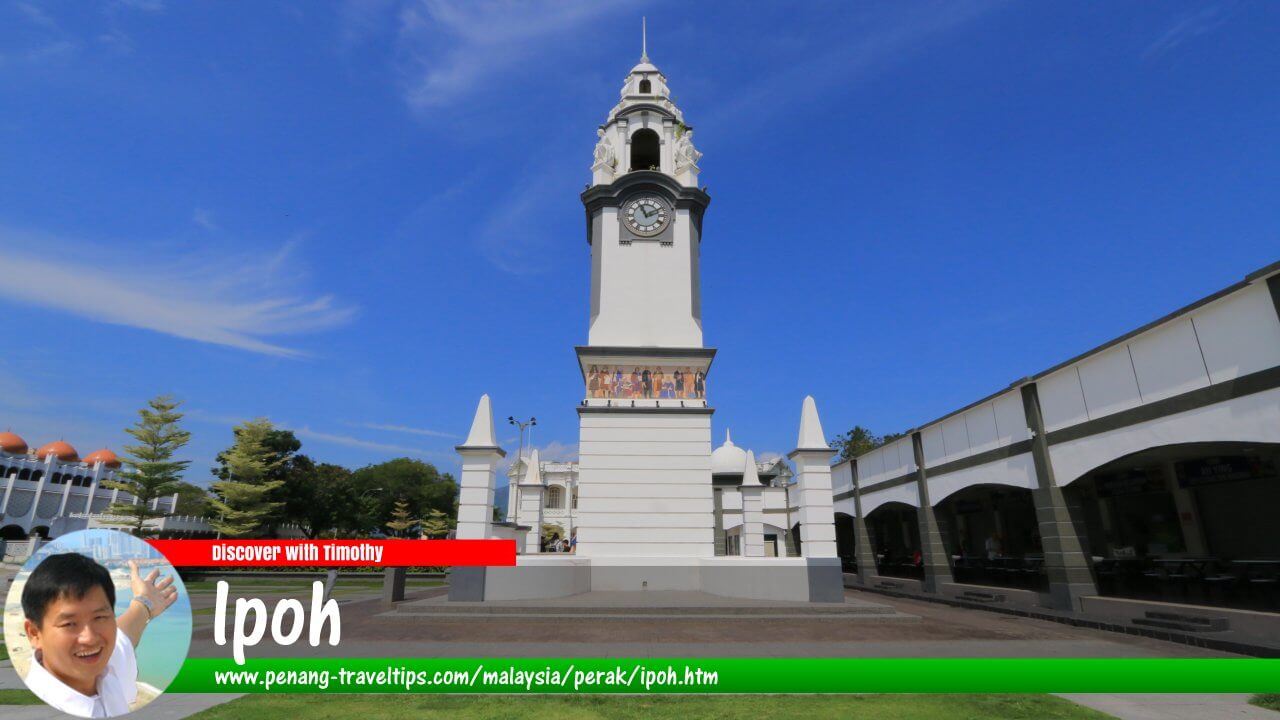
The Birch Memorial Clock Tower stands near the historic administrative centre of Ipoh. Completed in 1909, it was erected in memory of J.W.W. Birch, the first British Resident of Perak.
Birch's administration and assassination remain an important part of Perak's colonial history. The clock tower therefore provides an opportunity to examine the complex relationship between the British administration and local rulers and communities during the late 19th century.
Concubine Lane
Concubine Lane, historically known as Lorong Panglima, is one of the best-known lanes in Ipoh Old Town. The lane forms part of the historic Chinese commercial quarter of the city.
Today, the area contains restaurants, cafés, shops, souvenir outlets and other businesses. It is particularly popular with visitors exploring the heritage core on foot.
Han Chin Pet Soo
Han Chin Pet Soo is a former Hakka mining association building that has been converted into a museum. Its exhibits provide information about the history of the Hakka community, Chinese migration, tin mining and social life in Ipoh.
The museum is particularly useful for understanding the relationship between the Chinese community and the development of the Kinta Valley mining industry.
Ho Yan Hor Museum
Ho Yan Hor Museum occupies a historic shophouse in Old Town and presents the history of the Ho Yan Hor herbal tea business. The museum provides an example of how a local Ipoh business developed into a widely recognised Malaysian brand.
The museum can be combined with a walking tour of the surrounding heritage streets and shophouses.
Geological Museum
The Geological Museum in Ipoh is particularly relevant to the city's mining history. Its collections include rocks, minerals, fossils and materials related to geological resources.
For visitors interested in understanding why Ipoh developed where it did, the museum provides useful background on the geology of Perak and the mineral resources of the Kinta Valley.
Tambun Cave
Tambun Cave is an important prehistoric archaeological site located near Ipoh. It contains prehistoric rock art and provides evidence of human activity in the Kinta Valley long before the emergence of the modern city.
The site also demonstrates the relationship between the limestone landscape of the Kinta Valley and the long history of human settlement in the region.
Gunung Lang Recreational Park
Gunung Lang Recreational Park is situated around a former mining lake surrounded by limestone hills. Visitors can enjoy the scenery, gardens and recreational facilities, with boat services providing access across the lake.
The park offers an easy way to experience Ipoh's characteristic limestone landscape without undertaking a demanding hike.
Sam Poh Tong Temple
Sam Poh Tong is one of the best-known cave temples in the Gunung Rapat area. The temple occupies a limestone cave and includes religious buildings, gardens and a landscaped area surrounding the cave.
As an active place of worship, visitors should dress appropriately and behave respectfully. The cave setting also illustrates the distinctive relationship between Chinese religious culture and Ipoh's limestone environment.
Kek Lok Tong
Kek Lok Tong is another major cave temple in Gunung Rapat. Its large limestone cave contains Buddhist religious features, while the rear of the cave opens towards a landscaped garden surrounded by limestone hills.
The site combines religious, cultural and geological interest and is one of the most accessible places to appreciate Ipoh's karst landscape.
Ling Sen Tong
Ling Sen Tong is a Taoist temple located at the foot of the limestone hills near Gunung Rapat. Its colourful statues and buildings contrast with the surrounding grey limestone cliffs.
The temple can be visited together with other cave temples in the Gunung Rapat area.
Tasek Cermin
Tasek Cermin, meaning "Mirror Lake", is a natural lake enclosed by limestone formations. The sheltered landscape and reflective surface of the water have made it a popular location for nature photography.
Access arrangements can change, so visitors should check current conditions before travelling, particularly if they intend to explore the area independently.
Qin Xin Ling Leisure and Cultural Village
Qin Xin Ling Leisure and Cultural Village is a recreational and cultural attraction situated amid Ipoh's limestone landscape. It combines outdoor activities with displays and features associated with traditional Chinese rural life.
Lost World of Tambun
Lost World of Tambun is a large family-oriented theme park and leisure complex in Tambun, north of central Ipoh. It includes water attractions, hot springs and other recreational facilities set against a backdrop of limestone hills.
It is particularly suitable for families and visitors looking for entertainment and recreational activities rather than a purely historical experience.
Food to Try in Ipoh
Food is one of the major attractions of Ipoh. The city's culinary culture reflects the history of its multi-ethnic population, particularly the Chinese communities that grew alongside the tin-mining industry, as well as Malay and Indian food traditions.
Ipoh White Coffee
Ipoh white coffee is perhaps the city's most famous culinary product. Traditionally associated with the local Chinese kopitiam culture, the coffee is prepared using a particular roasting method and is commonly served with condensed or evaporated milk.
White coffee has become an important part of Ipoh's identity, and visitors can find it at traditional coffee shops as well as modern cafés.
Bean Sprout Chicken
Bean sprout chicken is another dish strongly associated with Ipoh. Tender poached chicken is served with the city's characteristic crunchy bean sprouts, usually accompanied by rice or noodles.
The dish is simple but has become one of the best-known examples of Ipoh's local food culture.
Kai See Hor Fun
Kai see hor fun consists of silky smooth flat rice noodles in a clear chicken or prawn broth, usually served with shredded chicken, prawns and spring onions. It is commonly eaten as a breakfast or lunch dish.
Dim Sum
Ipoh has a long-established dim sum culture, and numerous restaurants serve steamed dumplings, buns, egg tarts and other small dishes, particularly during breakfast and brunch hours.
Salt-Baked Chicken
Salt-baked chicken is another food associated with Ipoh. The chicken is prepared with salt and aromatic ingredients, producing a distinctive savoury flavour.
Tau Fu Fah
Tau fu fah is a soft soybean pudding commonly served with sweet syrup. It is widely available in Ipoh and makes a light dessert or snack after a meal.
Nasi Ganja
Nasi ganja is the informal name given to a well-known nasi kandar-style meal in Ipoh. Despite its unusual name, the dish does not contain cannabis. The expression refers to the perceived addictive quality of its taste and the tendency of customers to return for it.
Other foods worth trying include chee cheong fun, curry noodles, Ipoh-style rojak, cendol, mee rebus and a wide variety of traditional Chinese and Malay dishes.
Where to Stay in Ipoh
Ipoh has a broad range of accommodation, from budget hotels and guesthouses to boutique hotels and larger modern hotels. The best area to stay depends on the purpose of the visit.
Ipoh Old Town
Old Town is suitable for visitors whose priority is heritage, food and walking. Staying nearby allows easy access to historic shophouses, Concubine Lane, museums, cafés and traditional restaurants.
New Town and City Centre
The city centre and New Town offer numerous hotels and are convenient for visitors who want access to restaurants, shopping centres and other urban facilities. They also provide easy access to both Old Town and the railway station.
Tambun
Tambun is a practical choice for families and visitors intending to spend time at Lost World of Tambun or the surrounding hot springs and limestone attractions. Accommodation here ranges from hotels and resorts to other forms of short-stay lodging.
How to Get to Ipoh
By Car
Ipoh is well connected to Kuala Lumpur, Penang and other parts of Peninsular Malaysia by road. The North-South Expressway passes close to the city, with several interchanges providing access to different parts of Ipoh.
From Kuala Lumpur, the drive generally takes around two to three hours, depending on the starting point and traffic conditions. From George Town and Butterworth, Ipoh is also easily accessible by the North-South Expressway.
By Train
ETS trains provide one of the most convenient ways to travel to Ipoh from Kuala Lumpur, Penang and other stations along the electrified railway network.
Ipoh Railway Station is particularly convenient because it is close to the historic city centre. Visitors arriving by train can begin exploring Old Town shortly after leaving the station.
Train schedules and fares can change, so travellers should check the current timetable before making their journey, particularly during weekends and public holidays.
By Bus
Long-distance buses connect Ipoh with Kuala Lumpur, Penang and numerous other destinations. The main long-distance bus terminal is Amanjaya Integrated Bus Terminal in Meru, north of the city centre.
Travellers arriving at Amanjaya will need to continue into central Ipoh by local bus, taxi or e-hailing service.
By Air
Sultan Azlan Shah Airport is located within Ipoh and is the city's own airport. However, the number of scheduled commercial services is limited compared with the major airports in Kuala Lumpur and Penang.
Travellers should therefore check current flight availability before choosing to fly directly to Ipoh. Depending on the origin, it may be more practical to fly to Kuala Lumpur or Penang and continue to Ipoh by train or road.
Getting Around Ipoh
Ipoh is relatively spread out, so the best mode of transport depends on where you intend to go.
Walking is the best way to explore Old Town. The historic core is compact, and walking allows visitors to appreciate the architecture, murals, shopfronts and street life at a slower pace.
E-hailing services are useful for travelling between the city centre and attractions such as Gunung Rapat, Tambun and other suburban areas. They are particularly convenient for visitors who do not want to drive.
Driving is the most flexible option for visitors planning to explore attractions scattered around Ipoh and the Kinta Valley. A car makes it easier to combine cave temples, natural attractions and food stops in a single day.
Visitors should be aware that parking can become difficult in the most popular parts of Old Town during weekends and public holidays.
Best Time to Visit Ipoh
Ipoh can be visited throughout the year. The climate is tropical, with warm and humid conditions and rainfall occurring during different periods of the year.
For sightseeing on foot, mornings and late afternoons are generally more comfortable than the hottest part of the day. Visitors planning outdoor activities around limestone hills should also check the weather forecast before setting out.
Weekdays are generally quieter than weekends. During school holidays and major public holidays, popular attractions, restaurants and hotels can become considerably busier.
How Long to Spend in Ipoh
A one-day visit is sufficient for travellers who mainly want to experience Old Town, see several heritage buildings and sample some of Ipoh's famous food.
A two-day, one-night trip provides a much better introduction to the city. The first day can be devoted to Old Town, New Town, heritage buildings and food, while the second day can focus on limestone attractions, cave temples and Tambun.
Visitors with three days or more can use Ipoh as a base for exploring the wider Kinta Valley, including Gopeng, Batu Gajah and other nearby destinations.
Suggested Two-Day Itinerary
Day One: Heritage and Food
- Have breakfast at a traditional kopitiam.
- Begin at Ipoh Railway Station.
- Walk around City Hall and the historic government buildings.
- Visit the Birch Memorial Clock Tower.
- Explore Ipoh Old Town and its historic shophouses.
- Walk along Concubine Lane.
- Visit Han Chin Pet Soo or Ho Yan Hor Museum.
- Have lunch featuring bean sprout chicken or kai see hor fun.
- Explore additional heritage streets and murals in the afternoon.
- Enjoy dinner at one of Ipoh's local restaurants.
Day Two: Limestone Hills and Tambun
- Have breakfast in the city.
- Travel to Gunung Rapat.
- Visit Sam Poh Tong, Kek Lok Tong or another cave temple.
- Visit Tasek Cermin if access and weather conditions are suitable.
- Have lunch in the city.
- Continue towards Tambun.
- Visit Lost World of Tambun or explore other attractions around Tambun.
- Return to the city for dinner.
Practical Travel Tips
- Consider arriving by ETS: The railway station is conveniently located near the historic centre.
- Explore Old Town on foot: Walking is more enjoyable than driving between the closely spaced heritage attractions.
- Group attractions by area: Visit Old Town together, then explore Gunung Rapat and Tambun on another day or half-day.
- Start early: Many traditional breakfast establishments are busiest in the morning.
- Check opening hours: Museums, temples, recreational attractions and commercial tourist sites have different operating schedules.
- Dress appropriately at religious sites: Cave temples are active places of worship and should be treated accordingly.
- Carry drinking water: Ipoh's warm climate can make walking and outdoor activities tiring.
- Book accommodation ahead: Hotels can fill up during weekends, school holidays and major festivals.
- Allow time for traffic and parking: Popular parts of the historic centre can become congested during busy periods.
Ipoh and the Kinta Valley
Ipoh is best understood as part of the wider Kinta Valley rather than as an isolated city. Its history, economy and physical landscape were shaped by the surrounding tin deposits and limestone formations.
The former mining landscape remains visible in the form of lakes, abandoned mining grounds and altered river environments. At the same time, the limestone hills that attracted miners because of their geological setting have become important natural, cultural and recreational features.
Nearby destinations such as Gopeng and Batu Gajah can therefore be combined with an Ipoh trip. Together they provide a broader understanding of the history of central Perak and the rise of the Kinta Valley as one of the region's major mining districts.
Why Visit Ipoh?
Ipoh is particularly appealing to travellers who enjoy destinations where history, food and landscape can be experienced within a relatively compact region.
The historic centre preserves evidence of the city's tin-mining prosperity, while the surrounding limestone hills provide a striking natural setting. Chinese cave temples add another cultural dimension, while the city's kopitiams and restaurants provide a strong culinary identity.
Unlike some Malaysian destinations whose tourism is centred primarily on beaches or large-scale attractions, Ipoh's appeal is distributed across its streets, buildings, food establishments, museums, religious sites and natural surroundings.
Conclusion
Ipoh is one of the most important cities in the history of modern Perak. Its rise from a small settlement to a major tin-mining centre transformed the Kinta Valley and helped establish the economic and urban foundations of central Perak.
Today, the legacy of that history remains visible throughout the city. The railway station, colonial buildings, old shophouses and historic lanes provide a physical record of Ipoh's growth, while the limestone hills and cave temples demonstrate the distinctive geography and multicultural character of the region.
For visitors, Ipoh offers an appealing combination of heritage sightseeing, local food, nature and recreation. Whether visited as a weekend destination, a stopover between Kuala Lumpur and northern Malaysia, or a base for exploring the Kinta Valley, Ipoh provides a useful introduction to the history and culture of Perak.
Map of Ipoh, Perak
List of Streets in Ipoh
- Bulatan Amanjaya
- Bulatan Sultan Abdul Aziz
- Bulatan Sultan Yussuf
- Concubine Lane (Lorong Panglima)
- Hala Pasar Baru
- Hala Timah
- Jalan Abdullah
- Jalan Ali Pitchay
- Jalan Bandar Timah
- Jalan Bercham
- Jalan Bijeh Timah
- Jalan Brash
- Jalan Carey
- Jalan Che Tak
- Jalan CM Yusuf
- Jalan Dato Ismail Shah Bodin
- Jalan Dato Maharajalela
- Jalan Dato Onn Jaafar
- Jalan Dato Lau Pak Khuan
- Jalan Dato Tahwil Azhar
- Jalan Dato Sagor
- Jalan Dato Seri Ahmad Said
- Jalan Datuk Yeoh Cheng Lee
- Jalan Fifth Avenue
- Jalan Foo Choo Choon
- Jalan Ghazali Jawi
- Jalan Horley
- Jalan Jubilee
- Jalan Kamaruddin Isa
- Jalan Kelab Golf
- Jalan Keliling
- Jalan Kompleks Sukan
- Jalan Koo Chong Kong
- Jalan Kuala Kangsar
- Jalan Lahat
- Jalan Lapangan Terbang
- Jalan Lau Ek Ching
- Jalan Laxamana
- Jalan Lee Kwee Foh
- Jalan Leong Boon Swee
- Jalan Lim Bo Seng
- Jalan Market
- Jalan Masjid
- Jalan Mustapa Al Bakri
- Jalan Panglima
- Jalan Panglima Bukit Gantang Wahab
- Jalan Perajurit
- Jalan Raja Ashman Shah
- Jalan Raja Dihilir
- Jalan Raja Ekram
- Jalan Raja Musa Aziz
- Jalan Raja Musa Mahadi
- Jalan Raja Permaisuri Bainun
- Jalan S.P. Seenivasagam
- Jalan Seenivasagam
- Jalan Sheikh Adam
- Jalan Silang
- Jalan Sultan Abdul Jalil
- Jalan Sultan Azlan Shah
- Jalan Sultan Idris Shah
- Jalan Sultan Iskandar
- Jalan Sultan Nazrin Shah
- Jalan Sultan Yusuf
- Jalan Syed Abu Hassan
- Jalan Tambun
- Jalan Theatre
- Jalan Toh Puan Chah
- Jalan Tun Abdul Razak
- Jalan Tun Dr Ismail
- Jalan Tun Perak
- Jalan Tun Sambanthan
- Jalan Wu Lean Teh
- Jalan Yang Kalsom
- Jalan Yau Tet Shin
- Lebuh Cecil Rae
- Lintasan Pasar Baru
- Lorong Bijeh Timah
- Lorong Hale
- Lorong Market
- Panglima Lane
- Persiaran Bandaraya
- Persiaran Bijeh Timah
- Persiaran Brash
- Persiaran Greenhill
- Persiaran Sultan Azlan Shah
List of sights in Ipoh
- AEON Ipoh Falim (GPS: 4.5814, 101.06197)

- AEON Mall Ipoh Station 18 (GPS: 4.54568, 101.07067)

- AEON Mall Ipoh Klebang (GPS: 4.67746, 101.12312)

- Ali Pitchay Townhouse (GPS: 4.59756, 101.07841)

- Ambika Estates Office (GPS: 4.59517, 101.077)

- Balai Polis Pekan Baru (GPS: 4.59754, 101.07215)

- Birch Memorial (GPS: 4.59686, 101.0762)

- Bulatan Sultan Abdul Aziz (GPS: 4.59761, 101.10529)

- Bulatan Sultan Yussuf (GPS: 4.59203, 101.09024)

- Cenotaph (GPS: 4.59756, 101.07428)

- Central Market (GPS: 4.59595, 101.08274)

- Chee Teik Lim Temple (GPS: 4.58445, 101.08172)

- Chennai Potty (GPS: 4.59516, 101.0767)

- Chinese Theatre Hostel (GPS: 4.59646, 101.07786)

- Chua Cheng Bok Building (GPS: 4.59438, 101.08022)

- Chung Thye Phin Building (GPS: 4.59682, 101.07723)

- Church of Our Lady of Lourdes (GPS: 4.60316, 101.06867)

- Church of St John the Divine (GPS: 4.6015, 101.07587)

- Cititel Express (GPS: 4.59881, 101.07847)

- Dato Seri Adika Raja House (GPS: 4.58992, 101.07921)

- Dewan Bandaran Ipoh (GPS: 4.59723, 101.07492)

- Dudjom New Treasure Buddhist Society (GPS: 4.56312, 101.11456)

- Elim Gospel Hall (GPS: 4.59154, 101.08715s)

- Elken Building (GPS: 4.59731, 101.0765)

- Enlightened Heart Temple (GPS: 4.6039, 101.15404)

- Eu Yan Sang Building (GPS: 4.59426, 101.0775)

- FMS Bar & Restaurant (GPS: 4.59866, 101.07807)

- Foong Seong Building (GPS: 4.59578, 101.0811)

- Giant Hypermarket Farlim (GPS: 4.58415, 101.0666)

- Gua Tambun (GPS: 4.60249, 101.13073)


- Gunung Layang-Layang (GPS: 4.64806, 101.15454)

- Gunung Rapat (GPS: 4.55692, 101.12174)

- Gurdwara Sahib Railway Ipoh (GPS: 4.5984, 101.07251)

- Han Chin Pet Soo (GPS: 4.59629, 101.07904)

- Ho Yan Hor Museum (GPS: 4.59634, 101.07905)

- Hong Leong Bank Building (GPS: 4.59723, 101.08186)

- Hospital Raja Permaisuri Bainun (GPS: 4.60407, 101.09014)

- Hotel Excelsior (GPS: 4.59739, 101.08658)

- HSBC Building (GPS: 4.59755, 101.07741)

- Impiana Hotel Ipoh (GPS: 4.590088, 101.094449)

- Indian Muslim Mosque (GPS: 4.6001, 101.0774)

- Ipoh Baptist Church (GPS: 4.59903, 101.08654)

- Ipoh Cenotaph (GPS: 4.59756, 101.07428)
- Ipoh Court House (GPS: 4.59831, 101.07538)

- Ipoh Downtown Hotel (GPS: 4.59633, 101.08625)

- Ipoh Flagpole (GPS: 4.59913, 101.07573)

- Ipoh Multi-Level Car Park (GPS: 4.59711, 101.07631)

- Ipoh Padang (GPS: 4.59922, 101.07674)

- Ipoh Parade (GPS: 4.59606, 101.09012)

- Ipoh Police Headquarters (GPS: 4.59496, 101.07462)

- Ipoh Railway Station (GPS: 4.59611, 101.07396)

- Ipoh Riverfront Park (GPS: 4.59451, 101.07919)

- Ipoh Tourist Information Centre (GPS: 4.59802, 101.076)

- Ipoh Tree (GPS: 4.59708, 101.07398)

- Jalan Sultan Yusuf Heritage Row (GPS: 4.5963, 101.07708)

- Jambatan C.N. Annadurai (GPS: 4.59184, 101.06583)

- Jambatan Sultan Idris Shah (Birch Bridge) (GPS: 6.435766, 100.190755)

- Jambatan Sultan Iskanar (Hugh Low Bridge) (GPS: 4.59438, 101.08022)

- Japanese Counter Espionage Headquarters (GPS: 4.59942, 101.08599)

- Jingang Jing She Temple (GPS: 4.60264, 101.15574)

- Kek Look Seah (GPS: 4.5808, 101.07747)

- Kek Look Tong (GPS: 4.55904, 101.12927)

- Kian Aik Chan (GPS: 4.59563, 101.07932)

Kinta Aerated Water Company(GPS: 4.59328, 101.0769; demolished)
- Kinta Heights (GPS: 4.59238, 101.07738)

- Kompleks Yik Foong (GPS: 4.59708, 101.08134)

- Kwan Yin Temple (GPS: 4.59851, 101.07943)

- Kwang Tung Cemetery (GPS: 4.59911, 101.10803)

- Leong Yew Koh Office (GPS: 4.59714, 101.07709)

- Ling Sen Tong Cave Temple (GPS: 4.56642, 101.11404)

- Loong Thow Ngam Temple (GPS: 4.63214, 101.08794)

- Majuperak Building (GPS: 4.59757, 101.0808)

- Masjid Muhammadiah (GPS: 4.64954, 101.10728)

- Masjid Paloh (GPS: 4.58986, 101.07721)

- Masjid Panglima Kinta (GPS: 4.59342, 101.08063)

- Masjid Sultan Idris Shah II (GPS: 4.59617, 101.07578)

- Masjid Sultan Yussuf (GPS: 4.57121, 101.12528)

McDonalds Ipoh Building(GPS: 4.59567, 101.08305)
- Mekprasit Buddhist Temple (GPS: 4.625, 101.08144)

- Methodist Girls School Ipoh (GPS: 4.58719, 101.08511)

Miniature Wonders Art Gallery(GPS: 4.59589, 101.0783)
Movie Animation Park Studios of Perak(GPS: 4.66475, 101.08402)
- Muzium Darul Ridzuan (GPS: 4.60456, 101.07796)

- Muzium Geologi (GPS: 4.59755, 101.11978)

- Nam Thean Tong Cave Temple (GPS: 4.56589, 101.11442)

- OCBC Bank Building (GPS: 4.59683, 101.07677)

- Old OCBC Bank Building (GPS: 4.59513, 101.07711)

- Pakistani Mosque (GPS: 4.59414, 101.07602)

- Paloh Ku Miao (GPS: 4.59328, 101.0788)

- Pantai Hospital (GPS: 4.60334, 101.11958)

- Perak Ku Kong Chow Kung Wui Association (GPS: 4.596713, 101.078652)

- Perak Tong Cave Temple (GPS: 4.64451, 101.09886)

- Perak Toong Onn Woi Koon (GPS: 4.59418, 101.08596)

- Persatuan Hin Aun Perak (GPS: 4.59707, 101.08623)

- Public Bank Building (GPS: 4.59764, 101.08204)

- Qing Xin Ling Leisure and Cultural Village (GPS: 4.56191, 101.1242)

- Royal Ipoh Club (GPS: 4.59955, 101.07544)

- Rumah Pangsa Jalan Bijih Timah (GPS: 4.59288, 101.07816)

- Sam Poh Tong Cave Temple (GPS: 4.5643, 101.1151)

- Seenivasagam Brothers' Law Office (GPS: 4.59785, 101.07648)

- Sew Cheong Building (GPS: 4.59491, 101.08107)

- Sinhalese Bar (GPS: 4.59558, 101.07869)

- SMK Methodist (Anglo-Chinese School) (GPS: 4.59186, 101.07254)

- SPH De Silva (GPS: 4.59558, 101.07869)

- Sri Maha Karumariamman Muneswarar Temple (Kaka Kovil) (GPS: 4.58611, 101.0659)

- Sree Muneswarar Amman Kovil (GPS: 4.60396, 101.09419)

- St Andrew's Presbyterian Church (GPS: 4.59508, 101.08827)

- St Michael's Church (GPS: 4.59508, 101.08827)

- St Michael's Institution (GPS: 4.60131, 101.07724)

- Standard Charterd Bank Building (GPS: 4.59722, 101.07685)

- Sultan Azlan Shah Airport (GPS: 4.57007, 101.09846)

- Tai Pee Sim Monastery (GPS: 4.58345, 101.09545)

- Taman Rekreasi Gunung Lang (GPS: 4.62744, 101.09055)

- Taman Rekreasi Sultan Abdul Aziz (GPS: 4.5969, 101.11192)

- Tasik Cermin (GPS: 4.55983, 101.11864)

- Tenaga Nasional Building (GPS: 4.59742, 101.07613)

- The Haven Resort Ipoh (GPS: 4.63655, 101.16221)

- The Octagon (GPS: 4.59452, 101.08543)

- The Store Jalan Kampar (GPS: 4.58396, 101.09079)

- Tower Regency Hotel (GPS: 4.60039, 101.0879)

- Time Tunnel (GPS: 4.59675, 101.07825)

- Traditional Stovemakers (GPS: 4.62058, 101.07856)

- Travelodge Ipoh (GPS: 4.62058, 101.07856)

- True Jesus Church (GPS: 4.60065, 101.08701)

- Tung Wah Tong (GPS: 4.64439, 101.15573)

- UTC Perak (GPS: 4.59578, 101.08219)

- Wan Muhammad Saleh Mausoleum (GPS: 4.58996, 101.07676)

- Warta Kinta Office (GPS: 4.58976, 101.07766)

- Wat Puthanimittam (GPS: 4.58976, 101.07766)

- Yau Tet Shin Mansion (GPS: 4.59296, 101.07451)

Chinese/Buddhist Temples and Monasteries in Ipoh
- Chee Teik Lim Temple (GPS: 4.58445, 101.08172)
- Dudjom New Treasure Buddhist Society (GPS: 4.56312, 101.11456)
- Enlightened Heart Temple (GPS: 4.6039, 101.15404)
- Jingang Jing She Temple (GPS: 4.60264, 101.15574)
- Kek Look Seah (GPS: 4.5808, 101.07747)
- Kek Look Tong (GPS: 4.55904, 101.12927)
- Kwan Yin Temple (GPS: 4.59851, 101.07943)
- Ling Sen Tong Cave Temple (GPS: 4.56642, 101.11404)
- Loong Thow Ngam Temple (GPS: 4.63214, 101.08794)
- Mekprasit Buddhist Temple (GPS: 4.625, 101.08144)
- Nam Thean Tong Cave Temple (GPS: 4.56589, 101.11442)
- Paloh Ku Miao (GPS: 4.59328, 101.0788)
- Perak Tong Cave Temple (GPS: 4.64451, 101.09886)
- Sam Poh Tong Cave Temple (GPS: 4.5643, 101.1151)
- Tai Pee Sim Monastery (GPS: 4.58345, 101.09545)
- Tung Wah Tong (GPS: 4.64439, 101.15573)
- Wat Puthanimittam (GPS: 4.58976, 101.07766)
- Wat Siribunyamagaram (GPS: 4.60114, 101.11438)

- WEIL Hotel (GPS: 4.59469, 101.09007)

Government Buildings in Ipoh
- Dewan Bandaran Ipoh (GPS: 4.59723, 101.07492)
- Ipoh Police Headquarters (GPS: 4.59496, 101.07462)
- Ipoh Tourist Information Centre (GPS: 4.59802, 101.076)
- UTC Perak (GPS: 4.59578, 101.08219)
Historic buildings in Ipoh
- Ali Pitchay Townhouse (GPS: 4.59756, 101.07841)
- Ambika Estates Office (GPS: 4.59517, 101.077)
- Chennai Potty (GPS: 4.59516, 101.0767)
- Chinese Theatre Hostel (GPS: 4.59646, 101.07786)
- Chua Cheng Bok Building (GPS: 4.59438, 101.08022)
- Chung Thye Phin Building (GPS: 4.59682, 101.07723)
- Dato Seri Adika Raja House (GPS: 4.58992, 101.07921)
- Elken Building (GPS: 4.59731, 101.0765)
- Eu Yan Sang Building (GPS: 4.59426, 101.0775)
- FMS Bar & Restaurant (GPS: 4.59866, 101.07807)
- Foong Seong Building (GPS: 4.59578, 101.0811)
- Han Chin Pet Soo (GPS: 4.59629, 101.07904)
- Ho Yan Hor Museum (GPS: 4.59634, 101.07905)
- HSBC Building (GPS: 4.59755, 101.07741)
- Ipoh Court House (GPS: 4.59831, 101.07538)
- Jalan Sultan Yusuf Heritage Row (GPS: 4.5963, 101.07708)
- Japanese Counter Espionage Headquarters (GPS: 4.59942, 101.08599)
- Kian Aik Chan (GPS: 4.59563, 101.07932)
Kinta Aerated Water Company(GPS: 4.59328, 101.0769; demolished)- Leong Yew Koh Office (GPS: 4.59714, 101.07709)
- Majuperak Building (GPS: 4.59757, 101.0808)
McDonalds Ipoh(GPS: 4.59567, 101.08305)- OCBC Bank Building (GPS: 4.59683, 101.07677)
- Old OCBC Bank Building (GPS: 4.59513, 101.07711)
- Perak Ku Kong Chow Kung Wui Association (GPS: 4.596713, 101.078652)
- Public Bank Building (GPS: 4.59764, 101.08204)
- Royal Ipoh Club (GPS: 4.59955, 101.07544)
- Seenivasagam Brothers' Law Office (GPS: 4.59785, 101.07648)
- Sew Cheong Building (GPS: 4.59491, 101.08107)
- Sinhalese Bar (GPS: 4.59558, 101.07869)
- SPH De Silva (GPS: 4.59558, 101.07869)
- Standard Charterd Bank Building (GPS: 4.59722, 101.07685)
- Tenaga Nasional Building (GPS: 4.59742, 101.07613)
- Wan Muhammad Saleh Mausoleum (GPS: 4.58996, 101.07676)
- Warta Kinta Office (GPS: 4.58976, 101.07766)
- Yau Tet Shin Mansion (GPS: 4.59296, 101.07451)
Hospitals in Ipoh
- Hospital Raja Permaisuri Bainun (GPS: 4.60407, 101.09014)
- Pantai Hospital (GPS: 4.60334, 101.11958)
Hotels in Ipoh
- Cititel Express (GPS: 4.59881, 101.07847)
- Hotel Excelsior (GPS: 4.59739, 101.08658)
- Impiana Hotel Ipoh (GPS: 4.590088, 101.094449)
- The Haven Resort Ipoh (GPS: 4.63655, 101.16221)
- Tower Regency Hotel (GPS: 4.60039, 101.0879)
Mosques in Ipoh
- Indian Muslim Mosque (GPS: 4.6001, 101.0774)
- Masjid Muhammadiah (GPS: 4.64954, 101.10728)
- Masjid Paloh (GPS: 4.58986, 101.07721)
- Masjid Panglima Kinta (GPS: 4.59342, 101.08063)
- Masjid Sultan Idris Shah II (GPS: 4.59617, 101.07578)
- Masjid Sultan Yussuf (GPS: 4.57121, 101.12528)
- Pakistani Mosque (GPS: 4.59414, 101.07602)
Shopping Malls in Ipoh
- AEON Ipoh Falim (GPS: 4.5814, 101.06197)
- AEON Mall Ipoh Station 18 (GPS: 4.54568, 101.07067)
- AEON Mall Ipoh Klebang (GPS: 4.67746, 101.12312)
- Giant Hypermarket Farlim (GPS: 4.58415, 101.0666)
- Ipoh Parade (GPS: 4.59606, 101.09012)
- The Store Jalan Kampar (GPS: 4.58396, 101.09079)
Map of places to eat in Ipoh
Places to eat in Ipoh
- Ayam Garam Aun Kheng Lim (GPS: 4.59467, 101.08331)
- Canning Garden Bak Kut Teh (GPS: 4.60252, 101.10982)
- Choong Kee Pasir Pinji Big Tree Yong Tau Foo / Restoran Choong Kee Pokok Besar (GPS: 4.58237, 101.08574)
- CT Cendol Corner (GPS: 4.5957, 101.08362)
- Hong Kee Mah Chee Creamy Peanut Dessert (GPS: 4.57302, 101.08698)
- Kedai Kopi Loke Wooi Kee (GPS: 4.5951, 101.08348)
- Kedai Kopi Woh Heng (GPS: 4.59523, 101.08433)
- Kedai Minuman & Makanan Hua Nam (GPS: 4.59693, 101.08562)
- Medan Selera Dato' Tahwil Azar (GPS: 4.596, 101.08402)
- Ming Court Hong Kong Tim Sum (GPS: 4.59708, 101.08632)
- Nasi Ganja (GPS: 4.59268, 101.0847)
- Restoran Chang Keong Dim Sum (GPS: 4.59722, 101.08574)
- Restoran Foh San (GPS: 4.59694, 101.08583)
- Restoran Haji Yahya (GPS: 4.59434, 101.08242)
- Restoran Ipoh Kong Heng (GPS: 4.59646, 101.07786)
- Restoran Lou Wong Beansprout Chicken (GPS: 4.59396, 101.0842)
- Restoran Ong Kee Beansprout Chicken (GPS: 4.59384, 101.08388)
- Restoran Sin Lean Lee (Kin Kwok Daily News Building) (GPS: 4.59677, 101.07818)
- Tai Soo Ipoh Famous No. 1 Dessert Shop (GPS: 4.57214, 101.11504)
- Yong tau foo at Kedai Kopi Kwong Hong (GPS: 4.57214, 101.11504)

Map of things to buy in Ipoh
What to buy in Ipoh
- Pomelos - Ah Sai Fruits Trading (GPS: 4.61021, 101.1396)

- Teochew Soft Candy - Ching Han Guan Biscuit Shop (GPS: 4.59354, 101.08367)
- Traditional Biscuits - 362 Gunung Rapat Heong Peah (GPS: 4.574333, 101,120056), 362 Jalan Gunung Rapat

- Traditional Biscuits - Biskut Yee Thye, Jalan Dato Tahwil Azar Branch (GPS: 4.5944, 101.08431)

Neighbourhoods and Townships of Ipoh
- Bandar Meru Raya (GPS: 4.66959, 101.07872)

- Canning Garden
- Falim
- Ipoh Old Town
- Ipoh New Town
Hindu Temples in Ipoh
- Arulmigu Maha Ganapathy Aalayam (GPS: 4.59754, 101.07215)

- Sri Maha Karumariamman Muneswarar Temple (Kaka Kovil) (GPS: 4.58611, 101.0659)
- Sree Muneswarar Amman Kovil (GPS: 4.60396, 101.09419)
Churches in Ipoh
- Church of Our Lady of Lourdes (GPS: 4.60316, 101.06867)
- Church of St John the Divine (GPS: 4.6015, 101.07587)
- Ipoh Baptist Church (GPS: 4.59903, 101.08654)
- St Andrew's Presbyterian Church (GPS: 4.59508, 101.08827)
- St Michael's Church (GPS: 4.59508, 101.08827)
- True Jesus Church (GPS: 4.60065, 101.08701)
Gurdwaras in Ipoh
- Gurdwara Sahib Railway Ipoh (GPS: 4.5984, 101.07251)
Monuments in Ipoh
- Birch Memorial (GPS: 4.59686, 101.0762)
- Cenotaph (GPS: 4.59756, 101.07428)
Bridges in Ipoh
- Jambatan C.N. Annadurai (GPS: 4.59184, 101.06583)
- Jambatan Sultan Idris Shah (Birch Bridge) (GPS: 6.435766, 100.190755)
- Jambatan Sultan Iskanar (Hugh Low Bridge) (GPS: 4.59438, 101.08022)
Schools in Ipoh
- Methodist Girls School Ipoh (GPS: 4.58719, 101.08511)
- SMK Methodist (Anglo-Chinese School) (GPS: 4.59186, 101.07254)
- St Michael's Institution (GPS: 4.60131, 101.07724)
Public Amenities in Ipoh
- Central Market (GPS: 4.59595, 101.08274)
- Ipoh Multi-Level Car Park (GPS: 4.59711, 101.07631)
- Sultan Azlan Shah Airport (GPS: 4.57007, 101.09846)
Flats in Ipoh
- Kinta Heights (GPS: 4.59238, 101.07738)
- Rumah Pangsa Jalan Bijih Timah (GPS: 4.59288, 101.07816)
Roundabouts in Ipoh
- Bulatan Sultan Abdul Aziz (GPS: 4.59761, 101.10529)
- Bulatan Sultan Yussuf (GPS: 4.59203, 101.09024)
Geographical features in Ipoh
- Gunung Layang-Layang (GPS: 4.64806, 101.15454)
Categories of sights in Ipoh
- Bakeries in Ipoh
- Bridges in Ipoh
- Cave Temples in Ipoh
- Chinese Medical Halls in Ipoh
- Chinese Temples in Ipoh
- Churches in Ipoh
- Clan Associations in Ipoh
- Financial Institutions in Ipoh
- Government Buildings in Ipoh
- Historic Buildings in Ipoh
- Hotel Stays in Ipoh
- Hotels in Ipoh
- Mausoleums in Ipoh
- Metal Works in Ipoh
- Modern Buildings in Ipoh
- Monuments in Ipoh
- Mosques in Ipoh
- Museums in Ipoh
- Parks in Ipoh
- Recreation Clubs in Ipoh
- Restaurants in Ipoh
- Roundabouts in Ipoh
- Schools in Ipoh
- Shopping Malls in Ipoh
- Street Art in Ipoh
- Streets in Ipoh
- Thai Temples in Ipoh
- Tourist Attractions in Ipoh
Places near Ipoh
Petrol Stations in Ipoh
- BHPetrol Jalan Kuala Kangsar (GPS: 4.620709, 101.080375)
- Petron Jalan Kuala Kangsar (GPS: 4.623537, 101.081126)
- Shell Jalan Kuala Kangsar (GPS: 4.621612, 101.080579)
Page Details
This page was created on 12 September 2026. Hi, my name is Timothy and created it from my research, for my own entertainment, knowledge and to satisfy my curiosity. I am providing the information to you in good faith and hope it is useful. I try to get the details as accurate as possible. I also try to update the page whenever I stumble on new details. So this and all my other pages are perpetual work in progress. If you discover any error, please politely inform me, pointing out where the error lies, and I will correct it as soon as possible. Your helpfulness will keep this page accurate, relevant and helpful to those who need the information.Buy Me A Coffee
If you enjoy the information I provide and want to support the work I do, please buy me a coffee! I appreciate it immensely, thank you so much!
