
Kampar Travel Guide
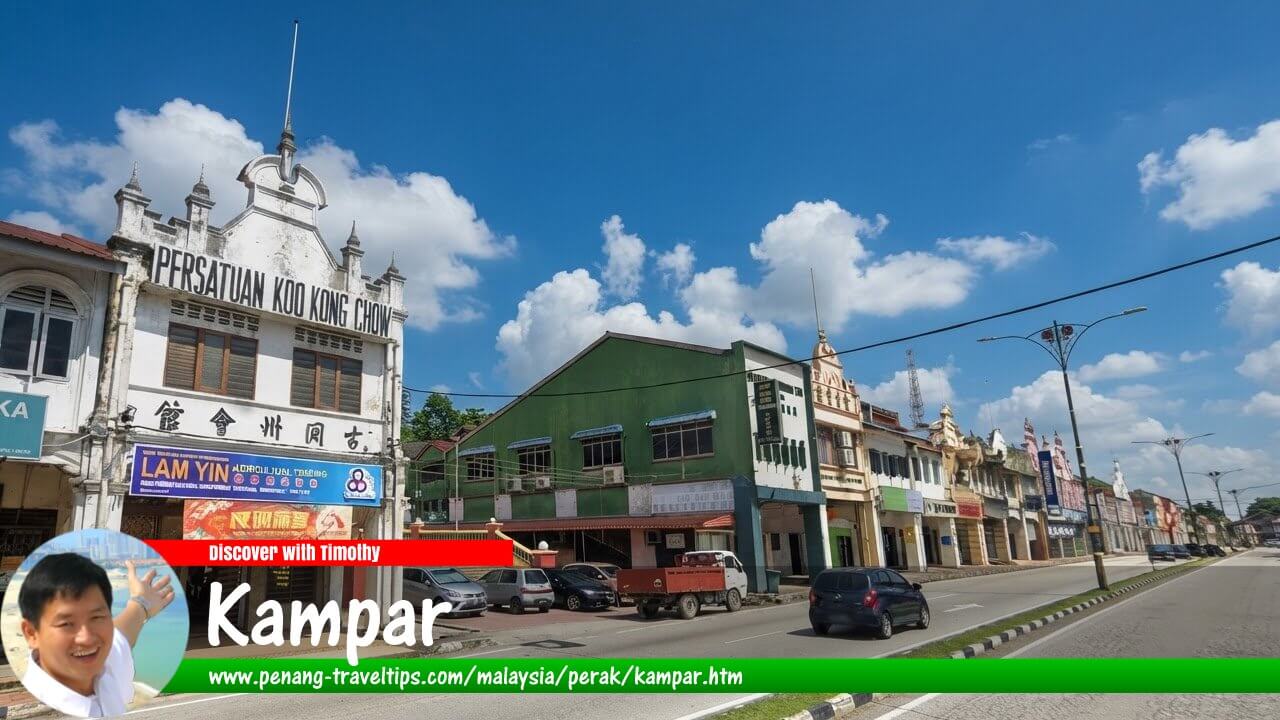 Kampar Travel Guide (AI generated on 10 September 2026)
Also available: Panduan Melawat Kampar
Kampar (GPS: 4.30567, 101.15215) is a historic town in the Kinta Valley of Perak, Malaysia. Once one of the world's important tin-mining centres, Kampar has developed into an education town while retaining traces of its mining past in its old shophouses, former mining landscapes, lakes and museums.
The town is surrounded by hills and former mining areas, giving it a different character from larger Perak towns such as Ipoh. Today, Kampar combines heritage, education, food and outdoor recreation. The wider Kampar district also includes Gopeng, Gua Tempurung, Malim Nawar, Kuala Dipang and several other settlements and natural attractions.
For visitors, Kampar can be explored as a heritage destination in its own right or included in a wider journey through the Kinta Valley. It is accessible by road and railway, and the presence of Universiti Tunku Abdul Rahman (UTAR) has given the town a strong student and international community.
Quick Facts
- Town: Kampar
- District: Kampar
- State: Perak
- Region: Kinta Valley
- Best known for: Tin-mining heritage, old shophouses, food, former mining lakes and UTAR
- Major nearby attraction: Gua Tempurung
- Main river: Sungai Kampar
- Railway: Kampar railway station
- Major educational institution: Universiti Tunku Abdul Rahman (UTAR), Kampar Campus
- Local authority: Kampar District Council
Where Is Kampar?
Kampar is located in the southern part of the Kinta Valley, between Ipoh and Tapah. The town lies near the foothills of Gunung Bujang Melaka and is surrounded by former mining areas, hills, rivers and lakes.
The present Kampar district is larger than the town itself. It includes a number of towns and settlements, including Gopeng, Malim Nawar, Kuala Dipang, Jeram, Mambang Diawan and Tanjung Tualang.
This distinction is useful when planning a trip. Several attractions commonly associated with a "Kampar" visit are actually outside the town centre but within the wider Kampar district.
Why Visit Kampar?
Kampar is particularly suitable for travellers interested in the history of Malaysia's tin-mining industry. The town was developed because of rich tin deposits and became an important centre of mining, commerce and migration.
Today, its identity has expanded beyond mining. Tourism Perak describes Kampar as a former major tin-producing area and an emerging education hub and university town. :contentReference[oaicite:0]{index=0}
Among the main reasons to visit Kampar are:
- exploring the historic town centre;
- learning about the Kinta Valley tin-mining industry;
- visiting the Kinta Tin Mining Museum;
- exploring the caves and limestone landscapes of the wider district;
- visiting Gua Tempurung;
- seeing former mining lakes and landscapes;
- experiencing Kampar's local food;
- seeing the modern university-town environment around UTAR;
- exploring Gopeng and other nearby settlements; and
- using Kampar as a base for a wider Kinta Valley itinerary.
A Brief History of Kampar
Kampar owes its origins to the discovery of tin ore. The Kampar District Council explains that the town developed in an area where the Kampar and Keranji rivers deposited alluvial material containing tin over a very long geological period.
Early mining involved digging small pits and washing tin-bearing earth along the rivers and in low-lying areas where water accumulated. Traditional mining methods were subsequently supplemented by more intensive techniques, including gravel-pump mining and dredging.
The district council's historical research indicates that the Kampar area was formally opened for mining leases in the late nineteenth century. One documented mining lease at Kampar dates from 17 January 1888, while the council's historical study concludes that Kampar was officially opened in 1886.
The development of mining attracted migrants, particularly Chinese workers and entrepreneurs. People from southern China, as well as Chinese communities already established in places such as Penang and Taiping, came to Kampar to work in the mines and establish businesses.
Malay communities were also present in the early development of the area. The district council's historical account associates the early settlement around the lower Sungai Keranji area with Imam Prang Jabor, while the wider history of Kampar also includes the involvement of Malay leaders and landholders in mining.
The Name Kampar
The name Kampar is associated with the Sungai Kampar, which flows through the area. The early settlement was also associated with Mambang Diawan, named after nearby Gunung Mambang Diawan.
According to the historical research published by the Kampar District Council, British officials eventually favoured the shorter name Kampar for the developing settlement. Chinese miners also referred to the town as Kam Poh, a name associated in local accounts with the idea of something valuable like gold.
The precise history of the name contains different interpretations, but its connection with the river and the early mining settlement is an important part of Kampar's identity.
The Tin-Mining Era
Tin mining dominated Kampar's economy for much of the nineteenth and twentieth centuries. The rich deposits of the Kinta Valley supported thousands of workers and created demand for shops, transport, accommodation, food and other services.
Mining technology changed over time. Traditional methods of digging and panning were followed by more mechanised techniques, including gravel pumps and large floating dredges.
The industry also created a landscape of artificial lakes. Many former mining pools remain around Kampar and have subsequently been used for aquaculture, recreation, fishing and other purposes.
The decline of the tin market in the early 1980s brought major changes to Kampar. The district council notes that the decline in the tin market from around 1983 significantly reduced the importance of mining as an economic activity.
The end of the mining boom did not end Kampar's development. The town gradually shifted towards commerce, services, education and other economic activities.
Kampar Old Town
The old town is one of the best places to begin exploring Kampar. Its traditional shophouses provide a visual connection with the period when mining was the foundation of the local economy.
The older commercial area developed around streets such as Jalan Gopeng and Jalan Idris. Many of the shophouses retain architectural features associated with pre-war commercial buildings in Malaysian mining towns.
Rather than rushing through the old town, visitors can spend some time walking along the streets, looking at the shopfronts and observing how the historic commercial centre continues to function as part of modern Kampar.
Early morning is often a pleasant time for exploring the town on foot, particularly before the heat becomes intense.
Kampar's Former Mining Lakes
One of the most distinctive features of the Kampar landscape is the large number of former mining lakes.
When open-cast mining ended, many excavated areas gradually filled with water. Some have become important freshwater environments, while others are used for fish farming, recreation and angling.
The lakes provide a reminder that the modern landscape around Kampar was partly created by the mining industry. What may appear to be a natural lake can in fact be the result of decades of mining.
Visitors should not enter abandoned mining areas or swim in unfamiliar former mining pools. Water depth, submerged machinery, unstable banks and other hazards may not be visible.
Kinta Tin Mining Museum
Kinta Tin Mining Museum is one of the most useful places in Kampar for understanding the history of the local mining industry.
The museum was established on the initiative of the late Tan Sri Hew See Tong, a prominent figure in the Malaysian tin-mining industry. Its purpose is to preserve and document the history of tin mining that played a major role in the economic development of the Kinta Valley and Malaysia.
The museum displays mining-related exhibits ranging from traditional to modern methods. Exhibits include replicas of mining activities, four mining models representing different eras, old photographs, a replica mining sluice, mineral and tin-ore collections, historical documents, statistics and geological maps.
The museum is located at Lot 126026, Jalan Batu Karang, Taman Bandar Baru, Kampar. The Kampar District Council currently lists its opening hours as 9.00 am to 5.00 pm. :contentReference[oaicite:1]{index=1}
For visitors who want to understand why Kampar exists where it does, the museum is one of the most informative places to visit.
Kampar Clock Tower
The Kampar Clock Tower is one of the town's landmarks. It stands within the historic urban area and provides a useful reference point when exploring the older part of Kampar.
The clock tower can be combined with a walking tour of the surrounding shophouses, markets, food outlets and older streets.
Kampar's Tin-Mining Sculpture
A sculpture depicting tin panning is another reminder of the town's mining heritage. It represents the traditional activity of separating tin ore from earth and gravel by washing it in a pan.
Such public monuments are useful for understanding how mining has become part of Kampar's modern civic identity, even though large-scale mining is no longer the town's dominant industry.
Universiti Tunku Abdul Rahman
The establishment of the Universiti Tunku Abdul Rahman (UTAR) Kampar Campus has given Kampar a new identity as a university town.
The campus was developed on approximately 1,300 acres of land donated by the Perak State Government. It welcomed its first intake of students in May 2007 and is located in Bandar Barat, Kampar. :contentReference[oaicite:2]{index=2}
The campus includes faculties covering areas such as business and finance, engineering and green technology, information and communication technology, science and arts and social science. It also contains research institutes and other academic facilities. :contentReference[oaicite:3]{index=3}
The university has transformed the character of the newer part of Kampar. Student accommodation, restaurants, shops, recreational facilities and other services have grown around the campus.
UTAR also makes Kampar more internationally connected. International students form part of the university community, contributing to the town's multilingual and multicultural atmosphere.
The campus is primarily an educational institution rather than a conventional tourist attraction. Visitors should respect campus rules and access restrictions.
Westlake and the Newer Kampar
The area around Westlake and Bandar Barat represents the newer phase of Kampar's development. Former mining landscapes have been incorporated into a modern township environment, while the university campus provides a major focal point.
The combination of lakes, hills, residential developments, educational facilities and commercial premises gives this part of Kampar a different appearance from the old town.
For travellers interested in urban development, Kampar provides an interesting example of how a former mining town can transition into an education and service centre.
Gua Tempurung
Gua Tempurung is one of the best-known natural attractions in the Kampar district. Located near Gopeng, the limestone cave is part of the geological landscape of the Kinta Valley.
The cave system is approximately 4.5 kilometres long, although the sections accessible to visitors extend to a shorter distance. It contains five major domes with different characteristics, including stalactites, stalagmites and other limestone formations. An underground river also runs through the cave.
Tourism Perak describes Gua Tempurung as one of the major cave attractions of the district and lists cave trekking, cave exploration and sightseeing among the activities available. :contentReference[oaicite:4]{index=4}
Visitors can choose different levels of cave exploration depending on the conditions and their physical ability. Some routes involve water, slippery surfaces, darkness and climbing, so appropriate footwear and clothing are important.
Gua Tempurung is particularly suitable for adventurous travellers, but families with young children should choose an appropriate route rather than assuming that every cave tour is suitable for everyone.
Gua Kandu
Gua Kandu is another limestone cave attraction listed by the Kampar District Council. It forms part of the limestone landscape of the Kinta Valley and is associated with outdoor and adventure activities.
Cave exploration should only be undertaken through appropriate operators or organised activities. Limestone caves can contain unstable surfaces, slippery rocks, deep water and difficult passages.
Gopeng
Gopeng is an important destination within the wider Kampar district. The town has a history of more than 150 years and developed around tin mining and rubber plantations.
Gopeng has its own heritage attractions, including the Gopeng Museum, which documents the history of the town, mining, rubber production and the communities that developed there.
The museum occupies several historic shophouse lots on Jalan Eu Kong. The Kampar District Council currently lists visits as being by appointment, so visitors should contact the museum before making a special trip. :contentReference[oaicite:5]{index=5}
Gopeng is also the centre of several outdoor activities, making it a useful addition to a Kampar itinerary.
Gaharu Tea Valley
HOGA – Gaharu Tea Valley in Gopeng is another attraction listed by the Kampar District Council and Tourism Perak.
The attraction is associated with gaharu, or agarwood, rather than conventional tea production. Visitors can learn about the cultivation of agarwood trees and enjoy the surrounding hill landscape.
The site can be combined with Gopeng and other attractions in the district, particularly for visitors interested in agriculture and nature.
Batu Berangkai Waterfall
Batu Berangkai Waterfall is a natural attraction in the Kampar area. The waterfall and surrounding forest provide opportunities for visitors who want to experience the area's natural environment rather than concentrating exclusively on its mining heritage.
Outdoor activities should be planned with care during periods of heavy rain. Water levels in streams and waterfalls can rise rapidly, and slippery rocks can become dangerous.
Gunung Bujang Melaka
Gunung Bujang Melaka rises near Kampar and forms part of the mountainous landscape surrounding the town.
The mountain is an important geographical landmark because Kampar developed near its western foothills. The surrounding hills also contribute to the town's distinctive scenery.
Visitors interested in hiking should use established routes and check current local conditions before setting out.
Malim Nawar
Malim Nawar is another historic settlement within the Kampar district. It lies north of Kampar and has its own community, religious buildings and historical associations.
Among its attractions is the Japanese Carbide Chimney, a surviving industrial structure associated with the town's wartime history.
Malim Nawar can be incorporated into a broader road trip around the Kampar district rather than treated as a separate destination.
Kuala Dipang
Kuala Dipang is located north of Kampar along the Kinta Valley corridor. It is another of the smaller settlements that contribute to the historical and geographical character of the district.
The area can be visited as part of a route connecting Kampar with Gopeng and other northern parts of the district.
Food in Kampar
Kampar has a strong food culture reflecting the town's Hakka and wider Chinese heritage, together with Malay, Indian and Malaysian cuisines.
One of the best-known local specialities is Kampar curry chicken bread, in which chicken curry is served inside a loaf of bread. It has become one of the foods most closely associated with the town.
Other local dishes and foods associated with Kampar include chee cheong fun, chicken biscuits, claypot chicken rice, fish-ball noodles, apam balik and lor mai fan.
However, Muslim travellers should exercise particular care with some traditional Chinese dishes. Chee cheong fun, for example, may be served with ingredients such as pork skin or other non-halal ingredients depending on the establishment.
Likewise, traditional Chinese restaurants may use lard, pork products or cooking wine. Muslim visitors should therefore ask about ingredients and cooking methods unless the restaurant has an appropriate halal certification or is clearly Muslim-operated.
Food for Muslim Travellers
Muslim travellers can find Malay and Indian-Muslim food in Kampar, particularly around the town centre and areas serving the local student population.
The large student community has also contributed to a diverse restaurant scene, including Muslim-friendly eateries. Nevertheless, halal status can vary between businesses, so visitors should check before ordering.
For families travelling with young children or elderly relatives, it is useful to identify a suitable halal restaurant before beginning a day trip to caves or rural attractions, where food choices may be more limited.
Masjid An-Nur Kampar
Masjid An-Nur, also known as the Masjid Daerah Kampar, is the main district mosque in Kampar. It is located on Jalan Iskandar near the district government offices and other public facilities.
The Perak state mosque management system lists the mosque as a masjid jamek and records facilities including public parking, prayer equipment, telekung, ablution facilities, toilets, accessible facilities, a drinking-water filtration machine and other community facilities. :contentReference[oaicite:6]{index=6}
Its location makes it a practical reference point for Muslim visitors exploring the town centre.
Other Mosques in the District
The wider Kampar district contains numerous mosques and surau. For example, Masjid Al-Muttaqin in Malim Nawar provides ablution facilities, telekung, prayer mats, public toilets, parking and accommodation facilities for travellers. :contentReference[oaicite:7]{index=7}
Masjid Al-Jauhariah in Kuala Dipang dates from 1920 and is another mosque with historical value in the district. The building originally had a timber structure. :contentReference[oaicite:8]{index=8}
Muslim travellers who plan to spend an entire day exploring the countryside should identify the nearest mosque before leaving Kampar town, particularly when visiting caves, waterfalls or rural attractions.
Kampar for Muslim Families
Kampar can be a comfortable destination for Muslim families if the itinerary is planned around food and prayer facilities.
A typical family day could begin with breakfast in town, followed by a museum visit in the morning, lunch at a halal or Muslim-friendly restaurant, and an afternoon visit to a suitable outdoor attraction.
Families visiting caves or waterfalls should remember that these activities may involve wet surfaces and physical exertion. Children should be supervised closely around water and on uneven terrain.
For a more relaxed family holiday, the old town, museum, food outlets and lake scenery can be enjoyed without undertaking demanding outdoor activities.
Kampar for Foreign Travellers
Kampar is particularly interesting for foreign visitors who want to understand how Malaysia's mining towns developed.
The town demonstrates several stages of Malaysian history within a relatively compact area: traditional mining, Chinese migration, British-era commercial development, railway transport, the decline of tin mining, and the subsequent transformation into an education and service centre.
The landscape itself is part of the story. Hills, rivers and artificial lakes around Kampar reveal the geological conditions that produced tin and the physical changes created by more than a century of mining.
For visitors interested in industrial heritage, geology, architecture, food and local communities, Kampar offers a useful complement to the larger attractions of Ipoh.
How to Get to Kampar
By Train
Kampar railway station provides a convenient connection to the West Coast railway line. KTM's ETS service operates along the electrified double-track West Coast Line between Gemas and Padang Besar, with services including ETS Platinum, Gold and Silver. :contentReference[oaicite:9]{index=9}
Visitors should check the current KTM timetable before travelling because not every service necessarily stops at every station.
The railway station is particularly useful for visitors travelling from Kuala Lumpur, Ipoh or other towns along the West Coast railway corridor.
By Car
Kampar is connected to the wider road network by Federal Route 1. Travellers using the North-South Expressway generally need to leave the expressway at an appropriate interchange and continue along the federal road network to reach Kampar.
Driving is especially convenient for visitors who intend to explore the wider district because Gua Tempurung, Gopeng, Malim Nawar and other attractions are spread over a large area.
By Bus
Intercity and local buses connect Kampar with other towns in Perak. Bus services are useful for reaching the town itself, although a car or arranged transport is generally more convenient for visiting several attractions outside the centre.
Getting Around Kampar
A private car is the most flexible option for exploring Kampar and the wider district. Attractions such as Gua Tempurung, Gopeng, museums and outdoor recreation areas are not concentrated in the old town.
E-hailing services may be available in the town and university area, but availability can be less predictable in rural areas. Travellers heading to remote attractions should arrange return transportation in advance rather than assuming that a vehicle will be available when they finish their visit.
The old town itself can be explored on foot, particularly if the purpose is to see the shophouses, local businesses and streets around the historic centre.
Accommodation in Kampar
Kampar has hotels, guesthouses, homestays, apartments and student-oriented accommodation. The growth of UTAR has contributed to a larger accommodation and rental market than might otherwise be expected for a town of its size.
Visitors who want to explore the old town should consider staying near the town centre. Those who want access to modern restaurants, shopping and the university area may prefer accommodation around Bandar Barat and Kampar's newer developments.
For Muslim travellers, it is useful to check whether the accommodation is close to a mosque or whether a prayer space is available. This is particularly useful for families and visitors staying several nights.
Suggested One-Day Itinerary
Morning: Begin in Kampar's old town and explore the historic streets and shophouses. Have breakfast or an early morning drink at a local establishment.
Late morning: Visit the Kinta Tin Mining Museum to understand the history and technology of the mining industry.
Lunch: Have lunch in Kampar, choosing a restaurant appropriate to your dietary requirements.
Afternoon: Visit the newer university area around UTAR or explore the former mining lakes and surrounding landscape.
Evening: Return to the old town for dinner before continuing your journey or staying overnight.
Muslim travellers can adjust the schedule around the Zuhur and Asar prayer times and use Masjid An-Nur as a convenient mosque in the town.
Suggested Two-Day Itinerary
Day 1: Explore Kampar old town, the Kinta Tin Mining Museum, local food outlets and the university area. Spend the evening around the newer part of town.
Day 2: Drive towards Gopeng and visit Gua Tempurung or another outdoor attraction. Continue to Gopeng for its heritage and museum, then return to Kampar.
This itinerary allows visitors to experience both sides of the district: the historic mining landscape and the modern education-and-tourism economy.
Suggested Three-Day Itinerary
Day 1: Kampar old town, Kinta Tin Mining Museum, local food and the surrounding former mining landscape.
Day 2: Gopeng, Gua Tempurung and Gopeng Museum. Outdoor activities can be selected according to fitness level and weather.
Day 3: Explore Malim Nawar, Kuala Dipang or another nearby settlement before returning to Kampar or continuing south towards Tapah.
Travellers interested in nature can allocate more time to the hills, caves and waterfalls rather than attempting to visit every heritage attraction.
Best Time to Visit
Kampar can be visited throughout the year. For walking around the old town and visiting outdoor attractions, early morning and late afternoon are generally more comfortable than the middle of the day.
Rain can affect cave, hiking and waterfall activities. Heavy rain may also make trails slippery and waterways unsafe.
Weekends and school holidays can be busier, especially around popular attractions and university-related areas. Visitors planning cave tours or other activities that require guides should make arrangements in advance.
Outdoor Activities and Safety
The Kampar district offers significantly more outdoor activities than the town centre itself. Caves, waterfalls, hills and former mining landscapes provide opportunities for hiking, caving and nature-based recreation.
Visitors should choose activities appropriate to their physical ability and follow the instructions of guides or operators. Caves can be dark, slippery and physically demanding, while waterfalls and streams can become dangerous after heavy rain.
Do not swim in abandoned mining ponds unless the site is specifically designated and managed for swimming. Former mining pools can be unexpectedly deep and may contain submerged hazards.
Kampar's Geological Landscape
Kampar lies within the Kinta Valley, a region noted for its limestone hills, mineral deposits and distinctive geological formations. The limestone landscape is particularly visible around Gopeng and Gua Tempurung.
The wider area forms part of the Kinta Valley National Geopark, where geological heritage, natural landscapes, history and local communities are considered together.
This makes Kampar interesting not only as a former mining town but also as a destination for understanding the relationship between geology and human settlement. The presence of tin ore helped create the mining industry, while the limestone hills and surrounding mountains now contribute to nature-based tourism.
Kampar as an Education Town
The transformation of Kampar from a mining town into a university town is one of the most significant developments in its recent history.
The arrival of UTAR's Kampar Campus brought thousands of students and staff into the area and encouraged the growth of accommodation, restaurants, retail outlets, transport services and other businesses.
The campus occupies a large landscaped site surrounded by hills and lakes. UTAR describes its Kampar campus as a former tin-mining area that has become an education hub, with extensive academic, recreational and sporting facilities. :contentReference[oaicite:10]{index=10}
For travellers, the university presence means that Kampar has a younger and more international atmosphere than might be expected from its historic mining-town origins.
Shopping and Local Life
Shopping in Kampar is primarily geared towards residents and students rather than international tourists. The old town contains traditional shops and local businesses, while newer commercial areas serve the growing population around the university.
Night markets and local food areas provide opportunities to observe everyday life in Kampar. Visitors who prefer an authentic small-town experience may find these more interesting than conventional tourist shopping centres.
Practical Tips for Travellers
- Wear comfortable footwear when exploring the old town and museums.
- Carry sufficient drinking water, especially for outdoor activities.
- Use sun protection because daytime temperatures can be high.
- Check attraction opening hours before making a special journey.
- Make advance arrangements for attractions that operate by appointment.
- Check current KTM schedules before planning a train journey.
- Arrange transport in advance when visiting rural or remote attractions.
- Do not enter abandoned mine workings or swim in unmanaged mining ponds.
- Follow all safety instructions when visiting caves and waterfalls.
- Muslim travellers should check the halal status of restaurants, especially traditional Chinese establishments.
- Identify nearby mosques before spending a full day in rural areas.
- Dress appropriately when entering mosques and other religious sites.
How Long Should You Stay?
A one-day visit is enough to experience the old town, the tin-mining museum and some of Kampar's local food.
A two-day stay is more suitable for visitors who want to combine Kampar with Gopeng or Gua Tempurung.
Travellers interested in caves, hiking, waterfalls and the wider Kinta Valley can comfortably spend three days or more in the district.
Kampar as a Kinta Valley Destination
Kampar is best understood as part of the larger Kinta Valley landscape. Its history is closely connected to the same tin deposits that transformed Ipoh, Batu Gajah and Gopeng.
However, Kampar has developed its own identity. The old town preserves the character of a mining settlement, while the newer township and UTAR campus represent its transformation into an education centre.
Gopeng and the surrounding limestone hills add a strong nature and adventure component. Together, these features make the Kampar district suitable for a multi-interest itinerary combining heritage, food, geology, education and outdoor activities.
Conclusion
Kampar is one of Perak's most interesting former mining towns. Its history began with the discovery of rich tin deposits and the arrival of miners, traders and entrepreneurs, and the town subsequently became an important centre in the Kinta Valley.
The decline of the tin industry did not end Kampar's significance. The town has adapted into a commercial and education centre, particularly following the establishment of the UTAR Kampar Campus. At the same time, its old shophouses, mining museum, former mining lakes and surrounding landscapes preserve the memory of its earlier economy.
For local travellers, Kampar offers a combination of food, heritage and outdoor activities within easy reach of Ipoh. For foreign visitors, it provides an opportunity to understand the history of Malaysia's tin-mining towns and the multicultural communities that developed around them.
With Gua Tempurung, Gopeng, limestone landscapes, waterfalls and other attractions within the wider district, Kampar is worth more than a brief roadside stop. It can serve as a useful base for exploring the southern Kinta Valley while offering enough attractions to justify a stay of its own.
Map of Kampar, Perak
Sights in Kampar
- Kampar Chinese Temple (GPS: 4.31322, 101.15381)

- Kedai Biskut Kampar (GPS: 4.31322, 101.15222)

- Kinta Toong On Association Kampar (GPS: 4.31417, 101.15214)

- Koo Kong Chow Association (GPS: 4.31334, 101.15335)

- Restoran Roti Ayam Yau Kee (GPS: 4.31166, 101.15237)

- Restoran Wing Lok Yuen (GPS: 4.31417, 101.15214)

- Tseng Lung Fui Kuon Association (GPS: 4.31417, 101.15214)

- Wisma Tamil Methodist (GPS: 4.31245, 101.15341)

Restoran Roti Ayam Yau Kee
Restoran Roti Ayam Yau Kee is possibly the most famous eatery in Kampar. For as long as I can remember, this coffee shop sells its speciality, which is chicken in a loaf. The shop was originally located at the junction of the Kampar Main Road with Jalan Ampang (GPS: 4.31433, 101.15283), but relocated to its present spot (as of Oct 2018) to the corner of Jalan Idris with Jalan Balai (GPS: 4.31166, 101.15237) Photos below were taken at its previous location.
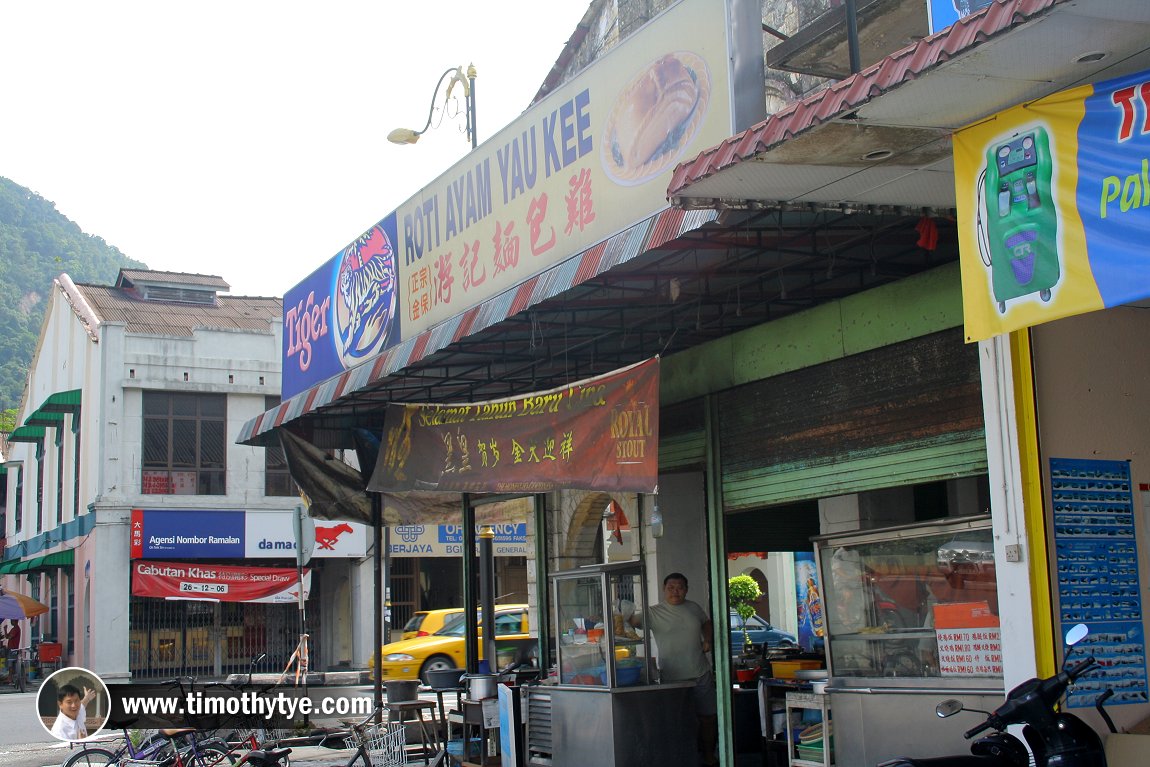 Roti Ayam Yau Kee, Kampar (28 December, 2006)
Kedai Biskut Kampar
Kedai Biskut Kampar is immensely popular with local Chinese travellers, particularly ladies, who stop over here to purchase local puff pastries. The shop has been in the same spot as of Aug 2017.
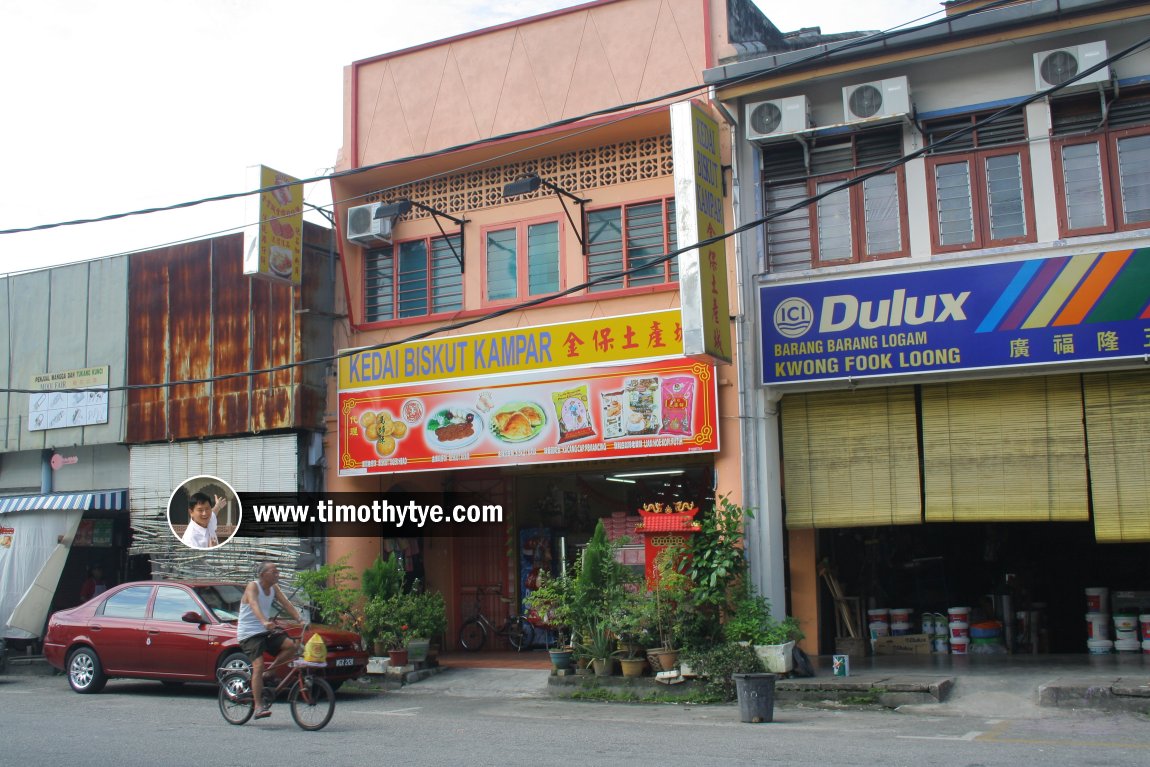 Kedai Biskut Kampar (28 December, 2006)
Kampar Chinese Temple
Kampar Chinese Temple is a large temple in the heart of Kampar. It has a large compound facing the Kampar Main Road (Federal Route 1). Right across from the temple is Jalan Tokong, a road that is laid out to form an avenue from the temple. The temple itself is on an elevation with a series of staircase leading up to it.
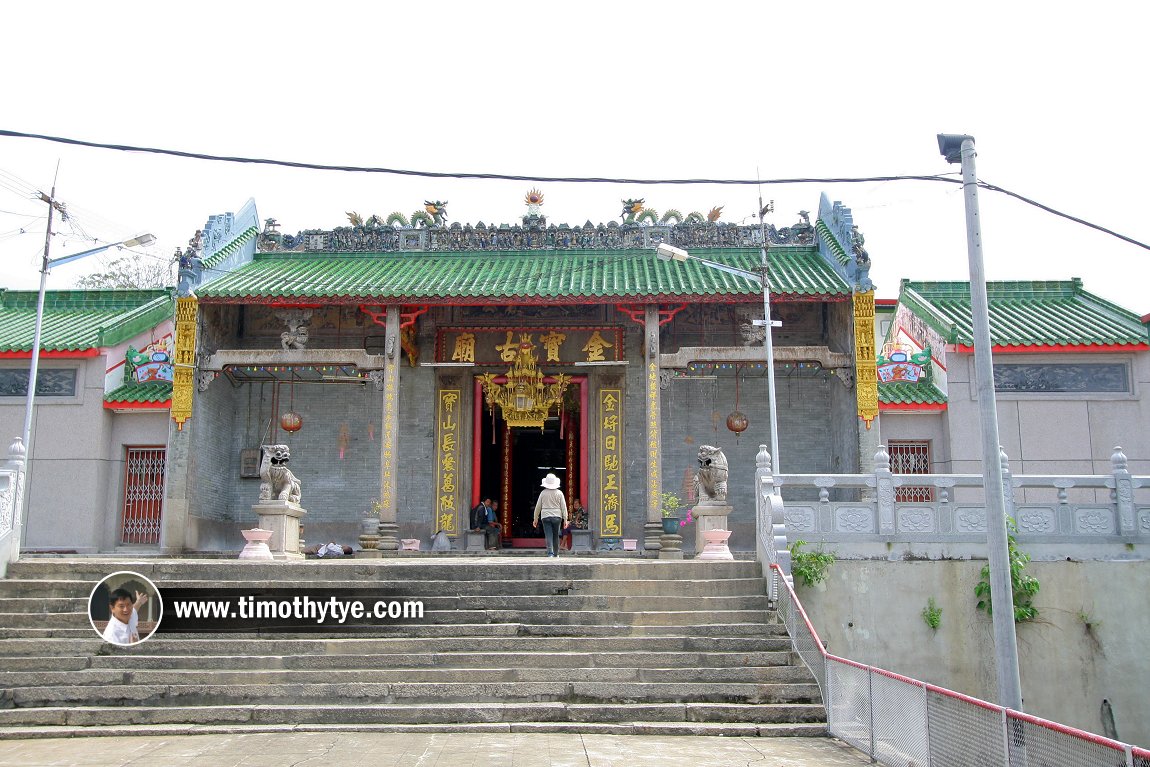 Kampar Chinese Temple (28 December, 2006)
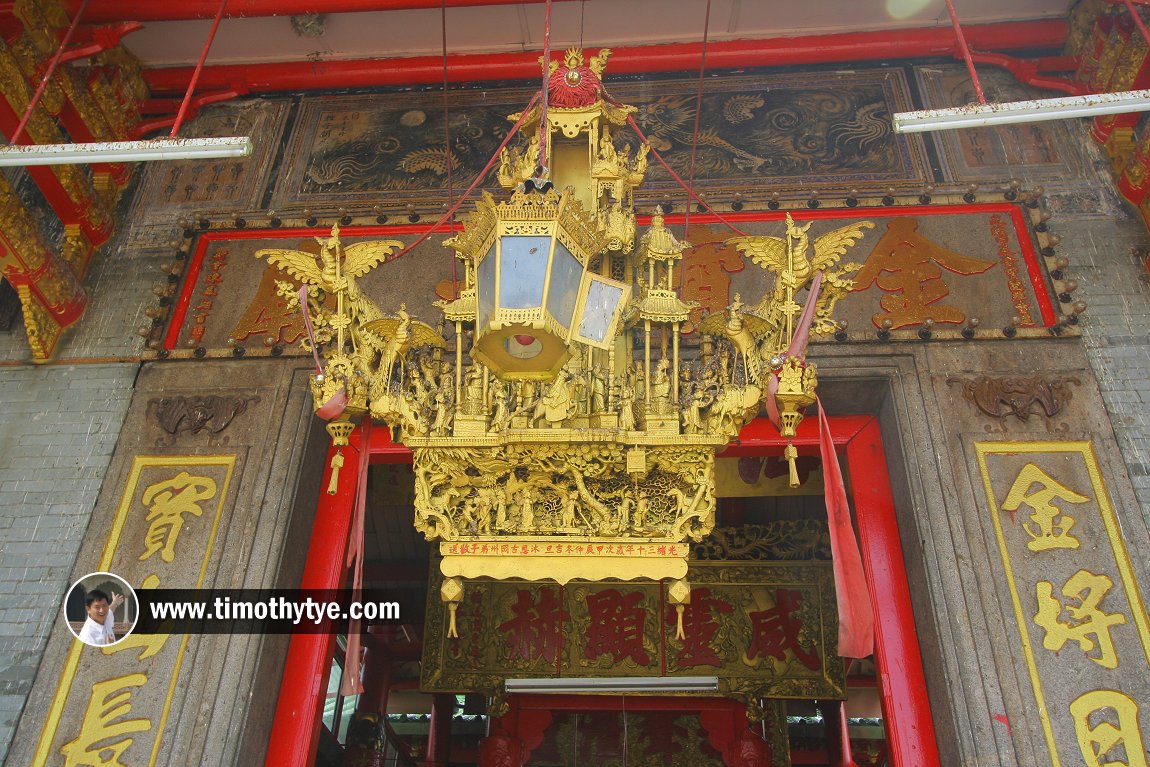 Intricate gilded ornamentation over the front entrance of Kampar Chinese Temple (28 December, 2006)
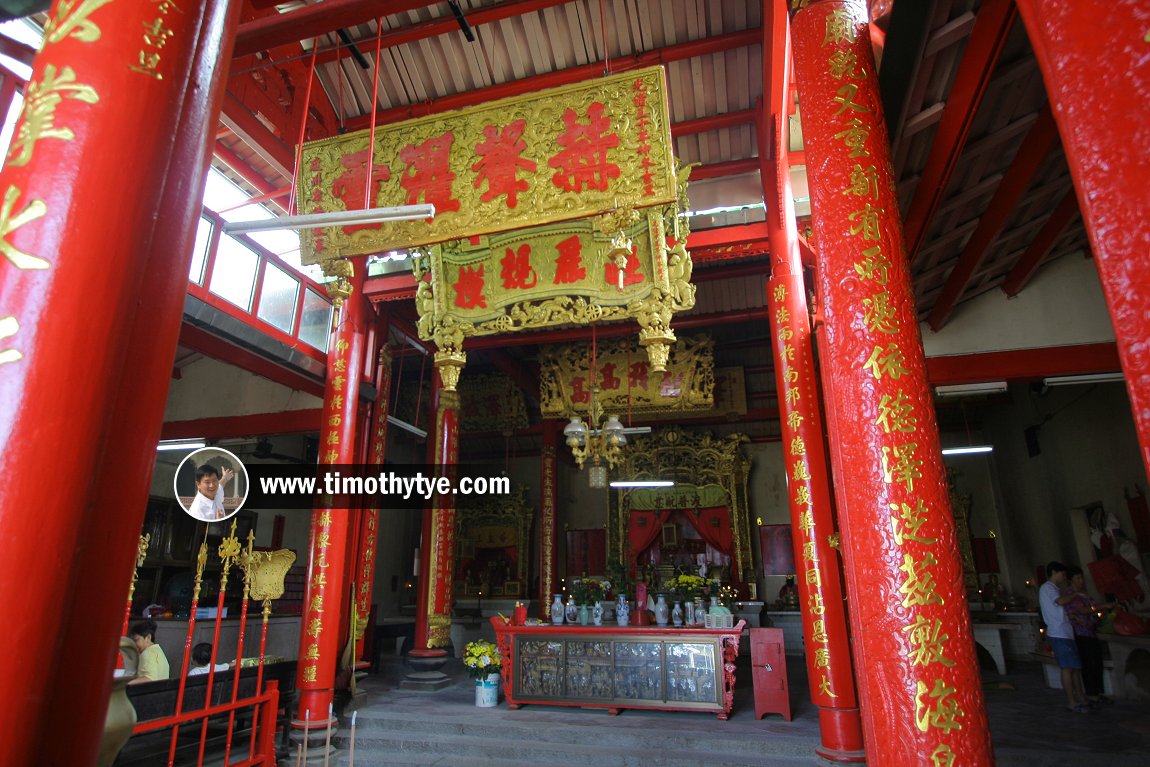 Prayer hall of Kampar Chinese Temple (28 December, 2006)
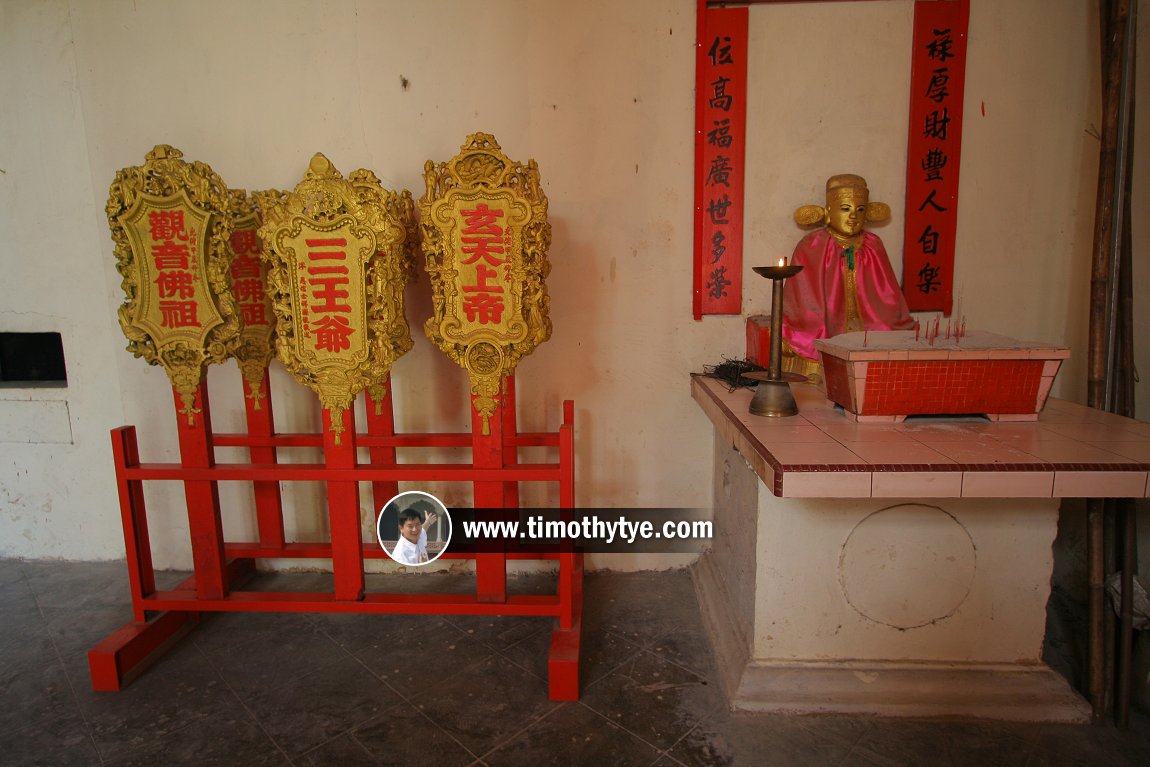 Ceremonial parade banners and side altar inside Kampar Chinese Temple (28 December, 2006)
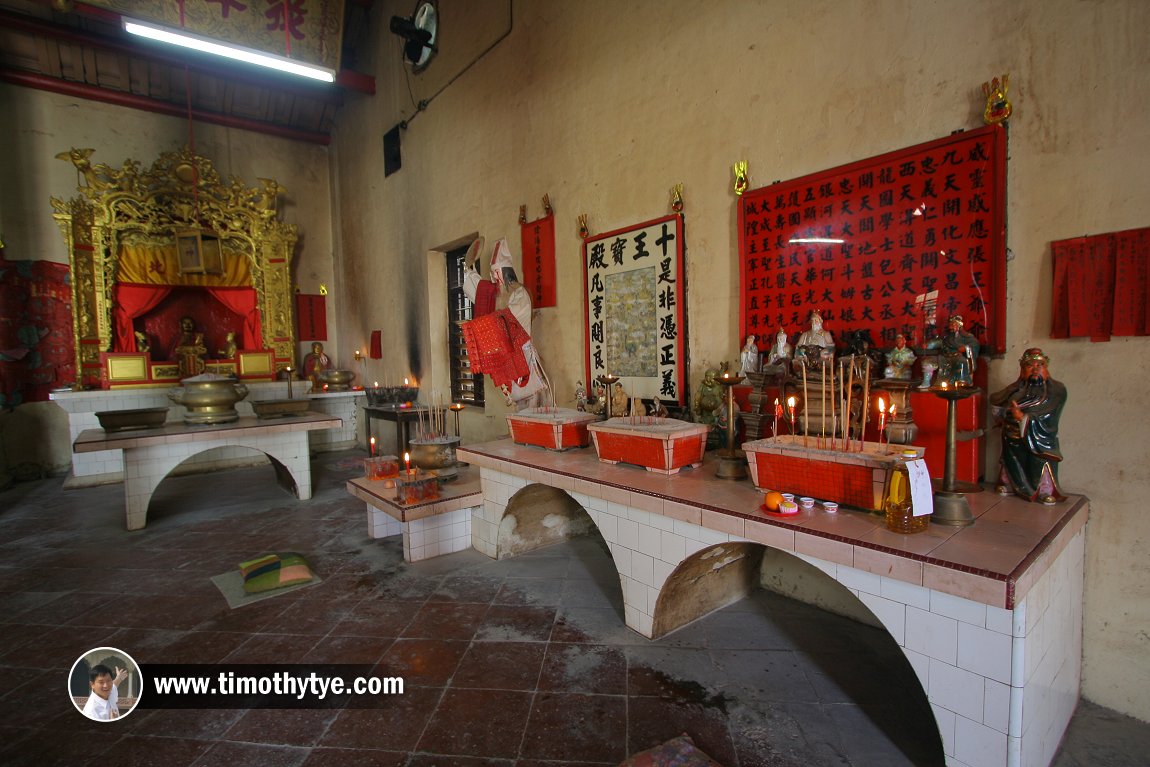 Altars inside Kampar Chinese Temple (28 December, 2006)
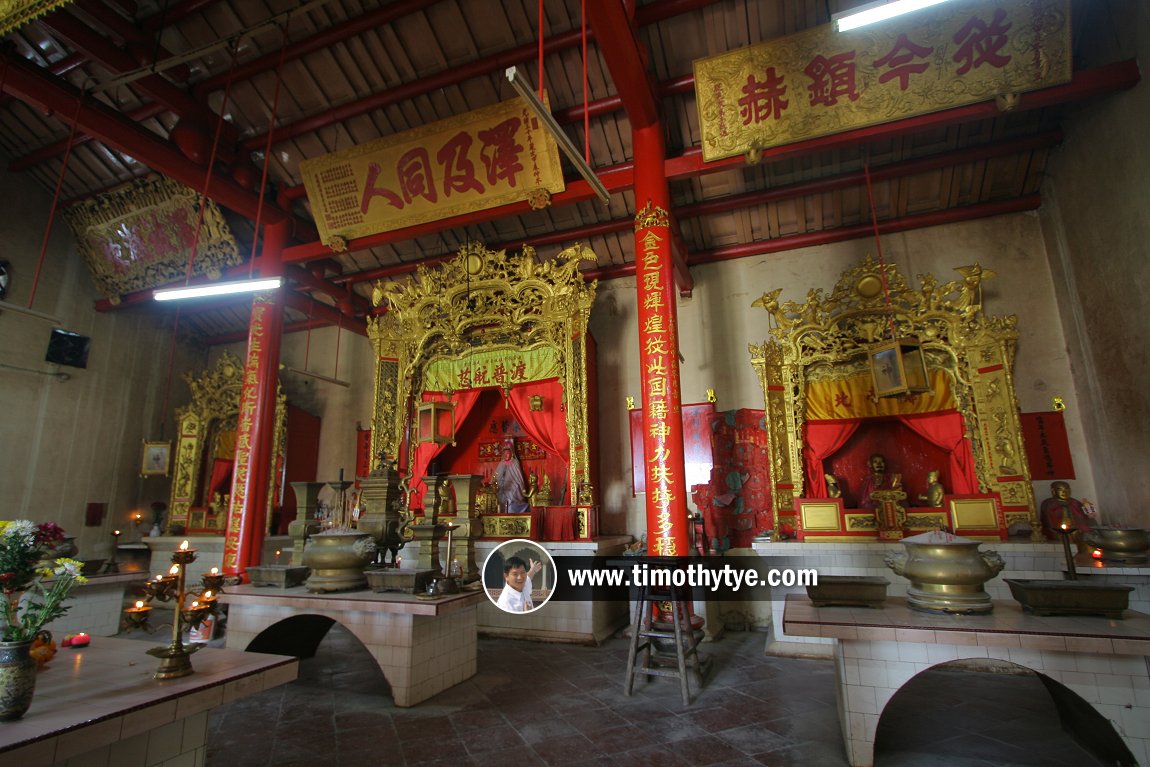 Main altars of Kampar Chinese Temple (28 December, 2006)
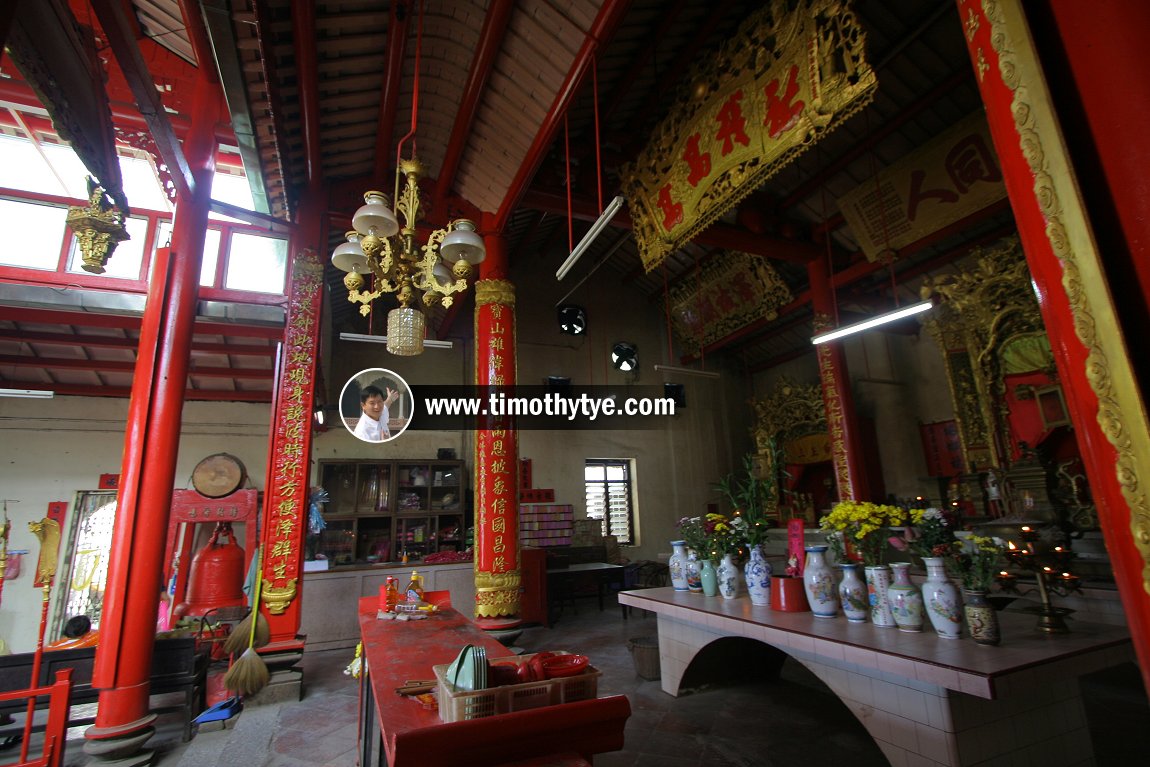 Prayer hall of Kampar Chinese Temple (28 December, 2006)
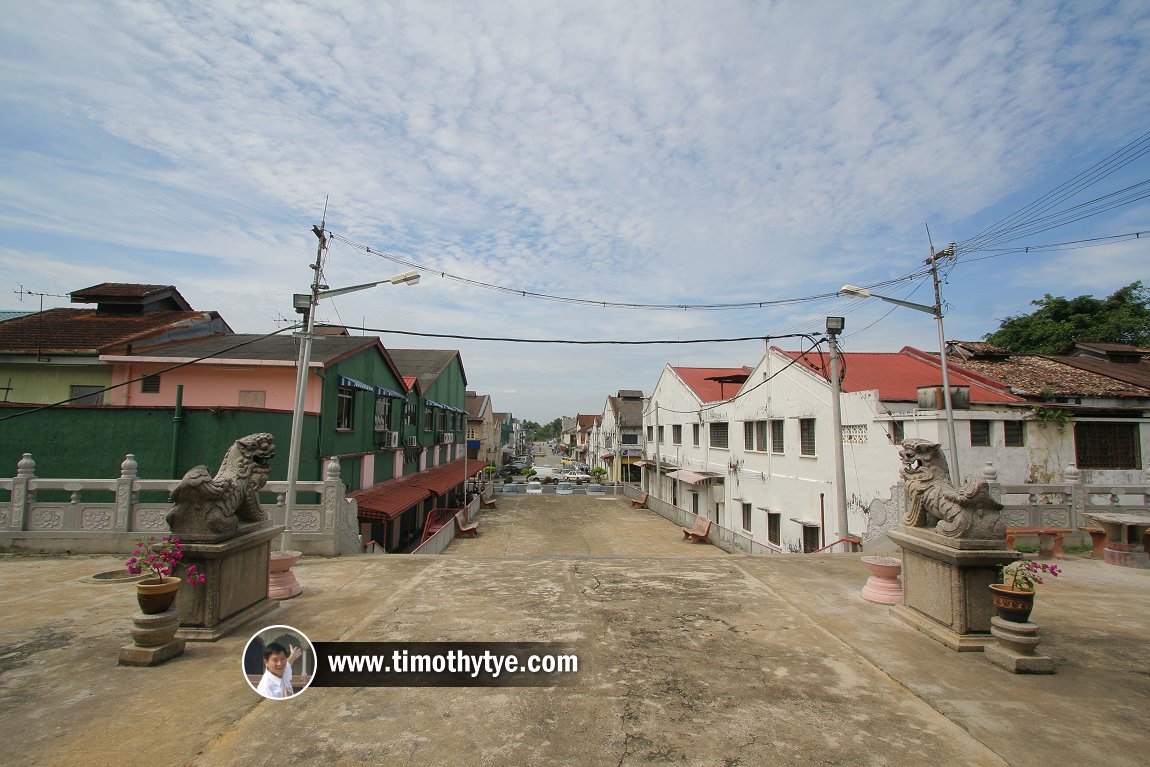 Front courtyard of Kampar Chinese Temple with Jalan Tokong extending beyond it. (28 December, 2006)
Other sights in Kampar
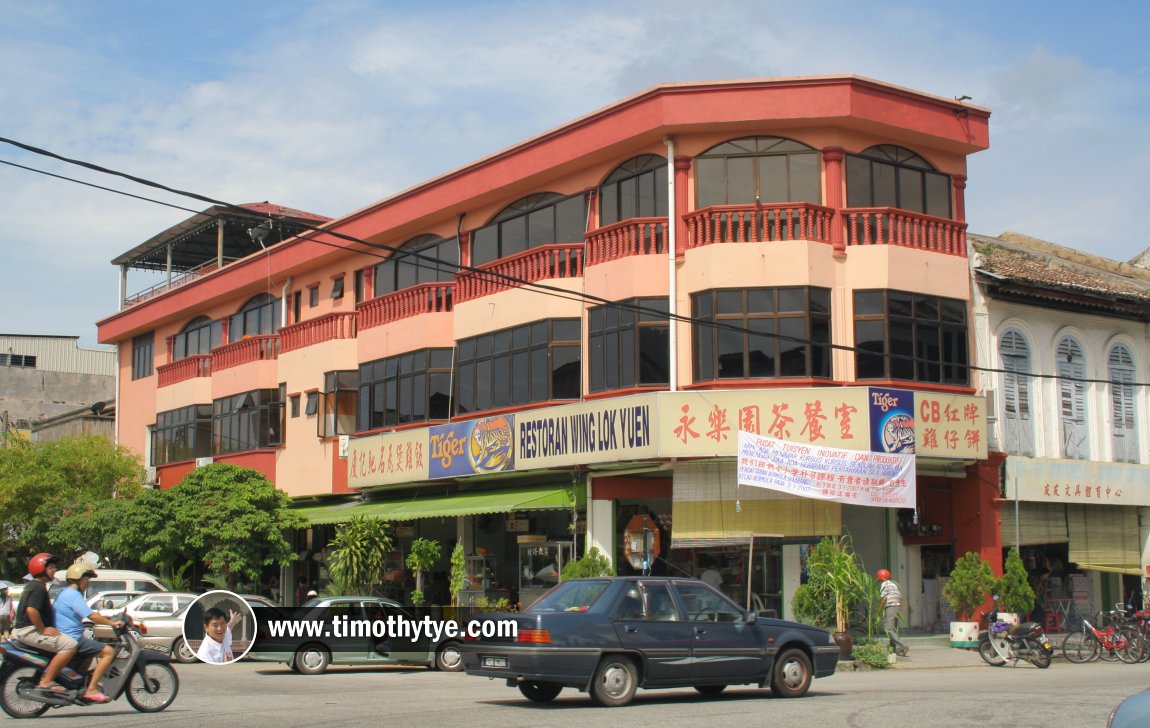 Restoran Wing Lok Yuen, Kampar (28 December, 2006)
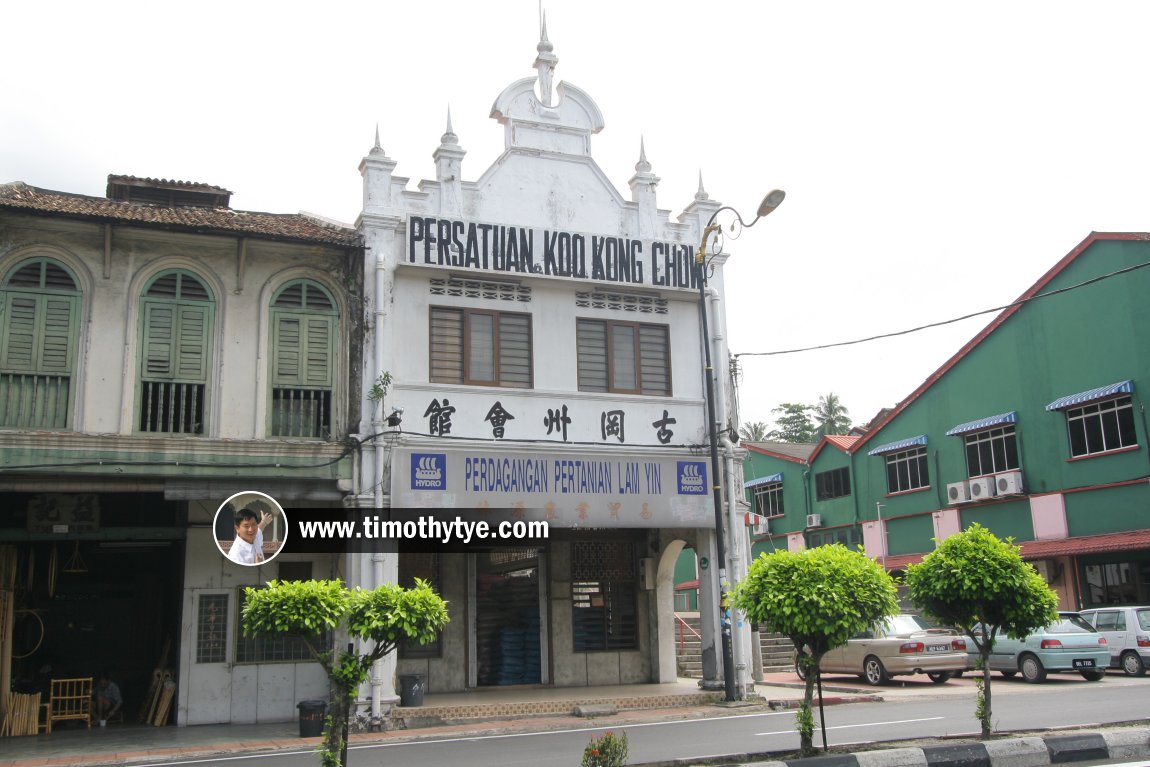 Koo Kong Chow Association, Kampar (28 December, 2006)
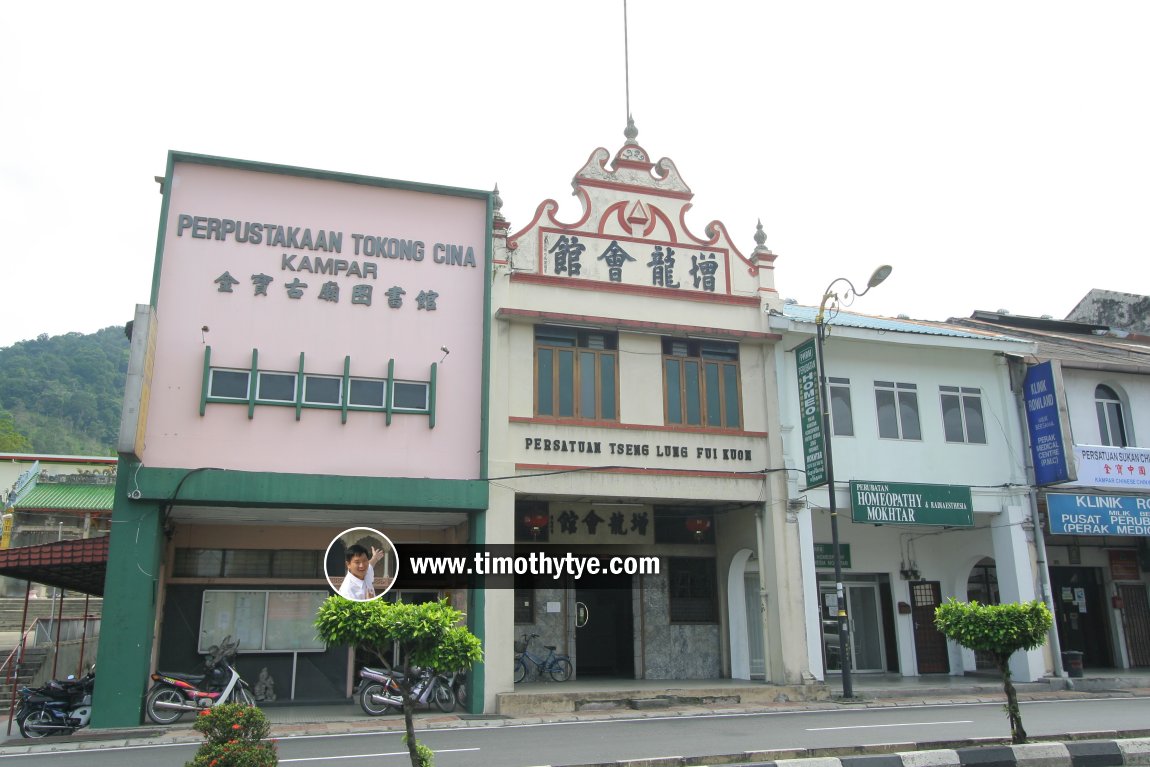 Tseng Lung Fui Kuon Association, Kampar (28 December, 2006)
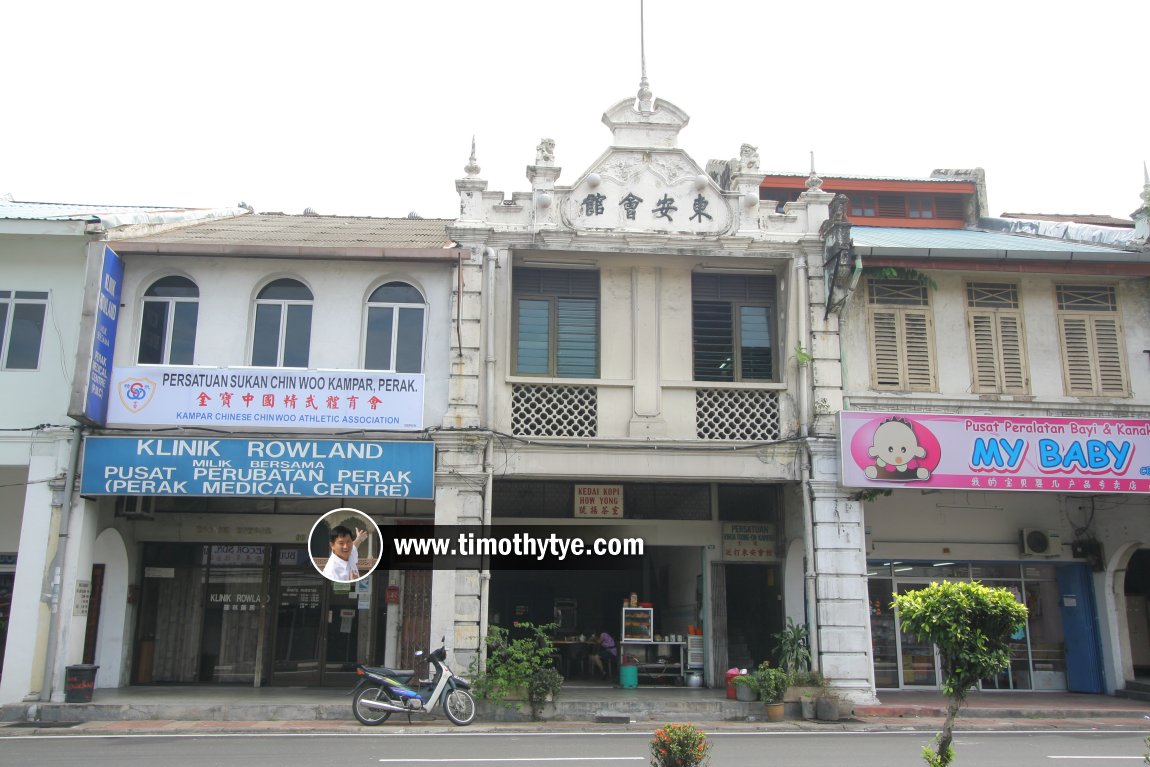 Kinta Toong On Association, Kampar (28 December, 2006)
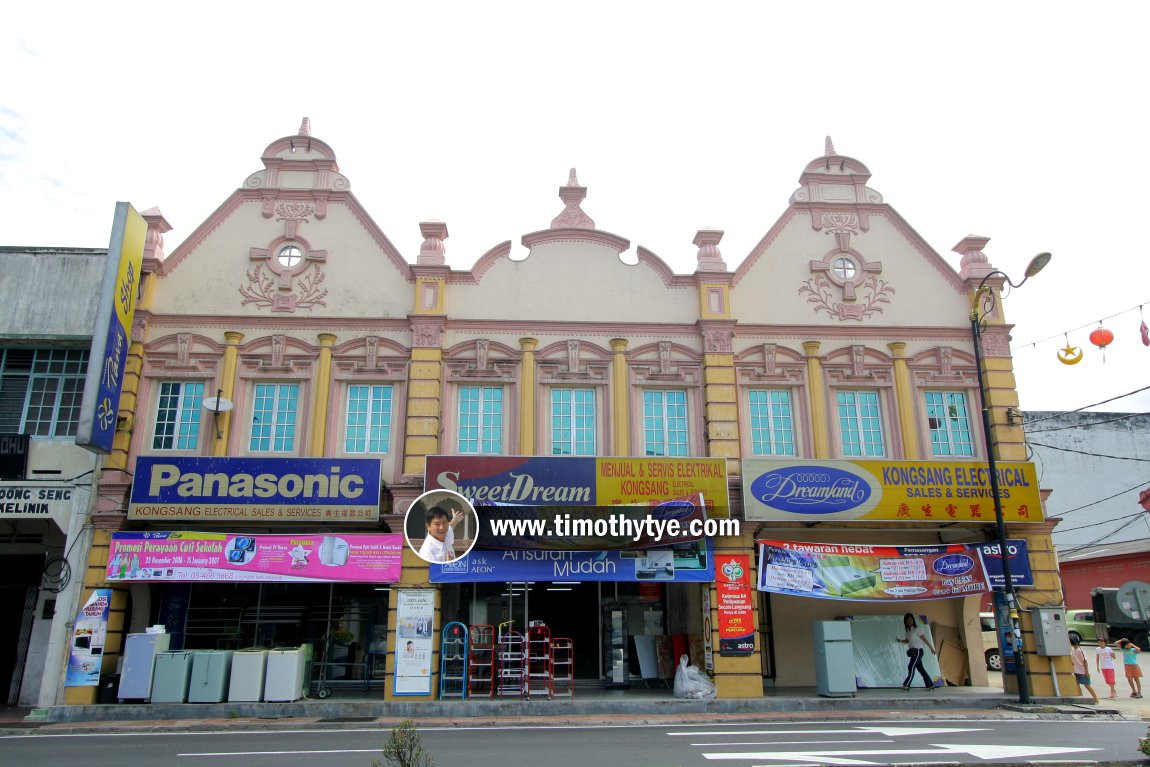 Wisma Tamil Methodist , Kampar, housing Kongsang Electrical Sales & Services. (28 December, 2006)
References
- Kampar District Council – Background and History of Kampar
- Kampar District Council – Kinta Tin Mining Museum
- Kampar District Council – Gopeng Museum
- Tourism Perak Malaysia – Kampar
- Tourism Perak Malaysia – Gua Tempurung
- Tourism Perak Malaysia – Kinta Valley National Geopark
- Universiti Tunku Abdul Rahman – UTAR 20th Anniversary Publication
- Keretapi Tanah Melayu Berhad – ETS
- Jabatan Agama Islam Perak – Masjid An-Nur, Kampar
- Jabatan Agama Islam Perak – Masjid Al-Muttaqin, Malim Nawar
Page Details
This page was created on 14 September 2026. Hi, my name is Timothy and created it from my research, for my own entertainment, knowledge and to satisfy my curiosity. I am providing the information to you in good faith and hope it is useful. I try to get the details as accurate as possible. I also try to update the page whenever I stumble on new details. So this and all my other pages are perpetual work in progress. If you discover any error, please politely inform me, pointing out where the error lies, and I will correct it as soon as possible. Your helpfulness will keep this page accurate, relevant and helpful to those who need the information.Buy Me A Coffee
If you enjoy the information I provide and want to support the work I do, please buy me a coffee! I appreciate it immensely, thank you so much!
