
Kuala Gula Travel Guide
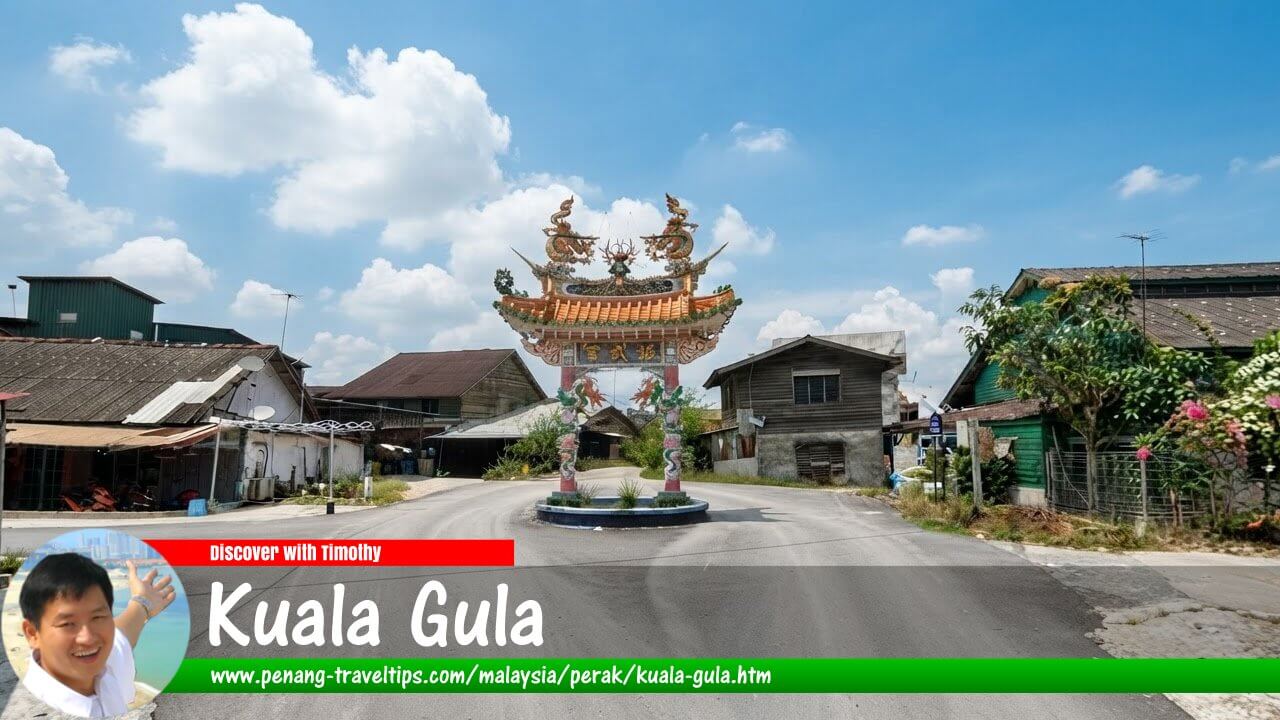 Kuala Gula Travel Guide (AI generated on 10 September 2026)
Also available: Panduan Melawat Kuala Gula
Kuala Gula Travel Guide provides practical information for visiting this small fishing village in the Kerian district of Perak. Located on the coast beside mangrove forests and river estuaries, Kuala Gula is best known for the Kuala Gula Bird Sanctuary, fishing, seafood, mangrove ecosystems and its traditional coastal village environment.
Unlike the larger tourist destinations of Perak, Kuala Gula is a quiet rural destination where the main attractions are nature and everyday life. It is particularly suitable for birdwatchers, photographers, anglers, nature lovers and travellers interested in Malaysia's fishing communities. Kuala Gula can also be combined with visits to Kuala Kurau, Ban Pecah, Tanjong Piandang, Bukit Merah and other attractions in the Kerian district.
Quick Facts
- Name: Kuala Gula
- District: Kerian
- State: Perak
- Type of settlement: Coastal fishing village
- Main attraction: Kuala Gula Bird Sanctuary
- Natural environment: Mangrove forest, mudflats, river estuaries and coastal waters
- Main activities: Birdwatching, nature observation, photography, fishing, boating and exploring the fishing village
- Nearby destinations: Kuala Kurau, Tanjong Piandang, Ban Pecah, Bukit Merah and Parit Buntar
- Nearest major town: Parit Buntar
- Nearest major airport: Penang International Airport
Where Is Kuala Gula?
Kuala Gula is a coastal village in the Kerian district in northwestern Perak. The district borders Kedah and Penang, making Kuala Gula accessible from northern Perak as well as from Seberang Perai.
The village is situated around the mouth of the Gula River and adjoining coastal waterways. Its geographical setting places it beside an extensive mangrove environment that forms part of the wider Matang mangrove ecosystem.
Tourism Malaysia describes Kuala Gula as a small fishing village approximately 50 kilometres west of Taiping. The village is also close to Kuala Kurau and the other coastal settlements of Kerian.
What Is Kuala Gula Known For?
Kuala Gula is principally known for three things: birdwatching, mangrove forests and fishing. These three aspects are closely connected.
The mangroves provide feeding and resting grounds for birds, while the estuaries and coastal waters support fish, prawns, crabs and other marine life. The same environment supports the livelihood of the local fishing community.
For travellers, this means that Kuala Gula is less about conventional sightseeing and more about experiencing a coastal ecosystem and observing the relationship between the village and its natural surroundings.
Kuala Gula Bird Sanctuary
The Kuala Gula Bird Sanctuary is the principal attraction in the area. The sanctuary was established in 1970 by the Department of Wildlife and National Parks, or PERHILITAN, to protect resident and migratory birds.
The sanctuary encompasses a combination of tidal mudflats, estuaries and mangrove forests. These habitats are particularly important to shorebirds and waterbirds, including migratory species travelling along the East Asian–Australasian Flyway.
More than 190 bird species have been recorded in the Kuala Gula area, with recent scientific research describing the sanctuary as supporting more than 200 species. The precise number can vary according to the period and survey methodology used.
Kuala Gula is also recognised as part of the Matang Important Bird Area, identified as IBA MY05. Its importance comes from the combination of mangrove, estuarine and intertidal habitats.
Birds You May See
The birdlife varies according to season, tide, weather and location. Species recorded in the area include herons, egrets, terns, kites, sea-eagles, sandpipers, plovers, greenshanks, redshanks and whimbrels.
The area is also associated with threatened waterbirds such as the Milky Stork and Lesser Adjutant. Sightings of any particular species should not be guaranteed, however, as wild birds move according to food availability, tides and weather.
When Is the Best Time for Birdwatching?
Migratory birds are an important part of Kuala Gula's appeal. Large numbers of birds arrive in Malaysia during the northern winter, although the exact timing and abundance vary from year to year.
August to December has traditionally been highlighted as an important period for migratory birds at Kuala Gula, while broader migration seasons may extend beyond these months. Travellers whose main purpose is birdwatching should therefore check recent local conditions and consult PERHILITAN or an experienced local guide.
Early morning is generally preferable for birdwatching because temperatures are cooler and birds may be more active. Tidal conditions are also important because many shorebirds feed on exposed mudflats during suitable stages of the tide.
PERHILITAN Kuala Gula
The Kuala Gula Wildlife Conservation Centre is associated with PERHILITAN and supports wildlife conservation, research, monitoring and public awareness. The centre has been associated with bird inventories, bird ringing and conservation activities.
Because facilities and access arrangements can change, visitors should check directly with PERHILITAN before travelling if they intend to visit the conservation centre or require specific information about access, guided activities or facilities.
The current PERHILITAN directory lists PKHL Kuala Gula Perak and provides the telephone number 05-890 2207. This is useful for visitors who want to verify arrangements before making a special trip.
The Matang Mangrove Environment
Kuala Gula forms part of the northern coastal landscape associated with the Matang mangrove ecosystem. Mangrove forests grow in tidal environments where freshwater and seawater interact, particularly around river mouths, mudflats and sheltered coastal areas.
Mangroves are important for both wildlife and people. Their root systems provide shelter and nursery areas for marine organisms, while the forest helps protect coastlines and supports fisheries.
The mangroves around Kuala Gula therefore have ecological importance beyond their value as a birdwatching destination. They form part of the natural system that supports the local fishing economy.
Fishing Village
Kuala Gula remains a working fishing village rather than a settlement created primarily for tourism. Fishing has traditionally been one of the main occupations of the local population.
Boats, fishing equipment, jetties, fish cages and other signs of the fishing industry can be seen around the village and waterways. Depending on the time of day, visitors may observe fishermen preparing boats, landing catches or carrying out maintenance work.
The fishing community is an important part of what makes Kuala Gula interesting to visitors. Travellers should remember that the jetties, boats and work areas are also workplaces, so photography and exploration should be carried out respectfully.
Fishing and Angling
Kuala Gula is also known among anglers for its coastal and estuarine fishing opportunities. The combination of rivers, mangrove channels and coastal waters provides habitat for various fish and other marine species.
Anglers who want to fish from a boat should arrange their trip with a local operator who knows the waterways. Conditions can change with tides, weather and currents, and some areas may be unsuitable or restricted.
Visitors should also follow local fishing regulations and avoid catching protected wildlife or removing animals from conservation areas.
Prawns, Crabs and Aquaculture
The waters around Kuala Gula support a range of marine resources, including prawns and crabs. Small-scale fisheries and aquaculture have therefore become closely associated with the local economy.
Fish cages can be seen in some waterways, and aquaculture forms another connection between the local community and the surrounding aquatic environment.
For visitors, these activities are best appreciated as part of the working landscape rather than treated simply as tourist attractions.
Local Seafood
Seafood is naturally an important part of Kuala Gula's food culture. Local restaurants and food stalls have traditionally served fish, prawns, crabs and other products associated with the coastal environment.
Kuala Gula has also been associated with products such as belacan, or shrimp paste, reflecting the importance of prawns and other marine products to local food production.
Travellers looking for seafood should consider visiting local eateries during their operating hours, particularly around lunch and dinner. Small village businesses may have different operating days and hours, so options can be more limited than in larger towns.
Food for Muslim Travellers
Kuala Gula has a mixed population, and not every food establishment in the village is necessarily halal. Muslim travellers should therefore check the status of a restaurant before ordering, especially at Chinese coffee shops and seafood establishments.
Seafood itself is generally permissible in Islam, but the preparation, sauces, cooking oils and other ingredients used by a particular restaurant may differ. When in doubt, ask the operator about the ingredients and preparation method.
For a more straightforward choice, Muslim travellers can look for Malay-run eateries or establishments that clearly indicate that their food is halal.
Traditional Village Atmosphere
One of Kuala Gula's attractions is its relatively quiet village atmosphere. The settlement is surrounded by waterways, mangroves and coastal landscapes rather than large commercial developments.
Walking or driving slowly through the village provides opportunities to observe traditional houses, fishing boats, small businesses and everyday activities. The experience is especially suitable for travellers interested in rural Malaysia and places that have retained a strong connection with their natural environment.
Photography in Kuala Gula
Kuala Gula offers a wide range of subjects for photography. These include mangrove trees, fishing boats, mudflats, birds, river scenes, fishing equipment, village houses and sunsets over the coastal landscape.
Bird photographers should bring binoculars or a telephoto lens rather than attempting to approach birds closely. Keeping a respectful distance reduces disturbance to wildlife.
When photographing local residents, fishermen or private homes, ask permission when appropriate. A working fishing village should not be treated as an open-air exhibition without regard for the privacy of its residents.
Boat Trips and Mangrove Exploration
One of the best ways to appreciate Kuala Gula's environment is from the water. Local operators may offer boat trips through mangrove channels, fishing grounds and nearby coastal waters.
The availability of boat tours can vary, and visitors should make arrangements in advance rather than assuming that a boat will always be available on arrival.
When taking a boat trip, wear the provided life jacket, follow the boatman's instructions and avoid standing unnecessarily while the boat is moving. Weather and tidal conditions should also be considered before departure.
Fireflies and Night Activities
The wider Kerian area has opportunities for observing fireflies, particularly around suitable riverine and mangrove habitats. These activities are generally arranged as guided evening excursions rather than independent walks.
Visitors interested in combining Kuala Gula with a firefly trip can consider the Kampung Dew area, which is another nature attraction promoted in the Kerian region.
Night-time wildlife activities should be undertaken with a local operator. Avoid shining bright lights directly at wildlife and follow the operator's instructions to minimise disturbance.
Nearby Kuala Kurau
Kuala Kurau is one of the most convenient destinations to combine with Kuala Gula. It is another traditional fishing settlement in Kerian, situated around the mouth of Sungai Kurau.
Kuala Kurau is known for its fishing industry, river scenery, aquaculture, seafood and village atmosphere. The two destinations can therefore be visited together as part of a coastal Kerian itinerary.
Ban Pecah
Ban Pecah is a coastal area near Tanjong Piandang known for its sea views and sunset scenery. It is another suitable stop for visitors exploring the coastal settlements of Kerian.
A Kuala Gula–Kuala Kurau–Tanjong Piandang–Ban Pecah route provides a varied experience, combining birdwatching, fishing villages, mangroves, seafood and open coastal scenery.
Tanjong Piandang
Tanjong Piandang is another fishing and coastal community in Kerian. Tourism Perak promotes the area partly for its seafood and coastal character.
Visitors can combine Tanjong Piandang with Kuala Gula and Kuala Kurau without needing to travel far into the interior of Perak.
Bukit Merah
Bukit Merah lies inland from the coastal villages and provides a contrasting environment of lake and recreational attractions. The Bukit Merah area is home to the Bukit Merah Orang Utan Island Foundation and Bukit Merah Laketown Resort.
A visit to Kuala Gula can therefore be combined with Bukit Merah for travellers who want to experience both coastal nature and inland recreation.
Parit Buntar
Parit Buntar is the main urban centre of the Kerian district and is useful as a base for visitors exploring Kuala Gula and the surrounding coastal villages.
The town provides a wider selection of shops, restaurants, services and accommodation than Kuala Gula. Travellers arriving by train may also find Parit Buntar a useful transport point before continuing to Kuala Gula by road.
How to Get to Kuala Gula
By Car
Driving is the most convenient way to visit Kuala Gula because the village is relatively remote from the main urban centres and public transport options are limited.
From the North–South Expressway, visitors can use the Bukit Merah interchange and continue towards Kuala Kurau and Kuala Gula using local roads.
From Penang, travellers can cross into mainland Penang and continue southwards towards the Kerian district. From Taiping, Kuala Gula can be reached by road through the western part of Larut and Matang and onward towards the coastal area.
Navigation applications are useful, but travellers should also pay attention to local road signs because some final approaches to Kuala Gula use smaller village roads.
By Train
The nearest useful railway connection for many visitors is Parit Buntar railway station. From Parit Buntar, travellers need to continue to Kuala Gula by road.
Travellers arriving by train should arrange onward transport in advance, particularly if arriving outside normal daytime hours.
From Penang International Airport
For international travellers, Penang International Airport is one of the more practical airports for reaching Kuala Gula. From the airport, the journey continues through mainland Penang and into northern Perak.
A rental car is particularly useful for overseas visitors who intend to explore Kuala Gula together with Kuala Kurau, Ban Pecah, Tanjong Piandang and Bukit Merah.
Getting Around Kuala Gula
Kuala Gula is a small village and does not have an extensive public transport network. A private vehicle or rental car is therefore the most convenient option for independent travellers.
Walking can be enjoyable around the village, but the bird sanctuary, mangrove areas and surrounding attractions are spread over a wider area. A vehicle is useful if you intend to explore several locations in one day.
Suggested One-Day Itinerary
Early morning: Arrive in Kuala Gula and begin with birdwatching around the sanctuary. Early morning is generally more comfortable for outdoor activities and can provide good opportunities for observing birds.
Late morning: Explore the fishing village and riverfront. Observe fishing boats, local businesses and the surrounding mangrove environment.
Lunch: Have lunch at a local seafood or Malay eatery, checking the halal status of the establishment if necessary.
Afternoon: Arrange a boat or mangrove excursion if available, or continue towards Kuala Kurau and explore its fishing village and river environment.
Late afternoon: Continue to Tanjong Piandang or Ban Pecah for coastal scenery and sunset.
Evening: Return to Kuala Gula, Kuala Kurau or Parit Buntar, or continue to a pre-arranged accommodation.
Suggested Two-Day Itinerary
For a more relaxed trip, spend the first morning and afternoon exploring Kuala Gula and its bird sanctuary. The second day can be devoted to Kuala Kurau, Ban Pecah and Tanjong Piandang.
Another option is to combine Kuala Gula with Bukit Merah. This provides a broader experience of the Kerian district, from mangrove and coastal ecosystems to the freshwater lake environment of Bukit Merah.
Accommodation
Accommodation options in Kuala Gula are more limited than in Parit Buntar or Taiping. The area has historically offered village homestays and accommodation associated with the bird sanctuary and ecotourism activities.
Travellers who want a wider choice of hotels may prefer to stay in Parit Buntar, while those seeking a nature-oriented experience can look for accommodation or homestay options in the Kuala Gula and Kuala Kurau area.
Because small accommodation providers may operate seasonally or change their arrangements, it is advisable to confirm availability before travelling.
For Birdwatchers
Kuala Gula should be high on the list of birdwatchers visiting northern Perak. Its combination of mangroves, mudflats and estuaries creates a variety of habitats within a relatively compact coastal area.
- Bring binoculars and, if possible, a telephoto lens.
- Visit early in the morning for more comfortable conditions.
- Check tidal conditions before visiting mudflats.
- Use a local bird guide if you want to identify less familiar species.
- Keep a safe distance from birds and nesting areas.
- Do not feed, chase or deliberately disturb wildlife.
- Wear suitable footwear if walking near muddy or wet areas.
For Families
Kuala Gula can be an interesting destination for families who want to introduce children to mangroves, birds and fishing communities.
Children can learn how mangroves support fish and other marine organisms and why coastal wetlands are important to migratory birds.
Parents should supervise children closely near rivers, jetties, boats, mudflats and fishing equipment. Mangrove mud can also be deep and unstable, so children should not enter the mudflats without appropriate supervision and guidance.
For Foreign Travellers
Kuala Gula is particularly worthwhile for foreign visitors who want to see a side of Malaysia beyond the major cities, islands and commercial resorts.
The village provides an opportunity to observe a working fishing community, while the bird sanctuary introduces visitors to one of the important wetland ecosystems of the west coast of Peninsular Malaysia.
English is understood in some tourism-related settings, but Kuala Gula remains a local village rather than a heavily internationalised tourist destination. Having the name and address of your accommodation saved on your phone can be useful when communicating with drivers or local residents.
Responsible Tourism
The natural environment is the principal reason to visit Kuala Gula, and responsible behaviour is therefore especially important.
- Do not litter in the village, river or mangrove areas.
- Do not collect shells, plants or wildlife from protected areas.
- Do not disturb nesting or feeding birds.
- Keep noise levels low when birdwatching.
- Do not enter private jetties, fishing areas or aquaculture facilities without permission.
- Support local food businesses, guides, boat operators and homestays where appropriate.
- Follow instructions from PERHILITAN and other authorities.
When to Visit
Kuala Gula can be visited throughout the year, but birdwatchers should consider the migratory season when planning their trip.
For general sightseeing, the early morning and late afternoon are usually more pleasant than the middle of the day. These periods are also more suitable for photography.
Heavy rain and rough coastal conditions can affect boat trips and other outdoor activities. Visitors should check the weather forecast and confirm boat arrangements before travelling.
Practical Tips
- Bring drinking water, sunscreen, insect repellent and a hat.
- Wear comfortable shoes suitable for village roads and nature areas.
- Bring binoculars if birdwatching is a main purpose of the trip.
- Carry sufficient cash because some small village businesses may not accept cashless payments.
- Do not assume that every seafood restaurant is halal.
- Arrange boat trips and accommodation in advance when possible.
- Check with PERHILITAN before visiting the conservation centre if you require specific facilities or access information.
- Be particularly careful near rivers, jetties, mudflats and mangrove channels.
Conclusion
Kuala Gula is a small coastal destination where fishing, mangroves and birdlife are closely connected. Its most important attraction is the Kuala Gula Bird Sanctuary, but the village itself is also worth experiencing for its fishing boats, seafood, waterways and traditional coastal setting.
For local travellers, Kuala Gula makes a worthwhile day trip from other parts of Perak, Penang or Kedah. For foreign travellers, it offers an opportunity to experience a quieter and more natural side of Malaysia. The village is particularly rewarding when combined with Kuala Kurau, Tanjong Piandang, Ban Pecah and Bukit Merah as part of a wider Kerian itinerary.
Map of Kuala Gula, Perak
Sights in Kuala Gula
- Chew Boo Kong Temple (GPS: 4.93096, 100.46664)

- Hua Seng Temple (GPS: 4.95666, 100.47891)

- Kuala Gula Hindu Temple (GPS: 4.97037, 100.5131)

- Kuala Gula Sanctuary Resort (GPS: 4.9391, 100.46873)

- Muara Kuala Gula (GPS: 4.92816, 100.46731)

References
- Tourism Perak – Kerian
- Tourism Malaysia – Birdwatching Paradise: Perak
- Tourism Malaysia – Perak Map Guide
- Department of Wildlife and National Parks (PERHILITAN) – PKHL Kuala Gula Perak
- PERHILITAN – Directory
- Forestry Department of Peninsular Malaysia – Mangrove Forest
- Tourism Perak – Perak Guide Book
- Marine Pollution Bulletin / PubMed – Kuala Gula Bird Sanctuary and migratory shorebirds
- Penang Insider – Things to Do in Kuala Gula, Perak
- Universiti Tunku Abdul Rahman – Kuala Gula, Perak
- Universiti Tunku Abdul Rahman – Jalan Pantai, Perak
- Penang Travel Tips – Kuala Gula, Perak
Page Details
This page was created on 15 September 2026. Hi, my name is Timothy and created it from my research, for my own entertainment, knowledge and to satisfy my curiosity. I am providing the information to you in good faith and hope it is useful. I try to get the details as accurate as possible. I also try to update the page whenever I stumble on new details. So this and all my other pages are perpetual work in progress. If you discover any error, please politely inform me, pointing out where the error lies, and I will correct it as soon as possible. Your helpfulness will keep this page accurate, relevant and helpful to those who need the information.Buy Me A Coffee
If you enjoy the information I provide and want to support the work I do, please buy me a coffee! I appreciate it immensely, thank you so much!
