
Kuala Kurau Travel Guide
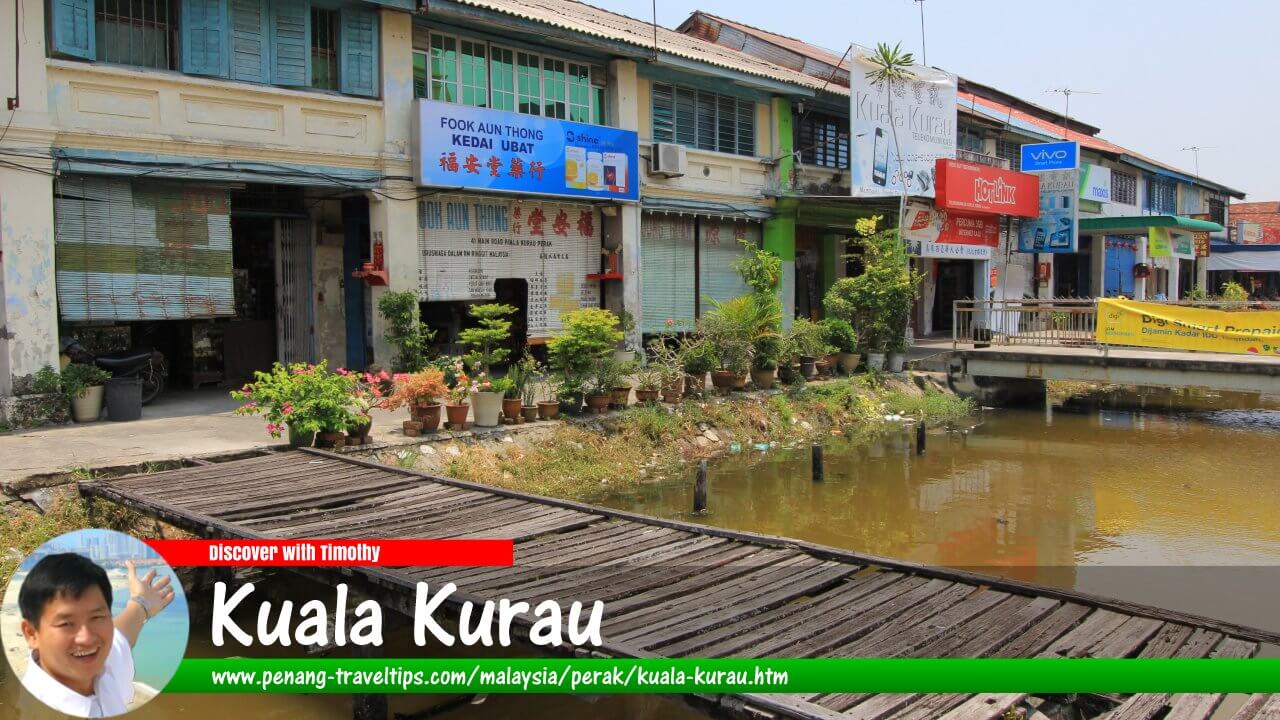 Kuala Kurau Travel Guide (AI generated on 10 September 2026)
Also available: Panduan Melawat Kuala Kurau
Kuala Kurau is a small coastal town and mukim in Kerian District, Perak, on the western side of the district facing the Straits of Malacca. Built around the mouth of the Kurau River, the town is known for its fishing industry, riverine landscape, traditional villages, seafood and rural character.
Although Kuala Kurau is not one of Perak's major tourist destinations, it offers a different kind of travel experience. Visitors can see fishing boats along the river, explore the old town, observe traditional fishing and boat-related activities, sample local food and visit nearby coastal and wetland attractions.
The town is also conveniently located within the wider Kerian tourism area, making it possible to combine a visit to Kuala Kurau with Kuala Gula Bird Sanctuary, Ban Pecah, Tanjong Piandang, Parit Buntar and Bukit Merah.
Quick Facts
Town: Kuala Kurau
District: Kerian
State: Perak
Mukim: Kuala Kurau
Postcode: 34350
Location: Western Kerian, on the Kurau River estuary
Nearest major town: Parit Buntar
Main river: Sungai Kurau
Coast: Straits of Malacca
Main industries: Fishing, aquaculture, agriculture, rice production and local commerce
Known for: Fishing villages, seafood, river scenery, fish farms, salted eggs and traditional rural life
Where is Kuala Kurau?
Kuala Kurau is located in the western part of Kerian District, near the coast of Perak. The mukim borders other parts of Kerian including Tanjung Piandang, Bagan Serai and Selinsing, while the Straits of Malacca lies to the west.
The town is centred on the lower reaches and estuary of Sungai Kurau. The river is an important geographical feature and has historically influenced settlement, transportation, fishing and trade in the area.
Kuala Kurau is approximately 17 kilometres west of Parit Buntar, making Parit Buntar the nearest major town and an important transport centre for visitors arriving by road or rail.
The town is also relatively close to the southern part of Penang, making it a practical destination for a day trip from Penang, particularly for visitors interested in fishing villages, local food and rural landscapes.
The Meaning of Kuala Kurau
The name Kuala Kurau is generally explained as a combination of the Malay word kuala, meaning the mouth or estuary of a river, and kurau, referring to the kurau fish.
Local historical accounts state that kurau fish were once abundant in the river, giving the settlement its name. The explanation is also recorded in a landscape study of Kerian prepared for the local authority.
The name therefore reflects the close relationship between the settlement and its riverine environment.
A Brief History of Kuala Kurau
The exact date when Kuala Kurau was first settled is not firmly documented. Local historical accounts, based on memories passed down by older residents, place the beginning of settlement around the 19th century.
Early Malay families are said to have opened the area for rice cultivation and fishing. As the settlement developed, people from different parts of the region arrived and established farms, fishing communities and businesses.
During the British colonial period, the surrounding area developed plantations, particularly coconut and sugar. Indian workers were brought in to work on plantations, while Chinese settlers became involved in commerce and trade.
Kuala Kurau subsequently developed into a small trading port. Historical accounts describe a customs presence and an import-export function, reflecting the importance of the river and its connection with the coast.
A landscape study of Kerian records that a small harbour and landing jetty were constructed in 1934 to regulate the movement of goods and commodities. The development illustrates the importance of Kuala Kurau as a riverine trading settlement before modern road transport became dominant.
Fishing Heritage
Fishing remains central to the identity of Kuala Kurau. The town and its surrounding villages contain fishing jetties, boat workshops, fish-processing activities and houses situated close to the river.
Historical records show that fishing was already well established in the Kurau area during the late 19th century. A study published in the Journal of the Straits Branch of the Royal Asiatic Society described a Chinese fishing village at the southern bank of the Kurau River entrance, with numerous fishermen, boats and fishing nets.
Today, visitors can still see fishing boats operating from the river and estuary. The sight of boats returning with their catch is one of the most distinctive aspects of Kuala Kurau.
The town therefore offers an opportunity to observe a working fishing community rather than a fishing village recreated specifically for tourism.
Kurau River
Sungai Kurau is the geographical centre of Kuala Kurau. The river flows from the inland areas of Kerian before reaching the coast at Kuala Kurau.
The river historically functioned as a transportation route and remains closely connected with fishing and aquaculture. Today, its banks provide some of the best opportunities to observe boats, jetties, riverside houses and everyday activity.
Visitors should remember that this is a working river. Fishing boats and other vessels may be moving through narrow waterways, and visitors should not obstruct jetties or private working areas.
Kuala Kurau Riverfront
The riverfront is one of the easiest places to experience the character of Kuala Kurau without joining an organised tour. The Taman Pinggiran Sungai Kurau is listed by Majlis Daerah Kerian as a public recreational area.
A walk along the river provides views of the waterway and the surrounding settlement. Early morning and late afternoon are particularly suitable for photography because fishing activity is often more noticeable and the light is softer.
The riverfront also provides a useful introduction to the relationship between the town and the fishing industry.
Kuala Kurau Bridge
Kuala Kurau Bridge, also known as Jambatan Baru Kuala Kurau, crosses Sungai Kurau and provides a direct road connection between Kuala Kurau and the road towards Kuala Gula.
The bridge was constructed between 2002 and 2005 at a reported cost of RM57.26 million. Its completion improved road connectivity between the fishing villages and surrounding parts of Kerian.
Before the modern road connection, some of the riverside communities depended much more heavily on boats for movement between settlements. The bridge therefore represents an important change in the physical development of Kuala Kurau.
Fishing Villages
Several fishing communities surround Kuala Kurau. Among the most notable is the area along Jalan Pantai, where fishing has long been an important occupation.
Jalan Pantai developed as a fishing village during the 20th century. Historical research describes its residents as being predominantly Hokkien Chinese and notes the importance of fishing and small family businesses.
The road connection across the river substantially improved access to these communities and allowed residents to travel more easily towards Taiping, Kuala Kurau and Butterworth.
Visitors should approach fishing villages respectfully. Fishing boats, nets, workshops and jetties are workplaces rather than tourist displays, so it is best to ask permission before photographing people or entering private premises.
Boat Tours and Fish Farms
One of the more interesting ways to experience Kuala Kurau is by taking a river boat tour. Local tour operators have offered short trips along the river and estuary, sometimes including visits to floating fish farms.
Aquaculture is an important part of the modern local economy. Fish are raised in cages positioned within the river or estuarine environment, allowing visitors to see how fish farming operates in a traditional fishing community.
Some tours include fish feeding, providing a closer look at species such as Asian sea bass, commonly called siakap.
Boat tours are dependent on local operators, tides and weather. Visitors should arrange a trip in advance rather than assuming a boat will always be available when they arrive.
Aquaculture in Kuala Kurau
In addition to traditional capture fishing, Kuala Kurau has developed a significant aquaculture industry. Fish cages can be seen in the river and coastal waters surrounding the settlement.
This combination of fishing and fish farming is one reason Kuala Kurau is particularly interesting to visitors who want to understand how coastal communities earn a living.
Visitors should avoid feeding or handling farmed fish unless this is part of an organised activity. Boats should also maintain a safe distance from fish cages and working areas.
Rice Farming
Fishing is not the only traditional economic activity in Kuala Kurau. The surrounding low-lying land is also part of the agricultural landscape of Kerian, one of the important rice-growing areas of northern Perak.
The contrast between fishing villages near the coast and rice fields inland is one of the defining features of the wider Kerian landscape. Visitors travelling between Kuala Kurau and Parit Buntar or Bagan Serai will encounter extensive agricultural areas.
For photographers, the combination of waterways, rice fields, village houses and fishing boats provides a good representation of rural northern Perak.
Local Food
Kuala Kurau is known locally for its seafood and traditional food products. Because fishing is an important part of the local economy, fresh fish, prawns and other seafood feature prominently in the area's cuisine.
Visitors can find seafood restaurants and small local eateries around the town and neighbouring fishing villages. Some restaurants specialise in simple preparations that allow the freshness of the seafood to remain the main feature of the meal.
Other local products associated with Kuala Kurau include rice and rice-based products, as well as salted eggs.
Salted Eggs
Salted eggs are among the better-known local products associated with Kuala Kurau. A long-established salted egg producer in the town has attracted visitors interested in seeing how the product is made.
The production of salted eggs is part of a wider food-processing tradition in rural Perak, where agricultural and seafood products are processed locally for sale.
Visitors interested in food heritage should check whether a factory or shop is open to visitors before arriving, as small family-run businesses may not operate according to fixed tourist attraction hours.
Rice and Local Rice Products
Kuala Kurau is also associated with rice production. The surrounding Kerian plain is an important agricultural landscape, and rice mills and related businesses serve the farming communities.
One local rice business in Kuala Kurau has attracted attention for its embryo rice, a type of rice processed to retain the rice germ. Travellers interested in local food can visit rice-related businesses when they are open to the public.
The rice industry is particularly significant because it connects Kuala Kurau with the wider agricultural economy of Kerian rather than limiting the town's identity to fishing alone.
Jalan Pantai
Jalan Pantai runs through one of the fishing-village areas associated with Kuala Kurau. It provides another opportunity to see the everyday environment of the local fishing community.
Small houses, fishing boats and family businesses are characteristic of the area. The road also provides access to coastal parts of Kuala Kurau.
For visitors, Jalan Pantai is best explored slowly by car or motorcycle, stopping only where it is safe and permitted. It is a residential and working area rather than a conventional tourist attraction.
Kuala Gula Bird Sanctuary
Kuala Gula Bird Sanctuary is one of the most important natural attractions near Kuala Kurau. It lies within the wider coastal wetland environment of Kerian and is known for its mudflats, estuaries, mangroves and birdlife.
Tourism Perak describes Kuala Gula Bird Sanctuary as a major ecotourism attraction in Kerian. The sanctuary was established in 1970 to protect resident and migratory birds, and records have identified more than 190 bird species in the area.
Migratory birds are particularly notable during certain periods of the year, making the sanctuary an important destination for birdwatchers and nature photographers.
Visitors should bring binoculars if possible and avoid disturbing birds or entering restricted areas.
Ban Pecah
Ban Pecah is a coastal recreational area in the wider Kerian District and can be combined with a visit to Kuala Kurau.
The area is associated with the open coast and sea views rather than the sheltered river environment of Kuala Kurau. Tourism Perak includes Ban Pecah among Kerian's natural attractions.
Because Ban Pecah is an exposed coastal area, visitors should exercise care around the shoreline, particularly during rough weather. It is better suited to enjoying the coastal landscape, sunset and fresh air than to unsupervised swimming.
Tanjong Piandang
Tanjong Piandang is another coastal settlement in the wider Kerian area. It can be combined with Kuala Kurau for visitors interested in seafood, fishing communities and the rural coastline.
Tourism Perak specifically highlights Tanjong Piandang for its seafood, making it a useful stop for travellers following a coastal food itinerary through Kerian.
Bukit Merah and Parit Buntar
Kuala Kurau can also be combined with inland attractions such as Bukit Merah and Parit Buntar.
Parit Buntar is the principal urban centre nearest Kuala Kurau and provides additional restaurants, shops, accommodation and transport connections.
Bukit Merah, meanwhile, is known for its lake, recreation facilities and Bukit Merah Orang Utan Island Foundation. Tourism Perak includes Orang Utan Island among Kerian's major ecotourism attractions.
Religious and Muslim Facilities
Muslim travellers will find mosques in and around Kuala Kurau. Majlis Daerah Kerian lists Masjid Jamek Kuala Kurau and Masjid An-Nur at Batu 14, Jalan Pantai, Kuala Kurau, among the mosques in the area. A further mosque, Masjid Al-Taifiqiah, is located in Kuala Gula.
These provide useful places for daily prayers when travelling around the fishing villages and coastal areas.
As Kuala Kurau is a predominantly working rural community rather than a resort destination, Muslim travellers should not expect dedicated tourist facilities at every attraction. It is useful to plan prayer stops around the town's mosques when visiting more remote areas.
Halal Food
Malay and Muslim visitors will generally find halal food in Kuala Kurau, particularly at Malay restaurants and eateries. Seafood is also widely available, making the town suitable for travellers who enjoy fish and other marine produce.
Foreign Muslim travellers should nevertheless confirm the halal status of individual restaurants if formal halal certification is important to them. Small family-run eateries may not display certification even though their food may be prepared according to local Muslim practices.
For seafood, ask about the ingredients and preparation if you have particular dietary requirements. Travellers with allergies should also inform restaurant staff before ordering.
Getting to Kuala Kurau
By car
Driving is the easiest way to explore Kuala Kurau and the surrounding fishing villages.
From Parit Buntar, follow the local road west towards Kuala Kurau. From Taiping and other parts of Perak, visitors can approach through the Kerian road network.
The town is also accessible from the direction of Kuala Gula via the Kuala Kurau Bridge and Jalan Gula.
From Penang
Visitors from Penang can travel south into Perak through the mainland and continue towards Parit Buntar before turning west to Kuala Kurau. The journey makes Kuala Kurau a practical day trip for visitors staying in Penang, particularly those interested in rural landscapes and seafood.
From Kuala Lumpur
Travellers from Kuala Lumpur can use the North-South Expressway towards northern Perak and exit in the vicinity of the Kerian district before continuing by local roads. Parit Buntar is the most useful urban reference point for the final part of the journey.
By train
There is no railway station in Kuala Kurau itself. The nearest major railway station is Parit Buntar, which is served by KTM intercity services. Visitors arriving by train can arrange a taxi or e-hailing service for the onward journey to Kuala Kurau.
Getting Around Kuala Kurau
A private car or motorcycle is the most practical way to explore the area. Some attractions are spread across villages and rural roads, and public transport is limited compared with larger towns.
Walking is suitable for exploring parts of the town centre and riverfront, but it is not practical for reaching all of the surrounding fishing villages, farms and coastal attractions.
Visitors who want to take a river cruise should make arrangements with a local operator rather than expecting scheduled public boat services.
Suggested One-Day Itinerary
Kuala Kurau works well as a day trip for visitors from Penang, Taiping or other parts of northern Perak.
- Morning: arrive in Kuala Kurau and explore the town centre.
- Morning: walk along the riverfront and observe fishing boats and local activity.
- Late morning: visit a local food producer such as a rice-related business or salted egg producer, subject to opening hours.
- Lunch: enjoy a local seafood meal.
- Afternoon: take a river cruise or visit a local fish farm if a tour has been arranged.
- Late afternoon: drive towards Kuala Gula or another nearby coastal attraction.
- Evening: return to Kuala Kurau or continue towards Parit Buntar.
Birdwatchers should reverse the itinerary and visit Kuala Gula early in the day, when bird activity may be more favourable.
Suggested Two-Day Itinerary
Day 1: Kuala Kurau
- Explore Kuala Kurau town.
- Walk along the Kurau River.
- Visit fishing villages and boat-related businesses.
- Have a seafood lunch.
- Take a river cruise or visit a fish farm.
- Explore Jalan Pantai.
- Stay overnight in Kuala Kurau or Parit Buntar.
Day 2: Coastal and Nature Attractions
- Visit Kuala Gula Bird Sanctuary.
- Continue towards Ban Pecah or Tanjong Piandang.
- Have a seafood lunch.
- Visit Bukit Merah or Parit Buntar before returning home.
For Families
Kuala Kurau is suitable for families who prefer relaxed sightseeing rather than amusement parks or highly developed tourist attractions. Children may particularly enjoy seeing fishing boats, fish farms, river scenery and traditional village life.
Parents should supervise children closely around jetties, rivers, fish cages and coastal areas. The river is a working waterway and can have strong currents and boat traffic.
For Photographers
Kuala Kurau offers considerable photographic interest. The combination of fishing boats, river houses, wooden jetties, mangroves, fish cages, rice fields and coastal scenery gives the area a strong visual identity.
Early morning is especially suitable for photography along the river, while late afternoon can provide good light around the coast and fishing villages.
Always ask permission before photographing people at close range, particularly fishermen at work or residents inside private compounds.
For International Travellers
International visitors looking for a quieter side of Malaysia may find Kuala Kurau particularly rewarding. The town offers an opportunity to observe a functioning fishing community without the extensive tourist infrastructure found in better-known destinations.
The landscape also demonstrates the diversity of northern Perak. Within a relatively short drive, visitors can encounter fishing villages, rice fields, mangrove wetlands, bird habitats, coastal areas and inland lakes.
English may not be widely spoken in every small business, so having the name or address of your destination written down can be useful. E-hailing availability may also be more limited than in Penang or Ipoh.
Best Time to Visit
Kuala Kurau can be visited throughout the year. The most comfortable periods for outdoor exploration are generally mornings and late afternoons, when temperatures are lower than during the middle of the day.
Birdwatchers should consider the seasonal movements of migratory birds when planning a visit to Kuala Gula Bird Sanctuary.
Coastal and river activities are dependent on weather and tidal conditions. Visitors planning a boat trip should check conditions with the operator on the day of the activity.
During periods of heavy rain or rough weather, visitors should avoid unnecessary activity close to exposed shorelines, jetties and rivers.
Practical Tips
- Bring cash because some small rural businesses may not accept cards or electronic payments.
- Wear comfortable footwear if walking around the riverfront and fishing villages.
- Bring sun protection, drinking water and insect repellent.
- Arrange boat trips and fish-farm visits in advance.
- Respect fishing operations and private property.
- Do not climb onto fishing boats or enter jetties without permission.
- Keep children away from unprotected river edges and fish cages.
- Check tidal and weather conditions before coastal or river activities.
- Birdwatchers should bring binoculars and avoid disturbing wildlife.
- Muslim travellers can use Masjid Jamek Kuala Kurau, Masjid An-Nur and other nearby mosques for prayer.
- Check the opening hours of small food producers before making them part of your itinerary.
- Consider combining Kuala Kurau with Kuala Gula, Ban Pecah, Tanjong Piandang, Parit Buntar or Bukit Merah for a fuller northern Perak itinerary.
Conclusion
Kuala Kurau is a small coastal town whose character is shaped by the Kurau River, fishing and the surrounding agricultural landscape. Its attractions are not grand monuments or large-scale tourist facilities, but the everyday scenery and activities of a working riverside community.
The riverfront, fishing villages, fish farms, local food, rice-growing landscape and coastal environment provide visitors with an authentic view of rural northern Perak. Nearby Kuala Gula Bird Sanctuary and Ban Pecah add opportunities for nature and coastal exploration.
For local travellers, Kuala Kurau makes an easy day trip from Penang, Taiping or other parts of northern Perak. For foreign visitors, it offers a quieter alternative to Malaysia's better-known tourist destinations and an opportunity to see fishing, aquaculture and village life at close range.
Map of Kuala Kurau, Perak
Sights in Kuala Kurau
- Bagan Seberang (GPS: 5.00841, 100.43017)

- Chua Boon Leng Datuk Kong Temple (GPS: 5.01704, 100.43415)

- Jejantas Kuala Kurau (GPS: 5.01616, 100.43387)

- Kuala Kurau Bridge (GPS: 5.0051, 100.4243)

- Kuala Kurau Hindu Temple (GPS: 5.01861, 100.43235)

- Lim Tian Lai Datuk Kong Temple (GPS: 5.00671, 100.42319)

- Masjid Al-Shafiq (GPS: 5.04134, 100.39333)

- Masjid Al-Taqwa Kuala Kurau (GPS: 5.01494, 100.41557)

- Masjid Jamek Pekan Kuala Kurau (GPS: 5.01872, 100.433)

- Xing Yuan Lu Shui Zha Datuk Kong Temple 興源路水閘籃啅公廟 (GPS: 5.00966, 100.42656)

Kuala Kurau is  on the Map of towns in Perak
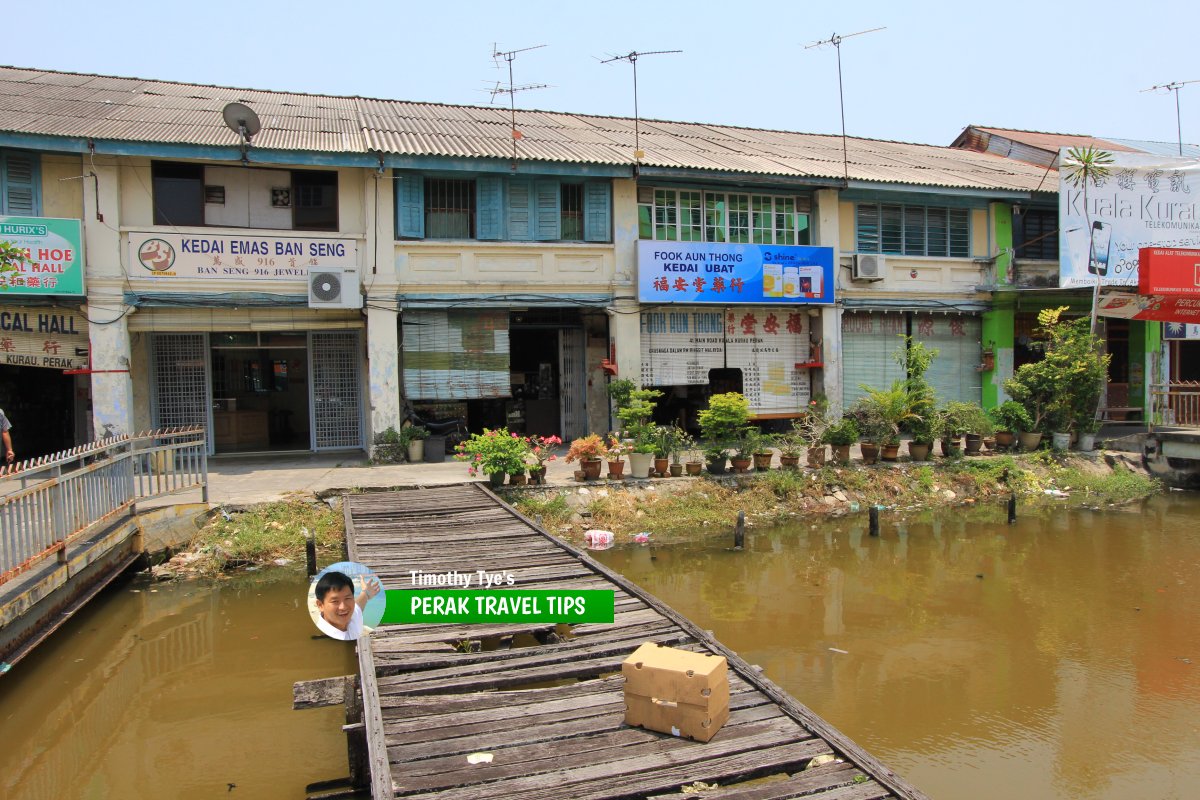 Shophouses in the pekan of Kuala Kurau (29 August, 2015)
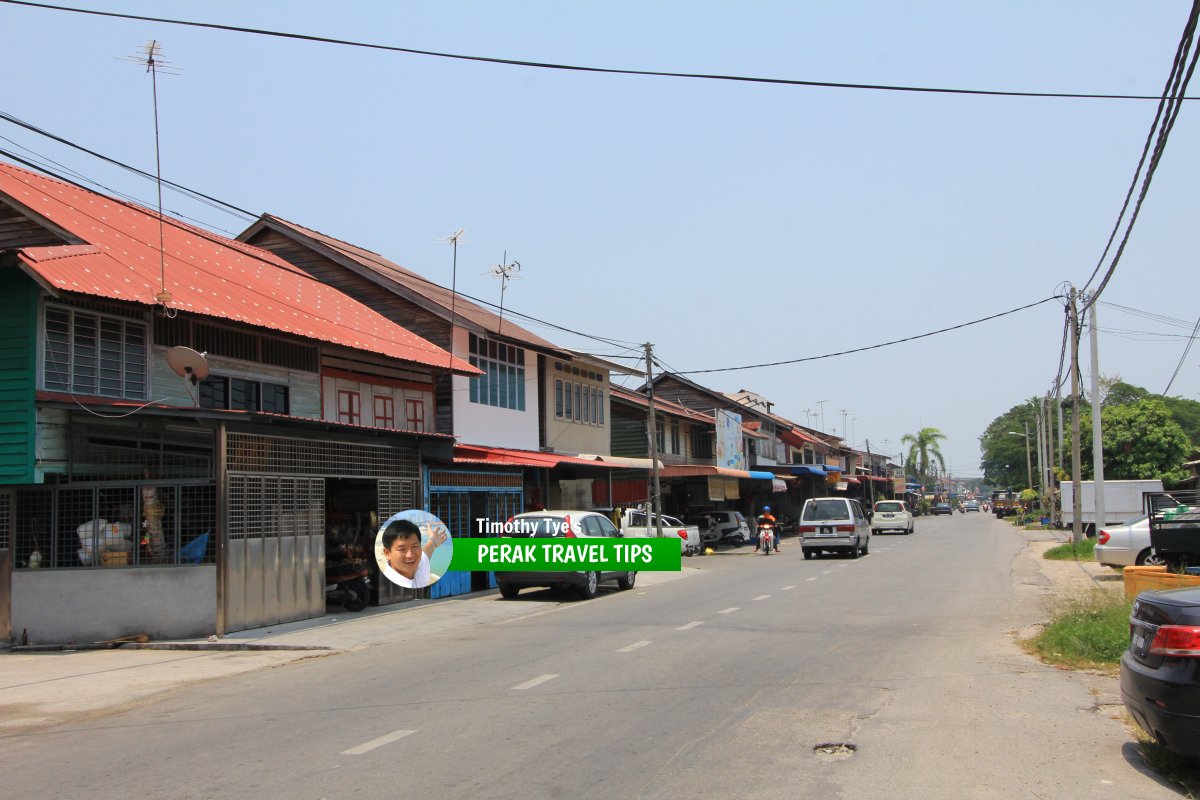 Jalan Pantai (A190), the main road in Kuala Kurau (29 August, 2015)
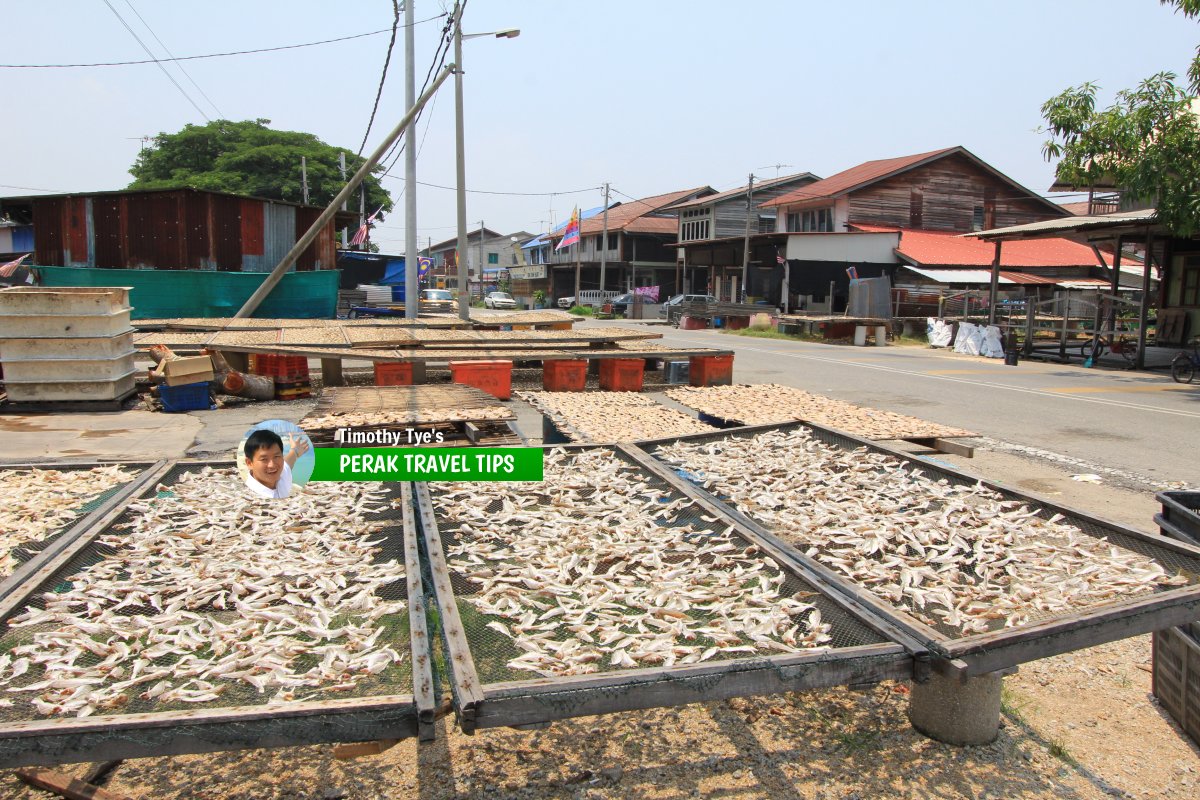 Fishing being laid out to dry, for making salted fish, in Kuala Kurau. (29 August, 2015)
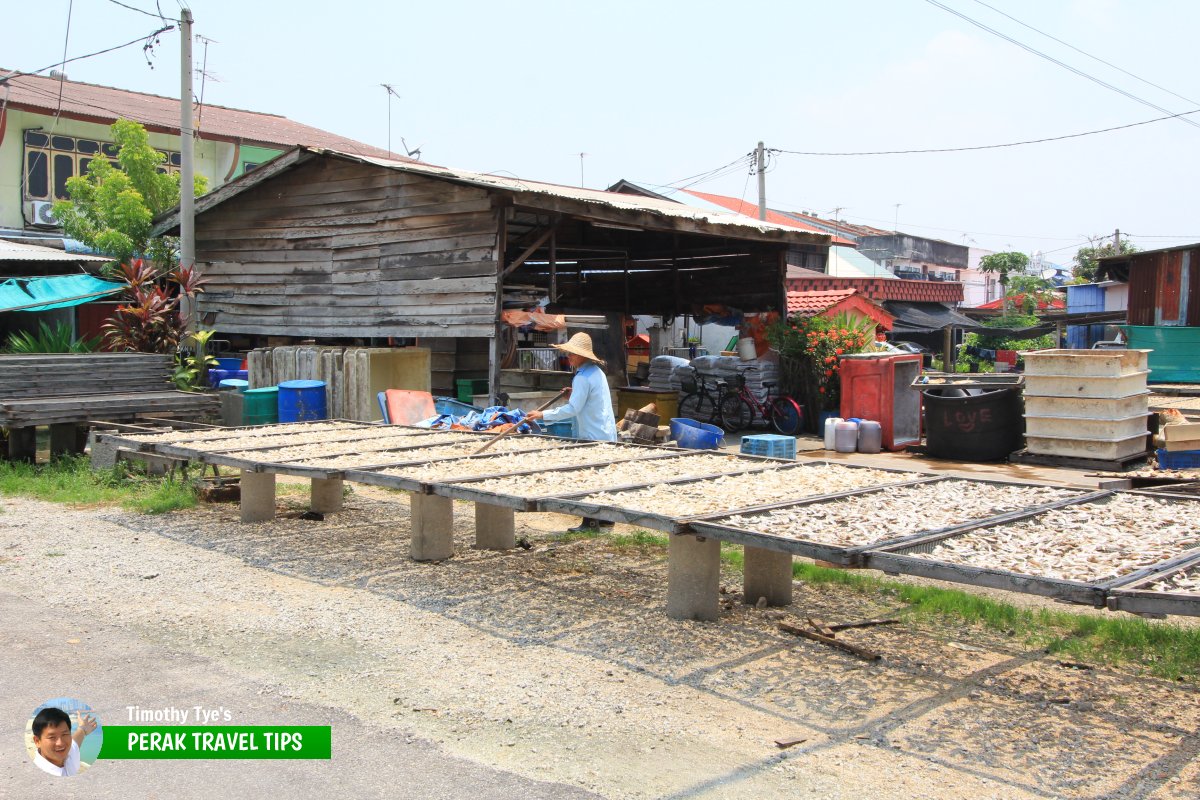 Salted fish maker tending to the fish in the hot sun. (29 August, 2015)
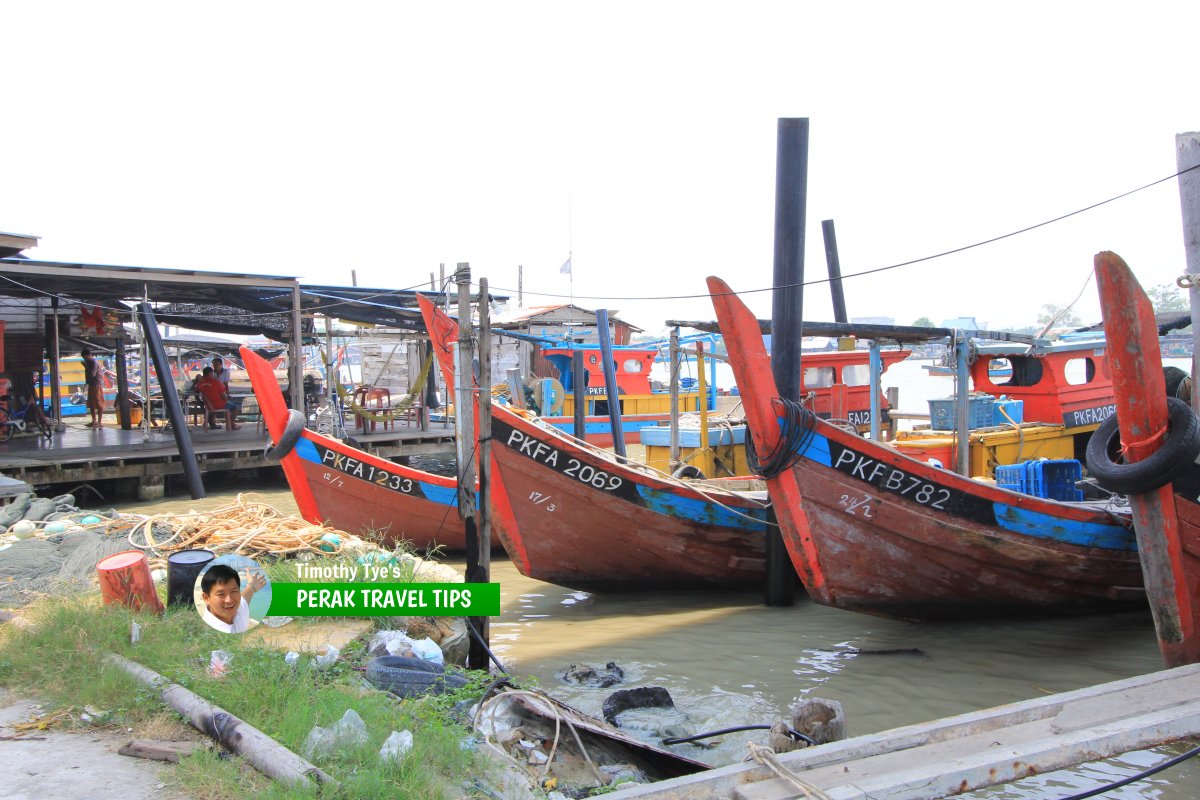 Fishing boats parked along the banks of Sungai Kurau. (29 August, 2015)
References
- Tourism Perak Malaysia – Kerian
- Tourism Perak Malaysia – Tourism Clusters
- Majlis Daerah Kerian – Sejarah dan Profil Daerah Kerian
- Majlis Daerah Kerian – Places of Worship
- Majlis Daerah Kerian – Rekreasi
- Majlis Daerah Kerian – Garis Panduan Aktiviti Air
- Tourism Perak Malaysia – Birdwatching in Perak
- NADI Pekan Kuala Kurau – Sejarah Kuala Kurau
- Jabatan Landskap Negara – Pelan Induk Landskap Majlis Daerah Kerian 2035
- Penang Travel Tips – Kuala Kurau Bridge
- Universiti Tunku Abdul Rahman – Jalan Pantai, Kuala Kurau
Page Details
This page was created on 15 September 2026. Hi, my name is Timothy and created it from my research, for my own entertainment, knowledge and to satisfy my curiosity. I am providing the information to you in good faith and hope it is useful. I try to get the details as accurate as possible. I also try to update the page whenever I stumble on new details. So this and all my other pages are perpetual work in progress. If you discover any error, please politely inform me, pointing out where the error lies, and I will correct it as soon as possible. Your helpfulness will keep this page accurate, relevant and helpful to those who need the information.Buy Me A Coffee
If you enjoy the information I provide and want to support the work I do, please buy me a coffee! I appreciate it immensely, thank you so much!
