
Lumut Travel Guide
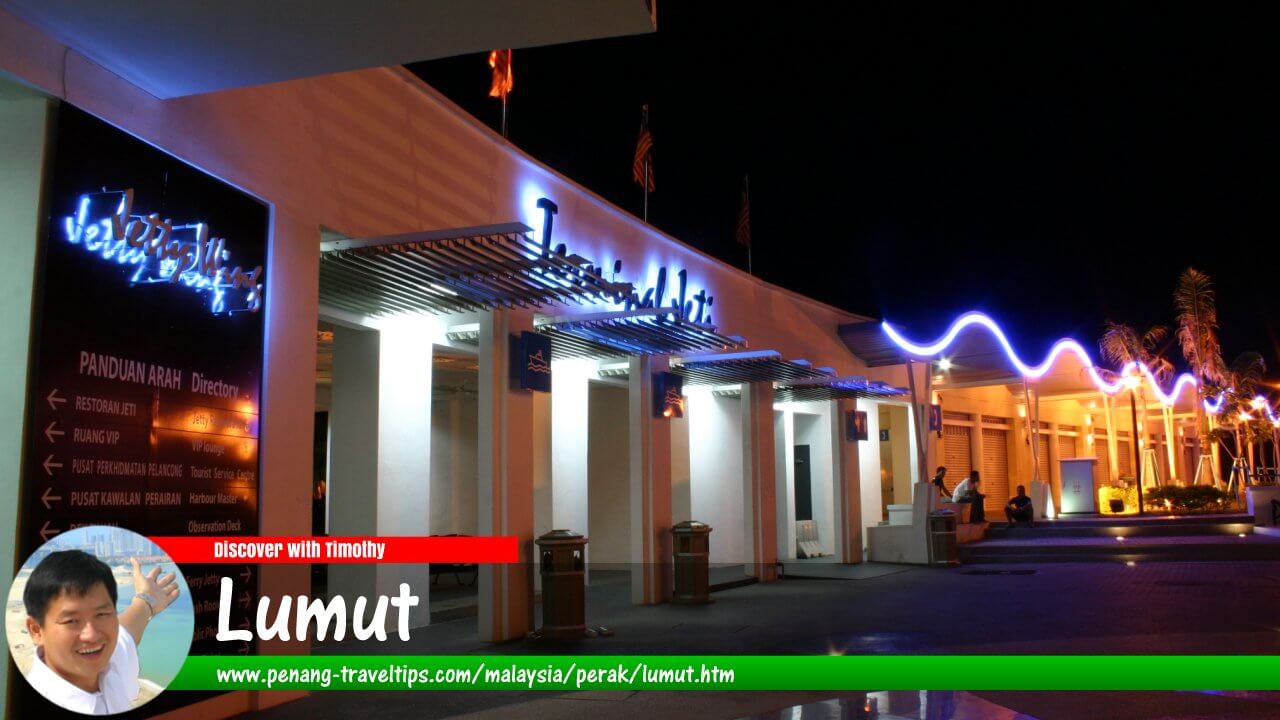 Lumut Travel Guide (AI generated on 13 September 2026)
Also available: Panduan Melawat Lumut
Lumut is a coastal town in Manjung District, Perak, on the western coast of Peninsular Malaysia. Historically associated with the former Dindings district, Lumut developed as a coastal settlement and port and is now best known as the mainland gateway to Pangkor Island and as the home of the Royal Malaysian Navy's Lumut Naval Base.
The town combines a working maritime environment with tourism. Its waterfront, jetty, seafood businesses and proximity to beaches make it a useful destination for travellers, while its location provides access to some of the best-known attractions in Manjung. Visitors can use Lumut as a stopover, a base for exploring the mainland coast, or as the starting point for a trip to Pangkor Island.
Quick Facts
- Town: Lumut
- District: Manjung
- State: Perak
- Location: Western coast of Peninsular Malaysia
- Coastal waters: Straits of Malacca
- Known for: Lumut Waterfront, Pangkor Island ferry services, maritime activities and seafood
- Major institution: Royal Malaysian Navy Lumut Naval Base
- Nearby towns: Sitiawan and Seri Manjung
- Nearby attractions: Teluk Batik, Teluk Senangin, Marina Island, Mangrove Swamp Park, Bukit Engku Busu and Pulau Pangkor
- Main role: Coastal town, maritime centre and gateway to Pangkor Island
Where Is Lumut?
Lumut is situated in Manjung District on the western coast of Perak. The town lies on the mainland opposite the waters surrounding Pangkor Island and is connected by road to Sitiawan, Seri Manjung and other parts of the district.
The town is part of a wider urban and tourism corridor that includes Sitiawan, Seri Manjung and Lumut. Sitiawan has a strong Foochow Chinese heritage, Seri Manjung is the modern administrative and commercial centre of the district, while Lumut serves as the principal coastal and maritime centre.
Lumut is especially important to travellers because it is one of the main departure points for Pulau Pangkor. A visit to Lumut can therefore form part of a larger Manjung itinerary combining town, beach, island and cultural attractions.
Why Visit Lumut?
Lumut is worth visiting for several reasons. First, it is a historic coastal settlement with a connection to the former Dindings district. Second, its waterfront and jetty provide a direct connection with the maritime character of Manjung. Third, it is the main mainland gateway for travellers heading to Pangkor Island.
For Malaysian travellers, Lumut is particularly suitable for a short family holiday because beaches, seafood restaurants, waterfront recreation and island excursions can all be combined in one trip.
For foreign travellers, Lumut provides an opportunity to see a less urbanised side of Peninsular Malaysia. It is not a major city, but it illustrates the relationship between a small coastal town, a naval installation, fishing communities, tourism and an island destination.
History of Lumut
The Dindings District
The history of Lumut is closely connected with the former Dindings district. Before 1973, the present Manjung District was known as Dindings. During the British colonial period, Dindings comprised three principal areas: Sitiawan, Lumut and Pangkor Island.
Following the Pangkor Agreement of 1874, Dindings became part of the Straits Settlements and was administered from Penang. The agreement was part of the British intervention in Perak following political conflict within the Perak royal court and the Larut tin-mining wars.
The Dindings area remained under British administration until 1937, when it was returned to Perak. The Perak government subsequently combined the former Dindings territory with Bruas and adjoining coastal areas. In 1973, the district was renamed Manjung.
Lumut as a coastal settlement
Lumut's position on the coast gave it a role as a landing place and maritime settlement. Its relationship with Pangkor Island and the mainland coastal villages contributed to its importance within the Dindings area.
The town's history is therefore different from that of inland Perak towns such as Ipoh, Taiping and Kuala Kangsar. Rather than developing primarily around tin mining, royal administration or railway connections, Lumut's identity has been strongly shaped by its coastal and maritime location.
The development of the naval base
In the modern period, Lumut became particularly important because of the presence of the Royal Malaysian Navy. The Lumut Naval Base and associated facilities form one of the major institutional features of the town and the wider Manjung district.
The naval presence has contributed to the development of the surrounding urban area and is one reason why Lumut has an importance beyond tourism. Visitors should note that military facilities are operational areas and are not generally open for unrestricted public access.
Lumut Waterfront
Lumut Waterfront is one of the town's principal public spaces. The waterfront area includes an esplanade and recreational spaces near the jetty, providing views across the coastal waters.
The waterfront is suitable for a leisurely walk, particularly in the late afternoon and evening. Its proximity to the jetty means that visitors can combine a waterfront visit with a trip to Pangkor Island or with shopping and dining in the town centre.
The waterfront also reflects Lumut's maritime identity. From some parts of the public area, visitors can see vessels operating in the waters around the town, although views towards naval facilities should not be interpreted as permission to photograph or enter restricted areas.
Lumut Jetty
Lumut Jetty is the principal mainland departure point for many travellers going to Pangkor Island. Tourism Perak describes Lumut Jetty as a major terminal for travellers from mainland Perak.
The ferry journey to Pangkor takes approximately 40 minutes, although actual journey times and schedules can vary. Ferries may call at Sungai Pinang Kecil before continuing to the main Pangkor jetty.
Because ferry schedules can change, visitors should check the current timetable before travelling. Arrive early enough to purchase tickets, park a vehicle if necessary and board without rushing.
Travelling to Pangkor Island from Lumut
The simplest way to travel from Lumut to Pangkor is by ferry. Visitors arriving by car can leave their vehicle in a car park near the jetty and continue to the island as foot passengers.
For a day trip, it is important to check both the outbound and return ferry schedules. Do not rely on an old timetable found online, particularly during public holidays, school holidays or periods of unusually high demand.
Pangkor is large enough to justify a full day of exploration, and visitors who want a slower holiday can stay overnight rather than returning to Lumut on the same day.
Marina Island
Marina Island is a modern coastal development south of Lumut. It has residential, recreational, hospitality and maritime facilities and includes another ferry connection to Pangkor.
The Marina Island Jetty provides an alternative departure point for travellers heading to Pangkor. Tourism Perak has also promoted Marina Island as a maritime tourism location, including its role as a port of call for cruise vessels.
In June 2026, the international Star Dream Cruise docked at Marina Island Jetty Complex, highlighting the site's emerging role in cruise and maritime tourism in Perak.
Teluk Batik
Teluk Batik is one of the best-known beaches near Lumut. The beach stretches for about two kilometres and is backed by tropical vegetation and low hills.
It is a popular mainland alternative to Pangkor Island and is suitable for swimming, relaxing, family outings and selected water activities, depending on sea and weather conditions.
Visitors who are not planning to cross to Pangkor can spend an afternoon at Teluk Batik and return to Lumut for dinner.
Teluk Senangin
Teluk Senangin is another beach in the Manjung coastal area. It is useful for travellers who want to explore several beaches rather than spending the entire trip at one location.
The beach can be combined with other coastal attractions south of Lumut during a road trip.
Bukit Engku Busu
Bukit Engku Busu is a prominent hill near Lumut and is one of the area's attractions for visitors interested in hiking and outdoor activities.
A climb provides a different perspective on the town and surrounding coastal landscape. Before setting out, check whether the trail is open and suitable for current weather conditions.
Hikers should carry sufficient drinking water, wear suitable footwear and avoid starting a climb during thunderstorms or extreme heat.
Mangrove Swamp Park
The Mangrove Swamp Park is one of the nature attractions highlighted by Tourism Perak for Manjung. It provides an opportunity to see a coastal ecosystem that is important for fish, birds and other wildlife.
Mangrove forests also help protect coastlines from erosion and provide nursery grounds for marine organisms. A visit therefore complements the beach experience by showing a different aspect of the coastal environment.
Pasir Panjang Segari Turtle Conservation Area
The Pasir Panjang Segari area, further along the Manjung coast, is associated with turtle conservation. The sandy beaches of the area provide nesting habitat for marine turtles.
Visitors should treat the area as a conservation site rather than a conventional tourist attraction. Do not touch turtles, disturb nests or use bright lights near nesting animals. Follow the instructions of conservation staff.
Pulau Pangkor
Pulau Pangkor is the principal tourist destination associated with Lumut. Tourism Perak describes Pangkor as one of Perak's major island destinations, with beaches, fishing villages, temples, wildlife and historical attractions.
The island's best-known beaches include Pasir Bogak and Teluk Nipah. Other attractions include the Dutch Fort, Pangkor Inscription Stone, Fu Lin Kong Temple and several fishing villages.
Visitors who enjoy nature can also explore the island's forested areas, while food lovers can try seafood and local products such as dried anchovies and other fish products.
Food in Lumut
Lumut's food culture is strongly influenced by its coastal location. Seafood is therefore one of the most obvious choices for visitors.
Restaurants in Lumut and surrounding Manjung offer fish, prawns, squid, crabs and other seafood, alongside Malay, Chinese and Indian-Muslim dishes.
Seafood
Fresh seafood is one of the foods most closely associated with Manjung. Visitors can find seafood restaurants in Lumut and along the surrounding coastal roads.
For Muslim travellers, it is advisable to select restaurants with a clear halal status, particularly when dining at establishments serving a mixture of Chinese and seafood dishes.
Dried seafood
Dried seafood is another local speciality. Products such as dried anchovies and other preserved seafood can be bought as souvenirs or brought home for cooking.
When buying packaged products, check the ingredients and packaging date, especially if you intend to take them on a long journey or overseas.
Local food
Lumut and the wider Manjung area also offer Malay and Indian-Muslim food, including rice dishes, noodles, roti and other everyday Malaysian meals. Travellers should explore the smaller local eateries as well as restaurants aimed at tourists.
Shopping in Lumut
Lumut has a range of shops serving both residents and visitors. The area around the jetty is particularly oriented towards tourists travelling to Pangkor, with shops selling food products, souvenirs, beach items and local seafood products.
For visitors, the most useful purchases are often dried seafood, snacks and locally produced food products. Prices and product quality vary, so compare several shops if you are buying in quantity.
Accommodation in Lumut
Lumut has hotels, guesthouses, apartments and holiday accommodation serving both business visitors and tourists. Staying in Lumut is particularly convenient for travellers planning to take an early ferry to Pangkor.
Travellers who prefer a quieter beach environment may instead choose accommodation near Teluk Batik or another coastal area. Those who want more general urban facilities can also consider Seri Manjung or Sitiawan.
During weekends, public holidays and school holidays, accommodation near the ferry terminal and beaches can become busy. Advance booking is advisable during peak periods.
How to Get to Lumut
By car
Driving is the most convenient way to reach Lumut and explore the Manjung area. Roads connect Lumut with Sitiawan, Seri Manjung, Ayer Tawar, Lekir and other parts of Perak.
For travellers arriving from Ipoh, the journey involves heading west towards the Manjung area before continuing to Lumut. Travellers from the south can approach through the road network serving the west coast of Perak.
Via the West Coast Expressway
The West Coast Expressway (WCE) provides a long-distance road connection along the western side of Peninsular Malaysia. Visitors can use the appropriate interchange and continue by local roads towards Lumut.
The WCE is particularly useful for travellers driving from the Klang Valley and other parts of the west coast.
By bus
Intercity buses serve the Manjung area. Depending on the operator, passengers may arrive in Lumut, Seri Manjung or Sitiawan and continue to their accommodation by local transport or e-hailing.
By train
Lumut does not have a railway station. Travellers arriving by KTM train need to continue the journey by road from a suitable railway station elsewhere in Perak.
For visitors arriving from Kuala Lumpur or other parts of Peninsular Malaysia, a direct bus or car journey is generally more straightforward if Lumut is the main destination.
Getting Around Lumut
A car is useful if you plan to explore more than Lumut town itself. Teluk Batik, Teluk Senangin, Marina Island, Mangrove Swamp Park and other attractions are spread across the Manjung coastal area.
E-hailing services may be available within Lumut and the main urban areas, but availability can be more limited in remote coastal locations. Visitors who want to visit several beaches in one day may therefore find a rental car more convenient.
The town centre and waterfront can be explored on foot, especially if you are staying near the jetty.
Suggested One-Day Lumut Itinerary
A first-time visitor can experience Lumut and its immediate surroundings in one day:
- Morning: Have breakfast in Lumut town.
- Morning: Explore Lumut Waterfront and the area around the jetty.
- Late morning: Visit nearby shops selling local seafood products and souvenirs.
- Lunch: Enjoy seafood or another local meal.
- Afternoon: Spend several hours at Teluk Batik.
- Late afternoon: Return to Lumut and explore the waterfront.
- Evening: Have dinner in Lumut before returning to your accommodation.
Suggested Two-Day Itinerary
- Day 1: Lumut Waterfront, Lumut town, Teluk Batik and the surrounding coastal area.
- Day 2: Take the ferry to Pulau Pangkor and explore its beaches, fishing villages and historical attractions.
If your main purpose is to experience Pangkor rather than simply visit the island, consider staying overnight there.
Suggested Three-Day Itinerary
- Day 1: Explore Lumut, the waterfront and nearby coastal attractions.
- Day 2: Spend the day on Pulau Pangkor.
- Day 3: Visit Teluk Senangin, Pasir Panjang Segari, the turtle conservation area and other coastal attractions, subject to opening arrangements.
An alternative is to spend the third day exploring Sitiawan and Seri Manjung, particularly if you are interested in food, local communities and the Foochow heritage of Sitiawan.
Best Time to Visit
Lumut can be visited throughout the year. Because many visitors come for beaches, island trips and outdoor activities, however, the weather is an important consideration.
Periods of heavy rain or rough seas may affect ferry services and water activities. Check current weather and ferry information before travelling to Pangkor.
The hottest part of the day is generally less comfortable for walking outdoors. Early morning and late afternoon are more pleasant for the waterfront, beaches and sightseeing.
Lumut for Families
Lumut is well suited to family trips because several different activities can be combined without travelling far. Families can spend the morning at the waterfront, have lunch in town and then visit a beach in the afternoon.
A trip to Pangkor can be added for families who have more time. Parents travelling with young children should allow extra time for ferry boarding and disembarkation and should check sea conditions before setting out.
For families staying several nights, choosing accommodation with convenient parking and easy access to food outlets can make the trip more comfortable.
Lumut for Foreign Travellers
For foreign travellers, Lumut offers a relatively accessible introduction to Malaysia's west coast outside the major cities. The town has a distinctly maritime character and provides an interesting contrast with the historic inland towns of Perak.
The most rewarding way to experience Lumut is to combine several elements: observe the town's coastal setting, walk along the waterfront, learn about its connection with the Dindings district, visit a mainland beach and take a ferry to Pangkor Island.
Visitors should also remember that Lumut is a functioning town and naval centre, not simply a resort. Military installations and other restricted facilities should not be entered or photographed where prohibited.
Maritime Tourism in Lumut
Lumut's maritime importance is visible in several ways. The town is associated with the Royal Malaysian Navy, ferry connections to Pangkor, fishing and seafood industries, recreational boating and the newer tourism facilities at Marina Island.
The arrival of the Star Dream Cruise at Marina Island in June 2026 marked another development in Lumut's maritime tourism. The cruise call demonstrated the potential for the wider Manjung region to receive international visitors arriving by sea.
At the same time, Lumut retains its traditional role as a working coastal town. This mixture of naval, commercial, fishing and tourism activities is an important part of the town's character.
Muslim Travellers
Muslim travellers should have little difficulty finding mosques, surau and halal food in Lumut and the wider Manjung area. The town is within Perak, where Malay Muslim communities are well established.
However, Lumut also has a substantial Chinese community and many restaurants serve Chinese cuisine. If halal status is important to you, choose restaurants that are clearly halal or Muslim-operated rather than assuming that seafood restaurants are automatically halal.
When travelling to Pangkor, plan prayer times around the ferry and island itinerary. Mosques and surau are available on the mainland and on the island, but it is still useful to identify a suitable place for prayer before beginning a full-day excursion.
Practical Tips
- Check ferry schedules: Timetables can change, particularly during holidays and periods of high demand.
- Arrive early at the jetty: Allow time for parking, tickets and boarding.
- Carry sun protection: The waterfront and beaches can be hot during the middle of the day.
- Check sea conditions: Rough weather can affect island trips and water activities.
- Book accommodation early: Weekends and school holidays can be busy.
- Use a car for coastal sightseeing: Several attractions are outside the town centre.
- Respect naval security: Do not enter restricted areas or photograph prohibited facilities.
- Try local seafood: Manjung is one of Perak's important areas for fresh and dried seafood.
- Carry some cash: Smaller shops and food stalls may not accept electronic payments.
- Keep the coast clean: Take rubbish with you and respect mangrove, beach and turtle conservation areas.
How Long Should You Stay?
One day is enough for a basic visit to Lumut, particularly if your main purpose is to see the waterfront and continue to Pangkor.
Two days are more suitable if you want to combine Lumut with a mainland beach such as Teluk Batik and a full day on Pangkor Island.
Three days or more allow you to explore the wider Manjung coast, including Teluk Senangin, Marina Island, Segari and other natural attractions, while also leaving time to visit Sitiawan and Seri Manjung.
Lumut as a Gateway to Manjung
Lumut is best understood not only as a destination in its own right but also as a gateway to the wider Manjung region.
From Lumut, travellers can explore the Foochow heritage of Sitiawan, the modern administrative centre of Seri Manjung, the beaches of the mainland, the natural environment of Segari and the island attractions of Pangkor.
This makes Lumut particularly useful for travellers who want to spend several days in western Perak rather than simply making a short stop at the ferry terminal.
Conclusion
Lumut is a coastal town with a history that reaches back to the former Dindings district and a modern identity shaped by maritime activity, the Royal Malaysian Navy and tourism. Its location on the mainland opposite Pangkor Island has made it one of the most important tourism gateways in western Perak.
The town itself can be explored relatively quickly, but its value becomes more apparent when considered together with the surrounding attractions. Lumut Waterfront, the jetty, Teluk Batik, Teluk Senangin, Marina Island, Mangrove Swamp Park and the coastal conservation areas provide a variety of experiences on the mainland.
For travellers with more time, Pulau Pangkor is the natural extension of a Lumut trip. The combination of beaches, fishing villages, historical sites and island scenery makes it possible to experience several aspects of Perak's western coast within a single holiday.
For both Malaysian and foreign visitors, Lumut is therefore more than a place to catch a ferry. It is a working coastal town, maritime centre and gateway through which much of the tourism of Manjung and Pangkor can be explored.
Map of Lumut, Perak
Sights in Lumut
- Lumut International Yacht Club (GPS: 4.23478, 100.63911)

- Lumut Marina Wing Waterfront (GPS: 4.23459, 100.64029)

- Lumut Waterfront Promenade (GPS: 4.23595, 100.63128)

- Taman Paya Bakau (GPS: 4.21114, 100.64692)

Categories of sights in Lumut
Transportation Hubs in Lumut
- Lumut Bus Terminal (GPS: 4.23493, 100.63368)

- Lumut Ferry Terminal (GPS: 4.23638, 100.63217)

Petrol Stations in Lumut
- Shell Jalan Iskandar Shah (GPS: 4.224221, 100.643809)
Information Centres in Lumut
- Lumut Tourist Information Centre (GPS: 4.23615, 100.63363)

- Pulau Sembilan Information Centre (GPS: 4.23571, 100.63315)

Residential Properties in Lumur
- Ramada Lumut Resort (GPS: 4.23171, 100.62755)

References
- Pejabat Tanah dan Galian Negeri Perak – Info Ringkas Daerah Manjung
- Tourism Perak – Manjung
- Tourism Perak – Pangkor Island
- Tourism Perak – Pangkor Island Guide
- Tourism Perak – Perak Cycling Guide
- Tourism Perak – Star Dream Cruise Returns to Marina Island
- Majlis Perbandaran Manjung
Page Details
This page was created on 13 September 2026. Hi, my name is Timothy and created it from my research, for my own entertainment, knowledge and to satisfy my curiosity. I am providing the information to you in good faith and hope it is useful. I try to get the details as accurate as possible. I also try to update the page whenever I stumble on new details. So this and all my other pages are perpetual work in progress. If you discover any error, please politely inform me, pointing out where the error lies, and I will correct it as soon as possible. Your helpfulness will keep this page accurate, relevant and helpful to those who need the information.Buy Me A Coffee
If you enjoy the information I provide and want to support the work I do, please buy me a coffee! I appreciate it immensely, thank you so much!
