
Seri Manjung Travel Guide
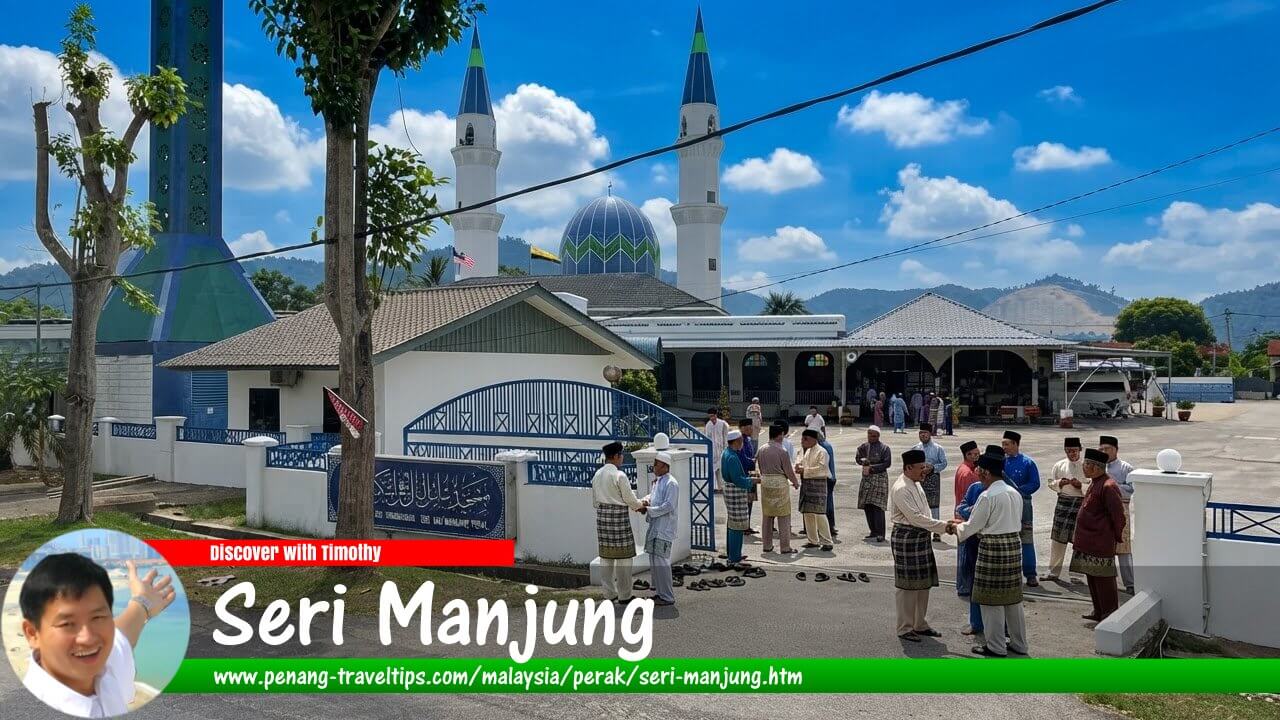 Seri Manjung Travel Guide (AI generated on 10 September 2026)
Also available: Panduan Melawat Seri Manjung
Seri Manjung is a planned town in Manjung District, Perak, Malaysia, situated between Sitiawan and Lumut. Developed from the early 1980s, the town was established as the administrative, commercial and service centre of Manjung District. Today, Seri Manjung forms part of a growing urban corridor linking Seri Manjung, Sitiawan and Lumut, while serving as a convenient base for exploring the beaches, islands, maritime attractions and historic settlements of western Perak.
Unlike Lumut, which is closely associated with the sea and the Royal Malaysian Navy, or Sitiawan, which has a distinctive history and multicultural heritage, Seri Manjung is primarily a modern administrative and urban centre. Its importance comes from its location, public facilities, commercial areas and proximity to the major attractions of Manjung, including Pangkor Island, Teluk Batik, Teluk Senangin, Marina Island, Segari and Lumut.
Quick Facts
- Town: Seri Manjung
- State: Perak, Malaysia
- District: Manjung
- Role: District administrative, commercial and service centre
- Development: Planned as a new town from the early 1980s
- Nearby towns: Sitiawan, Lumut, Ayer Tawar and Beruas
- Nearest major tourist gateway: Lumut
- Major nearby attraction: Pangkor Island
- Other nearby attractions: Teluk Batik, Teluk Senangin, Marina Island, Segari, Pasir Panjang, Lumut Waterfront and Bukit Engku Busu
- District authority: Majlis Perbandaran Manjung
Where Is Seri Manjung?
Seri Manjung is located in the western part of Perak, within Manjung District. It lies between the older towns of Sitiawan and Lumut, forming the central part of the main urban corridor of the district.
The town is approximately 5 kilometres from Sitiawan and about 10 kilometres from Lumut, while the city of Ipoh is considerably farther inland. Its position makes Seri Manjung particularly convenient for travellers who want to visit several destinations in the district without changing accommodation.
The wider Manjung District extends from the mainland agricultural areas around Beruas and Ayer Tawar to the coastal areas around Lumut, Pangkor Island, Segari and Pantai Remis. The district therefore contains a considerable variety of landscapes, including beaches, islands, forests, plantations, agricultural land and urban areas.
What Kind of Town Is Seri Manjung?
Seri Manjung is primarily a planned administrative and service town. It was developed as a new town rather than growing organically from an old village or river port.
According to the Manjung 2030 planning documents, Seri Manjung is one of the three principal urban centres of the district, together with Lumut and Sitiawan. The three towns form the core of the main urban corridor of Manjung.
Current planning identifies Seri Manjung as an administrative, business and service centre. The town contains the district administrative complex, commercial areas, educational institutions, healthcare facilities, residential neighbourhoods and recreational spaces.
This gives Seri Manjung a different character from the historic towns of Perak. Its principal interest to visitors is not a concentration of colonial buildings or a historic townscape, but its position at the centre of a region containing many important tourist attractions.
A Brief History of Seri Manjung
The Historic Dindings District
To understand the development of Seri Manjung, it is useful to look at the history of the wider Manjung area. Before it became known as Manjung, much of the area was associated with the Dindings, or Dinding, district.
Following the Pangkor Treaty of 1874, the Dindings became part of the British-administered Straits Settlements and was administered from Penang. The historical Dindings area included Lumut, Sitiawan and Pangkor Island.
The Dindings were eventually returned to Perak in the 1930s. The transfer reflected the Perak Sultanate's concern that the state lacked a substantial stretch of coastline while the Dindings remained under British administration.
After its return, the area was incorporated into a larger administrative territory together with Bruas and other coastal areas. The district was subsequently known as Manjung.
The Creation of Modern Seri Manjung
Modern Seri Manjung emerged during a period of rapid development in the early 1980s. The Malaysian government's development of Lumut Naval Base and the expansion of the port and industrial facilities in the area created a need for a new administrative and urban centre.
Seri Manjung was consequently developed as a planned new town to support the growing population and economic activities of the district. Rather than replacing Sitiawan or Lumut, the new town developed alongside them and took on a different function.
Over time, Seri Manjung became the main administrative centre of Manjung District. Government offices, schools, healthcare facilities, commercial centres and housing developments were established around the new town.
Growth of the Urban Corridor
Seri Manjung did not develop in isolation. Its growth has been closely connected with Sitiawan and Lumut. The three towns now form a continuous or closely connected urban corridor along the main roads of western Manjung.
Planning documents identify this Lumut–Seri Manjung–Sitiawan–Ayer Tawar corridor as the principal urban development area of the district. The corridor is expected to function increasingly as an integrated urban region rather than as a collection of completely separate towns.
Seri Manjung Today
Seri Manjung is now the administrative heart of Manjung District. The Pejabat Daerah dan Tanah Manjung and the Majlis Perbandaran Manjung are based in the town.
The town has also become an important commercial centre. Shopping centres, supermarkets, restaurants, banks, offices and other services serve not only Seri Manjung residents but also people from surrounding parts of the district.
Its healthcare role is also significant. Hospital Seri Manjung began operating in March 1995, replacing the older Hospital Lumut. The hospital was established in Seri Manjung because of the town's strategic position and growing population.
For visitors, this means that Seri Manjung has many of the services expected of a modern Malaysian town, making it a practical base for exploring the wider Manjung area.
Places to Visit in and Around Seri Manjung
Seri Manjung itself has fewer conventional tourist attractions than Lumut or Pangkor Island. However, its location places many of Manjung's most important attractions within easy reach.
1. Lumut Waterfront
Lumut Waterfront is one of the easiest attractions to combine with a stay in Seri Manjung. The waterfront is situated near Lumut Jetty and provides a recreational area overlooking the sea.
The approximately 3.3-hectare development includes a recreational park, esplanade area and open public spaces. Its maritime setting reflects Lumut's long association with the sea and the Royal Malaysian Navy.
From the waterfront, visitors can also appreciate the importance of Lumut as the main mainland gateway to Pangkor Island.
2. Lumut Jetty
Lumut Jetty is the principal mainland departure point for visitors travelling to Pangkor Island. Ferries and boats connect the mainland with Pangkor, making Lumut an important tourism gateway for the district.
Travellers staying in Seri Manjung can drive to Lumut and continue their journey by ferry. Ferry schedules and fares can change, so they should be checked before travelling.
3. Teluk Batik
Teluk Batik is one of the best-known beaches near Seri Manjung. The beach is approximately 7 kilometres from Lumut and is backed by green hills and tropical vegetation.
It is popular for swimming, picnicking and various recreational activities. Depending on conditions and operators, visitors may also encounter activities such as kayaking, banana boat rides and other water-based recreation.
Because it is relatively close to Seri Manjung, Teluk Batik is suitable for a half-day or full-day excursion.
4. Teluk Senangin
Teluk Senangin is another beach along the Manjung coastline. It generally has a quieter atmosphere than some of the more heavily visited beaches around Lumut and Pangkor.
The beach is suitable for visitors who want to spend time by the sea without necessarily visiting an island. It can also be combined with a drive through the coastal areas south of Lumut.
5. Marina Island
Marina Island is a man-made island development off the coast near Lumut. It contains a marina and provides another access point to attractions in the Pangkor area.
The island is particularly interesting for visitors who want to see the more recent maritime development of Manjung. Its modern character contrasts with the older fishing and trading settlements elsewhere along the coast.
6. Bukit Engku Busu
Bukit Engku Busu rises behind Lumut and is one of the better-known hiking areas in the district. The hill provides views over Lumut and the surrounding coastal landscape.
Visitors should be prepared for a tropical forest environment, including steep sections, humidity and potentially slippery ground after rain. Hiking conditions should be checked before setting out.
7. Pasir Panjang Segari
Pasir Panjang Segari is associated with turtle conservation and is part of the coastal conservation landscape of Manjung.
The area demonstrates the ecological importance of the Manjung coastline. Visitors interested in conservation can combine a visit with other attractions in Segari and the surrounding coastal villages.
8. Mangrove Swamp Park
The Mangrove Swamp Park in the Lumut area provides an opportunity to observe a different type of coastal environment. Mangrove forests are important habitats for fish, birds, crustaceans and other organisms, while also helping to protect shorelines.
The park complements the beaches and maritime attractions of Manjung by showing the ecological environments that exist alongside the developed coast.
9. Pangkor Island
Pangkor Island is the most important tourist destination in Manjung District and one of Perak's best-known islands. Although it is not in Seri Manjung itself, the town is a convenient mainland base for visiting the island.
Pangkor offers beaches, fishing villages, temples, historic sites and island scenery. Among its best-known attractions are Pasir Bogak, Teluk Nipah, Fu Lin Kong Temple, Tua Pek Kong Temple, Kota Belanda and several smaller beaches and viewpoints.
A visit to Pangkor can be arranged as a day trip from Seri Manjung, although staying overnight on the island provides more time to explore it.
Food in Seri Manjung and Sitiawan
The Seri Manjung–Sitiawan area has a diverse food culture reflecting the history of settlement in western Perak. Visitors can find Malay, Chinese, Indian, Indian-Muslim and other local cuisines within a relatively compact area.
Seafood
Seafood is particularly associated with Manjung because of its coastal location. Fresh fish, prawns, crabs, squid and other seafood are commonly found in restaurants around Lumut, Sitiawan and Seri Manjung.
Visitors who enjoy seafood can also explore the dried seafood products sold around the district. Dried seafood is an important part of the local food economy and makes a practical edible souvenir.
Sitiawan Food
The nearby town of Sitiawan is particularly interesting for food. Its history as a settlement with a significant Chinese community has produced a distinctive local food culture.
Visitors can find various Chinese dishes, noodles, rice dishes, seafood and traditional snacks. Sitiawan and Kampung Koh are close enough to Seri Manjung that visitors can easily include them in a food-oriented excursion.
Malay and Indian-Muslim Food
Seri Manjung also has numerous Malay and Indian-Muslim restaurants serving dishes such as nasi campur, nasi kandar, roti canai, mee goreng, fried rice and local kuih.
The variety of food reflects the multicultural character of modern Manjung and makes the Seri Manjung–Sitiawan area a useful destination for sampling everyday Malaysian food.
Where to Stay in Seri Manjung
Seri Manjung has a range of hotels and other accommodation suitable for business travellers, families and tourists exploring the district.
Staying in Seri Manjung is particularly practical for travellers who plan to visit several places around Manjung. Lumut, Sitiawan, Teluk Batik and other coastal attractions can be reached by road, while the town provides access to supermarkets, restaurants, banks, healthcare facilities and other services.
Travellers whose main objective is a beach holiday may instead prefer to stay near Teluk Batik, Lumut or Pangkor Island. Seri Manjung is more suitable for those who want a central base for exploring several parts of the district.
How to Get to Seri Manjung
By Car
Driving is the most convenient way to reach Seri Manjung and explore the district. The town is connected to the main road network of western Perak through roads linking it with Sitiawan, Lumut, Lekir, Ayer Tawar and other settlements.
Travellers from Ipoh can drive westwards through the Kinta Valley and continue towards Manjung. Visitors arriving from Kuala Lumpur and the southern part of Peninsular Malaysia can use the West Coast Expressway (WCE) and continue towards the Manjung area.
For travellers arriving from Penang and northern Perak, routes through Taiping, Beruas and the coastal road network provide access to the district.
By Bus
Long-distance and intercity buses serve the Manjung area, with Sitiawan and Lumut being important transport points. Local services can then be used to reach Seri Manjung.
Bus availability varies according to the departure city and operator. Visitors travelling without a car should check the current schedule before beginning their journey.
By Train
Seri Manjung does not have a KTM passenger railway station. Travellers arriving by KTM ETS therefore need to use a railway station elsewhere in Perak and continue to Manjung by road.
For many visitors arriving from Kuala Lumpur or northern Malaysia, travelling by ETS to Ipoh and continuing by road is one possible combination, although the most suitable railway connection depends on the origin and current transport schedules.
Getting Around Seri Manjung
A private car is the most practical form of transport for visitors exploring Seri Manjung and the wider Manjung District. The district is geographically spread out, and many of the most interesting attractions are located along the coast or on islands.
Within Seri Manjung itself, shops, restaurants, government offices and shopping centres are relatively concentrated. However, a vehicle is useful for travelling to Lumut, Teluk Batik, Sitiawan, Segari and other destinations.
Ride-hailing services may be available in the urban areas, but visitors should not assume that they will be readily available in more remote coastal or rural locations.
Suggested One-Day Seri Manjung Itinerary
- Morning: Begin in Seri Manjung with breakfast and explore the town centre.
- Late morning: Drive to Sitiawan to experience its food and local character.
- Lunch: Enjoy local Chinese, Malay or Indian-Muslim food in Sitiawan or Seri Manjung.
- Afternoon: Continue to Lumut and visit Lumut Waterfront and the jetty area.
- Late afternoon: Drive to Teluk Batik for the beach and coastal scenery.
- Evening: Return to Seri Manjung or Lumut for dinner, particularly if you want to try local seafood.
Suggested Two-Day Seri Manjung Itinerary
Day 1: Seri Manjung, Sitiawan and Lumut
Spend the first morning exploring Seri Manjung and its commercial areas before travelling to Sitiawan. Have lunch in Sitiawan and explore the surrounding streets and food establishments.
In the afternoon, continue to Lumut. Visit Lumut Waterfront, explore the jetty area and enjoy the maritime atmosphere. End the day with dinner in Lumut or Seri Manjung.
Day 2: Beaches and Nature
Spend the second day exploring the coastal attractions. Visit Teluk Batik in the morning, followed by Teluk Senangin or another nearby coastal destination.
If you prefer nature, consider visiting the mangrove environment or Segari and its turtle conservation area. Alternatively, arrange a trip to Pangkor Island and spend the day exploring its beaches and historic sites.
Suggested Three-Day Manjung Itinerary
Visitors with three days can use Seri Manjung as a base for a broader exploration of the district.
- Day 1: Seri Manjung and Sitiawan.
- Day 2: Lumut, Teluk Batik, Marina Island and the surrounding coast.
- Day 3: Pangkor Island, or Segari and the southern coastal area.
This itinerary allows visitors to experience the three main aspects of modern Manjung: urban life, maritime tourism and the natural environment.
Best Time to Visit Seri Manjung
Seri Manjung can be visited throughout the year. The town has a tropical climate, with warm temperatures and humidity throughout the year.
For beach activities, the weather and sea conditions are more important than for sightseeing in town. Visitors should check the forecast before planning swimming, boating, island-hopping or other marine activities.
Early morning and late afternoon are generally the most comfortable times for outdoor activities. They are also preferable for photography because the sunlight is less intense.
Seri Manjung and the Sea
Although Seri Manjung is not itself a coastal resort, its identity is closely connected with the maritime character of Manjung District. Lumut lies immediately to its west, while the coast and islands of Manjung extend further west and south.
The establishment of the Royal Malaysian Navy base at Lumut was an important factor in the modern development of the district. The naval presence helped reinforce the importance of Lumut and contributed to the need for a modern administrative and urban centre inland from the naval base.
Today, this combination of administration, industry, maritime activity and tourism gives the Manjung urban area an economic character that differs from the more agricultural districts of Perak.
Seri Manjung and the Royal Malaysian Navy
Lumut Naval Base is the principal Royal Malaysian Navy base and headquarters of the navy's western maritime operations. The base is located near Lumut rather than in Seri Manjung itself, but its presence has had a major influence on the development of the surrounding urban area.
Visitors should note that naval installations are operational military facilities. Public access is therefore restricted, and photography or entry should only be undertaken where explicitly permitted.
The naval connection nevertheless forms an important part of the history and identity of Manjung and helps explain why the district developed more rapidly from the late 20th century onwards.
Seri Manjung as an Urban Centre
The planned character of Seri Manjung can still be seen in its broad roads, residential neighbourhoods, institutional areas, commercial centres and government facilities.
Modern planning documents identify the town as an administrative, business and service centre. The town has developed two main commercial centres: an older central business district around the municipal administrative area and a newer commercial centre around Manjung Point.
The wider built-up area also contains substantial residential development, schools, healthcare facilities and recreational spaces. This makes Seri Manjung a functioning regional centre rather than simply a residential new town.
Shopping in Seri Manjung
Seri Manjung is one of the main shopping centres of western Perak. The town and its surrounding urban area contain shopping malls, supermarkets, commercial lots and smaller retail centres.
AEON Mall Seri Manjung is one of the principal modern shopping destinations in the area. It provides a useful option for travellers who need groceries, clothing, restaurants, banking services or other everyday facilities during a stay.
For a more traditional shopping experience, visitors can explore the smaller commercial areas of Seri Manjung, Sitiawan and Lumut.
What to Buy in Manjung
Visitors can find a variety of local products around Manjung. Seafood products are particularly characteristic of the district.
Dried seafood, including dried fish and other preserved marine products, is commonly sold around coastal areas such as Lumut and Sitiawan. These products can make useful souvenirs because they are associated with the maritime economy of the district.
Other possible purchases include local snacks, biscuits, traditional food products and souvenirs from Pangkor Island.
Practical Tips for Visitors
- Use Seri Manjung as a base: The town is particularly convenient if you plan to visit several parts of Manjung.
- Bring a car if possible: Many attractions are spread across the district and public transport is not always convenient.
- Combine towns: Seri Manjung, Sitiawan and Lumut are close enough to visit during the same trip.
- Plan island trips: If visiting Pangkor, check ferry arrangements before travelling to Lumut.
- Check the weather: Beach and marine activities depend heavily on weather and sea conditions.
- Try seafood: Manjung's coastal location makes seafood one of the region's characteristic foods.
- Explore beyond the town: Some of the district's most interesting attractions are beaches, islands, forests and rural settlements outside Seri Manjung.
- Respect military areas: Do not enter restricted areas around naval installations and follow all signs and instructions concerning photography.
How Long Should You Stay?
If Seri Manjung is being visited specifically as a town, one day is sufficient to see the main urban areas and use its facilities.
However, if the purpose of the trip is to explore Manjung District, two or three days is much more appropriate. This allows time for Seri Manjung and Sitiawan, Lumut and Teluk Batik, and either Pangkor Island or the coastal and natural attractions around Segari.
Visitors interested mainly in beaches and islands may prefer to stay in Lumut or Pangkor, while those who want a central location with easy access to shopping, restaurants and government and healthcare facilities may find Seri Manjung more convenient.
Seri Manjung for Local Travellers
For Malaysians, Seri Manjung is particularly suitable as part of a road trip through Perak. The town can be combined with Ipoh, Batu Gajah, Lumut, Sitiawan, Beruas, Pantai Remis and Pangkor Island.
Families may appreciate the town's shopping centres and proximity to beaches, while food enthusiasts can explore the different culinary traditions of Seri Manjung and Sitiawan. Those interested in history can use the town as a base for visiting the older settlements of Manjung.
Seri Manjung for Foreign Visitors
For international visitors, Seri Manjung provides an opportunity to experience a modern Malaysian regional town away from the country's largest cities. It is particularly useful for travellers who want to explore Perak's western coast rather than simply pass through it.
A stay in Seri Manjung can be combined with a visit to Pangkor Island, allowing visitors to experience both a modern mainland town and a traditional island environment within the same district.
The proximity of Sitiawan also provides an opportunity to experience the multicultural history of the Manjung area, while Lumut introduces the maritime and naval dimension of the district.
Why Seri Manjung Is Worth Visiting
Seri Manjung is not a traditional heritage town in the same sense as Taiping or Kuala Kangsar. Its significance lies in being a modern planned town created to support the transformation of Manjung during the late 20th century.
The town illustrates how Malaysia's regional urban centres have developed around administrative functions, public infrastructure, industry, military facilities and new residential areas.
Its greatest advantage for travellers is its location. From Seri Manjung, visitors can reach historic Sitiawan, maritime Lumut, the beaches of the Manjung coast and the islands of the Straits of Malacca without having to travel long distances between different bases.
Conclusion
Seri Manjung is the modern administrative and urban centre of Manjung District. Developed from the early 1980s, it grew alongside the expansion of Lumut's naval and maritime functions and the continued development of Sitiawan and the surrounding coastal region.
The town itself is best understood as a gateway rather than a conventional heritage destination. Its modern commercial and administrative facilities make it a practical place to stay, while its position between Sitiawan and Lumut puts many of Manjung's principal attractions within easy reach.
For travellers exploring western Perak, Seri Manjung provides access to beaches such as Teluk Batik and Teluk Senangin, the maritime town of Lumut, the historic and multicultural character of Sitiawan, the ecological areas around Segari and, most importantly, Pangkor Island. A visit therefore offers an opportunity to understand not only Seri Manjung itself but the wider transformation of Manjung from the historic Dindings district into one of the important urban and tourism regions of western Perak.
References
- Pejabat Tanah dan Galian Negeri Perak – Manjung District Information
- PLANMalaysia – Rancangan Tempatan Daerah Manjung 2030
- PLANMalaysia – Pelan Tindakan Bandar Pintar Manjung 2030
- Tourism Perak – Manjung
- Majlis Perbandaran Manjung – Official Portal
- Hospital Seri Manjung – Laporan Tahunan
- Kerajaan Negeri Perak – My Local Stats: Manjung
Page Details
This page was created on 12 September 2026. Hi, my name is Timothy and created it from my research, for my own entertainment, knowledge and to satisfy my curiosity. I am providing the information to you in good faith and hope it is useful. I try to get the details as accurate as possible. I also try to update the page whenever I stumble on new details. So this and all my other pages are perpetual work in progress. If you discover any error, please politely inform me, pointing out where the error lies, and I will correct it as soon as possible. Your helpfulness will keep this page accurate, relevant and helpful to those who need the information.Buy Me A Coffee
If you enjoy the information I provide and want to support the work I do, please buy me a coffee! I appreciate it immensely, thank you so much!
