
Sitiawan Travel Guide
 Sitiawan Travel Guide (17 September 2016)
Also available: Panduan Melawat Sitiawan
Sitiawan is a town in Manjung District, Perak, known especially for its strong Foochow (Fuzhou) Chinese heritage. Located between Seri Manjung and Ayer Tawar, the town developed from an agricultural settlement established in the early 20th century and has since become one of the principal urban centres of western Perak.
For Malaysian visitors, Sitiawan offers an opportunity to explore an important chapter of Chinese migration and settlement in Perak. For foreign travellers, the town provides a less familiar side of Malaysia, combining Chinese cultural heritage, Methodist missionary history, traditional food, local commerce and access to the coastal attractions of Manjung.
Sitiawan is also a practical base for exploring nearby Seri Manjung, Lumut, Teluk Batik, Teluk Senangin and Pulau Pangkor.
Quick Facts
- Town: Sitiawan
- District: Manjung
- State: Perak
- Region: West coast of Peninsular Malaysia
- Known for: Foochow heritage, Chinese Methodist history, local food and access to Manjung's coastal attractions
- Nearby towns: Seri Manjung, Lumut and Ayer Tawar
- Nearby attractions: Sitiawan Settlement Museum, Tua Pek Kong Temple, Teluk Batik, Teluk Senangin, Lumut Waterfront and Pulau Pangkor
- Principal historic community: Foochow Chinese settlers who arrived from Fujian in 1903
Where Is Sitiawan?
Sitiawan is situated in the northern part of Manjung District in western Perak. It lies along the lower reaches of the Sitiawan River and forms part of the urban corridor linking Ayer Tawar, Sitiawan, Seri Manjung and Lumut.
The town is inland from the immediate coastline, but the western coast of Manjung is close by. This makes Sitiawan convenient for travellers who want to combine a town visit with trips to beaches, coastal villages, mangrove areas and Pulau Pangkor.
Administratively, Sitiawan is part of Manjung District, whose principal urban centres include Sitiawan, Seri Manjung and Lumut. The three towns have different functions: Sitiawan has a long-established commercial and community identity, Seri Manjung serves as the modern administrative centre, while Lumut is the principal coastal and maritime centre.
Why Visit Sitiawan?
The main reason to visit Sitiawan is its distinctive Foochow heritage. Although Chinese communities of many dialect groups are found throughout Malaysia, Sitiawan developed a particularly strong Foochow identity following the arrival of Christian Foochow settlers from Fujian in 1903.
The town therefore provides an interesting contrast with other Perak towns. Ipoh and Taiping are strongly associated with tin mining and British colonial development, while Kuala Kangsar is associated with the Perak Sultanate. Sitiawan's story is instead closely connected with migration, Christian missionary work, agriculture, rubber cultivation and Chinese community development.
Sitiawan is also worth visiting for its food. The local cuisine reflects the town's Foochow background as well as the wider Chinese, Malay and Indian communities of Manjung. Visitors can find traditional Foochow-style dishes, biscuits, noodles, seafood and other local specialities.
A Brief History of Sitiawan
The name Sitiawan
The origin of the name Sitiawan is commonly associated with the Malay expression setia kawan, meaning “loyal friend”. A local tradition tells of two elephants that became trapped in the mud of the river and died together, giving rise to the earlier name Kampung Gajah Mati and eventually to the name Setia Kawan.
The elephant story is a local tradition rather than a firmly documented historical explanation. Tourism Perak nevertheless associates the modern name with the words setia and kawan. The present spelling, Sitiawan, developed from the earlier forms of the name.
The Dindings area
Sitiawan's history is also connected with the former Dindings district. The Dindings area became associated with British administration following the Pangkor Agreement of 1874 and was administered as part of the Straits Settlements before being returned to Perak in 1937.
Before the arrival of the large Foochow community, the wider Dindings area was already inhabited by Malays and other communities. Agriculture and the movement of commodities such as tin and agricultural produce contributed to the development of settlements in the region.
The Foochow migration of 1903
The most important event in the modern history of Sitiawan occurred in 1903, when a group of Foochow Christian settlers from Fujian arrived in the area.
The British colonial administration was seeking ways to increase agricultural production as the population of Perak expanded. The Methodist Episcopal Mission in Singapore was involved in recruiting Foochow settlers for an agricultural settlement in Sitiawan.
Missionaries including Dr H. L. E. Luering and Rev. Ling Ching Mi travelled to Fujian to recruit settlers. The first group reached Sitiawan in September 1903. Sources differ on some details of the migration, but the surviving historical accounts agree that several hundred Foochow Christians formed the pioneering settlement.
The settlers faced considerable difficulties. The agricultural land and infrastructure initially provided did not meet expectations, and the pioneers had to clear jungle and establish homes and farms under difficult conditions. The original plan to develop a major rice-growing colony did not achieve the results expected by the colonial administration.
Nevertheless, the settlers remained. They established churches, schools and community institutions, and eventually developed agriculture and rubber cultivation. Their descendants became an important part of the social and economic history of Sitiawan.
From agriculture to a modern town
The settlement gradually developed beyond its original agricultural purpose. Rubber became increasingly important, while commerce and small industries helped transform Sitiawan into a regional town.
The development of roads and improved communications strengthened the relationship between Sitiawan, Lumut and other parts of Manjung. In the modern period, the growth of Seri Manjung and the wider Manjung urban corridor has further integrated Sitiawan into a larger urban area.
Sitiawan Settlement Museum
The Sitiawan Settlement Museum is the most important place to visit for understanding the town's Foochow history.
The museum is located in Kampung Koh, an area closely associated with the early Foochow settlement. The two-storey building was constructed in 1935 as a residence for pastors of the Pioneer Methodist Church. It was subsequently converted into a museum and officially opened in September 2003, in conjunction with the centenary of the Foochow settlement.
The museum contains photographs, documents, household objects, agricultural equipment, furniture and other artefacts relating to the pioneers and their descendants. Its displays provide an insight into the difficult early years of the settlement, as well as the development of education, religion and community life.
For visitors interested in Malaysian migration history, this is one of the more unusual small museums in Perak because its story is centred on a specific immigrant community and its transformation of a rural settlement.
Kampung Koh
Kampung Koh is closely associated with the history of the Foochow settlement and is located near the Sitiawan Settlement Museum and Pioneer Methodist Church.
The area preserves elements of the community's early history, including its connection with the Methodist missionaries who accompanied and supported the settlers. Visitors interested in heritage can combine Kampung Koh with the museum rather than treating the museum as an isolated attraction.
The history of Kampung Koh also illustrates how immigrant communities established their own institutions, schools, churches and neighbourhoods while adapting to their new environment.
Pioneer Methodist Church
Pioneer Methodist Church in Kampung Koh is closely connected with the early Foochow Christian settlement. The Methodist mission played an important role in the establishment and organisation of the pioneer community after the settlers arrived in Sitiawan.
The church and the nearby museum together form an important heritage site for understanding the relationship between Christian missionary work and Chinese migration in early twentieth-century Perak.
Visitors should remember that a church remains a place of worship. If visiting outside a scheduled public or heritage programme, it is appropriate to be respectful of worshippers and ongoing activities.
Traditional Wells and Pioneer Heritage
The early Foochow settlers had to establish basic infrastructure for their new community. Among the surviving reminders of that period are several old wells associated with the settlement.
These wells were once important sources of water for the community before modern piped water became available. Their survival provides a tangible reminder of the practical difficulties faced by the pioneers during the early years of settlement.
Tua Pek Kong Temple
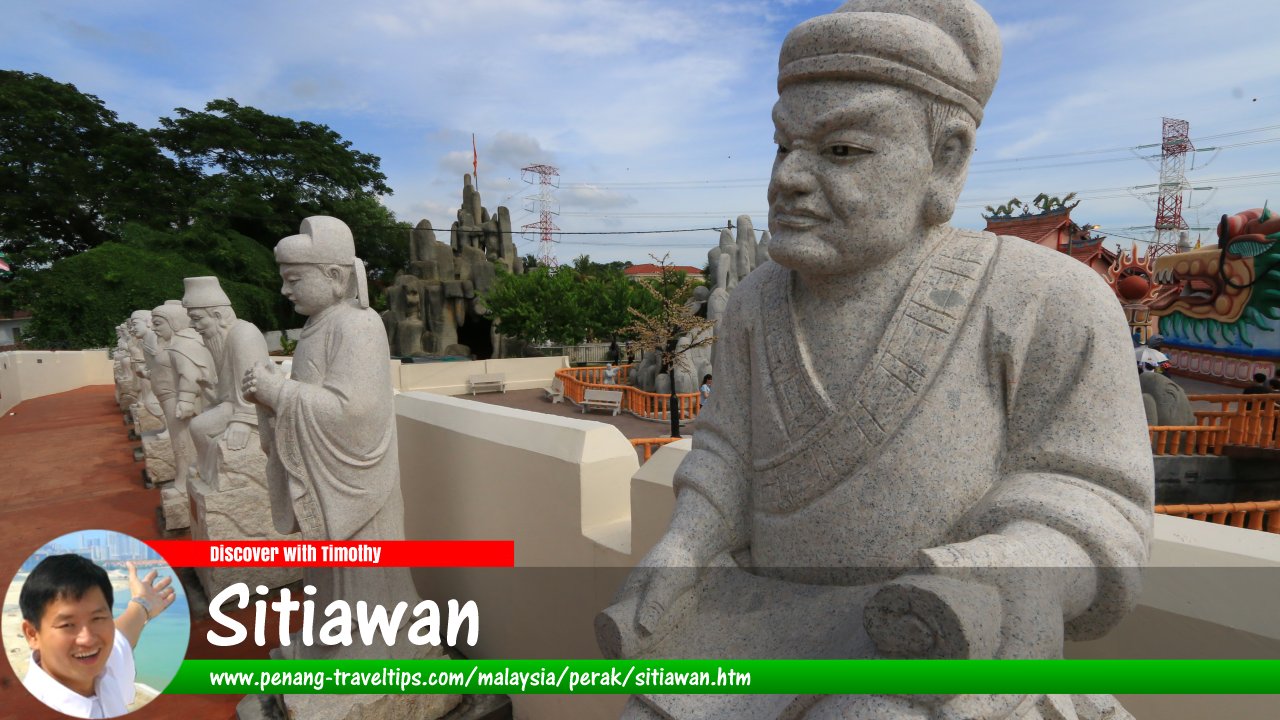
The Tua Pek Kong Temple is one of the best-known cultural attractions in the Sitiawan area. Located near the coast at Jalan Pasir Panjang, the temple complex is noted for its large collection of statues and its seaside setting.
The temple is associated with Chinese religious traditions and provides a different perspective on the Chinese cultural heritage of Manjung from the Christian heritage found in Kampung Koh.
Visitors can combine a visit to the temple with a drive through the coastal areas south of Sitiawan. As with other active temples, visitors should dress respectfully and follow any instructions regarding photography and access to worship areas.
Saloma Vineyard and Nursery
Saloma Vineyard and Nursery in the Lekir area is one of the agricultural attractions associated with Sitiawan. Tourism Perak has highlighted the vineyard as a local agricultural attraction growing different varieties of grapes.
The vineyard is particularly interesting because grape cultivation is not normally associated with Malaysia. Visitors should check current opening arrangements before making a special trip, as operating conditions and visiting arrangements may change.
3D Art and Other Attractions
Tourism Perak has also identified the 3D Art Gallery Sitiawan among the attractions of Manjung. Such attractions provide a more contemporary complement to the town's older heritage sites.
Visitors who are primarily interested in history, however, may wish to prioritise the Sitiawan Settlement Museum, Kampung Koh and the area's religious and community heritage.
Food in Sitiawan
Food is an important part of the Sitiawan experience. The town's Foochow heritage has influenced its local food culture, while its position in coastal Manjung means that seafood is also widely available.
Foochow food
Visitors should look for Foochow-style noodles and other traditional Foochow dishes. Foochow cuisine is known for its use of noodles, rice wine, red yeast and other ingredients that distinguish it from some of the other Chinese regional cuisines commonly found in Malaysia.
One of the interesting aspects of eating in Sitiawan is that some dishes have evolved locally rather than being exact reproductions of food from Fujian. They therefore form part of the culinary heritage of Malaysian Foochow communities.
Traditional biscuits
Gong pian and other traditional biscuits are associated with the Foochow food culture of Sitiawan. Gong pian is a baked pastry with Foochow origins and can be found in different versions.
Traditional bakeries and local food shops are worth exploring if you want to bring home edible souvenirs. Check packaging and shelf life if travelling onward to another destination.
Seafood
Sitiawan and the wider Manjung district are well known for seafood. Tourism Perak specifically highlights fresh seafood and local dried seafood products as part of the district's food identity.
Seafood restaurants can be found in Sitiawan, Kampung Koh, Lumut and the surrounding coastal areas. Local dried seafood is also commonly sold as a take-home product.
Nearby Attractions
Sitiawan is particularly useful as a base because several of Manjung's best-known attractions are within easy driving distance.
Lumut Waterfront
Lumut Waterfront is a coastal recreational area near the Lumut jetty. It is suitable for a relaxed walk and for experiencing the atmosphere of Lumut as a maritime town.
The waterfront is also close to the ferry facilities for Pulau Pangkor, making it convenient to combine with a visit to the island.
Lumut Jetty
Lumut Jetty is one of the principal departure points for visitors travelling to Pulau Pangkor. Travellers staying in Sitiawan can use the town as their accommodation base before travelling to Lumut in the morning.
Check the latest ferry timetable before setting out, particularly if planning a same-day return to Sitiawan.
Teluk Batik
Teluk Batik is one of the best-known beaches in Manjung. It offers a broad sandy beach backed by vegetation and low hills, with recreational activities including swimming and water sports depending on conditions.
The beach is suitable for families and casual visitors who want a coastal outing without travelling to an island.
Teluk Senangin
Teluk Senangin is another beach in the Manjung coastal area. It can be included in a road trip covering the beaches and coastal settlements south of Lumut and Sitiawan.
Pulau Pangkor
Pulau Pangkor is the major island destination in Manjung. It is known for its beaches, fishing communities, cultural sites and historical remains, including the Dutch Fort and the Pangkor Inscription Stone.
From Sitiawan, travellers can drive to Lumut and continue by ferry. A day trip is possible, but staying overnight on Pangkor allows more time for beaches, villages and other attractions.
Pasir Panjang Segari Turtle Conservation Area
The Pasir Panjang Segari area is associated with turtle conservation along the Perak coast. It provides an opportunity to learn about the conservation of marine wildlife and the importance of sandy beaches as nesting habitat.
Visitors should follow the instructions of conservation staff and avoid disturbing turtles, nests or hatchlings. Wildlife conservation areas should be treated as places for observation rather than entertainment.
Mangrove Swamp Park
The Mangrove Swamp Park provides an opportunity to see the coastal mangrove ecosystem of Manjung. Mangroves are important nursery grounds for marine life and provide protection against coastal erosion.
The site can be combined with other coastal attractions during a road trip through Manjung.
Shopping in Sitiawan
Sitiawan is primarily a local commercial centre rather than a shopping destination. Its town centre and surrounding neighbourhoods contain supermarkets, traditional shops, restaurants, bakeries and other businesses serving the local population.
For visitors, traditional food shops are generally more interesting than modern retail malls. Look for local biscuits, dried seafood and other food products associated with Manjung and the Foochow community.
Accommodation
Sitiawan has a range of hotels and smaller accommodation establishments suitable for travellers who want to explore Manjung by road. Staying in Sitiawan is particularly convenient for visitors interested in the town's heritage, food and nearby Kampung Koh.
Travellers whose primary purpose is a beach holiday may instead prefer to stay closer to Lumut, Teluk Batik or Pulau Pangkor. Seri Manjung offers another option for those who prefer a larger modern urban centre with more general services.
How to Get to Sitiawan
By car
Driving is the most convenient way to reach Sitiawan and explore the surrounding Manjung district. The town is connected by road to Seri Manjung, Lumut, Ayer Tawar, Lekir and other settlements in western Perak.
For visitors coming from Ipoh, the journey involves travelling westward through the road network towards Batu Gajah and Manjung. Travellers from the south can approach through the road network serving the west coast of Perak.
Via the West Coast Expressway
The West Coast Expressway (WCE) provides a faster long-distance road connection along the western side of Peninsular Malaysia. Depending on the direction of travel and the current road configuration, visitors can leave the expressway and continue towards Sitiawan and the other towns of Manjung.
The WCE is particularly useful for travellers arriving from the Klang Valley and other parts of the west coast.
By bus
Intercity buses serve the Manjung area and connect it with other towns and cities. Bus services may use terminals or stops in Sitiawan, Seri Manjung or nearby towns, so passengers should check the exact arrival point when purchasing a ticket.
By train
Sitiawan does not have a railway station. Travellers arriving by KTM train therefore need to continue the journey by road from a suitable railway station elsewhere in Perak.
For most foreign travellers arriving in Perak by public transport, combining a train journey with a bus, taxi or e-hailing service may be more practical than attempting to reach Sitiawan entirely by rail.
Getting Around Sitiawan
A car is the most convenient means of exploring Sitiawan and the surrounding district because the attractions are spread across several towns and rural areas.
E-hailing services may be available within the main urban areas, but visitors should not assume that a car will always be available in more remote coastal or rural locations. Those planning a full-day exploration of Manjung will generally find a private or rental car more flexible.
Walking is practical for exploring parts of the town centre, but it is not an efficient way to reach attractions such as Kampung Koh, the coastal temples or the beaches.
Suggested One-Day Sitiawan Itinerary
A first-time visitor can experience the town's main heritage in one day:
- Morning: Have breakfast at a local coffee shop and explore the town centre.
- Morning: Visit the Sitiawan Settlement Museum and Kampung Koh.
- Late morning: Explore the Pioneer Methodist heritage sites, subject to access and opening arrangements.
- Lunch: Try Foochow food or local noodles.
- Afternoon: Drive towards the coast and visit Tua Pek Kong Temple.
- Late afternoon: Continue towards a nearby coastal area or return towards Lumut.
- Evening: Have a seafood dinner in Sitiawan or the surrounding Manjung area.
Suggested Two-Day Itinerary
Two days allow Sitiawan's heritage to be combined with the coastal attractions of Manjung:
- Day 1: Sitiawan town, Kampung Koh, Sitiawan Settlement Museum, Foochow food and Tua Pek Kong Temple.
- Day 2: Lumut Waterfront, Pulau Pangkor or Teluk Batik, depending on whether you prefer an island trip or a mainland beach day.
If choosing Pulau Pangkor, check the ferry schedule carefully and allow sufficient time for the return journey.
Suggested Three-Day Itinerary
With three days, Sitiawan can be used as a base for a broader Manjung trip:
- Day 1: Explore Sitiawan and its Foochow heritage.
- Day 2: Visit Lumut and spend the day on Pulau Pangkor.
- Day 3: Explore Teluk Batik, Teluk Senangin and the coastal area towards Segari, including the turtle conservation area if open to visitors.
This itinerary is particularly suitable for travellers with a car because the attractions are distributed across a relatively large area.
Best Time to Visit
Sitiawan can be visited throughout the year because it is a functioning town rather than a seasonal resort. The more important consideration is the weather if your itinerary includes beaches, islands or outdoor activities.
During periods of heavy rain or rough seas, boat trips and water activities may be affected. Visitors travelling to Pulau Pangkor should check the latest weather and ferry information before departure.
For walking and outdoor sightseeing, mornings and late afternoons are generally more comfortable than the hottest part of the day.
Practical Tips for Travellers
- Plan around the town's heritage: The Foochow and Methodist history is the most distinctive feature of Sitiawan.
- Visit Kampung Koh: This is particularly worthwhile if you want to understand the origins of the Foochow settlement.
- Check museum hours: Opening arrangements for smaller museums can change, so verify them before travelling.
- Try local food: Look for Foochow noodles, gong pian, traditional biscuits, seafood and local dried seafood.
- Use a car for sightseeing: Attractions around Manjung are spread across Sitiawan, Lumut and the coastal areas.
- Plan ferry trips carefully: Check current schedules when travelling to Pulau Pangkor.
- Respect religious sites: Dress appropriately and follow local rules at churches, temples and other places of worship.
- Protect the environment: Do not litter at beaches, mangroves or conservation areas.
- Carry cash as a backup: Smaller food shops and rural businesses may not always accept cards or electronic payments.
Sitiawan for Foreign Travellers
For foreign visitors, Sitiawan offers a different experience from the better-known tourist destinations of Malaysia. The town is not primarily a sightseeing destination built around major monuments. Instead, its interest lies in its living cultural heritage.
The story of the Foochow settlers illustrates how migration shaped the development of modern Malaysia. Visitors can see how a group that arrived in the early twentieth century established farms, churches, schools, businesses and community institutions, eventually becoming an important part of the local population.
Sitiawan is therefore particularly suitable for travellers interested in ethnic history, migration, religion, food, local communities and everyday Malaysian life.
Sitiawan and the Wider Manjung Area
Sitiawan should not be viewed in isolation. It forms part of a closely connected urban and coastal region with Seri Manjung and Lumut.
Sitiawan provides the historical and community perspective, particularly through its Foochow heritage. Seri Manjung represents the modern administrative and commercial centre of the district. Lumut provides access to the coast, the naval base area and Pulau Pangkor.
Together, these towns form one of the most interesting urban areas on the west coast of Perak. A traveller who spends several days in the region can experience Chinese community heritage, Malay and Indian food, coastal landscapes, maritime history and island tourism without travelling great distances between destinations.
How Long Should You Stay?
A visitor interested mainly in Sitiawan's heritage can see the principal sites in one day. Two days are preferable if you want to combine the town with Lumut and a beach.
For a wider Manjung holiday incorporating Pulau Pangkor, several beaches and the coastal conservation areas, three days or more would be more comfortable.
Conclusion
Sitiawan is one of the more distinctive towns in Perak because its modern identity is strongly connected with the Foochow migration of 1903. The settlers arrived as part of an agricultural scheme but, despite the difficulties they encountered, established a community whose cultural influence remains visible today.
The Sitiawan Settlement Museum, Kampung Koh and the Pioneer Methodist heritage sites provide the best introduction to this history, while local food and traditional businesses allow visitors to experience the heritage beyond museums.
At the same time, Sitiawan's position in Manjung makes it a useful starting point for exploring the wider region. Lumut, Teluk Batik, Teluk Senangin, coastal conservation areas and Pulau Pangkor are all within the broader travel circuit.
For Malaysian travellers, Sitiawan is a worthwhile destination for discovering an important part of the country's Chinese and Foochow heritage. For foreign travellers, it offers an opportunity to see a living Malaysian community whose history was shaped by migration, missionary work, agriculture and the gradual development of a regional town.
Map of Sitiawan, Perak
Sights in Sitiawan
- Arulmigu Maha Mariamman Kovil Devasthanam (GPS: 4.21548, 100.69052)

- CT Hotel (GPS: 4.22072, 100.69374)

- Econsave Manjung (GPS: 4.20982, 100.67918)

- Hotel Intan (GPS: 4.22054, 100.69379)

- Hotel Mirama (GPS: 4.22095, 100.69368)

- Masjid An-Nasriyah (GPS: 4.21433, 100.69566)

- Pasar Awam Kampung Koh (GPS: 4.19351, 100.70466)

- Pioneer Methodist Church (GPS: 4.19654, 100.70038)

- SJK (C) Uk Ing (GPS: 4.18698, 100.70406)

- SMJK Nan Hwa (GPS: 4.20333, 100.69917)

- SMK Ahmad Boestamam (GPS: 4.22291, 100.69213)

- SMK Methodist (ACS) Sitiawan (GPS: 4.19671, 100.70084)

- SRJK (C) Uk Dih (GPS: 4.18698, 100.70406)

- Simpang Ampat Chinese Methodist Church (GPS: 4.21384, 100.70433)

- The Store (GPS: 4.21594, 100.69202)

- Tua Pek Kong Temple (GPS: 4.163, 100.68847)

- Wat Sitawanaram (GPS: 4.198, 100.69999)

- Wong Seng Kong Temple (GPS: 4.18057, 100.71023)

Hotels in Sitiawan
- CT Hotel (GPS: 4.22072, 100.69374)
- Hotel Intan (GPS: 4.22054, 100.69379)
- Hotel Mirama (GPS: 4.22095, 100.69368)
Categories of sights in Sitiawan
- Chinese temples in Sitiawan
- Churches in Sitiawan
- Hindu temples in Sitiawan
- Mosques in Sitiawan
- Schools in Sitiawan
- Shopping malls in Sitiawan
- Thai temples in Sitiawan
Petrol Stations in Sitiawan
- Shell Kampung Koh (GPS: 4.1771, 100.70817)
References
- Tourism Perak – Manjung District / West Coast Expressway Guide
- Tourism Perak – Manjung
- Tourism Perak – Perak Cycling Guide
- The Methodist Church in Singapore – Early Methodist Preachers
- The Methodist Church in Singapore – Church Dedication in Sitiawan
- The Star – The Sitiawan Settlement Museum Houses Vintage Exhibits
- Ipoh Echo – The Foochows of Sitiawan
- Manjung Tourism Product Guide
Page Details
This page was created on 13 September 2026. Hi, my name is Timothy and created it from my research, for my own entertainment, knowledge and to satisfy my curiosity. I am providing the information to you in good faith and hope it is useful. I try to get the details as accurate as possible. I also try to update the page whenever I stumble on new details. So this and all my other pages are perpetual work in progress. If you discover any error, please politely inform me, pointing out where the error lies, and I will correct it as soon as possible. Your helpfulness will keep this page accurate, relevant and helpful to those who need the information.Buy Me A Coffee
If you enjoy the information I provide and want to support the work I do, please buy me a coffee! I appreciate it immensely, thank you so much!
