
Penaga, Seberang Perai
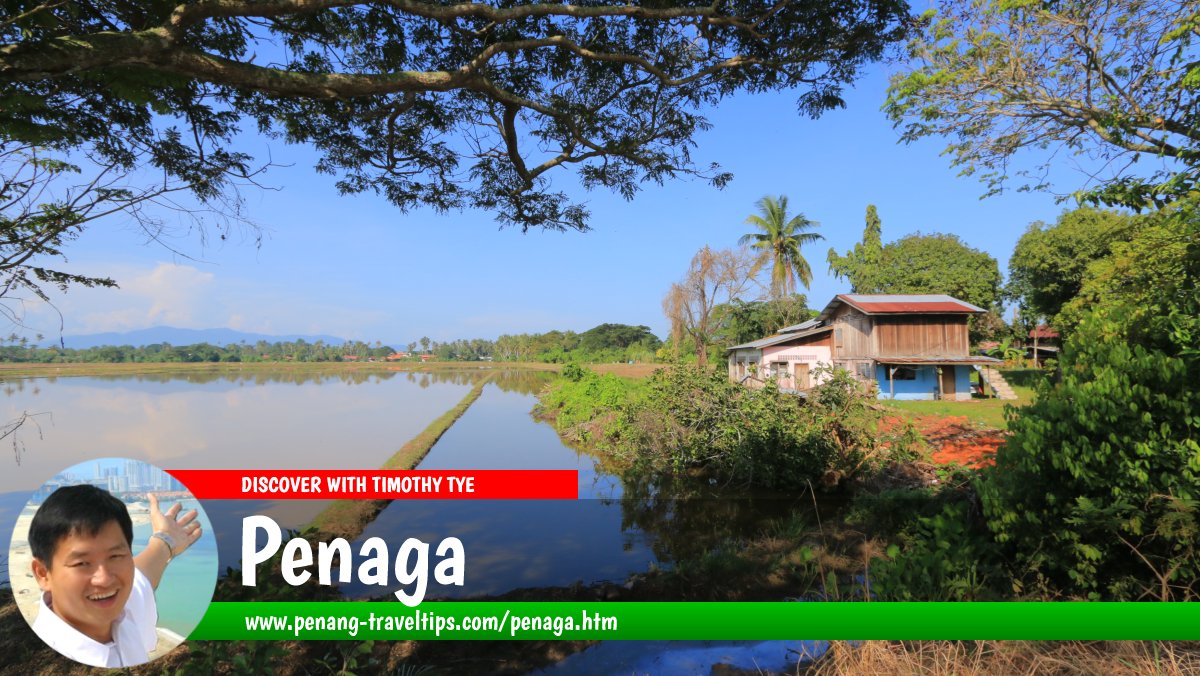 Penaga, Seberang Perai Utara (16 November 2019)
Penaga is a coastal town and mukim located in the northern part of Seberang Perai, Penang, Malaysia. Characterised by fishing villages, paddy fields, and long-established Malay communities, Penaga represents one of the most traditionally rooted areas in Seberang Perai. While modern development is gradually approaching, the town remains deeply connected to its agrarian and maritime heritage, offering a clear contrast to the more urbanised parts of mainland Penang1.
Quick Facts
Location: Northern Seberang Perai, Penang, Malaysia
District: Seberang Perai Utara
Administrative Authority: Seberang Perai City Council (MBSP)
Character: Rural and coastal town
Known for: Fishing villages, rice cultivation, traditional Malay culture
Nearby Areas: Kepala Batas, Teluk Air Tawar, Sungai Dua
Geography and Natural Setting
Penaga is situated along the northern coastal stretch of Seberang Perai, facing the Straits of Malacca. Its geographical setting is defined by low-lying coastal plains, extensive paddy fields, mangrove-fringed shorelines, and small rivers that flow into the sea. This natural environment has shaped local livelihoods for generations, particularly in agriculture and fishing2.
The coastal areas of Penaga are dotted with traditional fishing villages, where wooden houses are often built on stilts or raised ground to adapt to tidal conditions. Inland, fertile alluvial soil supports rice cultivation, making Penaga part of the historic rice bowl of northern Seberang Perai. The flat terrain also contributes to seasonal flooding during heavy monsoon rains, a challenge that has influenced settlement patterns and infrastructure planning.
Origins and Historical Development
The history of Penaga is closely tied to early Malay settlement along the northern Penang mainland. The town’s name is believed to be derived from the penaga tree, a coastal and riverine species that once grew abundantly in the area. These natural resources supported early communities that relied on fishing, farming, and river transport3.
During the 19th century, Penaga developed as a rural settlement under British colonial administration, though it remained largely outside the main centres of colonial trade and industry. Unlike Butterworth, which later became an industrial and port hub, Penaga preserved its village-based economy and social structure. Mosques, surau, and kampung networks formed the backbone of community life.
Traditional Economy and Livelihoods
For much of its history, Penaga’s economy has been sustained by two main activities: rice farming and coastal fishing. Paddy cultivation follows seasonal cycles that shape daily routines and social calendars, while fishing communities depend on nearshore waters for small-scale catches. These livelihoods fostered a strong sense of cooperation through shared labour and mutual assistance4.
Although fewer residents now rely exclusively on agriculture or fishing, these activities continue to define the town’s identity. Many families maintain small plots of land or participate in part-time farming, while others supplement their income through food production, small trading, and informal businesses.
Culture and Community Life
Penaga is widely recognised for its strong kampung culture and community cohesion. Social life revolves around mosques, local markets, and family networks that span multiple generations. Religious observances play an important role, with communal prayers, religious classes, and festive celebrations reinforcing shared values.
Traditional Malay customs remain visible in wedding ceremonies, food preparation, and daily interactions. Local cuisine often features fresh seafood, rice-based dishes, and traditional kuih, reflecting the town’s agricultural and maritime roots. These cultural practices contribute to Penaga’s reputation as a place where heritage remains actively lived rather than merely remembered.
Infrastructure and Accessibility
Penaga is connected to other parts of Seberang Perai Utara through a network of state and federal roads linking it to Kepala Batas, Sungai Dua, and Butterworth. While the town does not have direct access to major highways, travel times to urban centres have improved with ongoing infrastructure upgrades in northern Seberang Perai5.
Public transport services are limited, and private vehicles remain the primary mode of travel for residents. The relative distance from major commercial hubs has helped preserve Penaga’s rural character, though it also presents challenges in terms of access to higher-level services and employment.
Education and Social Facilities
Educational facilities in Penaga include primary and secondary schools that serve local villages and nearby rural areas. These schools play an important role in community development, providing basic education while maintaining close ties with parents and village leaders.
In addition to formal education, religious instruction remains an integral part of social life. Informal religious classes and mosque-based learning continue to shape moral values and community engagement, particularly among younger residents.
Environmental Considerations
Penaga’s coastal and agricultural environment presents both opportunities and challenges. Mangrove areas along the coast serve as natural buffers against erosion and support marine ecosystems, while paddy fields contribute to local food security. At the same time, climate change, sea-level rise, and changing rainfall patterns pose long-term risks to traditional livelihoods6.
Efforts to balance environmental protection with development have become increasingly important. Drainage improvements, coastal management, and sustainable farming practices are key issues for local authorities and residents alike.
Urban Influence and Gradual Change
Although Penaga remains predominantly rural, the influence of urbanisation is gradually becoming more visible. Improved road connectivity, population growth in nearby towns, and rising land values have led to limited residential and commercial development. These changes are reshaping parts of the town while leaving core village areas largely intact.
Local communities often express a desire to preserve Penaga’s identity while embracing selective development that improves quality of life. This cautious approach reflects an understanding of the town’s cultural and environmental significance within northern Seberang Perai.
Role within Seberang Perai Utara
Within the broader context of Seberang Perai Utara, Penaga plays an important supporting role as a food-producing and culturally significant area. Its agricultural output and fishing activities complement the administrative and commercial functions of nearby towns such as Kepala Batas.
Penaga’s continued existence as a rural coastal settlement contributes to the diversity of Seberang Perai, offering an alternative lifestyle rooted in tradition, community, and close ties to the natural environment7.
Future Outlook
Looking ahead, Penaga faces the challenge of adapting to modern pressures while maintaining its traditional character. Sustainable development, environmental resilience, and cultural preservation are likely to shape the town’s future trajectory.
As Penang continues to develop as a state, Penaga stands as a reminder of Seberang Perai’s rural foundations, embodying values of cooperation, heritage, and continuity that remain relevant in a rapidly changing world.
 Map of Penaga
Sights in Penaga
- Kampung Agong (GPS: 5.54023, 100.37974)

Eateries in Penaga
- Medan Selera PERDA Lahar Endin (GPS: 5.53236, 100.38032)

Chinese Temples in Penaga
- Penaga Tua Pek Kong Temple (GPS: 5.52561, 100.38098)

Hospitals and public clinics in Penaga
- Klinik Kesihatan Penaga (GPS: 5.53543, 100.38082)

Markets in Penaga
- Pasar Awam Penaga (local wet market) (GPS: 5.52831, 100.38011)

- Pasar Ikan Penaga (GPS: 5.53147, 100.37949)

Mosques in Penaga
- Masjid Jamek Al Hidayah (GPS: 5.57416, 100.33952)

- Masjid Jamek Nurussaadah (GPS: 5.51639, 100.383)

- Masjid Penaga (GPS: 5.52796, 100.38189)

- Masjid Permatang Bendahari (GPS: 5.57873, 100.37496)

Petrol Stations in Penaga
- Caltex Penaga (GPS: 5.53646, 100.38036)

- Shell Penaga (GPS: 5.5304, 100.38214)

Roads in Penaga
- Jalan Guar Kepah
- Jalan Padang Benggali
- Jalan Permatang Bendahari
- Jalan Permatang Kuala
- Jalan Permatang Rambai
Schools in Penaga
- Aik Keow Primary School (GPS: 5.52531, 100.38102)

- Sekolah Kebangsaan Penaga (GPS: 5.5369, 100.37871)

- Sekolah Kebangsaan Permatang Janggus (GPS: 5.5547, 100.38983)

- Sekolah Menengah Kebangsaan Dato Haji Hassan Noh (GPS: 5.55099, 100.37828)

Villages in Penaga
- Kampung Kuala Muda (GPS: 5.57435, 100.33932)

- Lahar Tabut (GPS: 5.51732, 100.38264)

- Permatang Berah (GPS: 5.50678, 100.38369)

- Permatang Binjai (GPS: 5.49978, 100.39574)

- Permatang Kuala (GPS: 5.50546, 100.3919)

- Permatang Pak Elong (GPS: 5.50668, 100.40248)

- Permatang Rambai (GPS: 5.5269, 100.39495)

- Permatang Sintok (GPS: 5.51551, 100.40244)

- Pulau Mertajam (GPS: 5.57186, 100.36208)

References
- Seberang Perai City Council (MBSP)
- Penang Institute – Regional Geography Studies
- Official Portal of the Penang State Government
- Department of Agriculture Malaysia
- Ministry of Transport Malaysia
- Ministry of Natural Resources, Environment and Climate Change
- Federal Department of Town and Country Planning Malaysia
Page Details
This page was created on 1 January 2026.Want to share your Penang travel experiences or get tips from fellow travellers?
Join the Penang Travel Tips Facebook GroupUseful guides for visiting Penang
My Videos of Penang
 Latest Pages & Updates
Buy Me A Coffee
If you enjoy the information I provide and want to support the work I do, please buy me a coffee! I appreciate it immensely, thank you so much!
