
Relau Villa
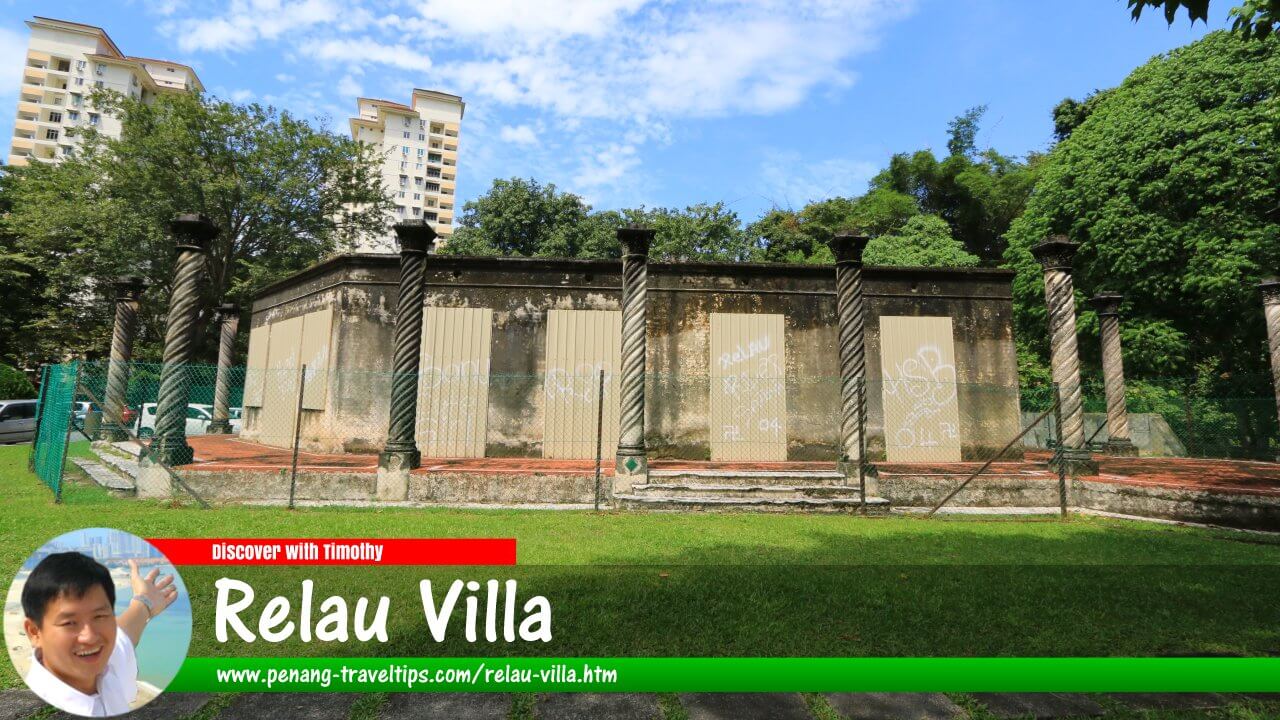 Relau Villa (28 January 2017)
Relau Villa (GPS: 5.34558, 100.27194), also known as the Chung Thye Phin Villa, stands as a fascinating remnant of early 20th-century Penang architecture and Chinese elite lifestyle. Located in the verdant suburb of Relau, this villa was once a private retreat for Chung Thye Phin (鄭太平, Zhèng Dàpíng), the last Kapitan Cina of Perak and son of Kapitan Chung Keng Quee of Hai San notoriety and builder of Hai Kee Chan. Though much of the structure now lies in ruins, the remaining elements, including its iconic spiral colonnades and central swimming pool, reflect a period of opulence and cross-cultural design.
Quick Facts
- Full Name: Relau Villa (Chung Thye Phin Villa)
- Location: Taman Metropolitan, Relau, Penang, Malaysia
- Built: Early 1930s
- Architect: Engineer B. H. Ung
- Owner: Chung Thye Phin, last Kapitan Cina of Perak
- Features: Central swimming pool, spiral colonnades, Roman-style design, forested surroundings
- Current Status: Ruins with standing pillars and open pool
- Significance: Example of early 20th-century elite Penang architecture and lifestyle
Historical Background
Chung Thye Phin, a prominent Malayan Chinese businessman and community leader, built Relau Villa in the early 1930s as a private holiday retreat. Known for his contributions to tin mining and civic life, he chose the Relau area for its elevated, forested setting, providing privacy and a serene environment away from the bustling city of George Town. The villa was intended to be both a leisure estate and a showcase of contemporary architectural sophistication. Sadly Chung Thye Phin passed away in 1935.
Architectural Features
The villa’s design reflects a blend of Roman-style architecture with modern elements suitable for tropical Malaysia. The central swimming pool, encircled by elegant spiral colonnades (called Solomonic columns), was reportedly the first private pool in Penang. The architect engaged to design the villa was Ung Ban Hoe from the architectural firm of Stark & McNeil. Its one-storey layout was complemented by open verandas and terraces, allowing natural ventilation and a panoramic view of the surrounding forest. The choice of location within lush greenery emphasized both exclusivity and harmony with nature.
Usage and Lifestyle
Relau Villa served as a personal retreat for Chung Thye Phin and his family. It was a venue for private gatherings, social events, and relaxation, reflecting the lifestyle of the Straits Chinese elite in the early 20th century. The combination of leisure spaces, gardens, and pool highlighted the fusion of Eastern and Western influences, characteristic of Malaya’s affluent Chinese community during that period.
Current Status
Today, Relau Villa is mostly in ruins, with only the colonnades and the pool remaining intact. Despite its dilapidated state, the villa is a significant heritage site, symbolizing the opulence and cultural hybridity of the last Kapitan Cina era. Local guides and heritage enthusiasts continue to document and preserve the villa’s remaining features, drawing attention to its historical and architectural value.
Modern Context
Relau Villa’s legacy is intertwined with Penang’s cultural memory. Its story reflects the wealth and social status of Malaya’s early 20th-century Chinese elites. Sites like Relau Villa also offer context for understanding urban development, as modern Penang neighborhoods have expanded into areas once reserved for elite retreats.
Today Chung Thye Phin is remembered with a road named after him in Taiping, a fountain which he donated to the Penang Turf Club, and the once elegant villa in Relau.
Cascading by the side of Relau Villa is one of the tributaries of Sungai Relau. Steps lead from the compound of the villa down to the riverside and a bridge crosses it to the other side, which slopes upward to the Shrine of the Jade Emperor.
Chung Thye Phin left behind many properties, some no longer standing. These include a mansion in North Beach (now Gurney Drive), on the plot of land occupied today by 1 Persiaran Gurney condominium and the Chung Thye Phin Building in Ipoh. If you visit 1 Persiaran Gurney condominium today, you can still see remnants of the gate to Chung Thye Phin's mansion there.
Relau Villa is  on the Map of Relau, Penang
Visit to Relau Villa in 2008
 Approaching Relau Villa from afar (7 July 2008)
 Relau Villa building surrounded by undergrowth (7 July 2008)
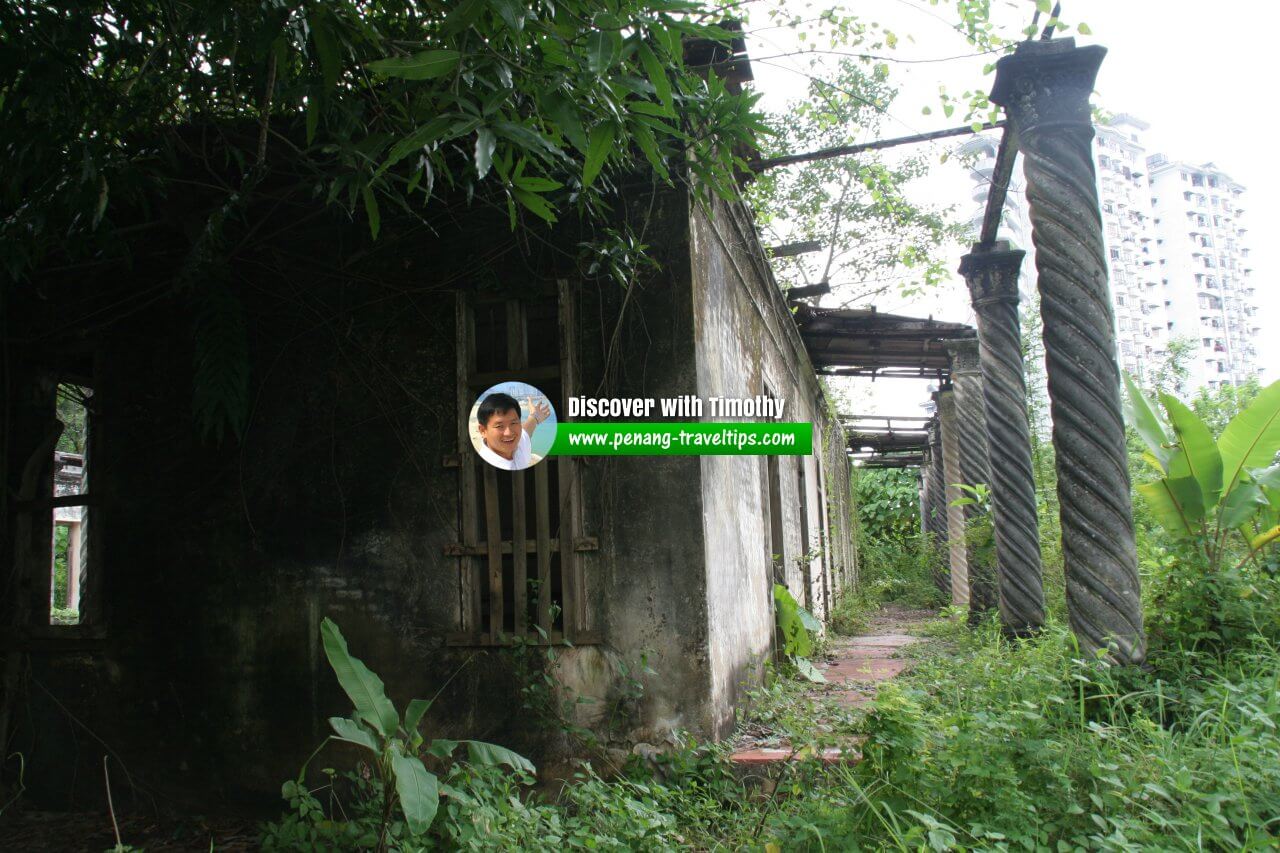 The distinctive screw-style columns of Relau Villa (7 July 2008)
 Entering Relau Villa (7 July 2008)
 The famous swimming pool of Relau Villa (7 July 2008)
 The altar at Relau Villa. (7 July 2008)
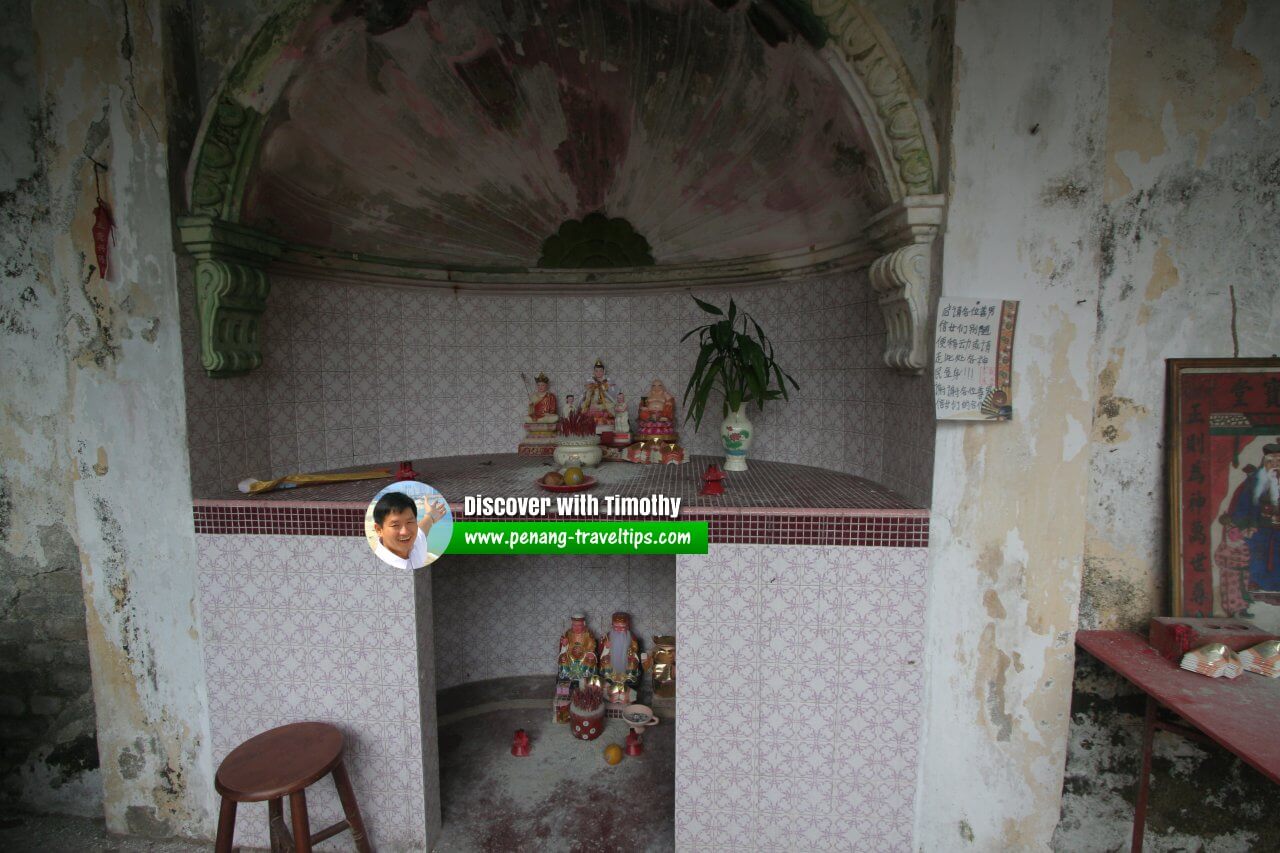 The altar at Relau Villa. (7 July 2008)
 View from the altar to the swimming pool of Relau Villa. (7 July 2008)
 At the time of my visit in 2008, people were still making offerings at the altar. (7 July 2008)
 View of the swimming pool from the side. (7 July 2008)
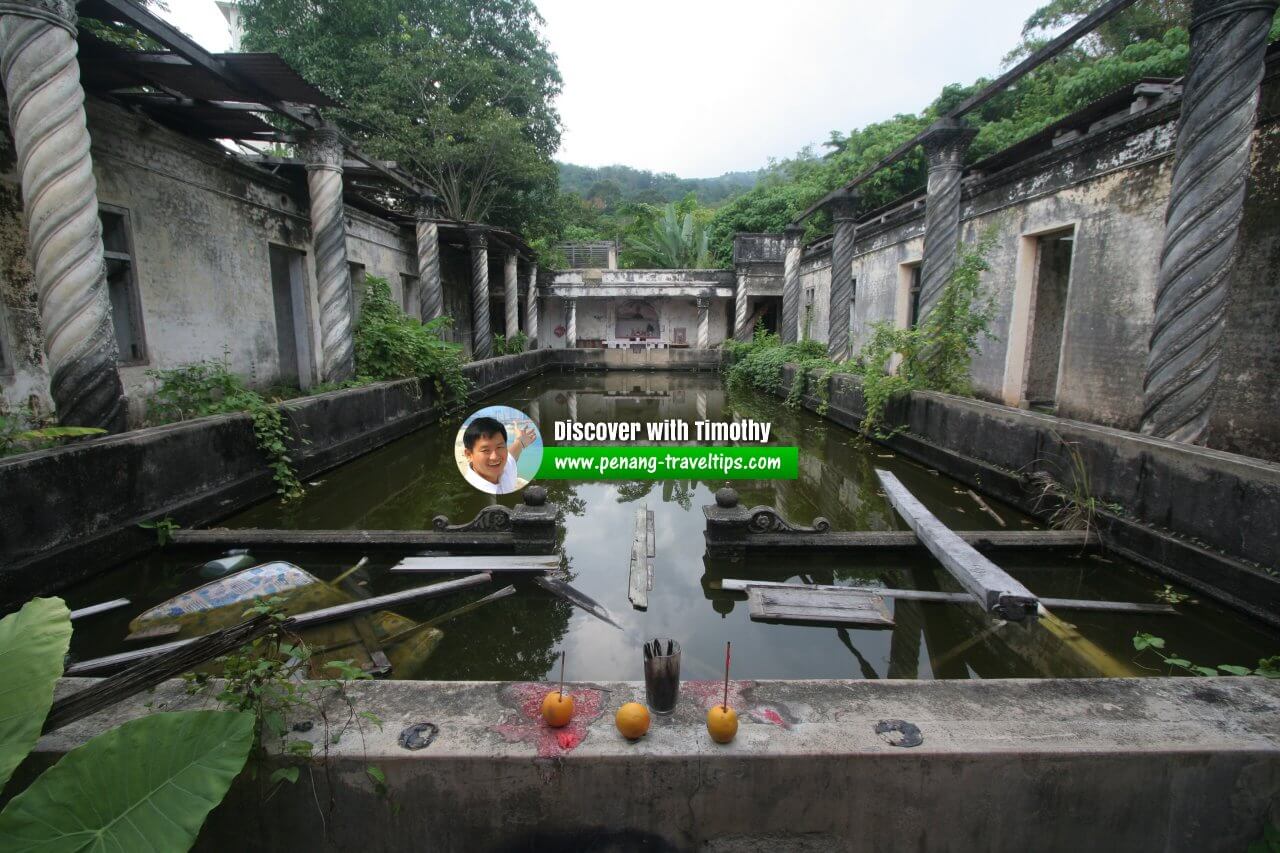 View from the far side of the swimming pool towards the altar. (7 July 2008)
 Close-up view of the screw-type columns. (7 July 2008)
The twisting, spiral shaft style column that you see at Relau Villa is called Solomonic column, and is also known as barley-sugar columbn. Solomonic columns have a helical or corkscrew-like twist that gives them a dynamic, almost fluid appearance, different from Doric, Ionic and Corinthian columns.
This column style is traditionally associated with the Temple of Solomon in Jerusalem, hence the name Solomonic. It became popular during the Baroque period (17th century), when architects like Bernini used them to create a sense of movement and grandeur. Possibly the most famous example of the Solomonic column are the Baldachin of St Peter's Basilica in Rome, the massive Solomonic columns supporting the canopy over the high altar.
 The top part of the column is called the capital. (7 July 2008)
 Side view of the Relau Villa swimming pool. (7 July 2008)
Return visit in 2013
I revisited the Relau Villa on 23 March, 2013, to find that the villa itself has been condoned off by the Penang Island Municipal Council (MPPP). The grounds surrounding the villa has also been spruced up. There is even a bench for visitors to sit and take a rest.
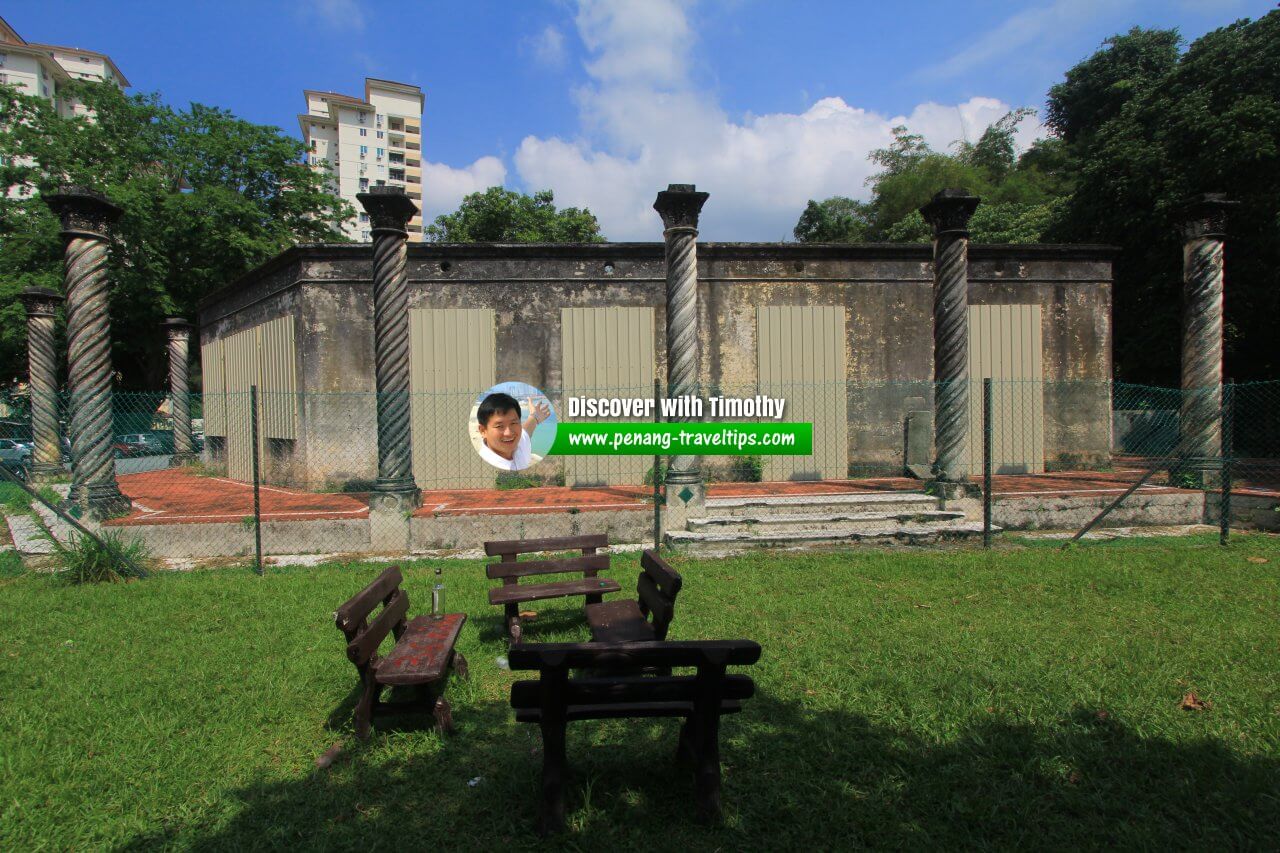 Relau Villa (23 March 2013)
 Grounds of the ruins of Relau Villa (23 March 2013)
 Sign from the MPPP at Relau Villa (23 March 2013)
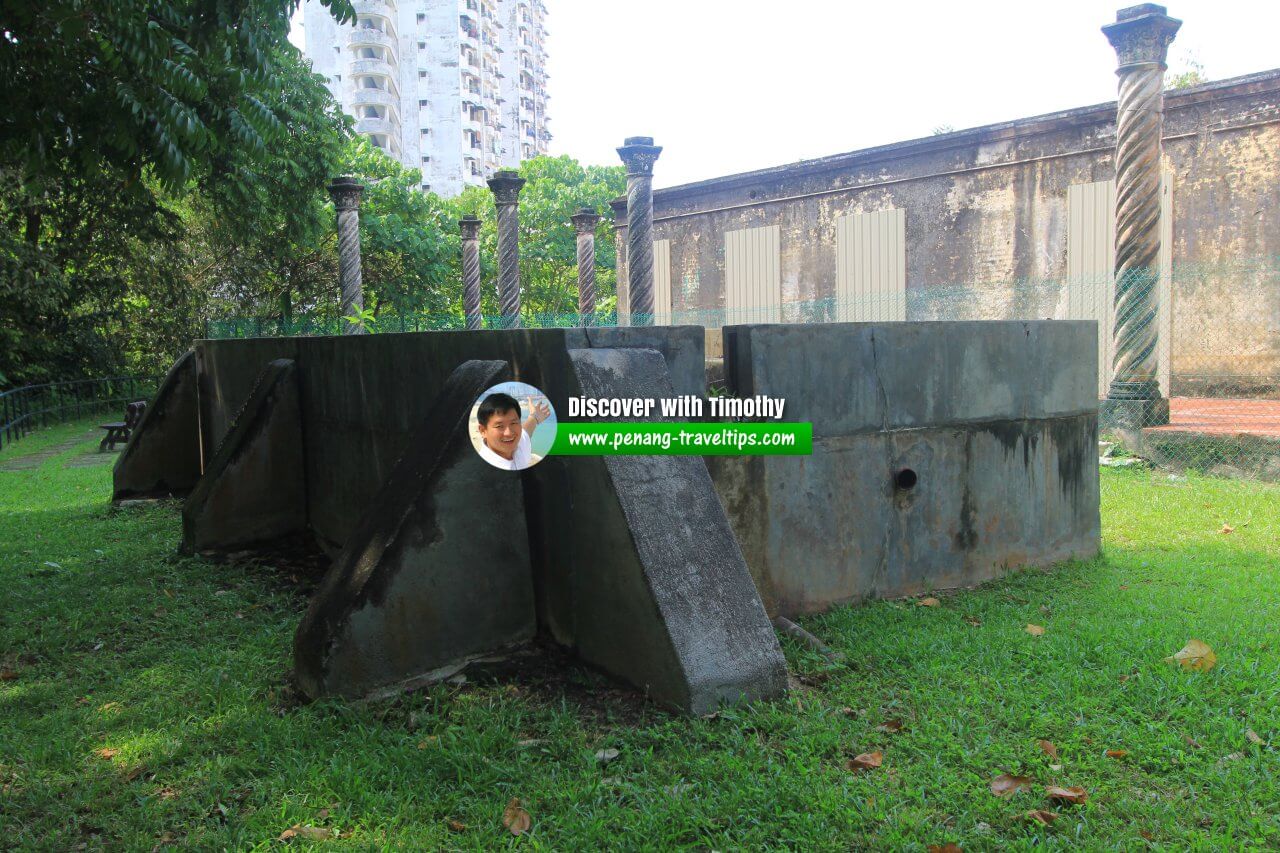 Water tank beside Relau Villa (23 March 2013)
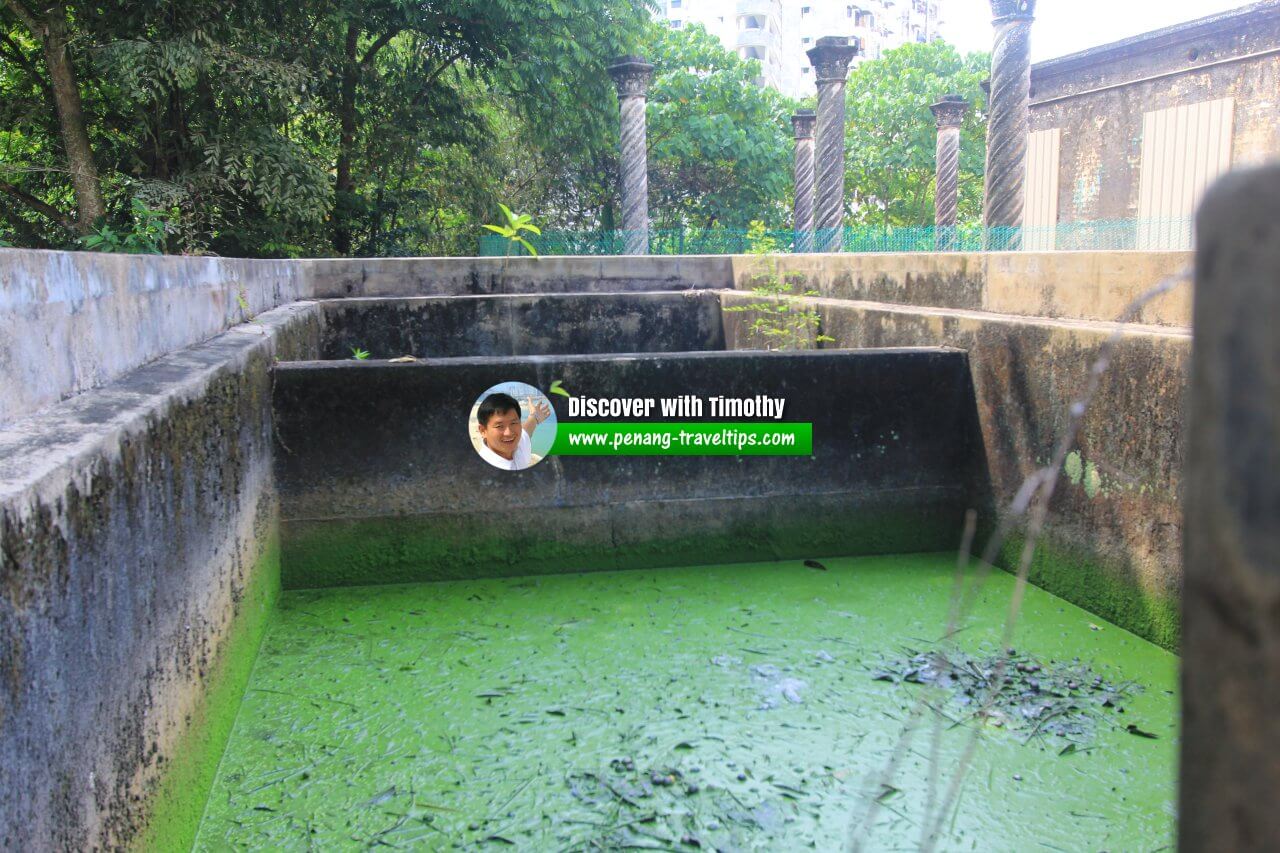 The inside of the water tank beside Relau Villa (23 March 2013)
2017 Visit
There was not much changes to Relau Villa when I returned in 2017.
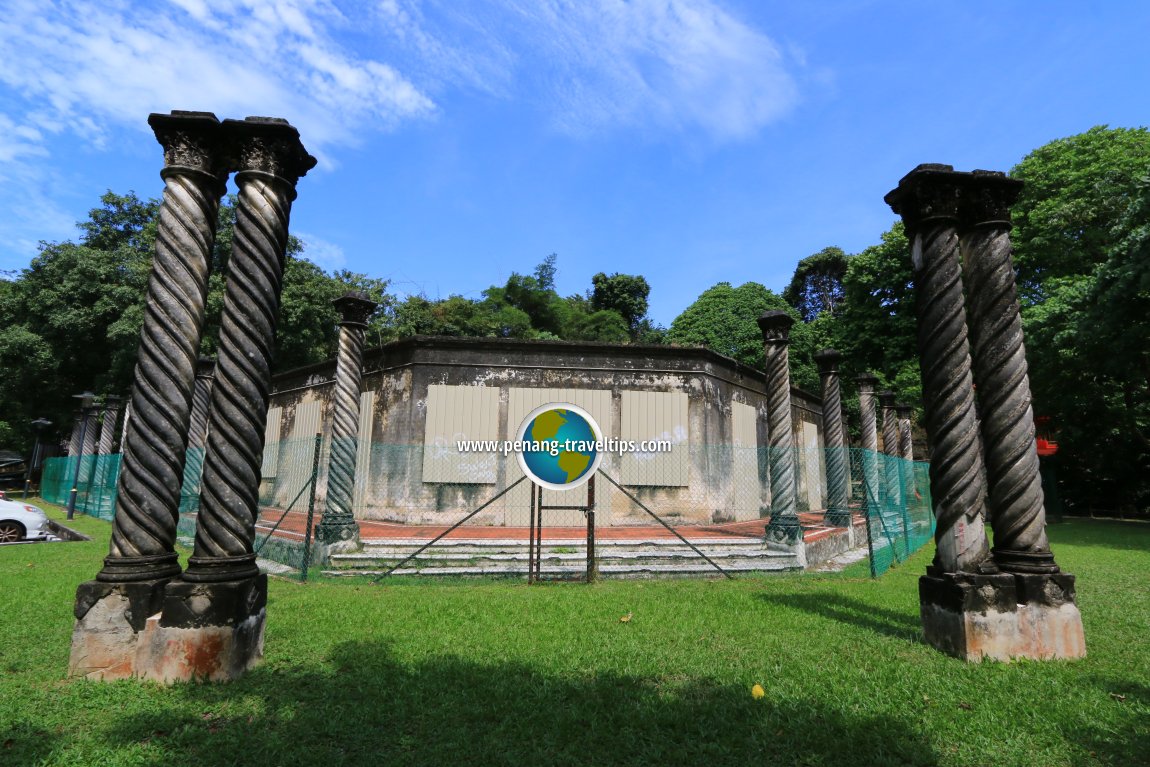 Ruins of Relau Villa (28 January 2017)
References
- Wikipedia – Chung Thye Phin
- Ipoh World – Chung Thye Phin Mining and Estates
- Penang Heritage Trust – Relau Villa
Page Details
This page was created on 20 September 2025.Want to share your Penang travel experiences or get tips from fellow travellers?
Join the Penang Travel Tips Facebook GroupUseful guides for visiting Penang
My Videos of Penang
 Latest Pages & Updates
Buy Me A Coffee
If you enjoy the information I provide and want to support the work I do, please buy me a coffee! I appreciate it immensely, thank you so much!
