
Lim Ah Woo Road, Singapore
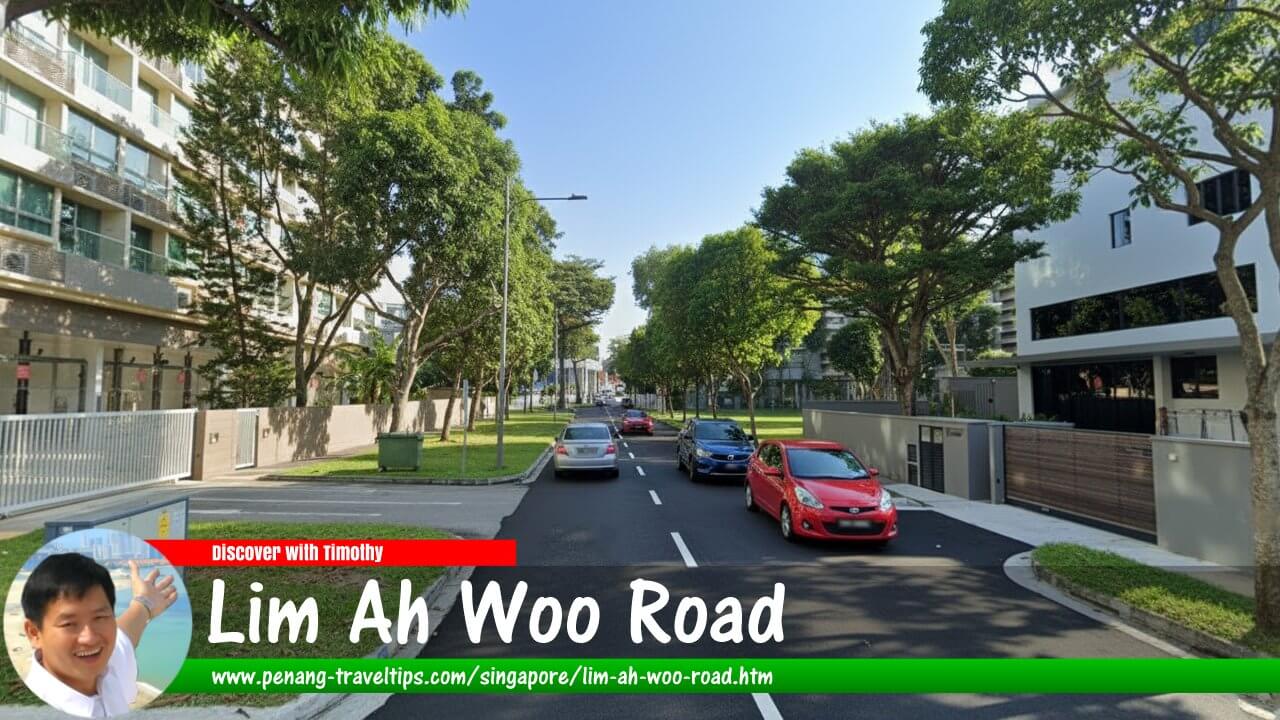 Lim Ah Woo Road, Singapore (AI-edited photograph on 3 May 2026)
Lim Ah Woo Road is a short but historically significant street located in Singapore, within the Geylang planning area. Measuring approximately 285 metres in length, the road runs in a north–south direction, linking Guillemard Road in the north to Green Lane in the south. Despite its modest size, Lim Ah Woo Road reflects the layered history of Singapore’s urban development, particularly in relation to early Chinese community leaders and property development in the eastern districts.
Quick Facts
- Road Name: Lim Ah Woo Road
- Length: 285 metres
- Planning Area: Geylang
- Postal District: 15
- Nearest MRT Station: Dakota (CC8)
- Road Type: Residential street
- Connections: Guillemard Road to Green Lane
History and Development
The area surrounding Lim Ah Woo Road was historically part of a larger stretch of plantation land and low-lying countryside in eastern Singapore. During the late 19th and early 20th centuries, Geylang was known for its coconut plantations, fruit orchards, and rural settlements. Over time, as Singapore urbanised, these plantations gave way to residential developments, particularly during the mid-20th century when housing demand increased.
Lim Ah Woo Road likely took shape during this transitional period, when private landowners subdivided their estates into smaller residential plots. This coincided with broader urban expansion efforts and the gradual extension of infrastructure such as roads, drainage systems, and public transport networks. By the 1950s and 1960s, the area had evolved into a mixed residential neighbourhood, combining landed houses with low-rise flats.
Today, Lim Ah Woo Road forms part of a mature residential enclave characterised by a blend of older homes and newer redevelopments. While the road itself is relatively quiet, it benefits from its proximity to major arterial routes such as Guillemard Road, which connects residents to the city centre and other parts of Singapore.
Name Origin
The road is named after Lim Ah Woo, a prominent Chinese businessman who played an important role in Singapore’s early commercial and community life1. He served for many years as the President of the Ngee Ann Kongsi, a well-known Teochew clan association that contributed significantly to education, philanthropy, and community welfare.
Lim Ah Woo was also notable as a property developer and entrepreneur. Among his achievements was the development of the Alhambra Theatre, one of Singapore’s early entertainment venues. The theatre was an important cultural landmark during its time, hosting films and performances that catered to the growing urban population.
By naming the road after Lim Ah Woo, the authorities recognised his contributions to Singapore’s development, particularly in commerce and community leadership. Such naming practices were common in the early to mid-20th century, when many streets were named after influential individuals who had shaped the colony’s growth.
Character and Surroundings
Lim Ah Woo Road is primarily a residential street, lined with a mix of landed terrace houses, semi-detached homes, and a few low-rise apartment blocks. The neighbourhood exudes a relatively მშვიდ and laid-back atmosphere, especially when compared to the busier commercial stretches of nearby Geylang.
The architectural character of the area reflects different phases of development. Some older houses date back several decades and retain traditional design elements, while newer properties feature modern facades and upgraded interiors. This blend gives the street a layered and evolving identity.
Despite its quiet nature, the road is well-connected to amenities. Residents are within easy reach of eateries, convenience stores, and services along Guillemard Road and nearby streets. The presence of schools, parks, and recreational facilities in the wider Geylang and Marine Parade areas further enhances the livability of the neighbourhood.
Nearby Roads and Connectivity
Lim Ah Woo Road is situated within a network of interconnected streets in Geylang. Key roads in its vicinity include:
- Guillemard Road: A major arterial road providing access to the city centre and eastern Singapore.
- Green Lane: A smaller residential street linking to other local roads.
- Tanjong Katong Road: Located nearby, offering additional connectivity and access to commercial areas.
- Old Airport Road: Known for its famous hawker centre and local amenities.
This network ensures that residents of Lim Ah Woo Road enjoy convenient connectivity, whether travelling by car, bus, or MRT.
Points of Interest
While Lim Ah Woo Road itself does not host major landmarks, several notable attractions lie within its vicinity:
- Old Airport Road Food Centre: A renowned hawker centre offering a wide variety of local dishes.
- Singapore Sports Hub: A major sports and entertainment complex located a short drive away.
- East Coast Park: Accessible within minutes, providing recreational and leisure opportunities by the sea.
- Katong and Joo Chiat: Areas known for their heritage shophouses, cafes, and cultural attractions.
These nearby amenities make Lim Ah Woo Road an attractive residential location for those seeking both convenience and a sense of community.
Real Estate and Property Market
As of 2025, properties along Lim Ah Woo Road are generally considered part of the city fringe residential market. Landed homes in the area typically range from about 1,800 to 3,500 square feet (approximately 167 to 325 square metres). Depending on condition and tenure, such properties can fetch between S$3.5 million and S$6.5 million.
Rental rates for landed homes in the vicinity vary based on size and level of renovation, typically ranging from S$4,500 to S$9,000 per month. Smaller apartment units in nearby developments may rent for around S$2,500 to S$4,000 per month, depending on factors such as proximity to transport and facilities.
Compared to prime districts in central Singapore, Lim Ah Woo Road offers relatively more affordable landed housing options, while still maintaining close proximity to the city. This balance makes it appealing to both owner-occupiers and investors.
Transport and Accessibility
The nearest MRT station to Lim Ah Woo Road is Dakota MRT Station (CC8) on the Circle Line. This station provides direct connectivity to key interchange stations such as Paya Lebar and Promenade, facilitating easy travel across Singapore.
In addition to the MRT, several bus services operate along Guillemard Road, with bus stops located within a short walking distance from Lim Ah Woo Road. These bus routes connect the area to the Central Business District, Orchard Road, and other parts of the island.
For motorists, the road’s proximity to major expressways such as the East Coast Parkway (ECP) and Pan Island Expressway (PIE) ensures efficient travel to various destinations.
Fun Fact
A lesser-known aspect of Lim Ah Woo Road is its connection to Singapore’s early entertainment scene through the Alhambra Theatre, developed by its namesake. During its heyday, the theatre was one of the few venues offering cinematic experiences, making it a popular gathering place for residents. This link highlights how even a short residential street can be tied to broader cultural developments in Singapore’s history.
Map of Lim Ah Woo Road, Singapore
References
- Savage, Victor R. & Yeoh, Brenda S.A. Singapore Street Names
- Ng Yew Peng. What's in the Name?
- Urban Redevelopment Authority (URA)
- SRX Property Market Data
- PropertyGuru Singapore Market Insights
Page Details
This page was created on 3 May 2026. Hi, my name is Timothy and created it from my research, for my own entertainment, knowledge and to satisfy my curiosity. I am providing the information to you in good faith and hope it is useful. I try to get the details as accurate as possible. I also try to update the page whenever I stumble on new details. So this and all my other pages are perpetual work in progress. If you discover any error, please politely inform me, pointing out where the error lies, and I will correct it as soon as possible. Your helpfulness will keep this page accurate, relevant and helpful to those who need the information.Streets of Singapore Directory
My videos of Singapore
Want to share your Singapore travel experiences or get tips from fellow travellers?
Join the Singapore Travel Tips Facebook GroupMore information for visiting and living in Singapore
Here are some related articles to help you get to know Singapore better.- Cost of Living in Different Singapore Neighbourhoods (2025 Guide)
- EZ-Link Card
- Owning a Car in Singapore
- Singapore MRT Map & Guide 2025
- Singapore Postal Districts and Postcodes
- Singapore Tourist Pass
- Taking the Bus in Singapore: A Visitor's Guide
- Understanding CCR, RCR and OCR in Singapore real estate
 Latest Pages & Updates
Buy Me A Coffee
If you enjoy the information I provide and want to support the work I do, please buy me a coffee! I appreciate it immensely, thank you so much!
