
Zhongshan, China
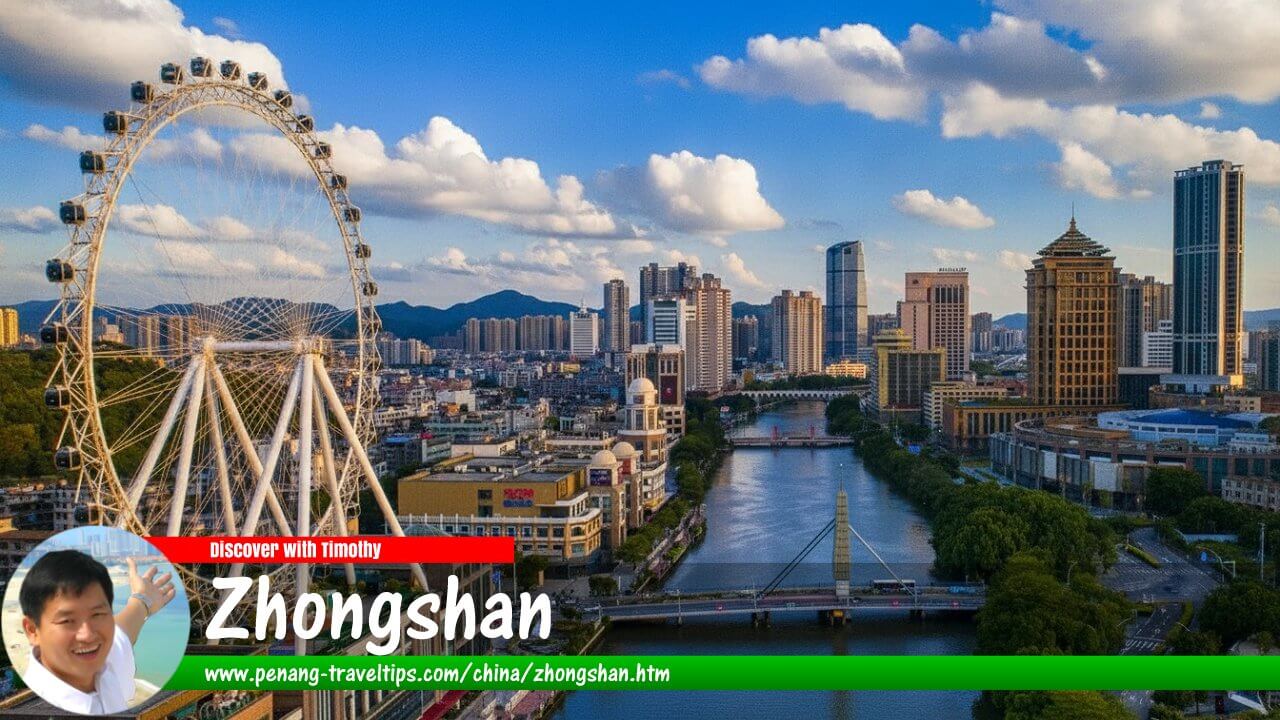 Zhongshan, China (Photo edited with AI on 16 June 2026)
Zhongshan (Chinese: 中山; pinyin: Zhōngshān) is a prefecture-level city in central Guangdong Province, China, located on the western side of the Pearl River Delta. The city is best known as the birthplace of Dr. Sun Yat-sen, the founding father of modern China, and is one of the most economically developed cities in southern China. Positioned between Guangzhou, Foshan, Zhuhai, and Macau, Zhongshan serves as an important manufacturing, commercial, and transportation hub within the Guangdong–Hong Kong–Macau Greater Bay Area. Combining historical significance with modern industry, the city attracts both business travelers and tourists interested in Chinese history and Cantonese culture.1
The city was originally known as Xiangshan (香山), meaning "Fragrant Mountain," a name derived from the aromatic flowers that once grew abundantly in the area. In 1925, the county was renamed Zhongshan in honor of Dr. Sun Yat-sen, whose adopted name was Sun Zhongshan (孙中山). The renaming commemorated his contributions to the overthrow of the Qing Dynasty and the establishment of the Republic of China.2
Quick Facts
- English Name: Zhongshan
- Chinese Name: 中山
- Pinyin: Zhōngshān
- Former Name: Xiangshan (香山)
- Province: Guangdong
- Location: Pearl River Delta, Southern China
- Named After: Dr. Sun Yat-sen (Sun Zhongshan)
- Climate: Humid Subtropical
- Main Railway Station: Zhongshan Railway Station
- Nearest Airport: Shenzhen Bao'an International Airport
- Known For: Sun Yat-sen's birthplace, manufacturing, Cantonese culture
- Economic Region: Guangdong–Hong Kong–Macau Greater Bay Area
Geography
Zhongshan is situated in the south-central portion of Guangdong Province on the western side of the Pearl River Estuary. It borders Foshan and Guangzhou to the north, Zhuhai to the south, and Jiangmen to the west. Across the Pearl River Estuary to the east lie Shenzhen and Hong Kong.1
The municipality covers approximately 1,784 square kilometers and consists mainly of low-lying plains, river networks, wetlands, and agricultural lands. Much of the city lies within the fertile Pearl River Delta, one of China's most productive economic and agricultural regions.
The terrain is generally flat, although several small hills and low mountains can be found in the southern and central districts. Rivers and waterways connect the city with neighboring municipalities and have historically played an important role in transportation and trade.
Zhongshan experiences a humid subtropical climate characterized by hot, humid summers and mild winters. Average annual temperatures range from approximately 22°C to 23°C. Rainfall is abundant throughout the year, particularly during the monsoon season between April and September.
The city's strategic location allows convenient access to major transportation corridors, ports, airports, and urban centers throughout the Greater Bay Area.
History
The history of Zhongshan extends back more than two thousand years. Archaeological discoveries indicate that the area was inhabited during prehistoric times. During the Qin and Han dynasties, the region became incorporated into the imperial administrative system of China.2
For centuries, the area was known as Xiangshan County. Agriculture, fishing, salt production, and river trade formed the basis of the local economy. Due to its location near Guangzhou and the South China Sea, the region benefited from both domestic and international commerce.
During the Ming and Qing dynasties, Xiangshan became increasingly prosperous. Many residents emigrated overseas, particularly to Southeast Asia, North America, and other parts of the world. Overseas Chinese communities from Xiangshan played an important role in trade and economic development.
The city is most famous as the birthplace of Dr. Sun Yat-sen (1866–1925), one of the most influential figures in modern Chinese history. Born in Cuiheng Village, Sun led revolutionary movements that culminated in the fall of the Qing Dynasty and the establishment of the Republic of China in 1912.3
Following Sun Yat-sen's death in 1925, Xiangshan County was renamed Zhongshan in his honor. The city remains one of the few places in China named after a historical figure.
During the twentieth century, Zhongshan underwent significant modernization. Following China's economic reforms beginning in 1978, the city attracted substantial investment due to its proximity to Hong Kong, Macau, Shenzhen, and Guangzhou.
Industrial parks, export-processing zones, and manufacturing facilities expanded rapidly. Today, Zhongshan is one of Guangdong's most prosperous cities while continuing to preserve its historical and cultural heritage.
Economy and Products
Zhongshan possesses a highly diversified economy based on manufacturing, commerce, technology, logistics, and services. It is considered one of the most economically successful cities in Guangdong Province.
The city is particularly known for manufacturing lighting products, household appliances, furniture, electronics, textiles, and hardware. Zhongshan's Guzhen Town is often referred to as the "Lighting Capital of China" due to its massive lighting industry.4
Household appliances represent another major sector. Products such as refrigerators, air conditioners, kitchen appliances, and electrical equipment are manufactured and exported worldwide.
The furniture industry is also important, producing both residential and commercial furnishings for domestic and international markets.
Electronics manufacturing includes telecommunications equipment, computer components, electronic devices, and smart technology products.
Agricultural products include rice, fruits, vegetables, flowers, seafood, and poultry. Despite rapid urbanization, agriculture remains significant in certain districts.
Tourism contributes to the economy through heritage sites related to Sun Yat-sen, cultural attractions, parks, and historical districts. The city's central location within the Greater Bay Area also supports logistics, transportation, and commercial activities.
How to Go There
By Air
Zhongshan does not currently have a major commercial airport. Most visitors arrive via nearby airports.
Shenzhen Bao'an International Airport (SZX) is approximately 90 kilometers from central Zhongshan and can be reached via road transport or ferry connections. The airport serves numerous domestic and international destinations and is one of southern China's busiest aviation hubs.5
Guangzhou Baiyun International Airport (CAN) is approximately 110 kilometers north of Zhongshan and offers extensive domestic and international flight connections.
Zhuhai Jinwan Airport (ZUH) is another convenient option, located approximately 60 kilometers from the city center.
Airlines serving these airports include Air China, China Southern Airlines, China Eastern Airlines, Shenzhen Airlines, Hainan Airlines, Cathay Pacific, Singapore Airlines, Emirates, and numerous international carriers.
By Train
Zhongshan Railway Station is located in Torch High Technology Industrial Development Zone and serves the Guangzhou–Zhuhai Intercity Railway. Other stations include Zhongshan North Railway Station, Xiaolan Railway Station, and Cuiheng Railway Station.6
High-speed rail services connect Zhongshan with Guangzhou, Zhuhai, Foshan, Shenzhen, Hong Kong, and many other destinations within the Greater Bay Area.
By Long-Distance Bus
Major bus terminals include Zhongshan Bus Terminal, Fuhua Bus Station, and Xiaolan Bus Station. These terminals offer extensive services throughout Guangdong Province and neighboring regions.
By Ferry
Zhongshan Port Passenger Terminal operates ferry services to Hong Kong and other destinations within the Pearl River Delta, providing a convenient alternative to road transport.
How to Travel Locally
Zhongshan offers a variety of transportation options for residents and visitors.
- Public Buses: A comprehensive bus network connects urban districts, industrial zones, tourist attractions, and surrounding towns.
- Taxis: Metered taxis are widely available throughout the city.
- E-Hailing Services: Didi is commonly used and functions similarly to Uber.
- Intercity Rail: Rail services provide convenient travel to neighboring cities.
- Ferries: Passenger ferries connect Zhongshan with Hong Kong and nearby coastal destinations.
- Bicycle Sharing: Shared bicycles are available in many urban districts.
Zhongshan does not currently operate a subway, metro, MRT, or LRT system. Traditional transportation methods such as trishaws, rickshaws, and tuk-tuks are generally not used. Most local travel is conducted by bus, taxi, private vehicle, or ride-hailing services.
Tourist Attractions
Sun Yat-sen Memorial Residence
Located in Cuiheng Village, this historic residence is the birthplace of Dr. Sun Yat-sen. The site includes his family home, museum exhibits, and cultural displays related to his life and revolutionary activities.3
Cuiheng Village
This preserved historic village offers visitors an opportunity to experience traditional Lingnan architecture and learn about the environment in which Sun Yat-sen grew up.
Zhan Garden
One of the largest classical gardens in southern China, Zhan Garden features traditional architecture, ponds, bridges, pavilions, and landscaped grounds.
Sun Yat-sen Memorial Park
This large urban park contains monuments, gardens, walking paths, and recreational facilities dedicated to the memory of Sun Yat-sen.
Zhongshan Museum
The museum showcases the history, culture, archaeology, and economic development of the city and surrounding region.
Qijiang Park
Award-winning Qijiang Park creatively combines industrial heritage with modern landscape design, providing green space and cultural attractions.
Changjiang Water World
This popular water park offers family-friendly entertainment, swimming facilities, and water-based attractions.
Guzhen Lighting Plaza
Located in the famous lighting-production district, this commercial area showcases innovative lighting products and hosts industry exhibitions.
Yixian Lake Park
A scenic urban park featuring a lake, walking paths, gardens, and recreational facilities for residents and visitors.
Zhongshan Hot Springs Resort
One of the city's best-known leisure destinations, the resort offers hot spring facilities, accommodations, golf courses, and recreational activities.
Zhongshan, China is  the Map of Cities in China
References
- Encyclopaedia Britannica – Zhongshan
- Wikipedia – Zhongshan
- Encyclopaedia Britannica – Sun Yat-sen
- Wikipedia – Guzhen, Zhongshan
- Shenzhen Bao'an International Airport
- Wikipedia – Zhongshan Railway Station
Page Details
This page was created/modified on 16 June 2026. Hi, my name is Timothy and created it from my research, for my own entertainment, knowledge and to satisfy my curiosity. I am providing the information to you in good faith and hope it is useful. I try to get the details as accurate as possible. I also try to update the page whenever I stumble on new details. So this and all my other pages are perpetual work in progress. If you discover any error, please politely inform me, pointing out where the error lies, and I will correct it as soon as possible. Your helpfulness will keep this page accurate, relevant and helpful to those who need the information.