
Johor Travel Guide
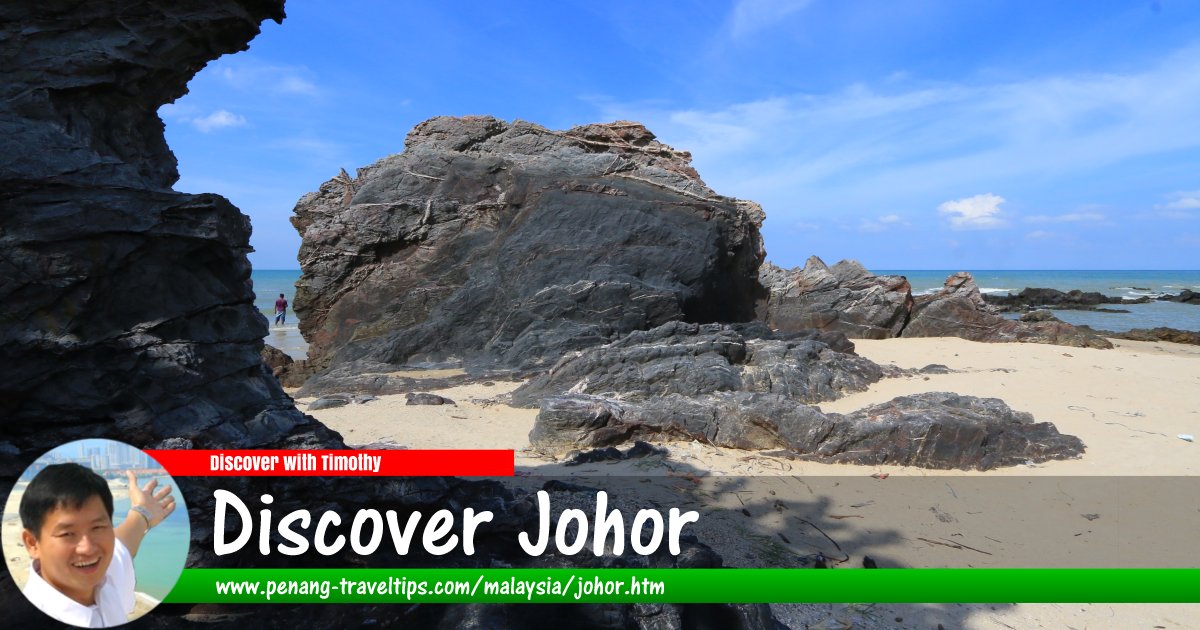 Johor (13 September, 2016)
Also available: Panduan Melawat Johor
Johor is Malaysia's southernmost state on the Malay Peninsula and one of the country's most historically significant regions. Located at the crossroads between the Malay Peninsula and the maritime routes of Southeast Asia, Johor has for centuries served as a gateway between the eastern and western worlds. From its origins as the successor to the Malacca Sultanate to its emergence as one of Malaysia's leading economic centres, Johor has continually adapted to changing political, economic and social circumstances.
Today, Johor is known for many different reasons. It is home to Johor Bahru, Malaysia's second-largest city and the gateway to Singapore; the seat of one of Malaysia's oldest royal institutions; major industrial and logistics hubs; important agricultural areas; and some of the country's most spectacular natural landscapes. Yet behind its modern cities and economic growth lies a long history shaped by maritime trade, migration, diplomacy and the enduring influence of the Johor Sultanate.
The importance of Johor extends beyond its geographical location. The state inherited much of the political and cultural legacy of the Malacca Sultanate after the fall of Malacca in 1511, preserving the continuity of Malay sovereignty in the southern Malay Peninsula. Over the centuries, Johor developed its own distinctive identity, influenced by Malay traditions, Bugis heritage, international trade and its strategic position along one of the world's busiest maritime regions.
In modern times, Johor has become one of Malaysia's fastest-growing states. Its proximity to Singapore has contributed to close economic ties and cross-border interaction, while its own resources, infrastructure and development initiatives have enabled it to become an important centre for manufacturing, logistics, agriculture and tourism. The state's transformation demonstrates how Johor has repeatedly reinvented itself while retaining its historical character.
Quick Facts
Quick Facts
Official name: Johor Darul Ta'zim
Location: Southern Peninsular Malaysia
Capital: Johor Bahru
Royal capital: Muar
Area: Approximately 19,166 square kilometres
Population: Approximately 4.0 million people
Districts: 10 districts
Highest point: Mount Belumut (Gunung Belumut), approximately 1,010 metres
Main airport: Senai International Airport
Main ports: Port of Tanjung Pelepas and Port of Pasir Gudang
Major cities: Johor Bahru, Batu Pahat, Muar, Kluang, Pasir Gudang, Kulai and Segamat
Where Is Johor?
Johor occupies the southern tip of Peninsular Malaysia, forming the country's gateway to Singapore and the wider maritime world. It shares land borders with Pahang to the north and northwest, while its western coastline faces the Strait of Malacca and its eastern coastline faces the South China Sea. To the south, the narrow Strait of Johor separates the state from Singapore.
This strategic location has shaped Johor's history for centuries. Before modern highways and railways connected the region, rivers and sea routes formed the main channels of movement and trade. Johor's coastline, river systems and proximity to major shipping routes allowed it to become an important centre within the maritime network of the Malay world.
The modern relationship between Johor and Singapore is one of Southeast Asia's most significant cross-border connections. However, this relationship should be understood within the wider context of Johor's own history. Johor's importance did not begin because of Singapore; rather, Singapore's later development became one of the factors that further enhanced Johor's strategic importance.
The Geography of Johor
Johor covers a diverse landscape ranging from coastal plains and agricultural areas to tropical rainforests and mountainous regions. The state's geography has played a major role in determining patterns of settlement and economic activity.
The southern part of Johor, particularly around Johor Bahru, Iskandar Puteri and Pasir Gudang, has experienced rapid urbanisation due to its proximity to Singapore and its role as a major economic corridor. This region contains dense residential areas, industrial estates, ports and commercial developments.
Central and northern Johor have traditionally been associated with agriculture, plantations and smaller towns. Large areas of oil palm cultivation continue to contribute to the state's economy, while towns such as Kluang, Segamat and Batu Pahat serve as important regional centres.
The eastern part of Johor retains some of the state's most valuable natural environments. Forest reserves, rivers and coastal ecosystems support biodiversity and provide opportunities for conservation, ecotourism and outdoor recreation. Endau-Rompin National Park, one of Malaysia's most important rainforest reserves, is located partly within Johor.
Climate
Johor experiences an equatorial climate characterised by high temperatures, high humidity and rainfall throughout the year. Average temperatures generally range between 24°C and 32°C, although conditions vary depending on elevation and location.
The state experiences significant rainfall during the Northeast Monsoon between November and March, particularly along the east coast. These seasonal rains influence agriculture, fishing activities and tourism patterns, especially on islands and coastal areas facing the South China Sea.
Despite its wet climate, Johor's weather supports abundant vegetation and agricultural productivity. The combination of fertile land, rainfall and tropical conditions has contributed to the state's long history of plantation agriculture and food production.
Population and Society
Johor is one of Malaysia's most populous states, with a population of approximately four million people. The majority of residents live within the southern urban corridor, particularly in Johor Bahru and surrounding districts, where economic opportunities and cross-border activities have encouraged rapid population growth.
The people of Johor reflect the multicultural character of Malaysia. Malays form the largest ethnic group, while Chinese, Indians and indigenous communities have all contributed to the state's development. The Chinese community has played an important role in commerce and urban development, while Indian communities have contributed to sectors including agriculture, trade and industry.
Johor is also home to Orang Asli communities, particularly in inland areas. These indigenous groups represent some of the earliest inhabitants of the peninsula and maintain important cultural traditions connected to the forests and natural landscapes of Johor.
The state's diverse population reflects its historical role as a place of movement and exchange. For centuries, traders, migrants and settlers arrived through Johor's ports and river systems, contributing to the multicultural society that exists today.
Johor and Its Identity
Among Malaysia's states, Johor possesses a particularly strong sense of identity. This is closely connected to the Johor Sultanate, one of the country's oldest continuing royal institutions. The state's history, traditions and symbols remain closely associated with the monarchy, which continues to play an important role in Johor's cultural life.
At the same time, Johor has always been outward-looking. Its history has been shaped by connections beyond its borders, whether through the maritime networks of the Malay world, relations with neighbouring kingdoms, colonial-era trade or modern economic links with Singapore and international markets.
This combination of tradition and openness has become one of Johor's defining characteristics. To understand Johor today, it is necessary to explore the historical events that transformed it from the successor of Malacca into one of Malaysia's most influential states.
History of Johor
Johor possesses one of the longest and most significant historical traditions among the states of Malaysia. Its history is closely connected with the rise and fall of the Malacca Sultanate, the development of the Malay maritime world and the transformation of the southern Malay Peninsula into a major centre of trade and political activity.
Unlike some states whose modern identity emerged primarily during the colonial period, Johor's historical roots extend back centuries. The state inherited the legacy of Malacca, developed its own powerful maritime kingdom and later became one of the most progressive and modernised Malay states before independence.
Early Johor and the Malay Maritime World
Long before the emergence of the modern state of Johor, the southern Malay Peninsula was part of a wider maritime world connected by rivers, seas and trading routes. Settlements developed along important waterways such as the Johor River and Muar River, which provided access to the Straits of Malacca and the South China Sea.
The region was influenced by successive Malay kingdoms and trading networks that connected Southeast Asia with China, India, the Middle East and beyond. Although written records from this early period are limited, archaeological evidence indicates that the area around present-day Johor was involved in regional commerce long before European powers arrived in Southeast Asia.
The Fall of Malacca and the Birth of Johor
The most important turning point in Johor's history came with the fall of Malacca to the Portuguese in 1511. Malacca had been one of Southeast Asia's greatest trading ports and the centre of Malay political power. Following the conquest, Sultan Mahmud Shah, the last ruler of Malacca, and his successors sought to continue the Malacca tradition elsewhere.
This led to the establishment of the Johor Sultanate, which claimed succession from Malacca and became the continuation of Malay political authority in the region. Although Johor faced repeated challenges from the Portuguese, Aceh and other regional powers, it preserved the traditions, legitimacy and cultural heritage associated with Malacca.
The establishment of Johor was therefore not simply the creation of a new kingdom. It represented the continuation of a political and cultural legacy that had begun in Malacca.
The Johor Sultanate and the Johor-Riau World
Over the following centuries, Johor developed into a powerful maritime kingdom. Its influence extended beyond the boundaries of the present-day state, encompassing territories and trading networks across parts of the southern Malay Peninsula, the Riau Islands and surrounding maritime regions.
The Johor Sultanate competed with Portuguese Malacca and the Aceh Sultanate for control and influence in the region. Through alliances, trade and military campaigns, Johor remained an important player in the political landscape of Southeast Asia.
In 1641, the Dutch capture of Malacca weakened Portuguese influence and changed the balance of power in the region. Johor later maintained close relations with the Dutch, allowing it to strengthen its position within the regional trading network.
The historical Johor world was centred on maritime connections rather than fixed land boundaries. Islands, rivers and ports formed part of an interconnected network that linked communities across what are today Malaysia, Singapore and Indonesia.
The Rise of the Bugis
During the eighteenth century, political changes within the Johor-Riau Sultanate saw the increasing influence of Bugis leaders from Sulawesi. The Bugis became important figures in the administration and defence of the kingdom, eventually shaping the political structure of the region.
The arrival of the Bugis reflected the dynamic nature of the Malay world, where migration, trade and political alliances frequently transformed the balance of power. Their influence remains an important part of Johor's historical identity, alongside Malay traditions inherited from Malacca.
The Temenggong Dynasty and the Formation of Modern Johor
By the nineteenth century, political changes within the Johor Sultanate led to the rise of the Temenggong branch of the royal family. Under Temenggong Daeng Ibrahim, Johor entered a new phase of development, with increased emphasis on administration, economic growth and agricultural expansion.
The development of plantation agriculture, particularly gambier and pepper cultivation, brought new wealth to Johor and encouraged migration from China. These economic activities laid the foundation for the modernisation that would follow under his son, Sultan Abu Bakar.
Sultan Abu Bakar and the Modernisation of Johor
Sultan Abu Bakar is one of the most important figures in Johor's history. During his reign in the late nineteenth century, Johor underwent extensive political, administrative and economic transformation.
Unlike many other Malay states that experienced increasing British intervention, Johor developed a more independent administrative system. Sultan Abu Bakar introduced modern government institutions, legal systems and infrastructure while maintaining the sovereignty of the Johor Sultanate.
His reforms earned Johor a reputation as one of the most advanced Malay states of the nineteenth century. The establishment of a modern administration, together with economic development and diplomatic relations with Britain, helped shape Johor's distinctive identity.
British Influence and the Road to Independence
Despite its relatively strong position, Johor eventually came under greater British influence during the early twentieth century. In 1914, a British adviser was appointed, bringing Johor into closer alignment with the colonial administration of the other Malay states.
During the Second World War, Johor experienced Japanese occupation from 1942 to 1945. The war caused significant disruption throughout the state, as it did across Malaya. Following the war, Johor became part of the political developments that eventually led to the formation of the Federation of Malaya and independence in 1957.
Johor After Independence
Since independence, Johor has continued to evolve while retaining its strong historical identity. Johor Bahru grew from a royal administrative centre into a major city, while industrialisation, infrastructure development and international trade transformed the state's economy.
The establishment of modern industrial zones, major ports and the Iskandar Malaysia development corridor has positioned Johor as one of Malaysia's leading economic regions. At the same time, the Johor Sultanate remains an important symbol of continuity, connecting the modern state with its centuries-old heritage.
The history of Johor is therefore a story of adaptation. From the successor of Malacca to a maritime kingdom, from a nineteenth-century modernising state to a major economic centre of Malaysia today, Johor has repeatedly transformed itself while preserving its unique identity.
Modern Johor
Since independence, Johor has undergone one of the most remarkable transformations among Malaysia's states. Once primarily associated with agriculture, plantations and traditional Malay settlements, Johor has developed into a diversified economy supported by manufacturing, logistics, services, tourism and international investment.
This transformation has been shaped by several factors: Johor's strategic location at the southern tip of the Malay Peninsula, its connection to major shipping routes, its proximity to Singapore and its ability to attract investment through large-scale infrastructure development. Today, Johor is one of Malaysia's most important economic regions and a key contributor to the country's growth.
Johor Bahru: From Royal Town to Metropolitan City
Johor Bahru is the capital and largest city of Johor. Originally known as Tanjung Puteri, the settlement was renamed Johor Bahru in 1866 during the reign of Sultan Abu Bakar as part of his efforts to modernise the state.
For much of its early history, Johor Bahru functioned primarily as a royal administrative centre. However, its location beside the Strait of Johor gave it a strategic advantage, particularly as Singapore developed into a major British trading port during the colonial era.
The completion of the Johor - Singapore Causeway in 1923 transformed Johor Bahru's development. The bridge created a permanent land connection between the two territories, encouraging trade, movement of people and economic interaction across the Strait of Johor.
Following Malaysia's independence, Johor Bahru expanded rapidly as population growth, industrialisation and cross-border economic activities increased. Today, it is one of Malaysia's largest urban areas, with modern commercial districts, residential developments, educational institutions and cultural attractions.
The Johor - Singapore Economic Relationship
Johor's proximity to Singapore is one of the defining characteristics of its modern development. The two territories share one of Southeast Asia's most active borders, with thousands of people crossing daily for employment, business, education, tourism and family connections.
However, Johor's economic development is not simply a result of its neighbour's success. The state has developed its own strengths through industrialisation, infrastructure investment, agricultural production and strategic planning. Singapore's presence has provided additional opportunities, while Johor's own resources and advantages have enabled it to emerge as a major economic region in its own right.
The relationship between Johor and Singapore is therefore best understood as one of interdependence. Singapore provides access to global markets, capital and international networks, while Johor offers land, resources, industrial capacity and a growing consumer market.
Manufacturing and Industry
Manufacturing has become one of Johor's most important economic sectors. The state has attracted industries ranging from electronics and electrical products to petrochemicals, food processing, automotive components and advanced manufacturing.
Industrial development is concentrated in several key areas, including Pasir Gudang, Tanjung Langsat, Senai, Kulai and the Iskandar Malaysia region. These industrial zones benefit from Johor's extensive transportation network, skilled workforce and access to both domestic and international markets.
The development of manufacturing has also transformed many towns in Johor. Areas that were once dependent primarily on agriculture have evolved into modern industrial and commercial centres, creating employment opportunities and encouraging urban growth.
Port of Tanjung Pelepas
One of Johor's most significant economic achievements is the development of the Port of Tanjung Pelepas (PTP). Located near the southwestern tip of the state, the port occupies a strategic position along the Strait of Malacca, one of the world's busiest maritime trade routes.
Since beginning operations in 2000, PTP has grown into one of the world's leading container ports. Its deep-water facilities, efficient operations and strategic location have enabled it to become an important regional shipping hub.
The success of Tanjung Pelepas demonstrates how Johor has leveraged its geography. Rather than simply relying on its proximity to Singapore, Johor has developed its own world-class infrastructure capable of competing within the global logistics network.
Pasir Gudang and the Industrial Corridor
Pasir Gudang is another major industrial centre in Johor. Located east of Johor Bahru, the city developed around port activities, manufacturing and petrochemical industries.
The Pasir Gudang industrial area has played an important role in Johor's economic growth, supporting industries including chemicals, oil and gas, food processing and logistics. Its port facilities and industrial estates have made it one of Malaysia's important manufacturing locations.
The growth of Pasir Gudang illustrates Johor's broader economic strategy: combining industrial land, transportation infrastructure and maritime access to create globally connected economic zones.
Iskandar Malaysia
One of the most ambitious development initiatives in Malaysia is Iskandar Malaysia, a large-scale economic region established in southern Johor in 2006. Covering a significant portion of the state's southern area, the development aims to create a balanced economic region combining industry, commerce, education, tourism and residential development.
Iskandar Malaysia was designed to strengthen Johor's position as a regional growth centre. Its location near Singapore was an important advantage, but the development strategy also focused on building Johor's own economic capabilities.
The region includes several key areas:
- Johor Bahru — the administrative and commercial centre of southern Johor.
- Iskandar Puteri — a planned city featuring government offices, education, tourism and residential developments.
- Medini — a mixed-use development area within Iskandar Puteri.
- Senai - Skudai — an important aviation, education and industrial corridor.
- Pasir Gudang - Tanjung Langsat — a major industrial and logistics zone.
The development of Iskandar Malaysia has significantly reshaped southern Johor, introducing new townships, infrastructure and investment opportunities while reinforcing Johor's role as one of Malaysia's leading growth regions.
Agriculture and Plantation Economy
Although Johor has become increasingly industrialised, agriculture remains an important part of the state's economy. Large areas of Johor continue to be used for oil palm cultivation, while the state is also known for pineapple production, rubber cultivation, aquaculture and food production.
Johor's agricultural sector has benefited from its fertile land, favourable climate and established plantation industries. The continued importance of agriculture demonstrates the diversity of Johor's economy, where traditional industries continue alongside modern manufacturing and services.
Tourism and Economic Growth
Tourism has become an increasingly important contributor to Johor's economy. The state attracts visitors through a combination of shopping, family attractions, heritage sites, beaches, islands and natural environments.
Its proximity to Singapore has contributed to a significant tourism flow, but Johor's attractions also appeal to visitors seeking experiences unique to the state. From the historic streets of Johor Bahru and Muar to the islands of Mersing and the forests of Endau-Rompin, Johor offers a diverse range of destinations.
Johor's Role in Malaysia's Future
Johor today represents one of Malaysia's most important growth regions. Its combination of strategic location, industrial capacity, ports, agricultural resources and human capital has positioned it as a major contributor to the country's economy.
The story of modern Johor is one of transformation without losing identity. The state has embraced industrialisation and global connectivity while maintaining its royal heritage, cultural traditions and historical significance.
As Malaysia continues to develop, Johor's role as the country's southern gateway will become increasingly important. The next section explores how this development has shaped everyday life in Johor, from transportation and education to healthcare, shopping and recreation.
Living in Johor
Johor offers a wide range of living environments, from the urban energy of Johor Bahru to quieter towns surrounded by plantations, forests and coastal landscapes. The state's rapid economic growth has brought modern infrastructure, residential developments and urban amenities, while many communities continue to retain their traditional character.
For many residents, Johor provides a balance between economic opportunity and quality of life. Its cities offer employment, education, healthcare and entertainment facilities, while its smaller towns provide a slower pace of living and closer connection to nature.
Transportation
Johor's strategic position at the southern end of Peninsular Malaysia has made transportation infrastructure a major priority. The state is connected to the rest of Malaysia through highways, railways, airports and ports, supporting both daily travel and international trade.
Road Network
Johor has an extensive road network linking its cities, towns and industrial areas. The North - South Expressway, which runs through the western part of the state, provides a vital connection between Johor and Kuala Lumpur, as well as other states in Peninsular Malaysia.
Major highways such as the Senai - Desaru Expressway, Second Link Expressway and Pasir Gudang Highway support economic development by connecting industrial areas, residential communities and ports.
The two land crossings connecting Johor with Singapore are among the busiest international border crossings in the world. The Johor - Singapore Causeway, opened in 1923, and the Malaysia - Singapore Second Link, opened in 1998, facilitate daily movement of people and goods between the two countries.
Rail Transport
Rail services have historically played an important role in connecting Johor with the rest of Malaysia. KTM Berhad's railway network links Johor with major towns throughout the peninsula, providing passenger and freight services.
The Johor Bahru - Singapore Rapid Transit System (RTS) Link represents a major future development in cross-border transportation. The rail connection is expected to improve movement between Johor Bahru and Singapore while strengthening economic and social ties between the two regions.
Air Transport
Senai International Airport serves as Johor's main aviation gateway. Located near Johor Bahru and Kulai, the airport provides domestic and international flights while supporting the state's tourism and business sectors.
The airport's location within the Senai - Skudai corridor has also contributed to the development of surrounding industrial, commercial and logistics activities.
Ports and Maritime Transport
Johor's ports are among the most important components of Malaysia's transportation network. The Port of Tanjung Pelepas and Port of Pasir Gudang support international trade, manufacturing and logistics activities, reinforcing Johor's role as a maritime gateway.
Education
Education has become an increasingly important part of Johor's development, particularly with the growth of Iskandar Malaysia and the expansion of knowledge-based industries.
The state is home to several prominent higher education institutions, including Universiti Teknologi Malaysia (UTM) in Skudai, one of Malaysia's leading universities specialising in engineering, technology and research.
Johor also hosts private universities, international schools and educational centres that serve both local and international communities. Institutions such as University of Reading Malaysia, Newcastle University Medicine Malaysia and other international campuses have strengthened Johor's position as an emerging education hub.
The presence of universities and research institutions has supported the growth of skilled industries while providing more opportunities for students to pursue higher education closer to home.
Healthcare
Johor has developed a comprehensive healthcare system consisting of government hospitals, specialist medical centres and private healthcare providers.
Major healthcare facilities are concentrated in Johor Bahru and other large towns, serving the state's growing population. Hospitals such as Hospital Sultanah Aminah and Hospital Sultan Ismail provide important public healthcare services, while private hospitals offer specialised treatment and modern medical facilities.
Johor's proximity to Singapore has also contributed to the development of healthcare services, as the state attracts patients seeking more affordable medical treatment while benefiting from international standards and expertise.
Shopping and Lifestyle
Johor's rapid urban development has created a diverse shopping and lifestyle environment. Modern shopping malls, commercial districts and entertainment facilities can be found throughout the state, particularly in Johor Bahru and the Iskandar Malaysia region.
Popular shopping destinations include major malls in Johor Bahru, while smaller towns offer traditional markets, local shops and community-oriented commercial areas. This combination of modern retail and traditional commerce reflects Johor's position between a rapidly developing economy and established local communities.
Johor has also become well known for attracting visitors from Singapore, particularly for shopping, dining and leisure activities. However, the state's lifestyle scene extends beyond cross-border visitors, with its own distinctive food culture, entertainment venues and community spaces.
Culture and Heritage
Johor's cultural identity is strongly connected to the Johor Sultanate and the traditions of the Malay world. Royal heritage remains an important part of the state's identity, reflected in its architecture, ceremonies and cultural institutions.
At the same time, Johor's history as a trading and migration centre has created a multicultural society. Malay, Chinese, Indian and indigenous communities have all contributed to the state's cultural landscape.
Traditional arts, festivals, cuisine and local customs continue to form an important part of Johor's identity. Towns such as Muar, with its historic streets and food culture, demonstrate how heritage continues to coexist with modern development.
Food Culture
Johor possesses one of Malaysia's most distinctive food cultures, shaped by Malay traditions, royal influences and centuries of cultural exchange.
Among Johor's best-known dishes are laksa Johor, a unique style of laksa traditionally associated with the Johor royal household; kacang pool, a dish influenced by Middle Eastern cuisine; and various seafood dishes found along the state's extensive coastline.
The state's multicultural communities have also contributed to a diverse culinary scene, with Chinese, Indian and local specialities available throughout Johor's towns and cities.
Nature and Recreation
Despite its rapid urbanisation, Johor retains some of Malaysia's most important natural environments. Forest reserves, islands, beaches and rivers provide opportunities for recreation and ecotourism.
Endau-Rompin National Park
Located along the Johor - Pahang border, Endau-Rompin National Park protects one of the oldest rainforest ecosystems in Peninsular Malaysia. The park is known for its biodiversity, waterfalls, rivers and opportunities for jungle trekking.
Johor's Islands and Beaches
The waters off eastern Johor contain numerous islands known for their beaches, coral reefs and marine ecosystems. Islands such as Pulau Rawa, Pulau Sibu and Pulau Besar attract visitors seeking diving, snorkelling and coastal relaxation.
Gunung Ledang
Mount Ophir, locally known as Gunung Ledang, is one of Johor's most recognisable natural landmarks. Located near Tangkak, the mountain is associated with Malay legends and remains a popular destination for hiking and outdoor activities.
A Balance Between Growth and Heritage
Johor's modern development has transformed the state, but it has not erased its historical character. New cities, industries and infrastructure exist alongside royal traditions, historic towns, agricultural landscapes and natural environments.
This balance is one of Johor's defining qualities. It is a state where residents can experience metropolitan opportunities while remaining connected to a rich cultural and natural heritage.
The final section explores Johor's districts, major towns and attractions, bringing together the diverse landscapes and communities that make up this important southern Malaysian state.
Administrative Divisions of Johor
Johor is divided into ten districts, each with its own history, geography and economic character. Unlike some states where development is concentrated mainly in one city, Johor has a more diverse urban network, with different towns serving distinct roles within the state.
The southern districts are closely connected with the metropolitan growth of Johor Bahru and Iskandar Malaysia, while central and northern districts retain stronger connections with agriculture, traditional industries and natural landscapes. Together, these districts form a state that combines urban development, economic production, cultural heritage and environmental diversity.
Johor Bahru District
Johor Bahru District is the most urbanised part of the state and serves as the economic and administrative centre of southern Johor. It includes Johor Bahru city, the state capital, as well as surrounding urban areas that have grown rapidly due to industrialisation and proximity to Singapore.
The district is home to major commercial centres, government institutions, transportation links and developments within Iskandar Malaysia. Its location beside the Strait of Johor has made it one of the most strategically important urban areas in Malaysia.
Batu Pahat District
Batu Pahat is one of Johor's major regional centres and has a long history as a trading and agricultural town. The town serves surrounding communities involved in manufacturing, agriculture and commerce.
Known for its food culture, shopping areas and traditional industries, Batu Pahat represents the character of established urban Johor outside the southern metropolitan corridor.
Kluang District
Located in central Johor, Kluang developed as an important agricultural and railway town. The district is surrounded by plantations and natural landscapes, giving it a different character from the more urbanised southern region.
Kluang has gained recognition for its coffee culture, outdoor attractions and proximity to natural destinations such as Gunung Lambak and nearby forest areas.
Kota Tinggi District
Kota Tinggi is one of Johor's historically significant districts. Located northeast of Johor Bahru, the area is closely associated with the early history of the Johor Sultanate and the Johor River.
The district is also known for its natural attractions, including waterfalls, forests and coastal environments. Its combination of history and nature makes it an important destination within Johor.
Kulai District
Kulai has developed into an important growth area due to its strategic location near Senai International Airport and major transportation routes.
The district has attracted industrial development, residential townships and commercial projects, making it an important component of the southern Johor economic corridor.
Mersing District
Mersing represents Johor's connection with the South China Sea. The district is best known as the gateway to many of Johor's islands, including Pulau Rawa, Pulau Sibu and Pulau Tioman's surrounding maritime region.
With its beaches, marine ecosystems and fishing communities, Mersing offers a very different experience from Johor's urban centres.
Muar District
Muar, also known as Bandar Maharani, is one of Johor's most culturally significant towns. It is recognised for its heritage architecture, traditional food and strong connection with Johor's royal history.
The town's historic streets, riverfront and culinary traditions have made Muar one of Johor's most distinctive destinations.
Pontian District
Pontian is located along Johor's southwestern coastline and is known for agriculture, fishing communities and coastal landscapes.
The district is also associated with pineapple cultivation, one of Johor's important agricultural industries.
Segamat District
Located in northern Johor, Segamat is a regional centre surrounded by agricultural areas. The district has traditionally been associated with rubber and oil palm cultivation while continuing to develop as a service centre for surrounding communities.
Tangkak District
Tangkak lies at the foothills of Gunung Ledang and is known for its agricultural activities, traditional textile industry and access to natural attractions.
The district provides an important connection between Johor and neighbouring Malacca, reflecting the historical links between communities along the western side of the peninsula.
Major Cities and Towns of Johor
Johor's towns and cities reflect the different stages of the state's development. Some grew from royal centres and trading settlements, while others emerged from plantations, industrialisation and modern economic planning.
Johor Bahru
Johor Bahru is the capital and largest city of Johor. It serves as the state's administrative, commercial and transportation hub, while also functioning as one of Southeast Asia's most important cross-border cities.
The city combines modern developments with historic landmarks connected to the Johor Sultanate, reflecting both Johor's past and its ambitions for the future.
Iskandar Puteri
Iskandar Puteri is one of Malaysia's most ambitious planned cities. Developed as part of Iskandar Malaysia, it includes government institutions, educational facilities, residential developments and tourism attractions.
Muar
Muar is renowned for its heritage character, food culture and riverside setting. Its preserved historic areas provide an important connection to Johor's cultural traditions.
Batu Pahat
Batu Pahat is a major commercial centre in western Johor. Its established urban economy, manufacturing activities and local food culture make it an important regional town.
Kluang
Kluang represents the character of central Johor, surrounded by plantations, hills and rural landscapes. It has developed into a popular destination for those seeking a slower-paced experience.
Pasir Gudang
Pasir Gudang is one of Malaysia's most important industrial cities. Its port facilities, industrial estates and petrochemical industries contribute significantly to Johor's economy.
Tourism Highlights of Johor
Johor offers a wide range of attractions that reflect its history, culture and natural environment. Rather than relying on a single type of tourism, the state provides experiences ranging from heritage exploration to island recreation and family entertainment.
Historical and Cultural Attractions
Visitors interested in history can explore royal landmarks, heritage buildings and traditional towns throughout Johor. Johor Bahru, Muar and Kota Tinggi provide insights into the state's royal heritage and connection with the wider Malay world.
Nature and Outdoor Attractions
Johor's forests, mountains, islands and coastlines provide opportunities for ecotourism and outdoor activities. Endau-Rompin National Park, Gunung Ledang and the islands of Mersing showcase the state's natural diversity.
Family and Modern Attractions
Southern Johor has developed numerous modern attractions, particularly within Iskandar Malaysia. Theme parks, shopping centres and entertainment destinations have strengthened Johor's appeal as a family destination.
Why Johor Matters
Johor's importance comes from its ability to remain relevant through centuries of change. It was once the successor to the Malacca Sultanate, then a powerful maritime kingdom, later a modernising Malay state and today one of Malaysia's most dynamic economic regions.
The state has repeatedly adapted to new circumstances while preserving its historical identity. Its royal heritage connects it to the Malay world of the past, while its ports, industries and cities connect it to the global economy of the present.
Johor's relationship with Singapore has enhanced its strategic importance, but the state's significance extends far beyond its neighbour. Johor has its own history, resources, culture and ambitions that have shaped its development over more than five centuries.
From the historic river settlements of the Johor Sultanate to the modern skyline of Johor Bahru and the industrial corridors of Iskandar Malaysia, Johor represents a remarkable journey of continuity and transformation. It remains, as it has been throughout much of its history, Malaysia's southern gateway and one of the country's most important states.
Map of Johor
List of Sights in Johor
- Batu Layar Beach (GPS: 1.44648, 104.29447)

- Desaru (GPS: 1.56947, 104.2527)

- Endau-Rompin National Park (GPS: 2.47191, 103.26634)

- Hutan Lipur Gunung Pulai (GPS: 1.5876, 103.53018)

- Hutan Lipur Panti (GPS: 2.64815, 103.75078)

- Kota Tinggi Waterfall (GPS: 1.82959, 103.8334)
- Kukup Fishing Village (GPS: 1.44648, 104.29447)

- Pantai Leka (GPS: 2.64815, 103.75078)

- Pantai Penyabong (GPS: 2.64815, 103.75078)

- Pulau Danga Bayu (GPS: 2.64815, 103.75078)

- Straits of Johor
- Sungai Johor Bridge (GPS: 1.53234, 104.02137)

- Tanjung Piai (GPS: 1.44648, 104.29447)

- Tasik Sembrong (GPS: 1.97372, 103.18913)

Rivers in Johor
- Sungai Johor
- Sungai Kesang
- Sungai Mengkibol
- Sungai Muar
- Sungai Pontian Kechil
- Sungai Pulai
- Sungai Skudai
- Sungai Tebrau
Lakes in Johor
Marine Parks in Johor
Map of towns in Johor
Towns in Johor
- Johor Bahru (state capital) (GPS: 1.48848, 103.75762)

- Air Papan (GPS: 2.516, 103.83351)
- Ayer Hitam (GPS: 1.91834, 103.17943)
- Bandar Penawar (GPS: 1.55335, 104.23042)
- Batu Anam (GPS: 2.57629, 102.70783)
- Batu Pahat (GPS: 1.84808, 102.93352)
- Bekok (GPS: 2.29596, 103.1305)
- Benut (GPS: 1.6495, 103.25862)
- Bukit Batu (GPS: 1.73383, 103.44357)
- Bukit Gambir (GPS: 2.21593, 102.65916)
- Bukit Kangkar (GPS: 2.17314, 102.55445)

- Chaah (GPS: 2.25079, 103.04193)
- Endau (GPS: 2.65148, 103.62343)
- Jementah (GPS: 2.4403, 102.68496)

- Johor Lama (GPS: 1.58122, 104.02009)

- Kahang (GPS: 2.26386, 103.60412)

- Kampung Mawai Baru (GPS: 1.85134, 103.97361)

- Kelapa Sawit (GPS: 1.67776, 103.52758)

- Kluang (GPS: 2.02929, 103.3168)

- Kota Kecil (GPS: 1.73775, 103.90443)

- Kota Tinggi (GPS: 1.72877, 103.89911)

- Kulai (GPS: 1.66319, 103.59891)

- Labis (GPS: 2.38178, 103.02009)

- Layang-Layang (GPS: 1.81806, 103.47363)

- Mersing (GPS: 2.42862, 103.83178)

- Muar (GPS: 2.06361, 102.57659)

- Pagoh (GPS: 2.14938, 102.77177)

- Parit Jawa (GPS: 1.95818, 102.64316)

- Parit Raja (GPS: 1.95818, 102.64316)
- Pasir Gudang (GPS: 1.47153, 103.9065)

- Pekan Nanas (GPS: 1.50795, 103.51078)

- Pengerang (GPS: 1.36552, 104.10807)

- Pontian (GPS: 1.48873, 103.38843)

- Punggai (GPS: 1.43451, 104.27832)

- Sagil (GPS: 2.30425, 102.61274)

- Segamat (GPS: 2.50957, 102.8128)

- Simpang Renggam (GPS: 1.82742, 103.30967)

- Sungai Mati (GPS: 2.14545, 102.56256)

- Sungai Rengit (GPS: 1.35003, 104.22257)

- Tangkak (GPS: 2.27353, 102.54409)

- Tanjung Agas (GPS: 2.0582, 102.55964)

- Tanjung Balau (GPS: 1.61288, 104.25905)

- Tanjung Pengelih (GPS: 1.36779, 104.10304)

- Teluk Ramunia (GPS: 1.37238, 104.24673)

- Tanjung Sedili (GPS: 1.61288, 104.25905)
- Teluk Sengat (GPS: 1.55926, 104.03117)

- Ulu Tiram (GPS: 1.59948, 103.82056)

- Yong Peng (GPS: 2.01094, 103.06443)

Highways in Johor
- E2: North-South Expressway Southern Route
- E3: Second Link Expressway
- E14: Johor Bahru-Eastern Dispersal Link Expressway
- E22: Senai-Desaru Expressway
- Jalan Mersing
Categories of sights in Johor
- AEON Malls in Johor
- Beaches in Johor
- Bridges in Johor
- Cemeteries in Johor
- Chinese Temples in Johor
- Churches in Johor
- Country Clubs in Johor
- Districts of Johor
- Forest Parks in Johor
- Giant Hypermarkets in Johor
- Government Buildings in Johor
- Gurdwaras in Johor
- Highways in Johor
- Hindu Temples in Johor
- Historic Buildings in Johor
- Hospitals in Johor
- Hotels in Johor
- Islands in Johor
- Jetties in Johor
- Markets in Johor
- Mausoleums in Johor
- Mosques in Johor
- Museums in Johor
- Palaces in Johor
- Parks in Johor
- Rivers in Johor
- Schools in Johor
- Shopping Malls in Johor
- Skyscrapers in Johor
- Street Art in Johor
- Streets in Johor
- Supermarkets in Johor
- Tesco Stores in Johor
- Universities in Johor
- Waterfalls in Johor
Map of Districts of Johor
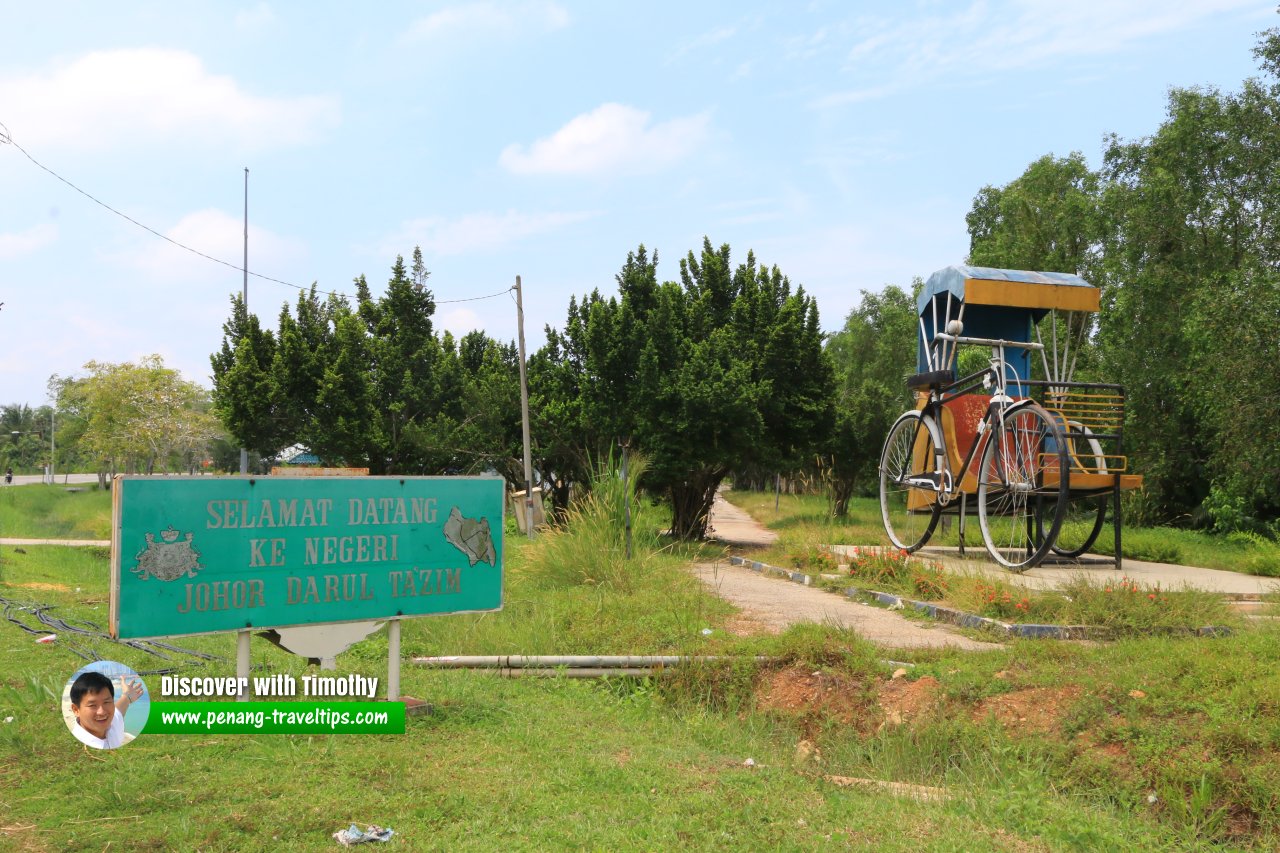 Welcome to Johor Darul Tazim (16 September 2016)
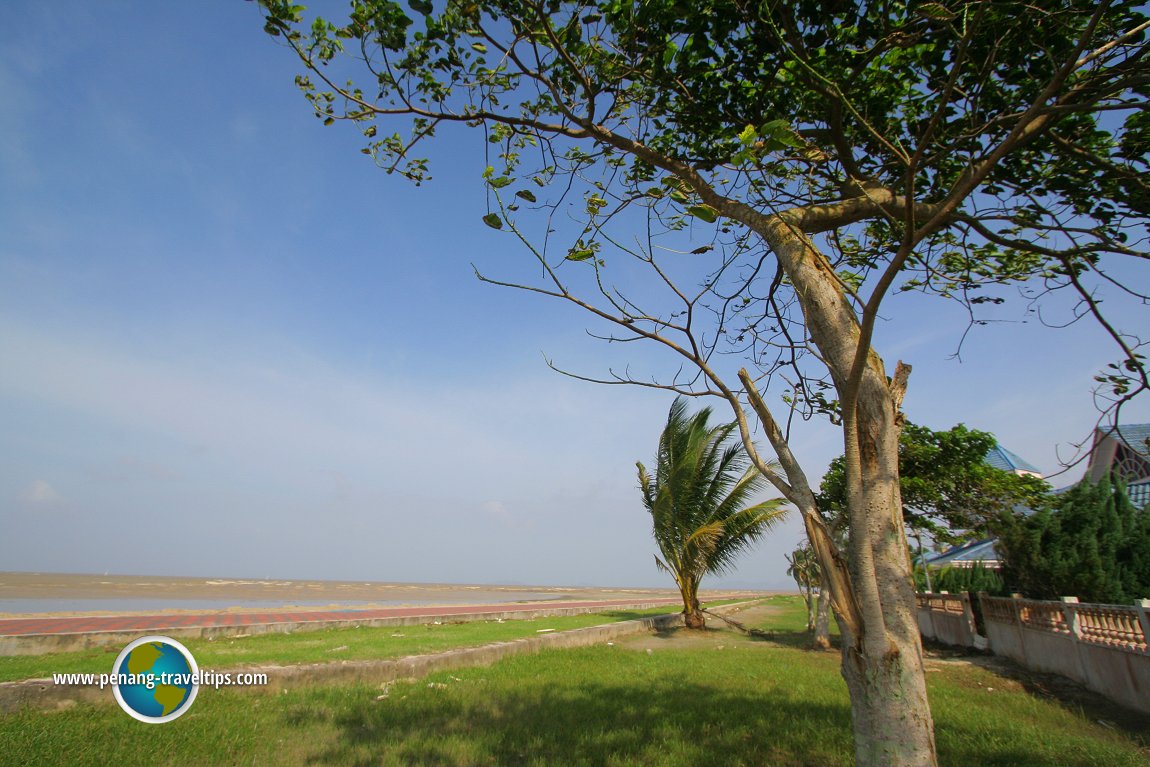
Coast of Mersing, Johor (30 December 2006)
References
- Johor State Government. Official information on the administration, history and development of Johor.
- Department of Statistics Malaysia (DOSM). Population and demographic statistics.
- Arkib Negara Malaysia. Historical records relating to Johor and the Malay Sultanates.
- Iskandar Regional Development Authority. Information on Iskandar Malaysia development.
- Port of Tanjung Pelepas. Official information on port operations and development.
- Malaysia Airports Holdings Berhad. Information on Senai International Airport.
- Tourism Johor. Official tourism information and attractions.
- Academic publications on the Johor Sultanate, Malay maritime history and Southeast Asian trade networks.
Page Details
This page was created on 20 July 2026. Hi, my name is Timothy and created it from my research, for my own entertainment, knowledge and to satisfy my curiosity. I am providing the information to you in good faith and hope it is useful. I try to get the details as accurate as possible. I also try to update the page whenever I stumble on new details. So this and all my other pages are perpetual work in progress. If you discover any error, please politely inform me, pointing out where the error lies, and I will correct it as soon as possible. Your helpfulness will keep this page accurate, relevant and helpful to those who need the information.My Videos of Malaysia
 Latest Pages & Updates
Buy Me A Coffee
If you enjoy the information I provide and want to support the work I do, please buy me a coffee! I appreciate it immensely, thank you so much!
