
Kedah Travel Guide
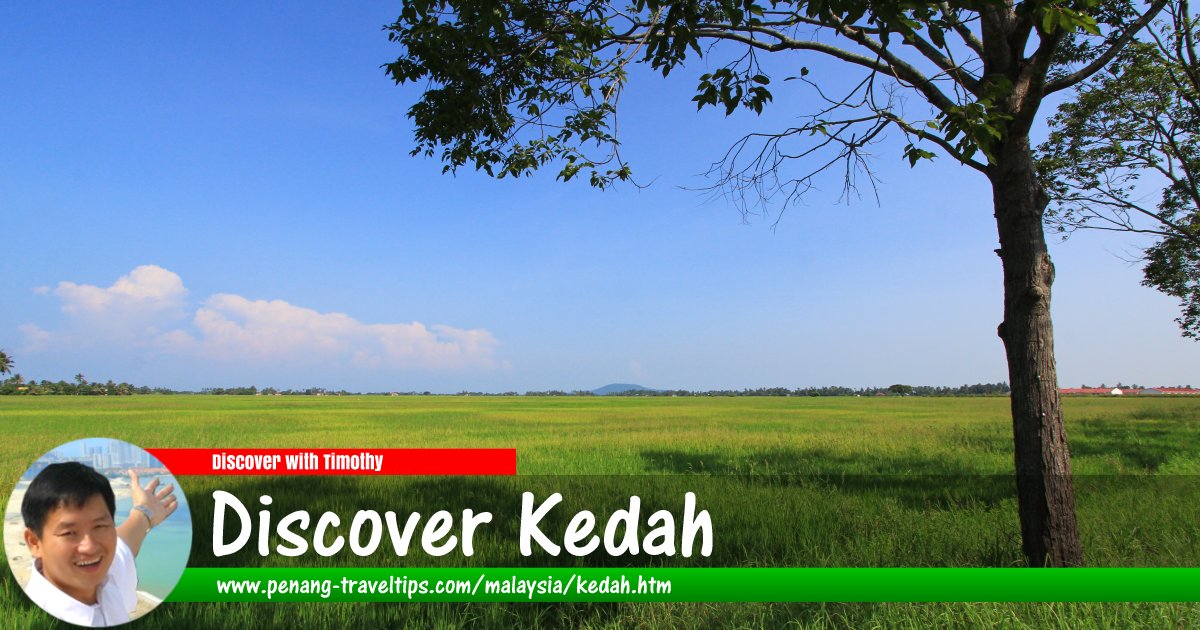 Discover Kedah (25 July, 2015)
Also available: Panduan Melawat Kedah
Kedah, officially known as the State of Kedah Darul Aman, is one of the oldest states in Malaysia and is widely regarded as one of the earliest centres of civilisation in the Malay Peninsula. Located in the northwestern part of Peninsular Malaysia, Kedah is best known as the "Rice Bowl of Malaysia" due to its extensive paddy fields and important role in the nation's rice production. Beyond agriculture, the state possesses a remarkable historical legacy dating back more than two thousand years, including the ancient civilisation of Kedah Tua, the archaeological treasures of the Bujang Valley, and one of the oldest surviving royal institutions in the Malay world. With its combination of historical heritage, fertile landscapes, modern industries and internationally recognised destinations such as Langkawi, Kedah occupies a unique position in Malaysia's past, present and future.1
Quick Facts
Official Name: State of Kedah Darul Aman
Capital: Alor Setar
Royal Town: Anak Bukit
Area: Approximately 9,500 km²
Population: More than 2.2 million
Number of Districts: 12
Highest Mountain: Gunung Bintang (1,862 m)
Most Recognised Landmark: Gunung Jerai
Major Island Group: Langkawi Archipelago
Nickname: Rice Bowl of Malaysia
Main Economic Activities: Agriculture, manufacturing, tourism and services
State Code: K
Why Kedah Matters
Kedah holds a special place in Malaysian history because its story began long before the emergence of many later Malay kingdoms. Archaeological discoveries in the Bujang Valley provide evidence of ancient settlements, international trade networks and cultural exchanges that existed centuries before the rise of Melaka. Situated along important maritime routes connecting India, China and Southeast Asia, Kedah became one of the earliest centres of commerce and civilisation in the Malay Peninsula.2
The importance of Kedah has continued into the modern era. The state's fertile plains have made it the country's leading rice-producing region, earning it the title "Rice Bowl of Malaysia". At the same time, developments such as Kulim Hi-Tech Park and the growth of Langkawi's tourism industry demonstrate Kedah's transformation into an economy that combines agriculture, technology, manufacturing and international tourism.3
Geography
Kedah is located in the northwestern region of Peninsular Malaysia. It shares borders with Perlis to the north, Perak to the south and Thailand's Satun Province to the northeast. Its western coastline faces the Strait of Malacca, while the Langkawi archipelago extends into the Andaman Sea, forming one of Malaysia's most recognised island destinations.4
The geography of Kedah is characterised by a contrast between fertile coastal plains and forested mountain areas. The western and central regions contain extensive agricultural land, particularly paddy-growing areas supported by irrigation systems, while the eastern parts of the state are dominated by hills, forests and sections of the Titiwangsa Range. These diverse landscapes have shaped both the economy and settlement patterns of Kedah throughout history.5
Climate
Kedah experiences a tropical climate with warm temperatures, high humidity and rainfall throughout the year. The seasonal monsoon patterns play an important role in the state's agricultural activities, particularly rice cultivation, which depends heavily on adequate water supply. The combination of fertile soil, river systems and a favourable climate has allowed Kedah's agricultural traditions to continue for generations.6
Population
Kedah is home to a diverse population comprising Malays, Chinese, Indians and other communities who have contributed to the state's social and cultural development. While agriculture remains an important part of life in many rural areas, towns such as Alor Setar, Sungai Petani and Kulim have grown into important centres for administration, commerce, education and industry.7
Despite modernisation and urban growth, many communities in Kedah continue to maintain close connections with traditional lifestyles, local customs and agricultural practices. This combination of heritage and development forms an important part of Kedah's identity as a state that respects its past while continuing to evolve.
History of Kedah
Kedah possesses one of the longest and most remarkable histories of any state in Malaysia. Archaeological discoveries indicate that organised settlements existed here more than two thousand years ago, making Kedah one of the earliest centres of civilisation in the Malay Peninsula. Throughout its history, the state has evolved from an ancient trading kingdom into a powerful Malay sultanate, before eventually becoming one of the founding states of modern Malaysia. This long historical continuity remains one of Kedah's defining characteristics.8
Early Civilisations
The fertile river valleys and strategic coastal location of Kedah attracted human settlement from prehistoric times. Situated along the maritime trade routes between India and China, the region became a natural stopping point for merchants crossing the Bay of Bengal and the Strait of Malacca. Over time, these commercial exchanges brought not only goods but also new ideas, technologies and religious beliefs that shaped the development of early societies in Kedah.9
Archaeological evidence suggests that iron smelting, agriculture and long-distance trade flourished in the region centuries before the emergence of many later Malay kingdoms. These early communities laid the foundations for the organised settlements that would eventually develop into one of Southeast Asia's most significant ancient trading centres.10
Ancient Kedah (Kedah Tua)
Ancient Kedah, commonly known as Kedah Tua, refers to a series of early settlements that flourished from the early centuries of the Common Era. Rather than a single city, Kedah Tua comprised a network of ports, settlements and administrative centres connected by rivers and coastal trade. Merchants from India, China, Persia and other parts of Southeast Asia visited the region, making it one of the earliest international trading centres in the Malay Peninsula.11
The prosperity of Kedah Tua was closely linked to its geographical position. Ships sailing between the Indian Ocean and the South China Sea frequently called at its ports to replenish supplies, exchange goods and shelter from seasonal monsoon winds. This strategic location enabled Kedah to become an important intermediary in regional commerce for many centuries.12
The Bujang Valley
The Bujang Valley is the most important archaeological region in Kedah and one of the most significant ancient heritage sites in Southeast Asia. Spread across a wide area near Sungai Merbok and Gunung Jerai, it contains the remains of temples, ritual structures, ancient ports, iron-smelting sites and settlements that testify to the region's long history of commerce and cultural exchange.13
Excavations have uncovered artefacts originating from India, China and the Middle East, demonstrating that Kedah participated in extensive international trading networks long before the rise of Melaka. Today, the Bujang Valley provides invaluable evidence for understanding the origins of civilisation and maritime trade in the Malay Peninsula.14
Hindu-Buddhist Influence
As trade expanded, Kedah became an important centre for the spread of Hinduism and Buddhism throughout the region. Indian merchants, monks and scholars introduced religious ideas, artistic traditions and systems of administration that influenced local society. Archaeological remains, inscriptions and temple foundations discovered throughout the Bujang Valley reflect these early cultural exchanges.15
Despite these external influences, local communities adapted foreign ideas to suit their own traditions. This blending of cultures became a defining feature of early Kedah and contributed to the development of a distinctive Malay civilisation.16
The Arrival of Islam
From about the 12th century onwards, Islam gradually spread to Kedah through merchants and religious scholars travelling along established maritime trade routes. Over time, Islamic beliefs became firmly established within the ruling elite and wider society, transforming the political, legal and cultural landscape of the state. Kedah subsequently emerged as one of the earliest Malay sultanates to embrace Islam.17
The adoption of Islam marked an important turning point in Kedah's history. While preserving many aspects of its earlier heritage, the state developed a new identity centred on the Malay-Islamic tradition that continues to influence Kedah today.18
The Kedah Sultanate
The Sultanate of Kedah is widely regarded as one of the oldest surviving royal institutions in Malaysia. Throughout the centuries, the sultanate maintained diplomatic and trading relationships with neighbouring kingdoms and regional powers while preserving its own political identity. Its long continuity provides an important link between the ancient kingdoms of the Malay Peninsula and the modern constitutional monarchy of today.19
Like many Malay states, Kedah experienced periods of prosperity as well as conflict. Nevertheless, the resilience of its royal institution enabled the state to maintain its identity through changing regional political circumstances.20
Siamese Influence
For several centuries, Kedah maintained a complex relationship with the Kingdom of Siam. At various times, Kedah acknowledged Siamese suzerainty while retaining a considerable degree of internal autonomy under its own rulers. Political tensions occasionally led to military campaigns and temporary occupations, but the Kedah Sultanate continued to survive through diplomacy, negotiation and resilience.21
The historical relationship between Kedah and Siam reflects the shifting balance of power that characterised mainland Southeast Asia before the arrival of European colonial powers.22
British Administration
British influence over Kedah increased during the late nineteenth and early twentieth centuries. Under the Anglo-Siamese Treaty of 1909, Siam transferred its rights over Kedah to Britain, after which the state came under British protection while retaining its Sultan and traditional institutions. This marked the beginning of a new administrative era that introduced reforms in governance, infrastructure and economic development.23
During the Second World War, Kedah experienced Japanese occupation before returning to British administration after the war. Like the other Malay states, Kedah later joined the Federation of Malaya in 1948 and became one of the founding states of Malaysia in 1963.24
Kedah in Modern Malaysia
Since independence, Kedah has successfully balanced its historical heritage with economic transformation. While agriculture continues to define much of the state's identity, industrial development, tourism and technological investment have diversified its economy. Projects such as Kulim Hi-Tech Park demonstrate how Kedah has embraced innovation while preserving the traditions that have shaped the state for more than two millennia.25
Today, Kedah is recognised not only as Malaysia's "Rice Bowl" but also as one of the country's most historically significant states. From the archaeological treasures of the Bujang Valley to the continuing legacy of its royal institution, the story of Kedah reflects the broader evolution of civilisation, trade and nation-building in Malaysia.26
Monarchy and Government
Kedah is a constitutional monarchy in which the Sultan serves as the Head of State, while the elected state government is responsible for the day-to-day administration of the state. This arrangement reflects the continuity of one of Malaysia's oldest royal institutions alongside a modern democratic system of government. Together, the monarchy and the state administration provide the framework through which Kedah is governed today.27
The Sultanate of Kedah
The Sultanate of Kedah is widely recognised as one of the oldest continuing royal institutions in the Malay world. According to historical tradition, the royal lineage dates back more than a thousand years, making it among the longest-established monarchies in Southeast Asia. Over the centuries, the sultanate has survived changing political circumstances, including the rise and fall of regional kingdoms, Siamese influence, British protection and the formation of modern Malaysia.28
Beyond its constitutional role, the Sultanate remains an important symbol of Kedah's history, identity and cultural heritage. Royal ceremonies, traditional customs and state occasions continue to reflect centuries-old institutions that connect present-day Kedah with its historical past.29
Constitutional Monarchy
Like the other Malay states, Kedah practises a constitutional monarchy. The Sultan exercises functions in accordance with both the Constitution of the State of Kedah and the Federal Constitution of Malaysia. Executive authority is exercised by the elected state government, led by the Menteri Besar and the State Executive Council, while the Sultan performs constitutional, ceremonial and other responsibilities provided for under the law.30
This constitutional framework ensures continuity between Kedah's historic royal institution and the democratic principles upon which modern Malaysia is founded. It also enables the monarchy to remain a symbol of stability and unity while respecting the constitutional separation of powers.31
State Government
The Government of Kedah is responsible for matters placed under state jurisdiction by the Federal Constitution. These include land administration, forestry, local government, Islamic affairs, agriculture and various aspects of public administration. The state government works closely with the Federal Government in areas such as infrastructure, education, healthcare and economic development to ensure the well-being of the people of Kedah.32
Alor Setar serves as the administrative capital, where the principal government departments, the State Secretariat and many public institutions are located. From here, policies affecting the state's development and public services are coordinated across all districts of Kedah.33
Menteri Besar
The Menteri Besar is the head of the Kedah state government and is appointed by the Sultan from among the elected members of the State Legislative Assembly who command the confidence of the majority. Assisted by the State Executive Council, the Menteri Besar oversees the implementation of government policies, economic planning and the administration of state affairs.34
Since Malaysia's independence, successive Menteri Besar have guided Kedah through significant changes, including agricultural modernisation, industrialisation, tourism development and improvements in public infrastructure. Their leadership has contributed to the state's transformation while preserving its distinctive historical and cultural character.35
State Legislative Assembly
The Kedah State Legislative Assembly is the state's law-making body. Comprising elected representatives from constituencies throughout Kedah, the Assembly debates and passes laws relating to matters within state jurisdiction, approves the annual state budget and provides oversight of the executive branch of the state government.36
Through regular elections, legislative debate and constitutional procedures, the Assembly plays an essential role in ensuring accountable and representative government. Together with the Sultan and the executive administration, it forms one of the three principal components of Kedah's constitutional system of governance.37
The Monarchy in Contemporary Kedah
Today, the Sultanate continues to occupy an important place in the life of the state. Beyond its constitutional responsibilities, the royal institution supports cultural, educational, religious and charitable initiatives while serving as a symbol of continuity across generations. State ceremonies, royal anniversaries and official functions reinforce the enduring relationship between the monarchy and the people of Kedah.38
The coexistence of an ancient royal institution with a modern constitutional government illustrates one of Kedah's defining characteristics. While the state looks towards future economic and social development, it continues to draw strength from institutions whose origins stretch back many centuries, reflecting the remarkable continuity that has shaped Kedah throughout its history.39
Economy of Kedah
The economy of Kedah has traditionally been shaped by agriculture, particularly rice cultivation, but the state has undergone significant transformation in recent decades. While paddy fields remain an important symbol of Kedah's identity, new economic sectors such as manufacturing, technology, tourism and services have expanded the state's economic base. Today, Kedah represents a balance between its agricultural heritage and its ambition to participate in Malaysia's modern economy.40
Agriculture and the Rice Industry
Agriculture has been the foundation of Kedah's economy for centuries. The state's extensive plains, fertile soils and reliable water resources have made it the most important rice-producing region in Malaysia. Because of this role, Kedah is widely known as the "Rice Bowl of Malaysia", reflecting its contribution to the country's food supply and agricultural heritage.41
The paddy-growing areas of Kedah are concentrated mainly in the northwestern and central parts of the state, where vast green fields dominate the landscape. These agricultural areas are not only economically significant but also form an important part of Kedah's cultural identity, shaping the traditional lifestyle and settlement patterns of rural communities for generations.42
Muda Agricultural Development Authority (MADA)
The establishment of the Muda Agricultural Development Authority (MADA) marked a major turning point in Kedah's agricultural development. Created to manage and modernise rice cultivation in the Muda irrigation area, MADA introduced improved irrigation systems, agricultural technology and support services that significantly increased rice productivity.43
Beyond improving agricultural output, MADA transformed rural communities by introducing more systematic farming methods and supporting farmers through training, infrastructure and development programmes. Its work demonstrates how traditional agriculture can be strengthened through modern planning and technology.44
Manufacturing and Industrial Development
Although agriculture remains central to Kedah's identity, manufacturing has become an increasingly important component of the state's economy. Industrial areas throughout Kedah have attracted investments in sectors including electronics, automotive components, food processing and other manufacturing activities.45
The growth of industrial centres has created new employment opportunities and contributed to the urbanisation of several towns, particularly in areas such as Kulim, Sungai Petani and the southern parts of the state. This diversification has helped Kedah reduce its dependence on agriculture while maintaining its traditional economic strengths.46
Kulim Hi-Tech Park
Kulim Hi-Tech Park represents one of Kedah's most significant steps into the technology-driven economy. Established as a high-technology industrial park, it has attracted multinational companies involved in advanced manufacturing, electronics and semiconductor-related industries.47
The development of Kulim Hi-Tech Park demonstrates the changing economic landscape of Kedah. A state once primarily associated with agriculture has successfully positioned itself as a location for high-value industries, research activities and technological innovation.48
Tourism Industry
Tourism is another important contributor to Kedah's economy, with Langkawi serving as the state's most internationally recognised destination. Known for its beaches, islands, natural landscapes and duty-free status, Langkawi attracts visitors from Malaysia and around the world.49
Beyond Langkawi, Kedah offers a wide range of attractions including Gunung Jerai, historical sites in the Bujang Valley, cultural attractions in Alor Setar and nature-based destinations throughout the state. These attractions provide opportunities for heritage tourism, ecotourism and rural tourism development.50
Langkawi as an International Tourism Destination
Langkawi occupies a special position in Kedah's economy and international image. The archipelago was designated a UNESCO Global Geopark in 2007, recognising its outstanding geological heritage and natural significance. This recognition has strengthened Langkawi's reputation as a destination combining tourism, conservation and sustainable development.51
The development of resorts, attractions and tourism infrastructure has transformed Langkawi into one of Malaysia's leading holiday destinations. At the same time, efforts to preserve its natural environment remain essential to ensuring that tourism growth continues sustainably.52
Border Trade and Regional Connections
Kedah's location near the Malaysia-Thailand border has also contributed to its economic development. Border towns such as Bukit Kayu Hitam serve as important gateways for trade, logistics and movement between the two countries. These connections strengthen Kedah's role as a northern gateway linking Malaysia with mainland Southeast Asia.53
Through the combination of agriculture, manufacturing, tourism and regional trade, Kedah continues to evolve as an economy that respects its historical foundations while embracing new opportunities. The state's future development depends on maintaining this balance between preserving its heritage and pursuing modern economic growth.54
Life in Kedah
Life in Kedah reflects a unique blend of tradition and modernity. While the state is widely recognised for its agricultural landscapes, historical heritage and rural character, its towns and cities have experienced significant growth through education, industry, tourism and improved infrastructure. From the busy streets of Alor Setar and Sungai Petani to peaceful villages surrounded by paddy fields, Kedah offers a way of life shaped by both its ancient roots and modern development.55
Transportation
Kedah's transportation network connects its towns, agricultural areas, industrial centres and tourism destinations with the rest of Malaysia. The North-South Expressway provides the main road link between Kedah and other parts of Peninsular Malaysia, while federal and state roads connect urban centres with rural communities throughout the state.56
The railway network also plays an important role in Kedah's connectivity. Railway stations such as Alor Setar, Sungai Petani and Gurun provide connections to other major cities, while the KTM ETS service has improved accessibility between Kedah, Kuala Lumpur and other parts of the peninsula. For international visitors, Sultan Abdul Halim Airport in Alor Setar and Langkawi International Airport provide air connections to selected destinations.57
Kedah's border location also gives it strategic importance. The Bukit Kayu Hitam checkpoint serves as one of Malaysia's main land gateways to Thailand, supporting trade, tourism and movement between Malaysia and mainland Southeast Asia.58
Education
Education has long played an important role in the development of Kedah. The state has a network of primary and secondary schools, vocational institutions, colleges and universities that serve communities across both urban and rural areas. These institutions support the development of human capital while providing opportunities for younger generations to participate in the modern economy.59
Among the notable higher education institutions in Kedah are Universiti Utara Malaysia (UUM) in Sintok and Universiti Teknologi MARA (UiTM) Kedah Campus in Merbok. UUM, in particular, has established itself as one of Malaysia's leading universities in management, business and administrative studies, attracting students from throughout Malaysia and overseas.60
The presence of higher education institutions has contributed to the growth of surrounding communities, transforming areas such as Sintok and Sungai Petani into important education centres in northern Malaysia.61
Healthcare
Kedah provides healthcare services through a combination of government hospitals, private medical centres, health clinics and specialist facilities. Major hospitals in Alor Setar, Sungai Petani and other districts serve as important healthcare hubs for residents throughout the state.62
As Kedah has a significant rural population, accessibility to healthcare remains an important aspect of state development. Government clinics and district healthcare facilities help ensure that communities outside major towns continue to receive essential medical services.63
Culture and Heritage
Kedah's culture is deeply connected to its history as one of the oldest Malay states. Traditional Malay customs, royal traditions, agricultural practices and religious influences have shaped the identity of its people for centuries. Many cultural practices continue to be preserved through festivals, crafts, performing arts and community traditions.64
The state's location near the Malaysia-Thailand border has also created cultural exchanges that can be seen in language, food and traditions, particularly in northern Kedah. This interaction has contributed to a distinctive northern Malay identity that differs in certain ways from other regions of Malaysia.65
Cuisine of Kedah
Kedah's cuisine reflects its agricultural heritage, Malay traditions and northern regional influences. Rice naturally occupies an important place in local food culture, reflecting the state's identity as Malaysia's main rice-producing region.66
Among the well-known dishes associated with Kedah are nasi ulam, laksa Kedah, pekasam, pulut ikan masin and various traditional Malay kuih. The state's proximity to Thailand has also influenced northern flavours, creating a cuisine that combines Malay culinary traditions with elements from neighbouring cultures.67
Festivals and Celebrations
Festivals in Kedah reflect the diversity of its population and the importance of community traditions. Islamic celebrations such as Hari Raya Aidilfitri and Maulidur Rasul are widely observed, while Chinese, Indian and other cultural celebrations contribute to the multicultural character of the state.68
Traditional events, agricultural celebrations and local cultural programmes also highlight Kedah's heritage. These occasions provide opportunities for communities to preserve customs while strengthening social bonds between people of different backgrounds.69
Recreation
Kedah offers a wide range of recreational opportunities, from historical attractions and urban parks to outdoor adventures. Residents and visitors can explore cultural sites, enjoy local markets, visit beaches, hike mountains or experience the natural beauty of the state's forests and islands.70
Gunung Jerai is among Kedah's most iconic recreational destinations, offering panoramic views over the surrounding plains and coastline. Other attractions such as waterfalls, nature reserves and coastal areas provide opportunities for hiking, eco-tourism and family recreation.71
Nature and Environment
Kedah possesses a diverse natural environment ranging from coastal ecosystems and mangrove forests to mountain landscapes and island habitats. These natural resources support biodiversity while also contributing to tourism and environmental conservation efforts.72
The Langkawi archipelago represents one of Kedah's most significant natural assets. Its geological formations, marine ecosystems and protected areas demonstrate the importance of balancing economic development with environmental preservation.73
Beyond Langkawi, mainland Kedah's forests, rivers and mountains continue to play an important role in maintaining ecological balance and supporting traditional livelihoods. The preservation of these natural environments will remain essential as the state continues to develop.74
Districts of Kedah
Kedah is divided into 12 districts, each with its own character, history and economic role. Together, these districts reflect the diversity of the state, from the royal and administrative centre of Alor Setar to the agricultural plains that define Kedah's identity, the industrial towns that drive economic growth, and the islands and forests that support tourism and conservation.75
Kota Setar District
Kota Setar is the administrative and cultural heart of Kedah. It is home to Alor Setar, the state capital, where the Sultan's official residence, government offices and many important institutions are located. The district represents the historical and political centre of Kedah, combining royal heritage, urban development and traditional Malay culture.76
Beyond Alor Setar, Kota Setar also contains extensive agricultural areas that reflect the state's long association with rice cultivation. The combination of city life and rural landscapes makes the district a representation of both modern and traditional Kedah.77
Kubang Pasu District
Kubang Pasu occupies the northern gateway of Kedah and shares a border with Thailand. The district is known for its importance in cross-border trade, agriculture and education. The town of Changlun serves as an important commercial centre along the route connecting Malaysia with southern Thailand.78
Kubang Pasu is also home to Universiti Utara Malaysia (UUM) in Sintok, one of Malaysia's leading institutions for management and business studies. The university has transformed the area into an important education hub in northern Malaysia.79
Padang Terap District
Padang Terap is one of Kedah's more rural districts, characterised by forests, rivers and agricultural landscapes. The district's natural environment provides opportunities for eco-tourism, while its rural communities continue to maintain traditional livelihoods connected to agriculture and natural resources.80
Pendang District
Pendang is closely associated with Kedah's agricultural identity. Located within the fertile plains of the Muda region, the district contains extensive paddy fields and communities whose lives have long been connected to rice cultivation.81
While agriculture remains central to Pendang's character, improved infrastructure and connectivity have supported gradual economic diversification and development.82
Yan District
Yan is located along Kedah's western coastline and is best known for its proximity to Gunung Jerai. The district combines coastal scenery, agricultural landscapes and natural attractions, making it one of Kedah's notable destinations for recreation and eco-tourism.83
The foothills of Gunung Jerai have also played an important role in local history, with the mountain serving as a landmark for maritime travellers for centuries.84
Kuala Muda District
Kuala Muda is one of Kedah's most populous and economically significant districts. Its main urban centre, Sungai Petani, has developed into an important commercial and industrial town, supported by manufacturing, education and services.85
The district also has historical and cultural importance through areas such as the Bujang Valley and Merbok, where archaeological discoveries reveal Kedah's ancient role in regional trade and civilisation.86
Kulim District
Kulim represents the modern industrial face of Kedah. Once primarily associated with agriculture, the district has transformed through the development of Kulim Hi-Tech Park, attracting technology companies and advanced manufacturing industries.87
The growth of Kulim demonstrates Kedah's economic transition from a traditional agricultural state into one capable of supporting high-value industries while retaining its rural heritage.88
Bandar Baharu District
Bandar Baharu is Kedah's southernmost district and serves as a connection point between Kedah, Penang and Perak. Its location near major highways has supported commercial activity and regional connectivity.89
The district retains a predominantly rural character, with agriculture continuing to play an important role in the local economy and community life.90
Sik District
Sik is one of Kedah's largest districts by area and is characterised by forests, hills and rural landscapes. The district is known for its natural environment, including lakes, waterfalls and forest areas that support eco-tourism and outdoor recreation.91
Sik represents the less urbanised side of Kedah, where traditional lifestyles and close relationships with nature remain important aspects of daily life.92
Baling District
Baling is located in the eastern part of Kedah and is surrounded by hills and forests. The district is known for its natural beauty, traditional villages and agricultural activities. Its landscapes provide opportunities for hiking, nature exploration and rural tourism.93
Baling also holds historical significance as the location of the 1955 Baling Talks, an important event during the period leading towards Malayan independence.94
Langkawi District
Langkawi is Kedah's most internationally recognised district and one of Malaysia's leading tourism destinations. Comprising a group of islands in the Andaman Sea, Langkawi is famous for its beaches, geological formations, marine environment and resort developments.95
The designation of Langkawi as a UNESCO Global Geopark has strengthened its reputation as a destination where tourism, geological heritage and environmental conservation come together. Beyond tourism, the islands also preserve traditional fishing communities and a unique island culture.96
Conclusion
Kedah is a state where the past and present exist side by side. From the ancient trading settlements of the Bujang Valley to the modern industries of Kulim, from the royal heritage of Alor Setar to the natural wonders of Langkawi, every part of Kedah contributes to the identity of the state.97
Often recognised as Malaysia's Rice Bowl, Kedah represents much more than agriculture. It is a state of ancient civilisation, enduring traditions, natural beauty and economic transformation. Its long history and continuing development make Kedah an essential part of Malaysia's story, connecting the nation's earliest heritage with its modern aspirations.98
Map of Towns in Kedah
Major Towns in Kedah
For a more comprehensive list, go to Towns in Kedah.- Alor Setar (GPS: 6.5101, 100.41898) state capital

- Bukit Kayu Hitam (GPS: 6.5101, 100.41898)

- Changlun (GPS: 6.43011, 100.42945)

- Gurun (GPS: 5.81753, 100.47615)

- Jitra (GPS: 6.26308, 100.42121)

- Kulim (GPS: 5.36821, 100.55305)

- Lunas (GPS: 5.42888, 100.53507)

- Sungai Petani (GPS: 5.64195, 100.48954)

Map of sights in Kedah
Categories of sights in Kedah
- TOWNS IN KEDAH
- Beaches in Kedah
- Bridges in Kedah
- Caves in Kedah
- Chinese temples in Kedah
- Churches in Kedah
- Coffee Shops in Kedah
- Condominiums in Kedah
- Convention centres in Kedah
- Famous Graves in Kedah
- Forest parks in Kedah
- Forts in Kedah
- Golf courses in Kedah
- Hills in Kedah
- Hindu temples in Kedah
- Historic buildings in Kedah
- Hospitals in Kedah
- Islands in Kedah
- Lighthouses in Kedah
- Markets in Kedah
- Mausoleums in Kedah
- Monuments in Kedah
- Mosques in Kedah
- Mountains in Kedah
- Museums in Kedah
- Palaces in Kedah
- Parks in Kedah
- Restaurants in Kedah
- Rivers in Kedah
- Schools in Kedah
- Shopping Malls in Kedah
- Sports Clubs in Kedah
- Stadiums in Kedah
- Thai temples in Kedah
- Tourist attractions in Kedah
- Towns in Kedah
- Train stations in Kedah
- Waterfalls in Kedah
Tourist Destinations in Kedah
- Alor Setar City Centre (GPS: 6.12038, 100.36584)

- Rice Museum (GPS: 6.19107, 100.32648)

- Gunung Jerai (GPS: 5.79638, 100.43485)

- Masjid Lama Pengkalan Kakap (GPS: 5.70768, 100.39366)

- Pantai Merdeka (GPS: 5.66603, 100.36732)

- Tanjung Dawai (GPS: 5.68145, 100.36718)

- Ulu Legong Hot Spring (GPS: 5.81769, 100.93543)
Districts of Kedah
- Baling District
- Bandar Baharu District
- Kota Setar District
- Kuala Muda District
- Kubang Pasu District
- Kulim District
- Padang Terap District
- Pendang District
- Pokok Sena District
- Pulau Langkawi District
- Sik District
- Yan District
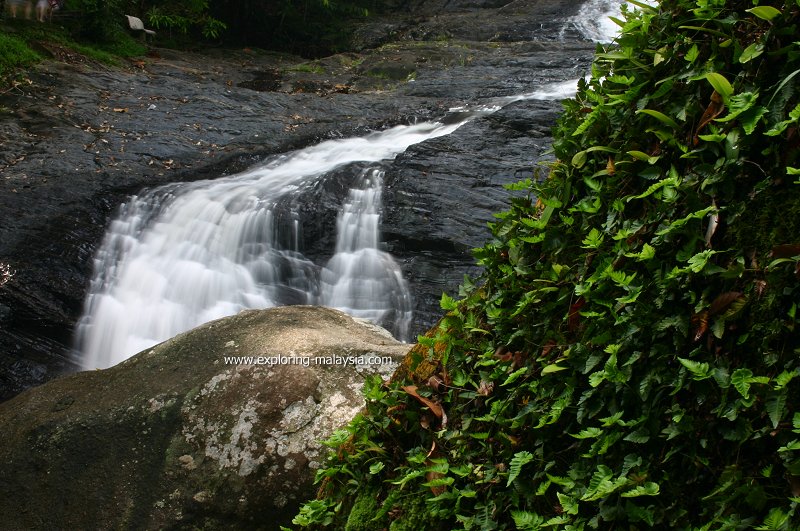 The waterfall at Sungai Sedim Recreational Forest, Kedah (2 May 2005)
References
- Department of Statistics Malaysia. Kedah population and demographic information.
- National Heritage Department Malaysia. Archaeological heritage of Kedah and Bujang Valley.
- Kedah State Government. State development information and economic overview.
Page Details
This page was created on 22 July 2026. Hi, my name is Timothy and created it from my research, for my own entertainment, knowledge and to satisfy my curiosity. I am providing the information to you in good faith and hope it is useful. I try to get the details as accurate as possible. I also try to update the page whenever I stumble on new details. So this and all my other pages are perpetual work in progress. If you discover any error, please politely inform me, pointing out where the error lies, and I will correct it as soon as possible. Your helpfulness will keep this page accurate, relevant and helpful to those who need the information.My Videos of Malaysia
 Latest Pages & Updates
Buy Me A Coffee
If you enjoy the information I provide and want to support the work I do, please buy me a coffee! I appreciate it immensely, thank you so much!
