
Kuala Kedah Travel Guide
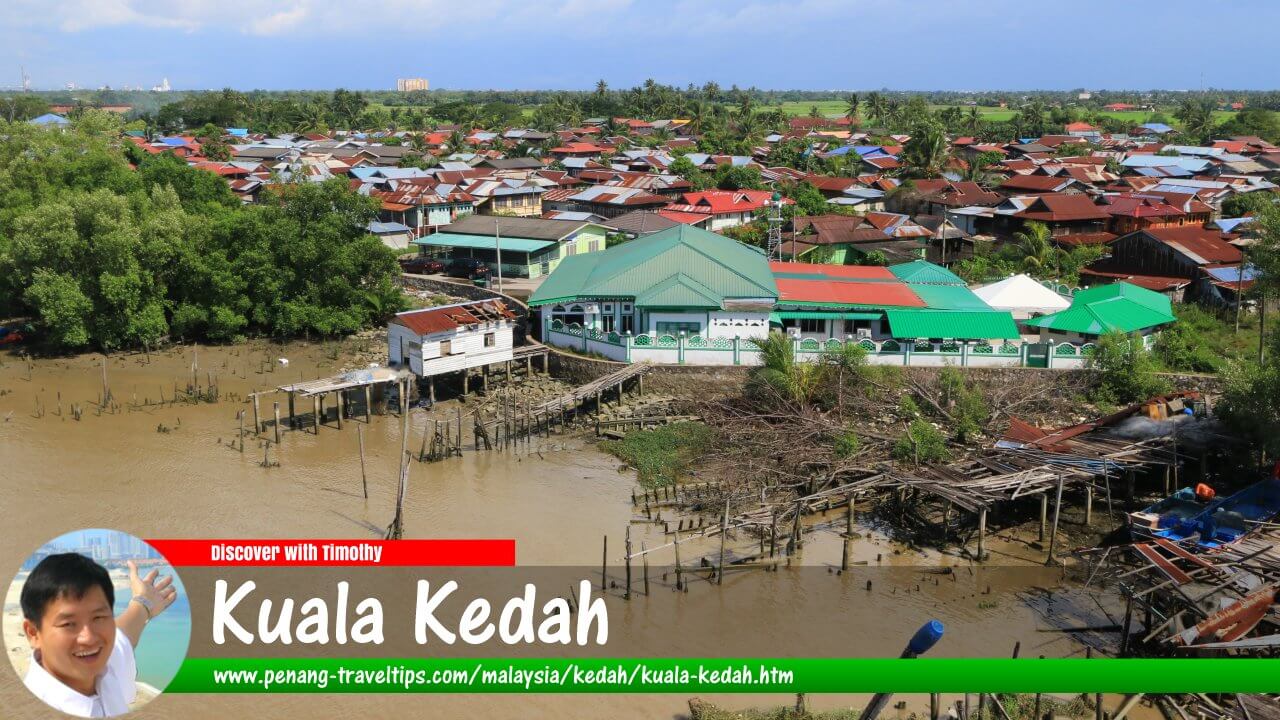 Kuala Kedah Travel Guide (10 November 2015)
Also available: Panduan Melawat Kuala Kedah
Introduction to Kuala Kedah
Kuala Kedah is a historic coastal town in the state of Kedah, Malaysia, located at the mouth of the Kedah River, just a short distance from Alor Setar. It is best known for its historic fort, fishing community and its role as one of the main ferry gateways to Langkawi.
The town's most important landmark is Kota Kuala Kedah, a historic fortress that once served as a defensive stronghold for the Kedah Sultanate. Today, the remains of the fort and the Muzium Kota Kuala Kedah provide an insight into the town's long history and its strategic importance. :contentReference[oaicite:0]{index=0}
Kuala Kedah also has a strong connection with the sea. Its location at the mouth of the Kedah River made it an important trading and defensive centre in the past, while today its ferry terminal provides a convenient connection between mainland Kedah and Langkawi. Tourism Malaysia identifies Kuala Kedah as one of the principal mainland departure points for ferries to Langkawi. :contentReference[oaicite:1]{index=1}
Despite its importance as a transport gateway, Kuala Kedah retains the character of a small coastal town. Visitors can experience traditional fishing activities, enjoy local seafood and explore an area where historical heritage and everyday village life exist alongside one another.
The town is particularly interesting for travellers who want to combine a visit to Langkawi with a short exploration of mainland Kedah. Kuala Kedah can easily be combined with Alor Setar, the state capital, which is only a short distance inland and has numerous historical and cultural attractions.
For visitors travelling from Penang or other parts of northern Peninsular Malaysia, Kuala Kedah can also make an interesting stop in its own right. Its historic fortress, riverside setting, local food and ferry connection give the town a character quite different from the larger cities nearby.
History of Kuala Kedah
Kuala Kedah has a long history as a strategic settlement at the mouth of the Kedah River. Its position provided access to the river and to the sea, making the area important for trade, administration and the defence of Kedah. The settlement was also known historically as Kuala Bahang. :contentReference[oaicite:0]{index=0}
The most important historical landmark is Kota Kuala Kedah, also known as Kota Kuala Bahang. An earlier fortification existed at the site before the present brick fortress was constructed. Historical records from the Department of Museums Malaysia state that the present fort was built from 1771 and completed in 1780 as a defence for Kedah and its capital, Alor Setar. :contentReference[oaicite:1]{index=1}
The fortress was constructed during the reign of Sultan Muhammad Jiwa and was designed with assistance from craftsmen brought from India. Its strategic position beside the Kedah River allowed it to protect the approach to the state's administrative centre. The fort subsequently survived attacks involving the Bugis, Acehnese and Siamese. :contentReference[oaicite:2]{index=2}
During the British period, following Kedah's entry under British control in 1909, the area around the fort was used for government purposes. Several government buildings were established there, together with a lighthouse, while a new gateway known as the English Gate was constructed. :contentReference[oaicite:3]{index=3}
During the Japanese occupation of Malaya, Kota Kuala Kedah was used as a headquarters by the Japanese armed forces. After the Japanese surrender in 1945, the site eventually became recognised for its historical importance. In 1978, the fort was gazetted as a historical site by the then Department of Museums and Antiquities. :contentReference[oaicite:4]{index=4}
Conservation and archaeological work was later carried out at the site. Among the projects was the reconstruction of the Kacapuri gateway, which had collapsed in 1970. The Muzium Kota Kuala Kedah was subsequently established within the historical complex to interpret the history of the fort and the surrounding area. :contentReference[oaicite:5]{index=5}
Today, Kota Kuala Kedah remains the most visible reminder of Kuala Kedah's strategic past. The fort, museum, old gateways and lighthouse provide visitors with a glimpse into the changing history of Kedah, from the era of the sultanate through the British and Japanese periods to the present day.
Getting to Kuala Kedah
Kuala Kedah is easily accessible from Alor Setar and other parts of northern Peninsular Malaysia. The town is particularly well connected by road because of its proximity to Alor Setar, while its ferry terminal provides an important sea connection with Langkawi.
By car: Driving is one of the easiest ways to reach Kuala Kedah. From Alor Setar, the journey by car takes about 25 minutes. The town can also be reached by road from other parts of Kedah, Perlis and Penang. 1
By bus: Visitors travelling by long-distance bus can first make their way to Alor Setar. From there, local bus services or a taxi can be used to continue to Kuala Kedah. The Department of Museums Malaysia also lists bus services from Alor Setar to the Kuala Kedah historical complex. 2
By train: The nearest major railway station is Alor Setar Railway Station, which is served by KTM ETS and KTM Komuter services. From the station, visitors can continue to Kuala Kedah by taxi or other road transport. 3
By air: Visitors arriving by air can fly to Sultan Abdul Halim Airport near Alor Setar. From the airport, Kuala Kedah can be reached by road. A taxi or private vehicle is the most practical option for the onward journey.
By ferry from Langkawi: Kuala Kedah is one of the principal mainland gateways to Langkawi. Passenger ferries operate between Kuala Kedah Ferry Terminal and Langkawi, with the sea journey taking approximately 1 hour 15 minutes. Ferry schedules can change according to season and demand, so passengers should check the latest schedule before travelling. 4
The Kuala Kedah ferry terminal is also useful for visitors who are combining a visit to the town with a trip to Langkawi. Those travelling by ferry should allow sufficient time to reach the terminal and complete the required check-in procedures before departure.
Getting around Kuala Kedah: A private car is convenient for exploring the wider area, while taxis and other road transport can be used for shorter journeys. The town itself is relatively compact, with the historical complex and ferry terminal among its main points of interest.
Food in Kuala Kedah
Kuala Kedah is a good place to enjoy the flavours of northern Kedah, particularly Malay food and seafood. Its location beside the Kedah River and the Strait of Malacca has given the town a strong connection with fishing and the sea.
Seafood is among the foods visitors should look out for in Kuala Kedah. Fish, prawns, squid, crabs and other locally available seafood may be prepared in a variety of Malay and Thai-influenced styles. Freshness and availability depend on the day's catch, so the selection can vary.
Gulai ikan and other fish-based dishes are common in northern Kedah cuisine. Visitors may also encounter dishes prepared with spicy sambal, coconut milk, herbs and other ingredients characteristic of Malay cooking.
Kuala Kedah is also close to Alor Setar, making it easy for visitors to sample some of the foods associated with Kedah. These include laksa Kedah, nasi lemak, pulut mangga and various traditional kuih. Some dishes reflect culinary influences from neighbouring Thailand because of Kedah's location in the northern part of the Malay Peninsula.
For Muslim visitors, halal food is widely available, particularly at Malay-owned restaurants and food stalls. Visitors who require officially certified halal premises should check the halal certification status of individual establishments.
Food outlets are concentrated around the more populated parts of Kuala Kedah and along roads leading towards Alor Setar. Visitors staying in the town can therefore explore local eateries, while those using Kuala Kedah as a departure point for Langkawi may wish to have a meal before or after their ferry journey.
For a more extensive choice of restaurants and local specialities, visitors can travel to nearby Alor Setar. Combining Kuala Kedah with a food excursion in Alor Setar is particularly convenient for travellers who have a few hours to spare before catching a ferry to Langkawi.
Places to Visit in Kuala Kedah
Kuala Kedah is best known for its historical heritage and coastal setting. Although it is a relatively small town, there are several places worth visiting, particularly for travellers interested in history, local culture and the relationship between Kedah and the sea.
Kota Kuala Kedah is the town's principal attraction. This historic fortress stands near the mouth of the Kedah River and was built as a defensive stronghold of the Kedah Sultanate. Visitors can explore the remains of the fort, its gateways and other surviving structures while learning about the battles and political events that shaped Kedah's history. 1
Muzium Kota Kuala Kedah is located within the historical complex and provides further information about the fort and the history of the area. Its collection includes archaeological objects, old fort bricks, ceramics and military artefacts. The museum is particularly useful for visitors who want to understand the historical importance of Kota Kuala Kedah rather than simply viewing its ruins. 1
The old lighthouse within the Kota Kuala Kedah historical complex is another notable landmark. Together with the fort, gateways and other surviving structures, it forms part of the historic landscape that illustrates Kuala Kedah's former strategic importance. 1
Kacapuri Archway is another surviving feature of the fort complex. The gateway dates from the period of Sultan Muhammad Jiwa Zainal Adilin Muazzam Shah II and is among the historical structures that give visitors an impression of the former fortified settlement. 1
The Kuala Kedah waterfront and riverside area provide a different experience from the historical complex. Visitors can observe the river, fishing activity and the coastal environment around the mouth of the Kedah River. The area is particularly suitable for those who want to experience the everyday character of a small fishing and ferry town.
The Kuala Kedah Ferry Terminal is another important landmark because of its role as a mainland gateway to Langkawi. Although the terminal is primarily a transport facility rather than a sightseeing attraction, travellers using the ferry can combine their journey with a short visit to Kuala Kedah and its historical attractions.
Visitors who have additional time can also travel to nearby Alor Setar, where attractions include the Zahir Mosque, Alor Setar Tower, Kedah State Museum, Royal Museum and Pekan Rabu. Kuala Kedah and Alor Setar are close enough to be combined in the same itinerary. 2
Where to Stay in Kuala Kedah
Kuala Kedah has a modest selection of accommodation, including homestays and holiday homes. Visitors who prefer a wider choice of hotels can stay in nearby Alor Setar, which is only a short drive from Kuala Kedah. Current accommodation listings include several homestays and properties within Kuala Kedah itself, as well as hotels in the surrounding Alor Setar area. 1
Staying in Kuala Kedah is convenient for travellers who want to be close to the ferry terminal or explore the town's historical attractions. Homestays and holiday homes can be particularly suitable for families or groups who prefer more space and private facilities. 1
Staying near the ferry terminal is a practical choice for passengers catching an early ferry to Langkawi. It reduces the need for a long journey on the morning of departure and allows travellers to explore Kuala Kedah before continuing their journey.
Alor Setar offers a much wider selection of hotels, from budget accommodation to larger full-service hotels. It is therefore the better choice for visitors who want more restaurants, shopping facilities and other urban amenities. Several hotels in Alor Setar are located within a short drive of Kuala Kedah. 1
For visitors arriving by train, staying in Alor Setar can also be convenient because the town has a railway station and good road connections to Kuala Kedah. A taxi, private car or other road transport can be used to travel between the two places.
Travellers planning to take the ferry to Langkawi should book accommodation according to their ferry departure time. During weekends, school holidays and public holidays, accommodation and ferry services can be busier, so making arrangements in advance is advisable.
References
- Booking.com, Kuala Kedah accommodation listings.
Map of Kuala Kedah
Places of Interest in Kuala Kedah
- Jambatan Tok Pasai (GPS: 6.10935, 100.29432)

- Kuala Kedah Ferry Terminal (GPS: 6.10655, 100.29013)

- Kuala Kedah Fort (GPS: 6.10897, 100.28722)

Categories of sights in Kuala Kedah
Page Details
This page was created on 8 September 2026. Hi, my name is Timothy and created it from my research, for my own entertainment, knowledge and to satisfy my curiosity. I am providing the information to you in good faith and hope it is useful. I try to get the details as accurate as possible. I also try to update the page whenever I stumble on new details. So this and all my other pages are perpetual work in progress. If you discover any error, please politely inform me, pointing out where the error lies, and I will correct it as soon as possible. Your helpfulness will keep this page accurate, relevant and helpful to those who need the information.Want to share your Kedah travel experiences or get tips from fellow travellers?
Join the Kedah Travel Tips Facebook GroupKedah Streets & Sights
Buy Me A Coffee
If you enjoy the information I provide and want to support the work I do, please buy me a coffee! I appreciate it immensely, thank you so much!
