
Kuala Lumpur Travel Guide
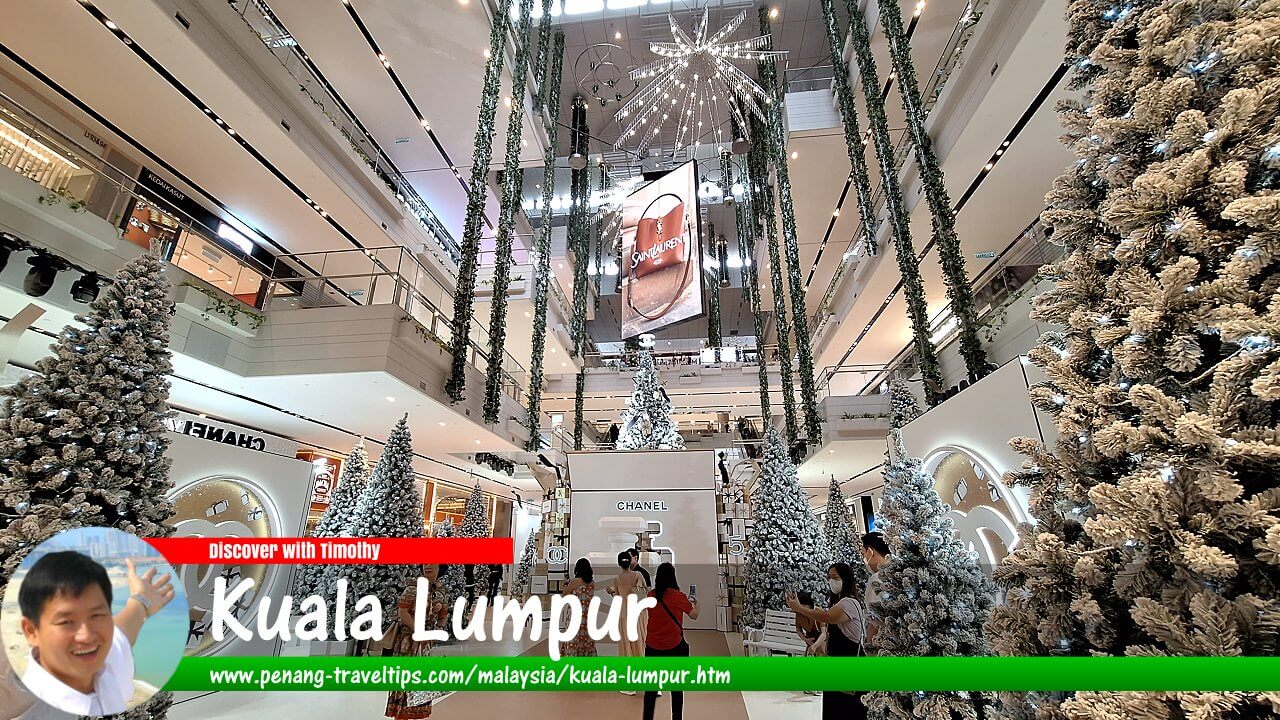 Kuala Lumpur (28 December 2023)
Also available: Panduan Melawat Kuala Lumpur
Kuala Lumpur, the capital city of Malaysia, is a dynamic metropolis blending history, culture, architecture and modernity. From the iconic Petronas Twin Towers to lively street markets and diverse neighbourhoods, Kuala Lumpur offers an ever-evolving mosaic of experiences. This page introduces the city’s history, geography, administrative structure, neighbourhoods, transport systems, attractions and shopping highlights — your comprehensive guide to Malaysia’s capital. 1
Quick Facts
- Official name: Kuala Lumpur
- Status: Federal Territory (Wilayah Persekutuan Kuala Lumpur)
- Area: 243 km²
- Population: Approx. 1.9 million (city proper); Greater Kuala Lumpur over 8 million 2
- Founded: c. 1857 as a tin mining settlement
- Coordinates: 3.139°N, 101.686°E
- Time zone: Malaysia Time (MYT) — UTC+08:00
- Elevation: 21.95 m above sea level (city centre)
- Official language: Malay (Bahasa Malaysia); English widely spoken
History of Kuala Lumpur
The story of Kuala Lumpur began around 1857 when Chinese miners, under the auspices of the Malay rulers of Selangor, founded a small settlement at the confluence of the Gombak and Klang rivers. The name “Kuala Lumpur” literally means “muddy confluence,” describing the area’s river junction. Early settlers mined tin in the Ampang area, and the town grew around its trading activities. Fires, floods and disease plagued its early years, yet its strategic location made it a vital commercial hub for Selangor. 3
By the late 19th century, British colonial administrators recognised Kuala Lumpur’s importance and began modernising the town’s infrastructure. Yap Ah Loy, a Chinese leader, was instrumental in rebuilding and developing it into a bustling entrepôt. In 1880, Kuala Lumpur replaced Klang as the capital of Selangor, and by 1896, it became the capital of the Federated Malay States under British rule. 4
Following independence in 1957, Kuala Lumpur continued to serve as Malaysia’s national capital and symbol of progress. The city achieved federal territory status in 1974, separating administratively from Selangor. Since then, Kuala Lumpur has expanded outward, modernised rapidly, and evolved into a major Southeast Asian financial and cultural centre. 5
Geography of Kuala Lumpur
Kuala Lumpur is located in the Klang Valley, a large intermontane basin surrounded by the Titiwangsa Range to the east and the Bukit Tarek Range to the north and west. The Klang and Gombak rivers meet near the city’s heart — now marked by Dataran Merdeka and Masjid Jamek. The terrain is generally undulating, with developed hills such as Bukit Bintang and Bukit Nanas interspersed with flatlands and reclaimed areas. 6
The city’s climate is equatorial — hot and humid year-round, with daily temperatures averaging between 23°C and 33°C. Kuala Lumpur experiences two monsoon seasons: the Southwest Monsoon (May–September) and the Northeast Monsoon (November–March), bringing intermittent heavy rains. Despite urbanisation, Kuala Lumpur still retains green belts, parks and forest reserves, including the Bukit Nanas Forest Reserve, one of the world’s oldest urban rainforests. 7
Map of Roads in Kuala Lumpur
The map below shows all the roads in Kuala Lumpur that I have described. The red lines are roads while the green ones are expressways. Click on them to open a new page with details of the road.
Administrative Divisions of Kuala Lumpur
As a Federal Territory, Kuala Lumpur is directly administered by the Federal Government through the Kuala Lumpur City Hall (DBKL)). The Mayor of Kuala Lumpur is appointed by the Minister of Federal Territories. Although not divided into districts with separate local councils like Malaysian states, the city is organised into numerous planning zones and parliamentary constituencies. Among the city’s major administrative and residential areas are Bukit Bintang, Titiwangsa, Setiawangsa, Seputeh, Kepong, Lembah Pantai and Cheras. 8
Neighbourhoods of Kuala Lumpur
Kuala Lumpur is a city of many distinct neighbourhoods, each with its own history, character and rhythm. From historic Kampung Baru and bustling Bukit Bintang to tranquil Taman Tun Dr Ismail and emerging Setiawangsa, the city’s urban fabric reflects its cultural diversity. You can explore these areas in more detail through our Neighbourhoods of Kuala Lumpur guide, which offers insights into local landmarks, lifestyle, and transport access from the city centre. 9
Map of the Neighbourhoods of Kuala Lumpur
This map shows the various neighbourhoods of Kuala Lumpur that I have described. Select and click to open page about the neighbourhood.
Getting In
Kuala Lumpur is accessible by air, road, rail and even by limited sea routes, making it one of Southeast Asia’s most connected capitals.
By Air
The main gateway is Kuala Lumpur International Airport (KLIA), located about 45 km south of the city in Sepang. KLIA and its adjacent terminal, KLIA2, serve Malaysia Airlines, AirAsia, and numerous international carriers. The KLIA Ekspres and KLIA Transit trains provide a fast rail link to KL Sentral Station in about 30–35 minutes. 10
By Road
Highways and expressways connect Kuala Lumpur to every major city in Peninsular Malaysia. The Federal Highway links the city with Petaling Jaya, Shah Alam and Klang. The North–South Expressway connects it to Penang, Ipoh and Johor Bahru, while the Karak Expressway links it to Genting Highlands and Kuantan. Long-distance buses arrive at major terminals such as TBS (Terminal Bersepadu Selatan), Hentian Duta and Pekeliling. 11
By Rail
KL Sentral is Malaysia’s main railway hub, connecting intercity KTM services, the ETS (Electric Train Service) to the north and south, and local commuter trains (KTM Komuter). From Singapore, travellers can reach Kuala Lumpur via connecting train services through Johor and Gemas. Regional links to Thailand also exist via Padang Besar. 12
By Sea
Although Kuala Lumpur itself is inland, it is accessible via nearby ports such as Port Klang, about 40 km to the west. Ferries from Indonesia and cruise ships often dock at Port Klang, from which travellers can continue by KTM Komuter train or taxi into Kuala Lumpur. 13
Getting Around
Kuala Lumpur boasts one of Southeast Asia’s most comprehensive public transport systems, integrating trains, buses and taxis into a unified network.
The Klang Valley Mass Transit Network includes the MRT, LRT, Monorail and KTM Komuter systems, offering extensive coverage across the metropolitan area. Learn more about routes and connections on our Klang Valley Mass Transit Network page. For last-mile travel and intra-city connections, the Rapid KL Bus Service covers major districts and residential zones throughout the city. 14
Map of Klang Valley Mass Transit Network
This map shows the mass transit network which covers the Klang Valley, which is the Kuala Lumpur metropolitan area.
Other means of transport include metered taxis, Grab e-hailing services, and walking paths in the city centre. Pedestrian connectivity has improved with covered walkways linking areas like Bukit Bintang, KLCC and Pavilion. Cycling remains limited, but designated lanes are being introduced gradually. 15
Where to Visit
Kuala Lumpur is a city of contrasts where colonial heritage, traditional culture and modern architecture coexist. Among the must-visit landmarks and attractions are:
- Petronas Twin Towers — once the tallest buildings in the world, symbolising modern Malaysia.
- Dataran Merdeka — the historical square where independence was proclaimed in 1957.
- KL Tower (Menara Kuala Lumpur) — offering panoramic views of the city skyline.
- Chinatown (Petaling Street) — a bustling market district famed for food and bargains.
- Little India, Brickfields — a colourful district with Indian cuisine and textile shops.
- Batu Caves — a Hindu temple complex within limestone caverns, just north of the city.
- Islamic Arts Museum Malaysia and National Mosque (Masjid Negara) — cultural landmarks showcasing Islamic heritage.
- Kuala Lumpur City Gallery — featuring exhibits on the city’s development and architecture.
Parks such as the Perdana Botanical Gardens, KLCC Park and Bukit Jalil Recreational Park offer green respite within the urban core. 16
What to Buy and Where to Shop
Shopping in Kuala Lumpur ranges from luxury malls to local markets. Bukit Bintang is the city’s premier retail district, home to Pavilion Kuala Lumpur, Lot 10 and Fahrenheit88. KLCC offers upscale brands within Suria KLCC beneath the Twin Towers. Mid Valley Megamall and The Gardens Mall cater to mid-range shoppers, while 1 Utama in Bandar Utama is one of the region’s largest shopping complexes. 17
For more traditional finds, Central Market sells handicrafts and souvenirs, while Jalan Masjid India and Chow Kit Market offer local fabrics, spices and street food. Night markets such as Taman Connaught and Setiawangsa bring together local snacks, fashion and trinkets in a lively atmosphere. 18
Kuala Lumpur’s retail landscape reflects its cosmopolitan identity — from artisanal batik to international designer labels, there’s something for every shopper. 19
Category of Sights in Kuala Lumpur
Due to the high number of sights in Kuala Lumpur that I have described, I divide them into the following categories.- PLACES OF INTEREST IN KUALA LUMPUR
- PETROL STATIONS IN KUALA LUMPUR
- STREETS OF KUALA LUMPUR
- Administrative Divisions in Kuala Lumpur
- Apartments in Kuala Lumpur
- Brethren Assemblies in Kuala Lumpur
- Bus Terminals in Kuala Lumpur
- Bridges in Kuala Lumpur
- Cemeteries in Kuala Lumpur
- Chinese Temples in Kuala Lumpur
- Churches in Kuala Lumpur
- Clocktowers in Kuala Lumpur
- Colleges in Kuala Lumpur
- Commercial Properties in Kuala Lumpur
- Convention Centres in Kuala Lumpur
- Commercial Properties in Kuala Lumpur
- Demolished Buildings in Kuala Lumpur
- Department Stores in Kuala Lumpur
- Development Projects in Kuala Lumpur
- Forest Parks in Kuala Lumpur
- Government Buildings in Kuala Lumpur
- Gurdwaras in Kuala Lumpur
- Fire Stations in Kuala Lumpur
- Funeral Parlours in Kuala Lumpur
- High-Rise Buildings in Kuala Lumpur
- Hills in Kuala Lumpur
- Hindu Temples in Kuala Lumpur
- Historic Buildings in Kuala Lumpur
- Hostels in Kuala Lumpur
- Hotels in Kuala Lumpur
- Important Buildings of Kuala Lumpur
- Localities in Kuala Lumpur
- LRT Stations in Kuala Lumpur
- Markets in Kuala Lumpur
- Mass Transit in Kuala Lumpur
- Mausoleums in Kuala Lumpur
- Memorials in Kuala Lumpur
- Modern Buildings in Kuala Lumpur
- Monorail Stations in Kuala Lumpur
- Monuments in Kuala Lumpur
- Mosques in Kuala Lumpur
- MRT Lines in Kuala Lumpur
- MRT Stations in Kuala Lumpur
- Museums in Kuala Lumpur
- Neighbourhoods of Kuala Lumpur
- Organisations in Kuala Lumpur
- Parks in Kuala Lumpur
- Pedestrian Malls in Kuala Lumpur
- Properties in the Klang Valley
- Residential Properties in Kuala Lumpur
- Restaurants in Kuala Lumpur
- Rivers in Kuala Lumpur
- Schools in Kuala Lumpur
- Shopping Malls of Kuala Lumpur
- Skyscrapers of Kuala Lumpur
- Stadiums in Kuala Lumpur
- Street Art in Kuala Lumpur
- Tourist Attractions in Kuala Lumpur
- Villages in Kuala Lumpur
- Waterfalls in Kuala Lumpur
Further Reading
References
- Encyclopaedia Britannica — Kuala Lumpur overview
- Department of Statistics Malaysia (DOSM) — population and area data
- The Star — Kuala Lumpur history and heritage features
- Wikipedia — Kuala Lumpur history
- Kuala Lumpur City Hall (DBKL) official portal
- Malaysian Meteorological Department — Kuala Lumpur climate data
- IMD World Competitiveness — city data
- Ministry of Transport Malaysia — transport and airport information
- Keretapi Tanah Melayu Berhad (KTMB) — rail connections
- Tourism Malaysia — attractions and cultural sites
Page Details
This page was created on 12 October 2025. Hi, my name is Timothy and created it from my research, for my own entertainment, knowledge and to satisfy my curiosity. I am providing the information to you in good faith and hope it is useful. I try to get the details as accurate as possible. I also try to update the page whenever I stumble on new details. So this and all my other pages are perpetual work in progress. If you discover any error, please politely inform me, pointing out where the error lies, and I will correct it as soon as possible. Your helpfulness will keep this page accurate, relevant and helpful to those who need the information.My Videos of Malaysia
 Latest Pages & Updates
Buy Me A Coffee
If you enjoy the information I provide and want to support the work I do, please buy me a coffee! I appreciate it immensely, thank you so much!
