
Negeri Sembilan Travel Guide
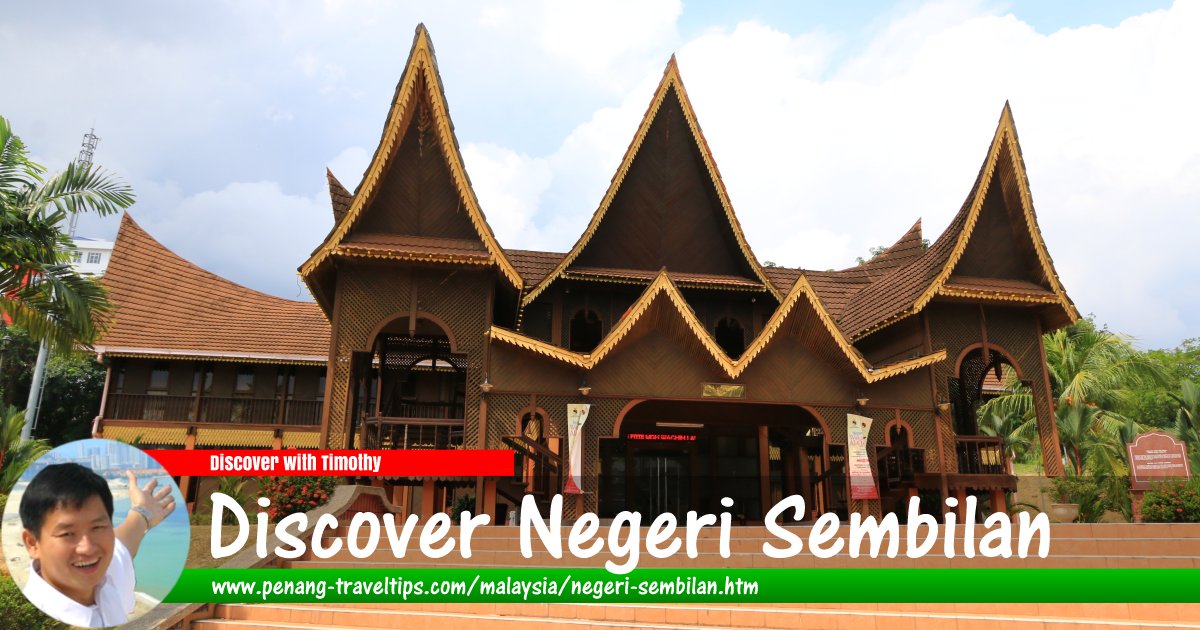 Discover Negeri Sembilan (9 July 2016)
Also available: Panduan Melawat Negeri Sembilan
Negeri Sembilan is a state on the southwestern coast of Peninsular Malaysia, sandwiched between Selangor to the north, Pahang to the east, Johor to the south, and Melaka further south, with a modest stretch of coastline along the Strait of Malacca.1 Its name, which translates literally as "Nine States," refers to the nine original Minangkabau chiefdoms, known as luak, established by migrants from the Minangkabau highlands of West Sumatra who settled the region from the fourteenth and fifteenth centuries onward.2 That migration left an imprint on the state unlike anywhere else in Malaysia: Negeri Sembilan is the only state in the country, and possibly the only place in the Islamic world, to formally practise Adat Perpatih, a matrilineal system of inheritance and governance under which property and clan lineage pass through women rather than men.3 Covering an area of roughly 6,686 square kilometres and home to an estimated population above 1.2 million, Negeri Sembilan blends royal tradition, distinctive Minangkabau-inspired architecture, and a growing economic footprint anchored by its capital, Seremban, and its best-known coastal town, Port Dickson.4
Geography and Climate
Negeri Sembilan occupies a relatively compact but geographically varied slice of Peninsular Malaysia. The state is drained chiefly by the Linggi River, and its terrain rises from a narrow 48-kilometre coastal belt along the Strait of Malacca in the west into hilly, forested interior districts toward the east.5 Much of the interior remains covered in tropical rainforest and rubber and oil palm plantations, a legacy of the state's colonial-era agricultural economy, while low-lying valley floors historically supported paddy cultivation.5 Notable natural landmarks include Gunung Angsi and Gunung Datuk, both popular hiking destinations, and Cape Rachado (Tanjung Tuan), a forested headland and lighthouse promontory that juts into the Strait of Malacca near Port Dickson.6
As with the rest of Peninsular Malaysia, Negeri Sembilan has a tropical rainforest climate, with consistently warm temperatures, high humidity, and rainfall spread across the year, though the Southwest Monsoon period between roughly May and September tends to bring drier, sunnier conditions well suited to beach holidays along the coast.5
History
Minangkabau Migration and the Formation of the Nine Luak
The story of Negeri Sembilan begins not on the Malay Peninsula but across the Strait of Malacca, in the Minangkabau highlands of West Sumatra. Malay historical tradition divides the region's early history into a semi-legendary period followed by successive waves of Minangkabau settlement, as migrants seeking land and opportunity crossed into the peninsula during the height of the Malacca Sultanate, when the port city's prosperity drew traders and settlers from across the archipelago.7 These migrants brought with them adat alam Minangkabau, a body of customary law that, over the fifteenth and sixteenth centuries, blended with existing local practice and newly arrived Islamic teachings to form the distinct tradition known as Adat Perpatih.3 The settlers organised themselves into nine luak, or confederated territories, each governed by a hereditary chief known as an Undang, a structure that gave the state both its name and its unusual constitutional character.2
The Yang di-Pertuan Besar and the Minangkabau Rulers
Unlike Malaysia's other Malay states, where rulers typically inherit the throne through patrilineal royal descent, Negeri Sembilan's head of state, the Yang di-Pertuan Besar, is elected by the four principal Undang, or territorial chiefs, from among eligible candidates of Minangkabau royal descent.2 Several of the state's earliest rulers were in fact invited directly from Pagaruyung, the historic Minangkabau kingdom in West Sumatra, reflecting the deep and enduring political ties between Negeri Sembilan and its ancestral homeland.2 This elective system of monarchy, unique within Malaysia, still governs succession today, with the royal seat traditionally based in Seri Menanti, in the district of Kuala Pilah.6
British Intervention and Colonial Development
During the nineteenth century, the loosely confederated luak of Negeri Sembilan, along with neighbouring territories such as Sungai Ujong, became entangled in tin-mining disputes and internal rivalries that drew the attention of British colonial interests on the peninsula.5 British Residents were progressively installed in the constituent territories through the latter half of the century, and in 1895 the various states were consolidated into the single confederated state of Negeri Sembilan, which then joined the Federated Malay States.5 This period saw the growth of Seremban as a tin-mining boomtown from the 1870s onward, developing under British administration into the state's principal urban and administrative centre, complete with railway links that connected it to other parts of the peninsula.8
Independence and Statehood within Malaysia
Negeri Sembilan became one of the constituent states of the Federation of Malaya upon independence, with its state government formally established on 31 August 1957.9 It subsequently became one of the thirteen states of Malaysia following the formation of the federation in 1963. Since independence, the state has retained its unique adat-based governance system alongside the standard structures of Malaysian state government, making it something of a living constitutional anomaly within the federation.3
Government and Administration
Negeri Sembilan is governed as a constitutional monarchy within the Malaysian federal system. Its head of state, the Yang di-Pertuan Besar, is currently Tuanku Muhriz ibni Almarhum Tuanku Munawir, who has reigned since December 2008.10 Executive government is led by the Menteri Besar, the state's chief minister, who is appointed by the ruler on the basis of commanding the confidence of the majority of the Negeri Sembilan State Legislative Assembly.11 The unicameral State Legislative Assembly comprises 36 seats representing single-member constituencies across the state, and the assembly's most recent election was held in August 2023, with the following state election scheduled for 2026.12
Administratively, the state is divided into seven districts: Seremban, Port Dickson, Kuala Pilah, Rembau, Jelebu, Jempol, and Tampin.4 Seremban, both the largest district by population and the seat of the state government, houses the primary administrative offices at Wisma Negeri Sembilan.9 Alongside this modern administrative structure, the traditional council of Undang, known as the Dewan Keadilan dan Undang, continues to hold authority over customary and adat-related matters, preserving the dual system of governance that has characterised the state since its founding.2
Economy
From Tin and Rubber to Manufacturing
Negeri Sembilan's modern economy has its roots in the tin-mining boom of the nineteenth century, which first drew large numbers of Chinese and later Indian migrant labourers to the state, followed by the widespread cultivation of rubber and, later, oil palm across the interior districts.5 While alluvial tin mining has long since declined, agriculture, particularly rubber and oil palm plantations, remains a visible feature of the rural landscape.5 Today, the state's economy has diversified considerably, with manufacturing and electronics assembly forming a significant part of Seremban's economic base, aided by the district's proximity to the Klang Valley and major transport corridors linking it to Kuala Lumpur.8
Port Dickson: Tourism and Petroleum
The coastal district of Port Dickson supports a distinct dual economy built on tourism and petroleum processing. The district is home to two major refineries, operated by Hengyuan Refining Company and Petron, alongside smaller-scale industrial activity, while its beaches and resorts continue to draw large numbers of visitors.13 Port Dickson alone accounts for roughly three-quarters of all tourist arrivals to Negeri Sembilan, with annual visitor numbers consistently exceeding four million in recent years, following renewed efforts to clean up and revitalise its coastline after a decline in the late 1990s caused by beach pollution.13
Malaysia Vision Valley
Looking ahead, the state government has placed significant emphasis on the Malaysia Vision Valley 2045 initiative, a long-term regional development framework spanning the Seremban and Port Dickson districts.14 The plan is designed to guide land use, infrastructure, housing, and industrial growth along this corridor, positioning Seremban as the urban and administrative anchor while Port Dickson contributes tourism, coastal lifestyle, and hospitality value, with the initiative also intended to capture spillover development demand from the increasingly congested Klang Valley.15
Demographics and Culture
Negeri Sembilan is home to a multiracial population exceeding 1.2 million people, with the Malay community, the majority of whom trace their heritage to Minangkabau settlers, forming the largest group, followed by significant Chinese and Indian communities alongside smaller populations of other ethnicities.16 This diversity is a direct legacy of the state's tin-mining past, which drew Chinese and Indian migrant labour into towns such as Seremban and Port Dickson during the colonial period, alongside the older Minangkabau-Malay population rooted in the rural luak.5
Adat Perpatih in Daily Life
Adat Perpatih remains the most distinctive cultural feature of Negeri Sembilan, governing not only inheritance but also the appointment of clan leaders, marriage customs, and community decision-making through principles of consensus and consultation.3 Under this system, property and lineage pass through the female line, with a husband traditionally regarded as orang semanda, an outsider who joins his wife's clan rather than the reverse, a striking contrast to the patriarchal norms found elsewhere in Malay society.17 Although adapted over the centuries to coexist with Islamic law, particularly in matters where the two traditions diverge, Adat Perpatih continues to shape community structure in much of rural Negeri Sembilan, and it is practised in limited pockets elsewhere in the peninsula, including Naning in Melaka and parts of Johor, though nowhere as comprehensively as in Negeri Sembilan itself.3
Minangkabau Architecture
The most visually striking expression of the state's Minangkabau heritage is its distinctive architecture, characterised by dramatic, sweeping rooflines that curve upward at each end, evoking the shape of buffalo horns.18 This design, from which the very word "Minangkabau" is said to derive, meaning roughly "victorious buffalo," can be seen throughout the state in traditional kampung houses as well as prominent public buildings, including the State Mosque, the State Secretariat Building, and the Istana Sri Menanti.16
Districts and Major Towns
Negeri Sembilan's seven districts each carry a distinct character, ranging from urbanised administrative centres to quiet, forested hinterlands.
- Seremban — the state capital and largest urban centre, originally founded as a nineteenth-century tin-mining settlement and today the state's commercial and administrative hub.8
- Port Dickson — the only coastal district in the state, known for its beaches, resorts, and petroleum refining industry.13
- Kuala Pilah — home to Seri Menanti, the traditional royal town and seat of the Yang di-Pertuan Besar.6
- Rembau — one of the historic luak, noted for its Minangkabau heritage and the Rembau Museum.19
- Jelebu — a hilly, forested interior district known for hiking spots such as Gunung Berembun.19
- Jempol — an agricultural district associated with palm oil cultivation and rural heritage.4
- Tampin — the state's southernmost district, bordering Melaka, known for attractions such as the Batu Maloi caves.19
Tourism and Attractions
Although often associated primarily with Port Dickson's beaches, Negeri Sembilan offers a considerably broader range of attractions spanning royal history, cultural heritage, and outdoor recreation.20
Royal and Cultural Heritage Sites
- Istana Lama Seri Menanti — a former royal palace built in 1903 entirely without nails, resting on 99 pillars, and now housing a museum displaying royal regalia, ceremonial weaponry, and costumes.6
- Seremban Cultural Complex — a heritage precinct built in Minangkabau architectural style comprising the Teratak Perpatih state museum, a former royal wooden palace, and a traditional Minangkabau-style house, together tracing the state's history, customs, and matrilineal traditions.18
- Rembau Museum (Replika Istana Raja Melewar) — a replica palace commemorating one of the earliest rulers associated with the founding of Negeri Sembilan.19
- Army Museum (Muzium Tentera Darat) — located near Port Dickson, showcasing Malaysia's military history and heritage.19
Nature and Outdoor Recreation
- Cape Rachado (Tanjung Tuan) — a forest reserve and lighthouse-topped headland near Port Dickson, notable both for coastal views and as a migratory bird-watching site.6
- Gunung Angsi and Gunung Datuk — popular hiking destinations offering forest trails and panoramic views over the state's interior.19
- Ulu Bendul Recreational Park — a riverside forest recreation area near Kuala Pilah popular for picnics and light nature walks.19
- Port Dickson beaches — a string of sandy beaches and resort stretches along the Strait of Malacca, historically the state's most visited attraction, drawing more than four million visitors annually.13
Festivals and Events
Negeri Sembilan hosts a variety of cultural and outdoor events throughout the year that reflect both its adat heritage and its coastal appeal, including the Angsi Forest Challenge, an outdoor adventure event held in the state's hill forests, and the Negeri Rhythms Festival, a music and arts event held in Port Dickson.20 Traditional Minangkabau-influenced ceremonies, particularly those tied to marriage and clan leadership under Adat Perpatih, also remain an important part of community life in the state's rural districts.3
Cuisine
Negeri Sembilan's cuisine is often regarded as among the spiciest and most robustly flavoured in Malaysia, a reputation closely tied to its Minangkabau roots. The state is widely credited by many Malaysians as a spiritual home of beef rendang, a rich, slow-cooked dish of meat braised in coconut milk and spices, a dish whose origins are traced by many food historians to the wider Minangkabau culinary tradition of West Sumatra.17 Other notable local specialities include masak lemak, a turmeric-spiced coconut gravy dish, and the well-known Seremban siew pau, a baked bun filled with savoury meat, which has become one of the town's signature culinary exports.20 The influence of the state's Minangkabau heritage on Malay cuisine more broadly is significant, given that Minangkabau culinary traditions, sometimes recognised elsewhere in the region under the umbrella of Padang cuisine, have shaped food culture well beyond Negeri Sembilan's borders.17
Religion and Festivals
Islam is the majority religion in Negeri Sembilan, practised predominantly by the state's Malay population, though Buddhism, Hinduism, Christianity, and other faiths are also observed by its Chinese, Indian, and other minority communities.16 This religious diversity is reflected in the state's calendar of celebrations, which spans Hari Raya Aidilfitri and Aidiladha, Chinese New Year, Deepavali, and Christmas, alongside national observances such as Hari Merdeka and Hari Malaysia.20 Distinctly local ceremonies tied to Adat Perpatih, including the installation of clan leaders and traditional wedding rites conducted according to matrilineal custom, continue to be observed in many of the state's rural luak, offering a cultural dimension found nowhere else in the country.3
Education
Negeri Sembilan hosts a number of higher education institutions that have grown alongside its expanding urban population, particularly in and around Nilai and Seremban. Nilai has developed into something of an education hub, home to several private universities and colleges, while Seremban itself hosts branch campuses and public sector training institutions that serve both the state and the broader southern Klang Valley region.4 The presence of these institutions has, in turn, encouraged the growth of student housing, retail, and services around these townships, complementing the state's broader push toward diversifying beyond its traditional manufacturing and plantation-based economy.15
Connectivity
Negeri Sembilan benefits considerably from its proximity to the Klang Valley, situated roughly 60 kilometres south of Kuala Lumpur.8 The state is served by the North-South Expressway, which runs through Seremban and connects the state efficiently to both Kuala Lumpur and southern Malaysia, while the Electric Train Service offers a fast rail link between Seremban and the capital.20 Gemas, in the southern part of the state, serves as a historic railway junction linking the west coast line with the East Coast Line toward Johor and beyond.5 This strong connectivity has increasingly positioned Negeri Sembilan, and particularly the Seremban–Port Dickson corridor, to absorb residential and industrial overflow from the increasingly congested Klang Valley.15
Conclusion
Negeri Sembilan occupies a singular place among Malaysia's thirteen states, not for its size or its economic output alone, but for the depth and endurance of its Minangkabau heritage. Its matrilineal Adat Perpatih, its elective monarchy rooted in ties to Sumatra's Pagaruyung kingdom, and its unmistakable buffalo-horn architecture together set it apart as a living cultural anomaly within the Malaysian federation, one that has managed to preserve centuries-old customs alongside a modern, diversified economy built on manufacturing, petroleum processing, and tourism. From the royal town of Seri Menanti to the beaches of Port Dickson and the tin-town streets of Seremban, Negeri Sembilan offers visitors and residents alike a rare combination of deep cultural continuity and steady contemporary growth, anchored by its enduring proximity to, yet distinctiveness from, the fast-paced Klang Valley just to its north.
Map of Negeri Sembilan
List of sights in Negeri Sembilan
- Berhulucamp (Hutan Lipur Serting Ulu) (GPS: 2.91444, 102.25888)

- Bukit Palong (GPS: 2.584, 101.83605)

- De Bana Recreational Park (GPS: 3.06247, 102.41226)

- Hutan Lipur Lenggeng (GPS: 2.83953, 101.97754)

- Hutan Lipur Ulu Bendul (GPS: 2.69752, 102.15792)

- Jeram Toi Waterfall (GPS: 2.86434, 102.01414)

- Kelamah River Memorial (GPS: 2.59536, 102.51909)

- Kota Lukut (GPS: 2.59536, 102.51909)

- Lata Kijang Waterfall (GPS: 2.59536, 102.51909)

- Pedas Hot Springs (GPS: 2.6323, 102.05462)

- Pengkalan Kempas Megaliths (GPS: 2.6323, 102.05462)

- Porterage Road (Jalan Penarikan) (GPS: 2.80783, 102.37427)

- Sri Menanti Palace (Muzium Diraja Istana Lama Sri Menanti) (GPS: 2.69752, 102.15792)

- Wan Loong Temple (GPS: 2.69752, 102.15792)

Map of Towns in Negeri Sembilan
List of main towns in Negeri Sembilan
- Seremban (State Capital)
- Kuala Klawang
- Kuala Pilah
- Lukut
- Nilai
- Port Dickson
- Seri Menanti
- Tampin
Categories of sights in Negeri Sembilan
- TOWNS IN NEGERI SEMBILAN
- PLACES OF INTEREST IN NEGERI SEMBILAN
- Chinese Temples in Negeri Sembilan
- Churches in Negeri Sembilan
- Government Buildings in Negeri Sembilan
- Hindu Temples in Negeri Sembilan
- Historic Buildings in Negeri Sembilan
- Hospitals in Negeri Sembilan
- Hotels in Negeri Sembilan
- Housing Estates in Negeri Sembilan
- Industrial Parks in Negeri Sembilan
- Monuments in Negeri Sembilan
- Mosques in Negeri Sembilan
- Multi-Purpose Halls in Negeri Sembilan
- Museums in Negeri Sembilan
- Palaces in Negeri Sembilan
- Petrol Stations in Negeri Sembilan
- Schools in Negeri Sembilan
- Shopping Malls in Negeri Sembilan
- Sports Clubs in Negeri Sembilan
- Street Art in Negeri Sembilan
- Train Stations in Negeri Sembilan
- Villages in Negeri Sembilan
Map of the districts of Negeri Sembilan
The modern state of Negeri Sembilan comprises seven districts namely Seremban, Port Dickson, Rembau, Jelebu, Kuala Pilah, Jempol and Tampin.
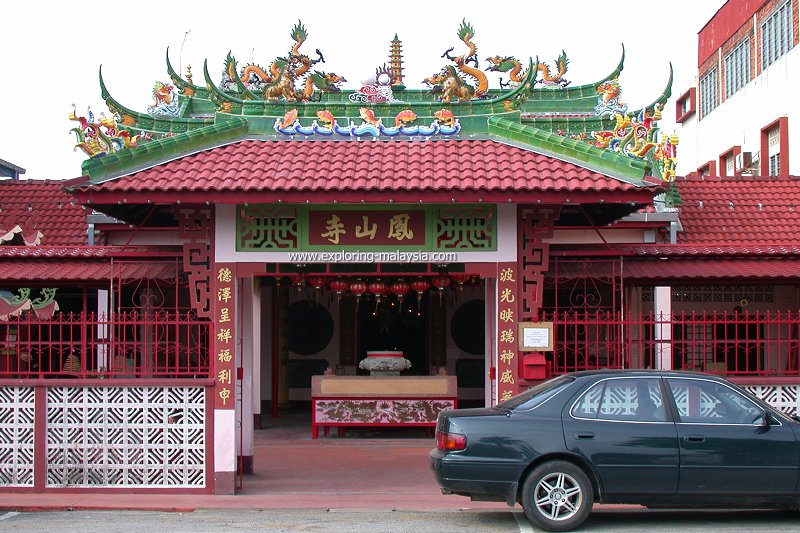 Hong San Si Temple, Port Dickson (29 December 2006)
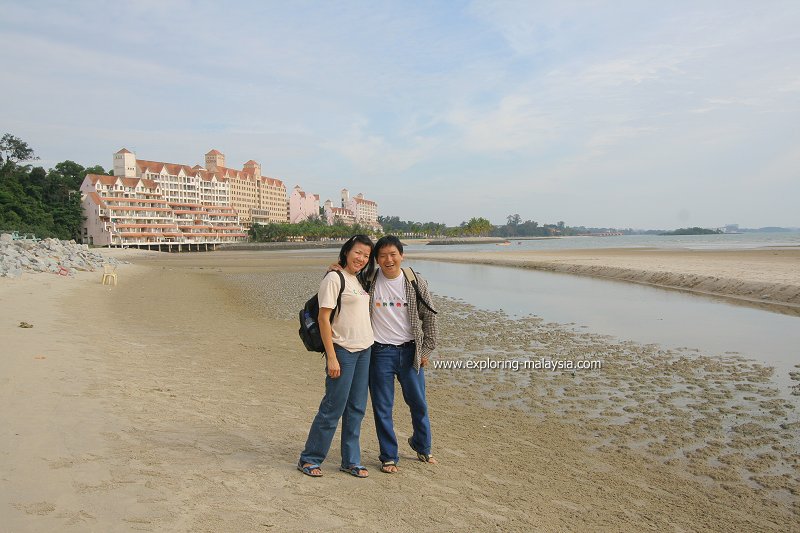 Tim and Chooi Yoke in Port Dickson (29 December, 2006)
References
- Britannica. "Negeri Sembilan."
- Seasia.co. "Negeri Sembilan and the Minangkabau: 5 Surprising Truths Most Malaysians Don't Know."
- ResearchGate. "Adat Perpatih in Malaysia: Nature, History, Practice, and Contemporary Issues."
- Grokipedia. "Negeri Sembilan."
- Britannica. "Negeri Sembilan: Geography and Economy."
- Lexis PD. "Getting To Know The Locals of Negeri Sembilan."
- Projek Travel. "Sejarah Awal Kesultanan Melayu Melaka & Kisah Parameswara."
- Grokipedia. "Seremban."
- Wikipedia. "Government of Negeri Sembilan."
- Wikipedia. "Muhriz of Negeri Sembilan."
- Wikipedia. "Menteri Besar of Negeri Sembilan."
- Wikipedia. "Negeri Sembilan State Legislative Assembly."
- The Edge Malaysia. "Rejuvenated Port Dickson banks on tourism and petroleum processing."
- Wikipedia. "Malaysia Vision Valley."
- M51 Avenue. "What Is Malaysia Vision Valley 2045 and Why It Matters for Negeri Sembilan."
- Malaysia Truly Asia. "A Window into Minangkabau Heritage & Negeri Sembilan History."
- Museum Volunteers, JMM. "The Minangkabau of Negeri Sembilan."
- Badan Warisan Malaysia. "Negeri Sembilan – Pentadbiran dan Adat Kini."
- Wanderlog. "Negeri Sembilan Trip Planner."
- The Star. "What to do and see in the charming Negri Sembilan."
Page Details
This page was created on 23 July 2026. Hi, my name is Timothy and created it from my research, for my own entertainment, knowledge and to satisfy my curiosity. I am providing the information to you in good faith and hope it is useful. I try to get the details as accurate as possible. I also try to update the page whenever I stumble on new details. So this and all my other pages are perpetual work in progress. If you discover any error, please politely inform me, pointing out where the error lies, and I will correct it as soon as possible. Your helpfulness will keep this page accurate, relevant and helpful to those who need the information.My Videos of Malaysia
 Latest Pages & Updates
Buy Me A Coffee
If you enjoy the information I provide and want to support the work I do, please buy me a coffee! I appreciate it immensely, thank you so much!
