
Lenggong Travel Guide
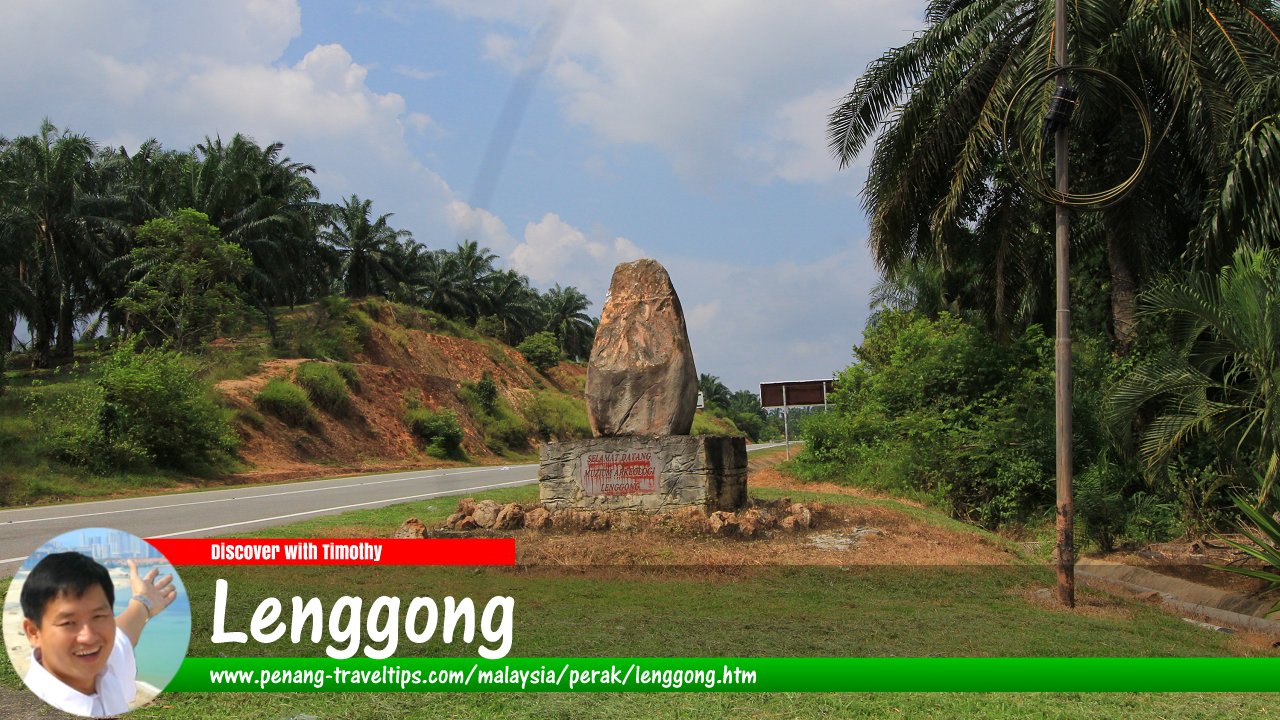 Lenggong Travel Guide (6 September 2015)
Also available: Panduan Melawat Lenggong
Lenggong Travel Guide provides an introduction to Lenggong, a small town and rural area in Hulu Perak, Perak. Lenggong is best known for the archaeological heritage of the Lenggong Valley, a UNESCO World Heritage Site containing evidence of human activity extending over a very long period of prehistory.
Beyond its archaeological importance, Lenggong is surrounded by limestone hills, caves, lakes, rivers, forests, traditional villages and agricultural land. The wider area is also recognised as the Lenggong UNESCO Global Geopark, making it a destination where archaeology, geology, biodiversity and local culture can be experienced together.
Quick Facts
- Name: Lenggong
- State: Perak
- District: Hulu Perak
- Type: Town, mukim and rural valley area
- Main attraction: Archaeological Heritage of the Lenggong Valley
- UNESCO status: World Heritage Site since 2012
- Other UNESCO designation: Lenggong UNESCO Global Geopark
- Famous archaeological discovery: Perak Man
- Natural attractions: Tasik Raban, Tasik Chenderoh, limestone hills, caves and waterfalls
- Major nearby towns: Kuala Kangsar and Gerik
- Main road: Federal Route 76, connecting Kuala Kangsar and Gerik
Where is Lenggong?
Lenggong is located in Hulu Perak in the northern part of Perak. The valley lies between the Bintang Range to the west and the Titiwangsa Range to the east.
The town is situated along the road between Kuala Kangsar and Gerik. Its position makes Lenggong a useful stopping point for travellers exploring northern Perak or travelling eastwards through Hulu Perak.
From Ipoh, Lenggong can generally be reached in around two hours by road, depending on the route and traffic conditions. Kuala Kangsar is closer, while Gerik lies farther north.
Although Lenggong is a rural area, it is surrounded by an unusually rich combination of limestone formations, rivers, lakes, forests, agricultural land and archaeological sites.
Lenggong Valley and UNESCO
The most important attraction in Lenggong is the Archaeological Heritage of the Lenggong Valley, which was inscribed on the UNESCO World Heritage List on 30 June 2012.
The World Heritage property consists of four archaeological areas arranged in two clusters. Together, they preserve evidence of human occupation in the Lenggong Valley spanning an exceptionally long period, from approximately 1.83 million years ago to about 1,700 years ago.
UNESCO considers Lenggong to contain one of the longest records of early human activity at a single location and one of the oldest such records outside Africa.
The archaeological evidence includes open-air sites and caves containing stone-tool workshops, habitation evidence, human burials and remains associated with different periods of prehistoric occupation.
The importance of Lenggong therefore extends well beyond Malaysia. It forms part of the archaeological record used to understand early human activity in Southeast Asia.
Perak Man
The best-known archaeological discovery in Lenggong is Perak Man, a prehistoric human skeleton discovered at Gua Gunung Runtuh in 1991.
Perak Man has been dated to approximately 10,120 years ago. The skeleton is particularly significant because of its relatively complete condition and the information it provides about prehistoric human life in Southeast Asia.
The burial provides evidence for prehistoric funerary practices and has allowed researchers to study aspects of the individual's physical condition and the society in which he lived.
Perak Man is now one of the central subjects used to explain the archaeological importance of the Lenggong Valley.
Lenggong Archaeological Gallery
Lenggong Archaeological Gallery at Kota Tampan is one of the best places to begin a visit to Lenggong. The gallery provides an introduction to the prehistoric archaeology of the valley before visitors explore the surrounding landscape.
The gallery displays archaeological materials and explains the development of prehistoric human activity in the Lenggong Valley. Exhibits include stone tools and information relating to the various archaeological sites in the area.
Visitors can also learn about Perak Man and the significance of the caves and open-air archaeological sites that form part of the UNESCO World Heritage property.
The gallery is located at Kota Tampan, roughly 100 kilometres north of Ipoh. The Department of National Heritage lists the gallery's telephone number as 05-7679700 / 703.
Tourism Perak has listed the gallery as operating from 8.00am to 5.00pm. Visitors should nevertheless check the latest operating arrangements before travelling, as opening hours and public-facility arrangements can change.
The Archaeological Sites of Lenggong
The Archaeological Heritage of the Lenggong Valley consists of four principal areas: Bukit Bunuh–Kota Tampan, Bukit Jawa, Bukit Kepala Gajah and Bukit Gua Harimau.
Bukit Bunuh
Bukit Bunuh is one of Lenggong's most important archaeological locations. It is associated with evidence of a meteorite impact approximately 1.83 million years ago.
The impact is believed to have altered the landscape and drainage patterns in the area. Archaeological research subsequently identified stone tools, including hand axes, in geological deposits associated with the ancient landscape.
Bukit Bunuh demonstrates the close relationship between archaeology and geology in Lenggong. Understanding the geological history of the valley helps researchers interpret the environment in which early humans lived.
Kota Tampan
Kota Tampan is another important prehistoric site. Archaeological investigations have found evidence of stone-tool production associated with Palaeolithic occupation.
The site is also significant because of its geological context. Layers associated with the enormous Toba volcanic eruption approximately 74,000 years ago have provided an important chronological and environmental reference for archaeological research in the region.
Bukit Jawa
Bukit Jawa is an open-air Palaeolithic archaeological site. Research has produced evidence of stone-tool production and prehistoric human activity.
The site is located near the Perak River system. Its position demonstrates the importance of river environments to prehistoric communities, which depended on water, food resources and natural routes through the landscape.
Bukit Kepala Gajah
Bukit Kepala Gajah is a limestone massif containing numerous caves. Several caves in the area have produced archaeological evidence, including Gua Gunung Runtuh, Gua Teluk Kelawar and Gua Kajang.
The caves preserve evidence from different periods of prehistoric occupation. Archaeological finds include human burials, stone tools, pottery fragments and animal remains.
Gua Gunung Runtuh
Gua Gunung Runtuh is the cave where Perak Man was discovered. It is located within the limestone landscape of Bukit Kepala Gajah.
Gua Gunung Runtuh should not be regarded simply as a recreational cave. It is an archaeological site of considerable scientific importance, and access arrangements may differ from those for caves developed for ordinary recreational tourism.
Gua Kajang
Gua Kajang is another important archaeological cave in the Bukit Kepala Gajah area. Research has identified evidence associated with prehistoric occupation from different periods, including stone tools, animal remains, shell material and pottery fragments.
Access to archaeological caves may require permission, a guide or other arrangements. Visitors should not enter restricted archaeological areas independently.
Lenggong UNESCO Global Geopark
Lenggong's importance is not limited to its World Heritage archaeological status. The wider area is also recognised as the Lenggong UNESCO Global Geopark.
The geopark covers a broad landscape containing rivers, lakes, limestone hills, granite formations, forests, agricultural areas and archaeological sites.
Important geological features include the Lawin Tuff, volcanic-related rocks, suevite associated with the ancient meteorite impact at Bukit Bunuh and geological evidence related to the Toba eruption.
The geopark approach brings together geology, archaeology, biodiversity and human culture. Agriculture, freshwater fisheries, local products, traditional villages and tourism are all part of the contemporary landscape.
Tasik Raban
Tasik Raban is one of the most accessible natural attractions around Lenggong. The lake lies north of Tasik Chenderoh and is surrounded by hills and rural settlements.
Tasik Raban is part of the reservoir system associated with the Chenderoh hydroelectric scheme. The construction of the Chenderoh Dam altered the valley landscape and created the lake environment seen today.
The lake provides opportunities for enjoying scenery, observing rural life and participating in water-based activities where these are available and permitted.
Dataran Tasik Raban
Dataran Tasik Raban is a recreational area beside the lake. It provides a place for visitors to stop, rest and enjoy views across the water.
The area can be a convenient place to visit after exploring the archaeological attractions of Lenggong, particularly in the late afternoon.
Boat Activities on Tasik Raban
Boat trips on Tasik Raban can provide a different perspective of the Lenggong landscape. From the water, visitors can see surrounding hills, villages and parts of the rural lakeside environment.
Availability depends on local operators and weather conditions. Visitors should obtain current information before travelling and follow the operator's safety instructions.
Tasik Chenderoh
Tasik Chenderoh is a large reservoir formed by the construction of Chenderoh Dam on the Perak River in the late 1920s.
The dam was one of the significant early hydroelectric projects in Perak and was constructed during the British colonial period. Its construction changed part of the river valley and created the lake environment that remains today.
Traditional villages and freshwater fishing activities can be found around the lake. Tasik Chenderoh also forms part of the geological and cultural landscape of Hulu Perak.
The Perak River
The Perak River has played an important role in shaping the Lenggong landscape. Many archaeological locations are situated near the river system and ancient river terraces.
For prehistoric communities, rivers provided water, food and natural routes through the landscape. For modern communities, the Perak River continues to support freshwater fishing and rural livelihoods.
Boat excursions on the river can provide another way of experiencing the Lenggong landscape. Such activities should be undertaken through appropriate local operators and according to river and weather conditions.
Lata Kekabu
Lata Kekabu is a waterfall and recreational area in Lenggong. The waterfall is situated in a forested environment and is among the natural attractions of Hulu Perak.
Lata Kekabu provides a contrast to Lenggong's archaeological attractions and allows visitors to experience the area's forest and freshwater environment.
Water levels and conditions can change rapidly following heavy rain. Visitors should follow safety signs and instructions from the authorities responsible for the recreation area.
Limestone Hills and Caves
The limestone landscape is one of the most distinctive physical features of Lenggong. Bukit Kepala Gajah in particular contains numerous caves and cavities formed through geological processes over very long periods.
These caves have different functions from a tourism perspective. Some are important archaeological sites, while others may have geological, ecological or recreational value.
Visitors should not assume that every cave is open for public entry. Some caves and archaeological locations require permits, guides or permission from the relevant authorities.
Traditional Villages
Lenggong is not simply an archaeological landscape preserved without inhabitants. The valley continues to contain villages where local communities live and work.
Traditional villages in the wider Lenggong area provide an opportunity to observe rural life in Hulu Perak. Agriculture, freshwater fishing and small-scale local activities remain part of the landscape.
Visitors can contribute to the local economy by using community-based accommodation, purchasing local products and engaging local guides or activity operators where appropriate.
Local Food in Lenggong
Lenggong has a food culture strongly associated with freshwater fish and traditional village produce.
Ikan Pekasam
Ikan pekasam is one of the foods most closely associated with Lenggong. Freshwater fish are preserved through fermentation using salt and toasted rice.
This traditional preservation method allows fish to be stored for longer periods while producing a distinctive sour, salty and fermented flavour.
Ikan pekasam can be purchased as a local food product and taken home if it is properly packaged and stored.
Kebebe
Kebebe is another traditional food associated with Lenggong. It is generally prepared using a mixture of fruits and other ingredients with sour, spicy and salty flavours.
Recipes vary between households and food producers. Visitors interested in traditional Hulu Perak cuisine can ask local restaurants or food sellers whether kebebe is available.
Freshwater Fish
Freshwater fish are an important part of the local food tradition. Depending on availability, restaurants may serve dishes such as grilled fish or other traditional preparations.
Travellers with food allergies should ask about ingredients and preparation methods, particularly when sauces, pastes or mixed ingredients are used.
Lenggong for Malaysian Travellers
Lenggong is suitable for a weekend trip from Ipoh, Kuala Lumpur, Penang, Kedah and other parts of northern Peninsular Malaysia.
Domestic travellers can combine historical attractions with outdoor activities. For example, the morning can be spent at the archaeological gallery, followed by lunch featuring local food and an afternoon at Tasik Raban or another recreational area.
Travellers with more time can explore the caves, villages, geopark landscapes and river environment with the assistance of local guides.
Lenggong for Foreign Travellers
Lenggong is particularly relevant to foreign travellers interested in archaeology and human history. Its UNESCO World Heritage status gives international context to a landscape that might otherwise appear to be a quiet rural part of Perak.
Foreign visitors can combine Lenggong with Kuala Kangsar, Gerik and Royal Belum in a longer northern Perak itinerary.
Because Lenggong is a rural destination, its tourism infrastructure is less extensive than that of Ipoh or Kuala Lumpur. Visitors should therefore plan transport, accommodation and guided activities in advance.
Lenggong for Families
Lenggong can be an educational destination for families with children. The Archaeological Gallery introduces young visitors to prehistoric human history, while the lakes, rivers and natural attractions provide opportunities for outdoor activities.
Children should be supervised closely near rivers, lakes, waterfalls and caves. They should not touch, remove or collect archaeological objects, fossils, bones, stones or other materials from protected sites.
For History and Archaeology Enthusiasts
Lenggong offers a different kind of historical experience from Malaysia's colonial-era heritage towns. Its history reaches far further into the past and is concerned primarily with human evolution, prehistoric technology, environmental change and early settlement.
A meaningful visit involves understanding the relationship between geology, rivers, caves, climate, food resources and human settlement. These elements help explain why the Lenggong Valley was repeatedly occupied by humans over such a long period.
Getting to Lenggong
By Car
Driving is the most practical way to explore Lenggong and the surrounding attractions.
Lenggong lies along Federal Route 76, which connects Kuala Kangsar with Gerik and the wider Hulu Perak region.
From Kuala Lumpur and Ipoh, travellers generally use the North-South Expressway before continuing towards Kuala Kangsar and then taking the road northwards towards Lenggong and Gerik.
From Penang and Kedah, Lenggong can be approached through northern Perak or southern Kedah before continuing into Hulu Perak.
By Public Transport
Public transport to Lenggong is more limited than in major cities. Travellers arriving by train can consider using Kuala Kangsar railway station as a gateway before continuing by bus, taxi, e-hailing service or pre-arranged private transport.
For an itinerary covering several archaeological sites and natural attractions, a private vehicle or pre-arranged transport is generally more convenient.
From Penang International Airport
For foreign travellers arriving by air, Penang International Airport can serve as a practical gateway to northern Perak. The journey continues through mainland Penang and towards the Kerian and Kuala Kangsar areas before heading into Hulu Perak.
A rental car is particularly useful for travellers who want to combine Lenggong with Kuala Kangsar, Gerik and other destinations in northern Perak.
Getting Around Lenggong
Lenggong is a rural area without an extensive urban public transport network. A private car, rental car or pre-arranged transport is therefore the most convenient way to move between attractions.
Cycling can be an enjoyable way to experience the rural landscape, particularly around villages and agricultural areas, but cyclists should be prepared for hot weather and share the roads carefully with motor vehicles.
Walking is practical for exploring parts of the town itself, but a vehicle is necessary for reaching many archaeological and natural attractions outside the town centre.
Where to Stay
Accommodation in Lenggong includes small hotels, chalets, resorts and village-based accommodation. The local authority and tourism operators provide information on accommodation options in the wider district.
Travellers who want a more rural experience can consider homestays or community-based accommodation where available.
Kuala Kangsar and larger towns elsewhere in Perak offer additional accommodation choices, although staying farther away means adding travel time to the Lenggong itinerary.
One-Day Itinerary
Morning: Start early and visit the Lenggong Archaeological Gallery at Kota Tampan.
Late morning: Explore archaeological-related locations where public access is available. Follow any permit, guide and access requirements.
Lunch: Have lunch in Lenggong and look for local dishes such as freshwater fish or ikan pekasam.
Afternoon: Continue to Tasik Raban and Dataran Tasik Raban to enjoy the lakeside scenery.
Late afternoon: Spend some time around the lake before beginning the journey home.
Two-Day Itinerary
Day 1: Concentrate on the archaeological heritage of Lenggong. Visit the Archaeological Gallery and learn about Kota Tampan, Bukit Bunuh and the other archaeological areas before exploring the surrounding landscape.
Day 2: Explore Tasik Raban, traditional villages, the Perak River and natural attractions such as Lata Kekabu. A cave visit can be included if the necessary access arrangements, permits and guide have been secured.
Travellers with a particular interest in geology can organise the second day around geopark locations, while nature enthusiasts can allocate more time to the lakes, rivers and forest areas.
Best Time to Visit
Lenggong can be visited throughout the year, but outdoor activities should take weather conditions into account. Heavy rain can make forest trails, caves and areas around waterfalls slippery or unsafe.
Early morning is generally comfortable for outdoor activities, while the middle of the day can be used for indoor attractions, food and rest. Late afternoon is suitable for spending time around the lakes.
Visitors planning cave exploration, hiking or boat activities should check weather and local conditions beforehand.
Practical Tips
- Use a private or rental car if you intend to visit several attractions.
- Check the latest opening hours of the Lenggong Archaeological Gallery before travelling.
- Arrange permits and guides in advance for caves or archaeological sites where access is controlled.
- Bring drinking water and sun protection for outdoor activities.
- Wear suitable footwear for caves, forest trails and uneven terrain.
- Never remove archaeological objects, stones, bones or other materials from protected sites.
- Do not touch, climb or damage archaeological remains.
- Exercise caution near rivers, lakes and waterfalls.
- Check weather conditions before participating in boating or other water activities.
- Carry some cash because some small rural businesses may not accept cashless payments.
- Ask permission before photographing residents or private activities.
Responsible Tourism
The value of Lenggong lies partly in the fact that its archaeological heritage remains within a living rural landscape. Visitors therefore have an important role in protecting archaeological sites, caves, forests, rivers and villages.
Do not leave rubbish, scratch cave walls or remove materials from archaeological locations. Do not use prehistoric remains or protected structures as places to sit or climb.
Using local guides, boat operators, homestays, restaurants and other community businesses can also help ensure that tourism contributes to the local economy.
Conclusion
Lenggong is one of Perak's most important destinations for understanding the early history of humans in Peninsular Malaysia. The Archaeological Heritage of the Lenggong Valley preserves an exceptionally long record of human activity, while the discovery of Perak Man provides a particularly important insight into prehistoric life in Southeast Asia.
Lenggong, however, is more than an archaeological destination. Tasik Raban, Tasik Chenderoh, the Perak River, limestone hills, caves, waterfalls, traditional villages and local foods such as ikan pekasam add natural and cultural dimensions to a visit.
For Malaysian travellers, Lenggong is well suited to a weekend journey combining history and nature. For foreign travellers, it provides an opportunity to experience a less urbanised part of Malaysia while exploring archaeological and geological heritage of international significance.
Map of Lenggong, Perak
Places and sights in Lenggong, Perak
- Lenggong Town (GPS: 5.12659, 100.96978)

- Bukit Jawa Paleolithic Site (GPS: 5.1287, 100.99242)

- Gua Badak (GPS: 5.152260, 100.986269)

- Gua Gunung Runtuh (GPS: 5.12659, 100.96978)

- Gua Kajang (GPS: 5.126505, 100.981365)

- Gua Teluk Kelawar (GPS: 5.121494, 100.977517)

- Lata Kekabu (GPS: 5.04137, 100.95112)

- Lata Perahu (GPS: 4.89779, 100.9024)

- Lenggong Archaeological Museum (GPS: 5.05431, 100.97404)

- Makam Tok Temong (GPS: 4.8607, 100.94739)

- Pasar Awam Lenggong (GPS: 5.10882, 100.96752)

- Pusat Lapangan Arkeologi USM (GPS: 5.05216, 100.96631)

Petrol Stations in Lenggong
- BHPetrol (GPS: 5.11164, 100.97021)

- Caltex (GPS: 5.11370, 100.97164)

- Petronas (GPS: 5.04154, 100.95098)

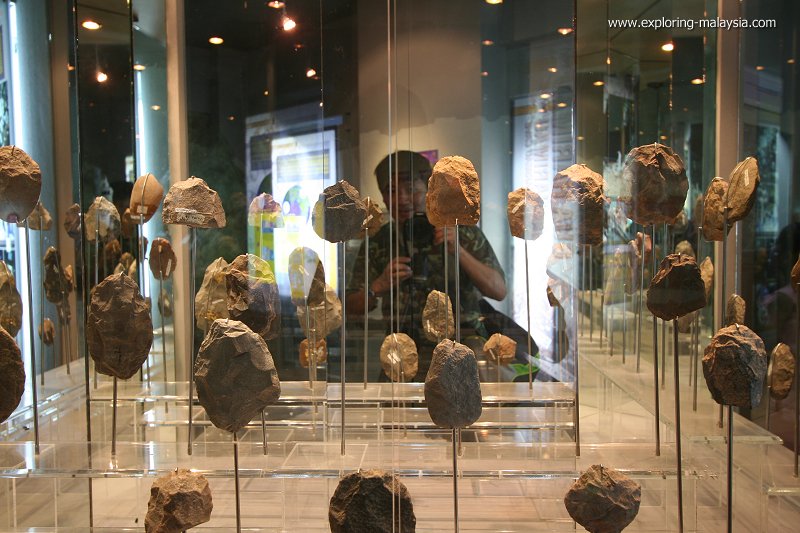 Flints at the Lenggong Archaeological Museum (4 February, 2006)
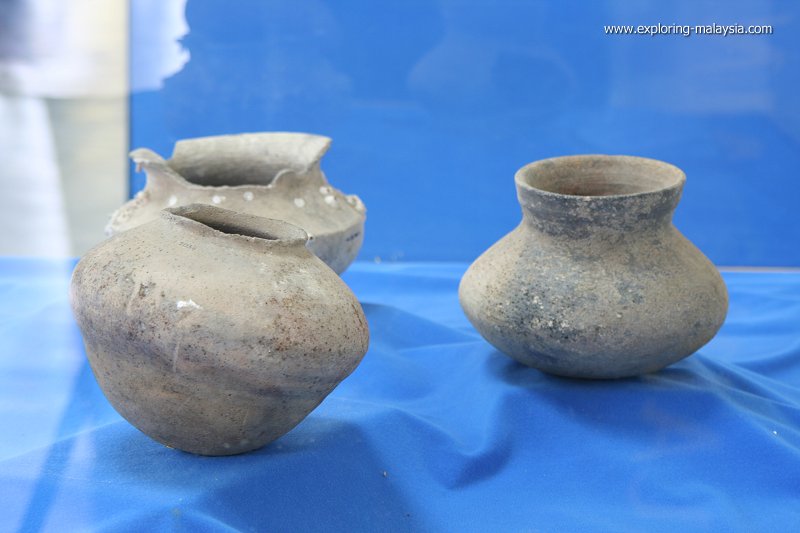 Earthenware at the Lenggong Archaeological Museum (4 February, 2006)
References
- UNESCO World Heritage Centre – Archaeological Heritage of the Lenggong Valley
- Department of National Heritage – Introduction to Lenggong Archaeology
- Department of National Heritage – Archaeological Heritage of the Lenggong Valley
- Department of National Heritage – Lenggong Archaeological Gallery
- Tourism Perak – Lenggong Valley
- Tourism Malaysia – Lenggong Valley
- Lenggong District Council – Tourist Attractions
- UNESCO – Lenggong UNESCO Global Geopark
- Tourism Malaysia – Lenggong Archaeological and Geopark Tourism
- Lenggong Geopark – About Us
Page Details
This page was created on 17 September 2026. Hi, my name is Timothy and created it from my research, for my own entertainment, knowledge and to satisfy my curiosity. I am providing the information to you in good faith and hope it is useful. I try to get the details as accurate as possible. I also try to update the page whenever I stumble on new details. So this and all my other pages are perpetual work in progress. If you discover any error, please politely inform me, pointing out where the error lies, and I will correct it as soon as possible. Your helpfulness will keep this page accurate, relevant and helpful to those who need the information.Buy Me A Coffee
If you enjoy the information I provide and want to support the work I do, please buy me a coffee! I appreciate it immensely, thank you so much!
