
Matang Travel Guide
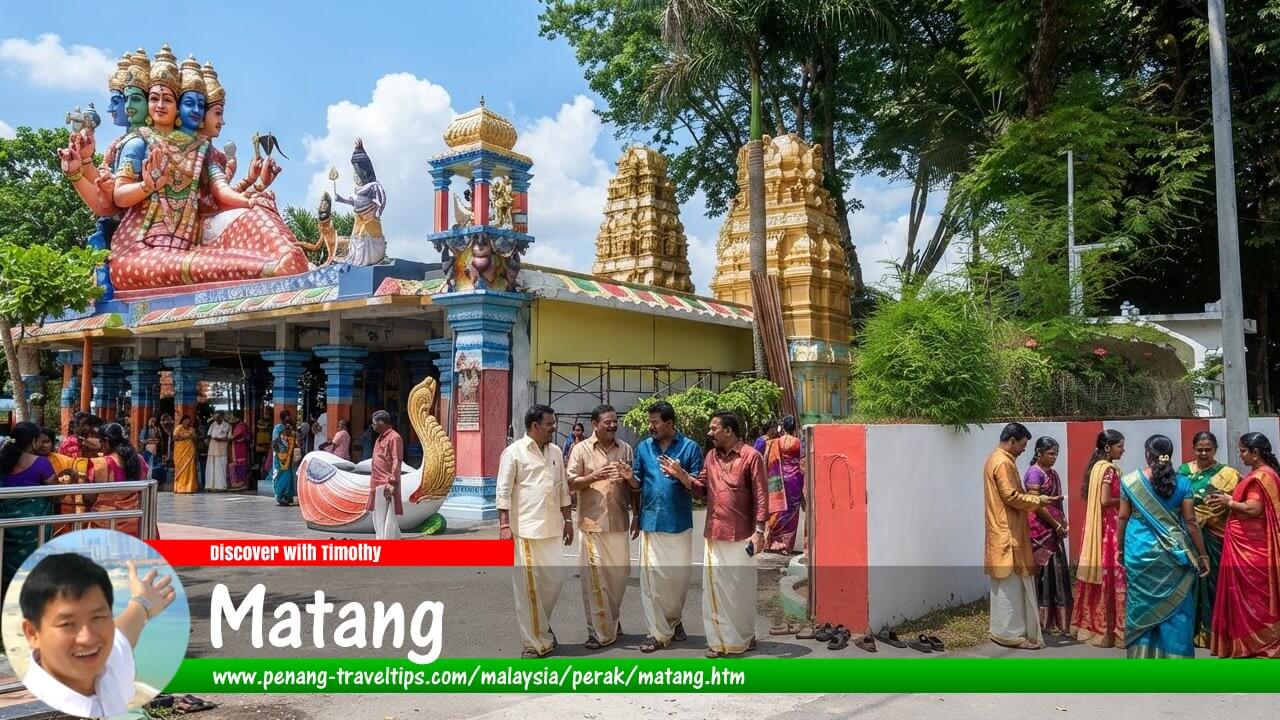 Matang Travel Guide (AI generated on 10 September 2026)
Also available: Panduan Melawat Matang
Matang is a historic locality in the Larut, Matang and Selama area of Perak, Malaysia. Located west of Taiping, it is closely associated with the history of Malay tin mining, the development of the Larut region and the legacy of Ngah Ibrahim, one of the most prominent Malay tin miners and administrators of 19th-century Perak.
Today, Matang is best known for its historical attractions and its proximity to the Matang Mangrove Forest Reserve and Kuala Sepetang. The area therefore offers an interesting combination of history, nature, traditional industries, fishing villages and coastal landscapes. It is particularly suitable for travellers who want to explore a quieter part of Perak beyond the better-known attractions of Taiping.
Quick Facts
Name: Matang
State: Perak
District: Larut, Matang and Selama
Mukim: Matang
Nearest major town: Taiping
Historical significance: Tin mining, Larut administration and Ngah Ibrahim
Main historical attraction: Matang Historical Complex / Matang Museum
Nature attraction: Matang Mangrove Forest Reserve
Nearby destination: Kuala Sepetang
Recommended duration: Half a day to one full day, or longer when combined with Kuala Sepetang and Taiping
Where Is Matang?
Matang is situated in the district of Larut, Matang and Selama in north-western Perak. It lies approximately 30 minutes by road from Taiping, making it practical to visit as a side trip from the city. The Matang Historical Complex is located at Matang, while the mangrove forest and Kuala Sepetang are farther west towards the coast.
The area occupies an important position between the inland tin-mining settlements of Larut and the coastal waterways leading towards the Straits of Malacca. This geographical position was particularly important during the 19th century, when tin was being transported from the interior to the coast.
The Meaning of Matang
The name Matang is understood to be a shortened form of Permatang. According to the Perak Land and Mines Office, the name is associated with embankments or raised structures constructed by earlier inhabitants to control water flowing into rice fields. Over time, Permatang became shortened to Matang.
The agricultural economy of the area originally included rice, sugar cane and coffee, together with forest products such as damar and rattan. The development of tin mining in Larut subsequently transformed the economic importance of the area.
History of Matang
The history of Matang is closely linked to Long Jaafar and his son, Ngah Ibrahim. Long Jaafar is associated with the opening of tin-mining operations in Larut in the 19th century. His activities contributed to the growth of the Larut mining economy and eventually to the emergence of Taiping.
Ngah Ibrahim inherited and expanded his family's interests. His residence and administrative centre at Matang became an important centre for the administration and commercial activities of Larut. The building that survives today as the Matang Historical Complex was not simply a private residence; it also served as a fort, administrative centre, tin store and trading centre.
The strategic position of Matang was important because it was connected to the coast through waterways. The nearby Pelabuhan Melawati served as a point for transporting agricultural produce, forest products and tin towards the Straits of Malacca.
The development of Matang therefore illustrates how the history of Perak's tin industry was connected not only to mines but also to rivers, roads, ports, agriculture and political administration.
Matang Historical Complex
The most important historical attraction in Matang is the Matang Historical Complex, also known as the Ngah Ibrahim Fort and formerly known as the Kota Ngah Ibrahim Historical Complex.
The complex was built by Ngah Ibrahim and functioned as his residence, a fortified structure and the administrative centre of Larut. The Department of Museums Malaysia states that the complex occupies about 0.8094 hectares and was constructed using stone-based materials.
After Ngah Ibrahim died in Singapore in 1895, the building came under British administration. Its subsequent uses illustrate the changing history of the area. It became the Matang Malay Teaching College from 1913 to 1922, and was subsequently used as a Malay school. During the Japanese occupation it served as a Japanese military headquarters. After the Second World War it returned to use as a school.
In 1985, the building was converted into a historical museum under the Department of Museums Malaysia. The building was subsequently gazetted as a heritage building under the National Heritage Act in 2009.
What to See at the Museum
The permanent exhibition documents the history of the building and the people associated with it. Exhibits cover the family of Long Jaafar, Ngah Ibrahim, British administration, the Japanese occupation, the Matang Malay Teaching College and the Malay school.
The museum is particularly worthwhile for visitors interested in the history of Perak, Malay political history and the development of the state's tin-mining industry.
The museum is currently listed as open daily from 9.00am to 5.00pm, with admission free of charge. It also has a Muslim prayer room, car park, library and guided-tour facilities. Opening arrangements should nevertheless be checked before travelling, especially during public holidays and festive periods.
Ngah Ibrahim and Malay Tin Mining
Ngah Ibrahim is an important figure in the history of Malay participation in Perak's tin industry. He inherited the interests established by Long Jaafar and became a wealthy and influential figure in Larut.
His wealth was derived not only from tin mining but also from agricultural activities and other commercial enterprises. His administrative position allowed him to play a significant role in the development of Matang and the surrounding area.
The Matang Historical Complex provides an opportunity to understand this period from a perspective that is sometimes overshadowed by accounts of British administration and Chinese mining communities. Malay rulers, chiefs and entrepreneurs also played significant roles in the development of the Larut mining economy.
Matang Mangrove Forest Reserve
For nature lovers, the Matang Mangrove Forest Reserve is one of the area's most important attractions. The reserve covers more than 40,000 hectares and is internationally recognised for its long-running system of sustainable mangrove management.
The forest is dominated by mangrove species such as Rhizophora apiculata, commonly known as bakau minyak, and Rhizophora mucronata, or bakau kurap. The mangrove ecosystem provides habitat for birds, fish, crustaceans and other wildlife.
The reserve is also an important location for migratory birds. Visitors can explore parts of the forest using wooden walkways that allow them to observe the mangrove environment without walking directly across the muddy forest floor.
Eco-Education
The Matang mangrove forest is more than a scenic attraction. It is also an important example of sustainable forest management and environmental education. Visitors can learn about the ecological functions of mangroves, including their role as breeding grounds for aquatic life and their importance in protecting coastal areas from erosion.
For foreign travellers, the reserve offers an opportunity to see a tropical mangrove ecosystem in a managed setting without having to travel to a remote island or national park.
Wildlife and Birdwatching
The mangrove environment supports a wide range of wildlife. Depending on the season and time of day, visitors may encounter birds, mudskippers, crabs, monkeys and other animals associated with coastal wetlands.
The wider Matang and Kuala Gula area is particularly important for migratory birds. Birdwatchers should bring binoculars and a telephoto lens if available, and should avoid making excessive noise.
Wildlife sightings are never guaranteed. Visitors should observe animals from a respectful distance and avoid feeding or disturbing them.
Kuala Sepetang
Kuala Sepetang is one of the most interesting places to combine with a visit to Matang. The former fishing and port settlement lies beside the mangrove forest and is known for its fishing community, seafood, river environment and traditional charcoal industry.
The village provides a useful connection between the natural and economic history of the Matang area. Mangrove timber has traditionally supported the local charcoal industry, while the surrounding estuaries continue to support fishing and aquaculture.
Traditional Charcoal Making
One of the most distinctive experiences around Kuala Sepetang is a visit to a traditional charcoal factory. Mangrove logs are placed inside large brick kilns and slowly heated to produce charcoal.
The process demonstrates how a forest product can become part of a traditional local industry. Guided visits can explain the preparation of the wood, the loading of the kilns, the controlled heating process and the removal of the finished charcoal.
The charcoal industry is also an example of why the management of the Matang mangrove forest has historically been closely connected with sustainable harvesting and replanting.
River and Mangrove Tours
Boat trips are available around Kuala Sepetang and the surrounding mangrove waterways. A river cruise can provide a different perspective of the forest, especially around the tidal channels and estuaries.
Some tours are designed around wildlife observation, while others combine mangrove exploration with visits to the charcoal factory and fishing village.
Evening boat trips can also be arranged in some parts of the wider area for firefly watching. The availability of tours depends on the operator, weather and river conditions.
Food in Matang and Kuala Sepetang
Food is another reason to include Kuala Sepetang in a Matang itinerary. The coastal environment means that seafood is prominent, while the surrounding villages offer a variety of local dishes.
One of the foods particularly associated with Kuala Sepetang is prawn noodles, commonly known as mee udang. Freshwater and marine seafood are also commonly featured in local cooking.
Travellers looking for halal food should ask about the ingredients and preparation methods of individual restaurants or stalls. Malay-owned stalls and restaurants are generally the easiest choice for Muslim visitors, but visitors should still confirm the status of a particular establishment when necessary.
Muslim Facilities
Matang and the surrounding villages have a substantial Malay population and several mosques and surau. The Matang Historical Complex itself also provides a Muslim prayer room for visitors.
Muslim travellers planning a full-day visit should nevertheless plan their prayer times because some nature attractions are located away from town centres. When joining a river or mangrove tour, it is useful to inform the operator in advance if the itinerary needs to accommodate prayer times.
Visitors should also dress appropriately when entering mosques and respect local customs in Malay villages.
Getting to Matang
From Taiping
Taiping is the most convenient base for visiting Matang. The Matang Historical Complex is approximately 30 minutes by road from Taiping. Visitors can drive, take a taxi or use an e-hailing service where available.
Public bus services also connect Taiping with the Kuala Sepetang area. The Department of Museums Malaysia lists Bus No. 77 from Taiping Bus Station towards Kuala Sepetang as one public-transport option for reaching the Matang Historical Complex.
By Train
Visitors arriving by ETS can travel to Taiping railway station and continue to Matang by taxi or e-hailing service. This makes Matang relatively accessible for travellers coming from Kuala Lumpur, Ipoh, Penang and other cities served by the railway network.
From Penang
Travellers from Penang can drive south through Seberang Perai and continue towards Taiping before turning west towards Matang and Kuala Sepetang. The journey is practical as a day trip, although spending a night in Taiping provides more time to explore the area.
From Kuala Lumpur
From Kuala Lumpur, the North-South Expressway provides the main road connection towards Taiping. From Taiping, continue towards Matang and Kuala Sepetang by road.
Getting Around
Matang is spread across a rural landscape, and the attractions are not concentrated in a single pedestrian district. A private car is therefore the most convenient option for independent travellers.
Travellers without their own vehicle can base themselves in Taiping and arrange taxis or e-hailing rides. For a full-day excursion, arranging transport for the entire itinerary may be more practical than relying on individual rides between attractions.
How Long Should You Spend in Matang?
A half-day is sufficient to visit the Matang Historical Complex and explore one or two nearby attractions. A full day is preferable if the itinerary includes the mangrove forest, Kuala Sepetang and a charcoal factory.
Travellers interested in birdwatching, photography or nature can spend longer in the area. Matang also works particularly well as part of a wider Taiping itinerary.
Suggested One-Day Matang Itinerary
- Start in Taiping after breakfast.
- Travel to the Matang Historical Complex.
- Explore the former Ngah Ibrahim Fort and museum.
- Continue towards Kuala Sepetang.
- Visit the Matang Mangrove Forest Reserve.
- Take a walk along the mangrove boardwalk.
- Have lunch featuring local seafood or mee udang.
- Visit a traditional charcoal factory.
- Explore Kuala Sepetang fishing village.
- Take an afternoon or evening river cruise if arranged in advance.
- Return to Taiping.
If a firefly cruise is planned, the itinerary should be adjusted so that the visitor remains in the area after sunset.
Matang for Local Travellers
For Malaysian travellers, Matang is an accessible destination for learning about an important part of Perak's history. The Matang Historical Complex is particularly valuable because it connects Malay history, tin mining, colonial administration, Japanese occupation and education in one location.
Families with school-age children can combine the museum with the mangrove forest to create an educational excursion covering both history and environmental science.
Matang for Foreign Travellers
Foreign visitors may find Matang especially interesting because it presents several aspects of Malaysia that are not always encountered in major tourist cities. The area combines Malay political history, Chinese-influenced tin-mining history, traditional industries, fishing communities and tropical mangrove ecology.
A visit to Matang can therefore be combined with Taiping to create a broader introduction to northern Perak's colonial, environmental and industrial heritage.
Best Time to Visit
Matang can be visited throughout the year, but outdoor activities are most enjoyable during periods of suitable weather. Rain can make boardwalks and other outdoor areas slippery, while heavy rain may affect boat tours.
Early morning is a good time for nature observation because temperatures are generally cooler and wildlife may be more active. Birdwatchers should check seasonal migration patterns if particular species are their main interest.
For visitors hoping to take a firefly cruise, the activity naturally takes place after sunset and should be arranged with a local operator in advance.
Practical Tips
- Wear comfortable walking shoes for the mangrove forest and historical sites.
- Bring drinking water, especially when walking outdoors.
- Use insect repellent when visiting mangrove and wetland areas.
- Bring binoculars if birdwatching is a priority.
- Protect cameras and phones from rain and water during boat trips.
- Check the weather before booking a river cruise.
- Confirm museum and attraction opening hours before travelling.
- Arrange boat trips and specialist tours in advance where possible.
- Do not feed or disturb wildlife.
- Do not damage mangrove trees or remove plants, shells or other natural material.
- Dress respectfully when visiting mosques and local communities.
Nearby Attractions
Matang is particularly useful as part of a wider trip around Taiping and Larut, Matang and Selama. Nearby attractions include:
- Taiping Lake Gardens – a historic public garden and one of Taiping's best-known attractions.
- Perak Museum – Malaysia's oldest museum, founded in Taiping in 1883.
- Bukit Larut – a hill station and forested highland overlooking Taiping.
- Kuala Sepetang – a coastal fishing settlement beside the Matang mangrove forest.
- Kuala Gula Bird Sanctuary – an important wetland area for migratory birds.
- Kampung Dew Fireflies – an evening nature attraction in the wider Matang area.
The official Perak tourism guide groups Matang Museum, the Matang Forest Eco-Education Centre, the charcoal factory, Taiping Lake Gardens and other attractions within the wider Taiping, Larut, Matang and Selama tourism area.
Why Visit Matang?
Matang is worth visiting because it offers an unusual combination of historical and natural attractions within a relatively small area. Its history is closely tied to the rise of Larut as one of the great tin-producing regions of 19th-century Malaya, while its mangrove forest represents a very different aspect of Perak's landscape.
The Matang Historical Complex provides the historical starting point, while Kuala Sepetang and the mangrove forest provide an introduction to the coastal environment and traditional industries. Together, they make Matang a useful destination for travellers interested in heritage, nature and local communities.
Conclusion
Matang is a rewarding destination for travellers who want to look beyond the main attractions of Taiping. Its historical importance comes from the role it played in the development of Larut and the career of Ngah Ibrahim, while its modern tourism appeal comes from the Matang Mangrove Forest Reserve and the nearby village of Kuala Sepetang.
A visit to Matang can therefore combine a museum and heritage site with mangrove walks, wildlife observation, traditional charcoal making, seafood and river excursions. For visitors staying in Taiping, it is an especially convenient excursion, while for travellers exploring northern Perak, Matang provides an opportunity to understand how the state's history, rivers, forests and coastal communities are interconnected.
Map of Matang, Perak
Places of Interest in Matang
- Captain Speedy's Bungalow (GPS: 4.81354, 100.67539)

- Kota Ngah Ibrahim (GPS: 4.81237, 100.67551)

- Matang Mangrove Forest Reserve (GPS: 4.83984, 100.63498)

Categories of sights in Matang
References
- Department of Museums Malaysia – Matang Historical Complex
- Department of Museums Malaysia – Matang Museum
- Pejabat Pengarah Tanah dan Galian Negeri Perak – Mukim Matang
- Tourism Perak – Matang Mangrove Forest Reserve
- Tourism Malaysia – Discover Mangrove Forests in Malaysia
- Tourism Malaysia – Perak's Top Activities
- Tourism Perak – Tin Mining Trail at the Land of Grace
- Tourism Malaysia – Malaysia Travel Guide: Perak
- Tourism Malaysia – Birdwatching Paradise: Perak
Page Details
This page was created on 15 September 2026. Hi, my name is Timothy and created it from my research, for my own entertainment, knowledge and to satisfy my curiosity. I am providing the information to you in good faith and hope it is useful. I try to get the details as accurate as possible. I also try to update the page whenever I stumble on new details. So this and all my other pages are perpetual work in progress. If you discover any error, please politely inform me, pointing out where the error lies, and I will correct it as soon as possible. Your helpfulness will keep this page accurate, relevant and helpful to those who need the information.Buy Me A Coffee
If you enjoy the information I provide and want to support the work I do, please buy me a coffee! I appreciate it immensely, thank you so much!
