
Port Klang Travel Guide
Port Klang is Malaysia’s principal port town and one of Southeast Asia’s busiest maritime gateways. Located about 38 km southwest of Kuala Lumpur, it lies within the Klang District of Selangor. The town serves as the main maritime and logistics hub for the nation, housing three major port facilities — Northport, Westports, and Southpoint — all of which handle vast volumes of cargo and passenger traffic each year. 1
Quick Facts
- Located 38 km from Kuala Lumpur, within the Klang District.
- Malaysia’s largest and busiest port, managed by the Port Klang Authority (PKA).
- Consists of three main terminals: Northport, Westports, and Southpoint.
- Connected to Klang and Kuala Lumpur via the Federal Highway and Shah Alam Expressway (KESAS, E5).
- Served by the KTM Komuter Port Klang Line.
History and How the Town Was Established
Port Klang was originally known as Port Swettenham, founded in 1901 during the British colonial era as a new deep-water port to replace the silting Klang River port. Named after then British Resident Sir Frank Swettenham, the port quickly became a vital trading post for tin, rubber, and other commodities. 2
Port Klang is located about 6 kilometers to the southwest of Klang town, and 38 kilometers from Kuala Lumpur. The development of Port Klang was initiated by Sir Frank Swettenham, the British Resident of Selangor who administered the state from September 1882 until 1 July, 1896, when it was promoted to be the first Resident General of the Federated Malay States. He received a knighthood from Queen Victoria in 1897.
The railway track from Kuala Lumpur to Klang, completed in September 1886, was extended to the estuary of the Klang River, at the initiation of Frank Swettenham. Here, a port was developed. 15 years later, in 1901, the port was named Port Swettenham in his honour. On 1 July 1963, the Port Swettenham Authority was established. Some years later, Port Swettenham was renamed Port Klang. Today the port at Port Klang comprises Northport, Southpoint and Westport.
After independence, the port was renamed Port Klang in 1972 to reflect its Malaysian identity. The expansion of port facilities in the late 20th century, including Northport and Westports, positioned it as one of the world’s top container ports. 3
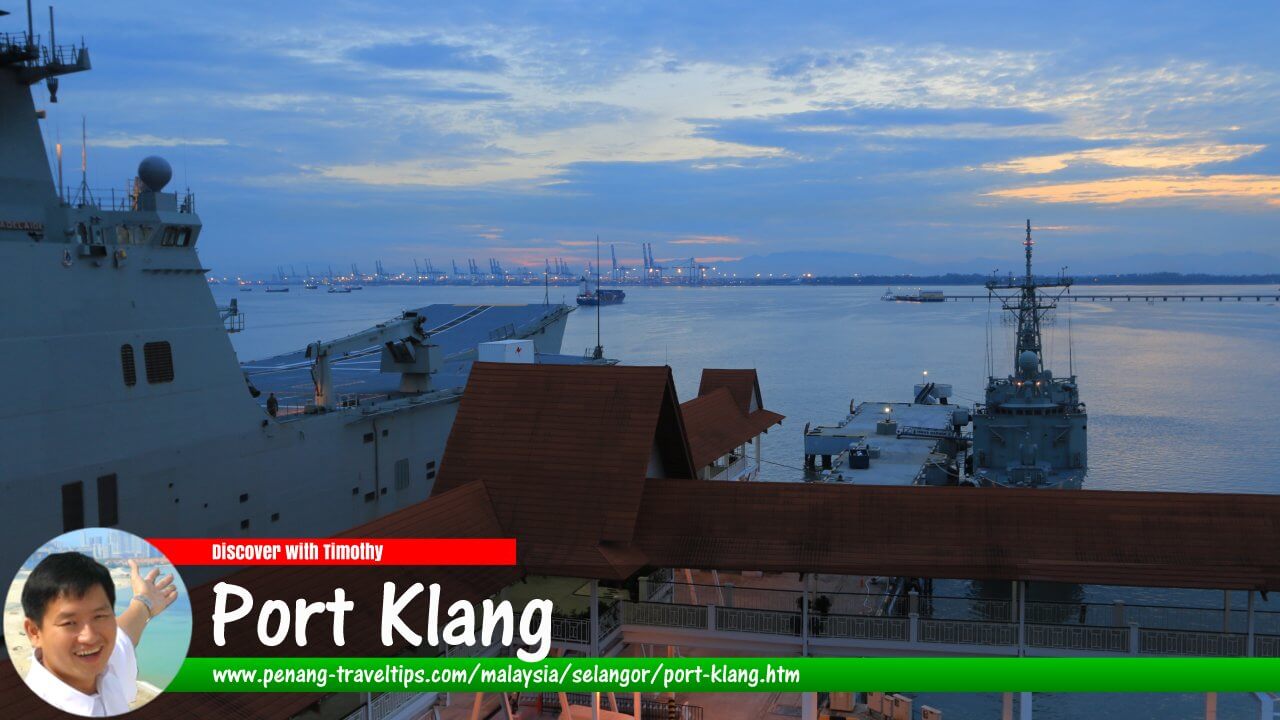 View of Port Klang, from the Boustead Cruise Centre towards Northport. (1 October, 2017)
Characteristic of the Town
Port Klang is an industrial and maritime town characterised by a blend of port operations, residential settlements, and commercial activity. It functions primarily as a working port community, with many residents employed in logistics, shipping, warehousing, and support services. 4
Neighbourhoods such as Pandamaran and Taman Perindustrian Pulau Indah are integral to the port economy. Meanwhile, local markets, seafood restaurants, and ferry terminals give the town a lively coastal identity. 5
Real Estate and Property Market There
The property market in Port Klang is dominated by industrial and commercial properties that cater to shipping and logistics. Residential areas mostly comprise affordable housing and older landed properties, particularly around Pandamaran and Taman Selatan. 6
While the town itself sees limited high-end residential development, nearby areas like Klang and Bandar Botanic offer more modern options for professionals working in the port sector. 7
Accessibility and Transportation
Port Klang is well connected by road and rail. The Federal Highway and Shah Alam Expressway (KESAS, E5) provide direct access from Klang and Kuala Lumpur. It is also served by the KTM Komuter Port Klang Line, which terminates at the Port Klang station. 8
The town’s close proximity to the South Klang Valley Expressway (SKVE, E26) and New Klang Valley Expressway (NKVE, E1) ensures good connectivity to the wider Klang Valley region and industrial hubs on Pulau Indah. 9
How to reach Port Klang
Take the Federal Highway (Federal Route 2) from Kuala Lumpur westwards until its end. Just continue driving on and you will eventually arrive at Port Klang. See direction on map from the end of the Federal Highway to Port Klang.
Landmarks and Places of Interest
- Port Klang Cruise Terminal – gateway for international cruise ships and ferry services to nearby islands.
- Westports and Northport – the two major container terminals forming Malaysia’s main maritime gateway.
- Royal Selangor Yacht Club – one of Malaysia’s oldest yacht clubs, established in 1969.
- Ferry Terminal to Pulau Ketam – offering boat services to the fishing island of Pulau Ketam.
- Port Klang Free Zone (PKFZ) – a major logistics and commercial zone on Pulau Indah.
Fun Fact
Port Klang handles over 13 million TEUs (twenty-foot equivalent units) of container cargo annually, ranking it among the top 15 busiest ports in the world. It is also a major hub for transshipment within the ASEAN region. 10
Map of Port Klang, Selangor
Sights in Port Klang (inc. Pandamaran)
- Boustead Cruise Terminal (GPS: 2.98434, 101.33712)

- Masjid Kampung Raja Uda (GPS: 3.01765, 101.41289)

- Port Klang Golf Resort (GPS: 3.00523, 101.366)

- Restoran Sri Choon Keng Seafood (GPS: 3.01019, 101.41714)

Categories of sights in Port Klang
Port Klang is  on the Map of Towns in Selangor
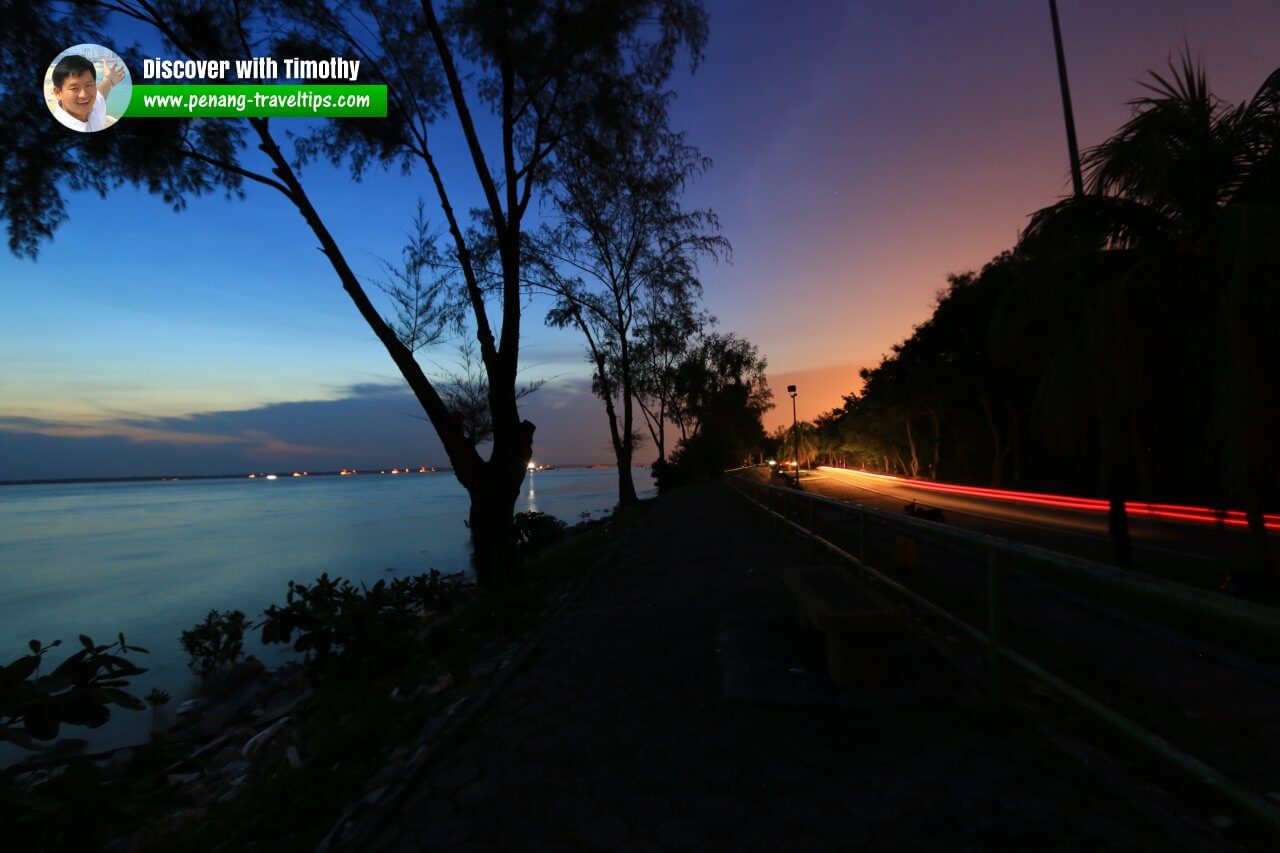 Lingkaran Sultan Hishamuddin in Port Klang at dusk (7 July, 2016)
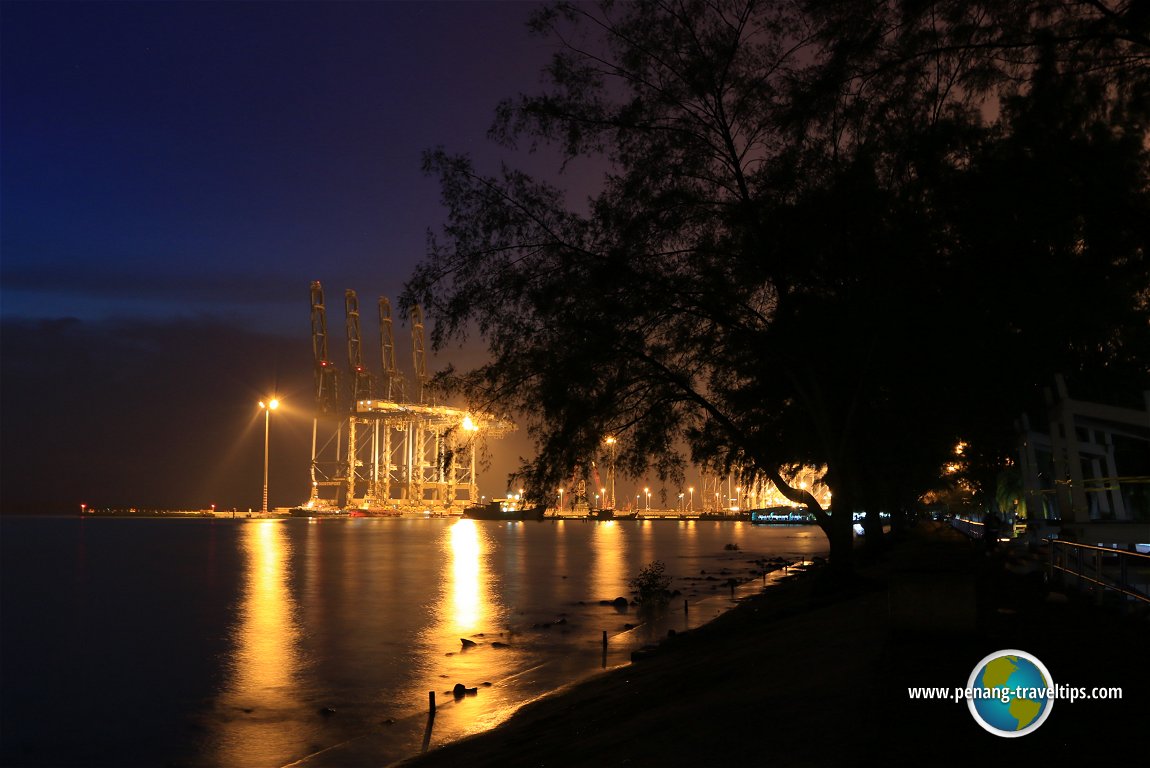 View of the cranes of the Northport Container Terminal at Port Klang, Selangor (7 July, 2016)
References
- Wikipedia – Port Klang
- Port Klang Authority (PKA) – Official Website
- Westports Malaysia – Official Website
- Northport (Malaysia) Bhd – Official Website
- EdgeProp – Port Klang Property Overview
- The Star – Port Klang: Then and Now
- Tourism Selangor – Port Klang
Page Details
This page was created on 16 October 2025. Hi, my name is Timothy and created it from my research, for my own entertainment, knowledge and to satisfy my curiosity. I am providing the information to you in good faith and hope it is useful. I try to get the details as accurate as possible. I also try to update the page whenever I stumble on new details. So this and all my other pages are perpetual work in progress. If you discover any error, please politely inform me, pointing out where the error lies, and I will correct it as soon as possible. Your helpfulness will keep this page accurate, relevant and helpful to those who need the information.List of Towns in Selangor
Living in Selangor
 Latest Pages & Updates
Buy Me A Coffee
If you enjoy the information I provide and want to support the work I do, please buy me a coffee! I appreciate it immensely, thank you so much!
