
The Anglican Faith: A Visitor's Guide to the Church of England
The Church of England: Official Religion of the United Kingdom
The Anglican faith, also known as the Church of England, is considered the official state religion of the United Kingdom. It is unique in that it is a Christian denomination established by law, and the reigning monarch—currently King Charles III—is its Supreme Governor. This gives the Church of England a formal role in national life, including representation in the House of Lords by bishops.
Anglicanism in Modern London
Although the Church of England is the established church, it’s true that the majority of Londoners do not attend church regularly. However, many still identify culturally or nominally as Anglican. London is a religiously diverse city today, with thriving communities of various faiths. Yet Anglican churches remain prominent landmarks and places of national ceremony and reflection.
A Brief History of the Anglican Faith
The Anglican faith originated in the 16th century during the English Reformation. King Henry VIII famously broke away from the Roman Catholic Church in 1534 when Pope Clement VII refused to annul his marriage to Catherine of Aragon. This led to the establishment of the Church of England, with the monarch as its head.
Though Anglicanism has Protestant roots, it maintains many traditions that echo Roman Catholicism. Over time, it developed its own identity and theological positions, shaped by figures like Thomas Cranmer and the creation of the Book of Common Prayer.
Is Anglicanism Protestant?
Yes, the Anglican faith is generally classified as part of Protestant Christianity. However, it occupies a unique space known as the "middle way" or via media—between Roman Catholicism and more radical forms of Protestantism. It retains many liturgical elements and traditions found in Catholic practice, while affirming key Protestant principles like salvation by faith and the authority of Scripture.
From Catholic Roots: A Splinter or a Reformation?
Anglicanism can be seen as a splinter from the Roman Catholic Church, but it was also a political and theological reformation. It maintained apostolic succession and many traditional practices, yet rejected the Pope’s authority. In this way, it is both a continuation and a divergence from medieval Catholicism.
Key Differences and Similarities: Anglican vs. Roman Catholic
Here are a few differences between Anglicanism and Roman Catholicism:
- The Anglican Church rejects the Pope’s authority; the Roman Catholic Church sees the Pope as infallible in matters of doctrine.
- Anglican clergy may marry; Catholic priests take a vow of celibacy.
- Anglicans use the Book of Common Prayer; Catholics use the Roman Missal.
However, there are also similarities:
- Both recognise the sacraments of Baptism and Eucharist (Holy Communion).
- Both value tradition, liturgy, and the creeds of early Christianity.
- Both celebrate major festivals like Christmas and Easter with similar liturgical forms.
Historical Tensions with Roman Catholics
For centuries, there was considerable animosity and legal restriction against Roman Catholics in England. After the Reformation, Catholic worship was outlawed, and Catholics faced discrimination in public life. These restrictions eased only in the 19th century, with the Catholic Emancipation Act of 1829. It was only then that Roman Catholic churches could once again be openly established in London.
Westminster Abbey: Is It a Church or an Abbey?
Westminster Abbey is a working church, though it is historically classified as a “royal peculiar”, meaning it is directly responsible to the monarch rather than a bishop. While "abbey" traditionally refers to a monastery led by an abbot or abbess, Westminster Abbey functioned as such until the Reformation. Today, it operates as a grand Anglican church and the site of coronations, royal weddings, and national memorial services.
St Paul's Cathedral and Other Anglican Churches in London
St Paul's Cathedral is the seat of the Bishop of London and one of the most iconic Anglican churches in the country. Designed by Sir Christopher Wren after the Great Fire of London in 1666, it remains a symbol of national identity and spiritual resilience.
London is divided into Anglican parishes, each typically centred around a parish church. These churches serve as local places of worship and community gathering. Each parish church is led by a priest (also called a vicar or rector). The Bishop of London, one of the senior figures in the Church of England, oversees the Diocese of London and is based at St Paul's Cathedral.
Leadership in the Anglican Church
The Church of England is headed spiritually by the Archbishop of Canterbury, who resides at Lambeth Palace in London. He is considered the symbolic head of the global Anglican Communion, which includes churches in countries like Canada, Australia, Nigeria, and the United States (known there as the Episcopal Church).
A Global Communion
Though rooted in England, the Anglican Church is part of a worldwide communion of over 85 million people. Each national church is autonomous but shares a common heritage. Visitors to London from places like Kenya, the Philippines, or New Zealand may find familiarity in the liturgy and structure of services at Anglican churches here.
Fun Fact: Anglicanism's Royal Connection
Every English monarch since the 16th century has been crowned at Westminster Abbey—an Anglican church—using a Christian ceremony that includes anointing with holy oil. Even today, royal weddings and funerals often take place in historic Anglican settings, offering tourists a glimpse into centuries of tradition.
Why Visit Anglican Sites in London?
Anglican landmarks like Westminster Abbey and St Paul's Cathedral offer much more than religious services. They are cultural, historical, and architectural treasures. Visitors may:
- Attend Evensong services with choral music
- Explore royal tombs and memorials
- Climb domes and towers for panoramic views
- Learn about British history through guided tours
Whether you’re a person of faith, a history enthusiast, or simply a curious traveler, these Anglican sites are integral to understanding London’s identity.
Quick Facts: The Anglican Faith in London
- Official Religion: Yes – the Church of England is the established church of the UK.
- Founded: 1534 by King Henry VIII during the English Reformation.
- Religious Identity: Most Londoners don’t attend church weekly, but many still identify as Anglican.
- Classification: Protestant Christianity, with some Catholic traditions retained.
- Main London Landmarks: Westminster Abbey, St Paul's Cathedral.
- Leadership: Archbishop of Canterbury (based at Lambeth Palace); Bishop of London (based at St Paul's Cathedral).
- Global Reach: Over 85 million adherents in the Anglican Communion worldwide.
- Historic Restrictions: Roman Catholics faced legal discrimination until 1829.
- Fun Fact: Every English monarch has been crowned in an Anglican ceremony at Westminster Abbey.
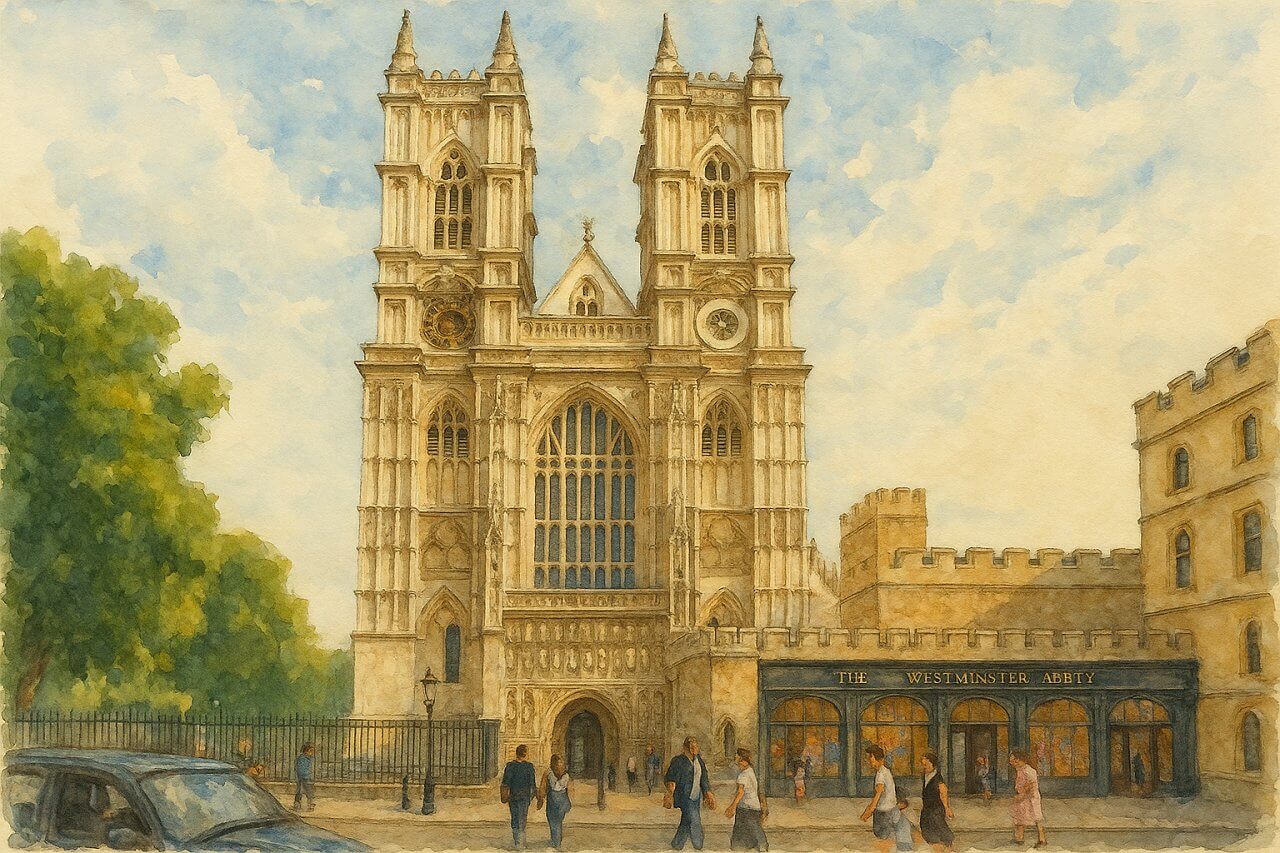
Painting of The Anglican Faith: A Visitor's Guide to the Church of England (View image in full size)
Page Details
This page was created/modified on 10 May 2025. Hi, my name is Timothy and created it from my research, for my own entertainment, knowledge and to satisfy my curiosity. I am providing the information to you in good faith and hope it is useful. I try to get the details as accurate as possible. I also try to update the page whenever I stumble on new details. So this and all my other pages are perpetual work in progress. If you discover any error, please politely inform me, pointing out where the error lies, and I will correct it as soon as possible. Your helpfulness will keep this page accurate, relevant and helpful to those who need the information.Want to share your London travel experiences or get tips from fellow travellers?
Join the London Travel Tips Facebook GroupMore information for visiting London
Here are some related articles to help you get to know London better.- Cost of Living in London: Discover the true cost of living in London, including housing, transport, groceries, and more - plus tips for budgeting in one of the world's most expensive cities.
- Driving in London: Planning to drive in London? Learn about roads, car rentals, parking, tolls, and key tips for tourists and visitors from outside the capital.
- Driving Tips for Visiting London: Thinking of driving to London? Discover the best times to travel, congestion tips, parking apps, breakdown help, and petrol advice for a smoother journey.
- Evolution of London's Streets: Discover the fascinating history of how London's streets developed from ancient footpaths to today's complex network of roads across the capital.
- History of Immigration to London: Discover the rich history of immigration to London, from Huguenots to Bangladeshis, and how diverse communities have shaped the city's vibrant identity.
- How Big Is London Compared to Other World Cities?
- How London's Streets Measure Up: A Global Comparison of Road Widths
- How Streets of London are Named: Discover how London streets get their names, who decides them, and how historic, political, and public influences shape street naming in the capital.
- How the Grosvenor Family Came to Own Much of Mayfair, Belgravia and Pimlico: Explore how the Grosvenor family came to own much of Mayfair, Belgravia, and Pimlico, and learn about their historical connection (or lack thereof) with the British royal family and government.
- Living and working in London
- London's Quiet Collapse: How Living Standards Fell as Costs Skyrockted (1975-2025): Explore how London residents endured rising costs and falling living standards from 1975 to 2025 - from rocketing rents to wage stagnation and inflation.
- Marvel of the London Underground: Discover the history, challenges, and triumphs of the London Underground - the world's first underground railway and a vital transport lifeline for the UK capital since 1863.
- Moving to London: Expat Tips for Settling in Westminster: Essential advice for expats moving to London's Westminster: neighborhood insights, cost of living, transportation, housing, healthcare, schools, and tips to help you feel at home in the heart of the city.
- Places in London that aren't pronounced the way they're spelled
- Shopping in London: Discover London's diverse shopping scene
- Taking the bus in London: This is your complete guide to taking the bus when in London.
- The Anglican Faith: A Visitor's Guide to the Church of England: Learn about the Anglican faith and its deep ties to London's landmarks like Westminster Abbey and St Paul's Cathedral.
- Top 10 London Streets Every Visitor Must See: Discover London through its most iconic thoroughfares - 10 streets every visitor must experience. From historic Abbey Road to vibrant Camden High Street, explore culture, shopping, and hidden gems.
- Why are most roads in Central London so narrow? Learn why there are so few multi-lane roads and elevated highways in the heart of the city.
 Latest Pages & Updates
Buy Me A Coffee
If you enjoy the information I provide and want to support the work I do, please buy me a coffee! I appreciate it immensely, thank you so much!
