
The Marvel of the London Underground
An Ingrained Part of London Life
The London Underground is so seamlessly woven into the fabric of the city that many Londoners barely give it a second thought. It has simply always been there—for them, for their parents, and for their grandparents. The "Tube," as it's affectionately known, is more than just a transport network; it's part of the city’s identity. Yet beneath the daily frustrations over delays, signal failures, and the occasional grimy station lies a story of extraordinary ambition and engineering brilliance.More Than a Century of Underground Rail
The London Underground has been operating for over 160 years. Its long history makes it not only the world’s oldest underground railway system, but also one of the most iconic. When the first line opened in 1863, much of the world had not even begun to build railways above ground. In fact, many countries had not yet entered the age of industrialisation.A Pioneering Vision in the 19th Century
To appreciate just how revolutionary the London Underground was, one must consider the technological landscape of the 19th century. The notion of running trains below street level was as audacious as it was innovative. At the time, electricity was not in commercial use, so the earliest trains ran on coal-fired steam locomotives.This presented a formidable engineering challenge. The Metropolitan Railway—the world's first underground passenger railway—began operating between Paddington (then called Bishop's Road) and Farringdon in January 1863. It was built using the cut-and-cover method, which involved digging a trench along the street, laying the tracks, and then covering it over.
Steam Underground: A Hazardous Start
Running steam trains in confined tunnels was no easy feat. The underground environment trapped smoke and exhaust, creating a stifling and dangerous atmosphere. Early commuters often emerged from journeys soot-streaked and gasping for fresh air. Engineers attempted to ventilate tunnels using chimneys placed along the route, but these proved only partially effective.Despite these limitations, the system worked well enough to capture public imagination and demand, leading to rapid expansion. The success of the Metropolitan Railway led to the development of other lines, eventually linking up to form a growing network.
Older Than Cars, Buses, and Motorbikes
One surprising fact that many Londoners forget is that the Underground predates the widespread use of motor vehicles. When the Tube began service, horses were still the primary mode of transport above ground. The Underground therefore didn’t just supplement the existing transport system—it helped shape it. London's urban development patterns were influenced by the reach of its growing rail lines, paving the way for suburban expansion.Setting a Global Example
The success of the London Underground inspired other great cities to follow suit. The Paris Métro opened in 1900, and the New York City Subway began operation in 1904. These systems took cues from London's pioneering example, though each developed its own distinct identity and approach to underground rail.The Golden Era of Expansion
Most of the London Underground's core network was established in the late 19th and early 20th centuries. Lines like the District, Circle, Northern, Bakerloo, and Piccadilly were added in quick succession. The introduction of electric trains in the early 1900s allowed deeper tunnels to be dug and operated safely—giving rise to the so-called “deep-level tube lines” such as the Central and Jubilee lines.From the 1920s through to the 1940s, the Tube expanded rapidly. Many of the stations built during this era, particularly under the guidance of architect Charles Holden, are celebrated for their distinctive modernist design.
Slowing Down in the Modern Era
In contrast to its earlier pace, the development of the London Underground slowed dramatically by the 21st century. Several factors contributed to this. One is the sheer complexity and cost of building underground in a densely built-up and historically rich city like London. Tunnelling through centuries of infrastructure, utilities, and archaeological layers is a logistical challenge and financial burden.Another reason is shifting political and funding priorities. While some major projects, such as the Jubilee Line Extension (1999) and the Elizabeth line (2022), have made headlines, these are exceptions rather than the rule. Continued investment is needed to maintain and upgrade the network, and expansion often takes a backseat to renovation and safety improvements.
North-South Disparity
One of the most curious aspects of the Underground’s layout is its heavy concentration in North London. Of the system’s 273 stations, only 33 are located south of the River Thames. This uneven development is the result of historical and geological factors.In the early days, London’s wealthier and more densely populated areas were to the north. The soil to the north of the Thames is also generally more suitable for tunnelling. South London, by contrast, was served more heavily by surface-level railways. As a result, the Tube developed more fully in the north, and to this day, Southern Boroughs remain less connected via Underground services.
Comparing Global Transit Systems
While London pioneered the concept of the underground railway, other cities have since built larger and often more modern systems. In terms of number of stations, New York City holds the record, with more than 470. The Paris Métro has denser station spacing and often better accessibility in its central zones.Still, London’s network is vast, with 11 lines serving 273 stations and covering 402 kilometres (250 miles). It carries around 1.35 billion passengers annually (pre-pandemic levels), putting it among the busiest metro systems in the world. Moreover, recent additions like the Elizabeth line—which runs through new underground tunnels across central London—demonstrate that innovation is far from dead.
Enduring Challenges, Timeless Impact
Modern users of the Underground may gripe about delays, the lack of air conditioning, or the dated appearance of many stations. They may compare it unfavourably with the sleek, new metro systems of cities like Beijing, Singapore, or Seoul. Yet such comparisons often overlook London’s pioneering legacy and ongoing complexity.It is easier to build a brand-new system from scratch than to maintain, modernise, and expand an old one that has been in use since the Victorian era. And while many stations are undeniably in need of refurbishment, the network has continuously evolved to meet the needs of its users.
A Marvel of Engineering and Urban Design
The London Underground remains a triumph of human ingenuity and perseverance. It began with a radical idea—to run trains under the streets of a crowded, soot-filled city—and grew into one of the most recognisable transport systems in the world. Along the way, it faced and overcame enormous technical and financial obstacles.Despite its imperfections, the Tube continues to serve as the backbone of life in the capital. For tourists, it’s a convenient and charming way to see the city. For locals, it’s a daily essential—often taken for granted, yet sorely missed when disrupted.
London's Underground isn't just a way to get from A to B. It’s a living museum of transportation history, a driver of urban development, and a symbol of bold, visionary thinking. Over a century and a half later, it still stands as a marvel of engineering—and a vital artery in the lifeblood of London.
Quick Facts
- Opened: 10 January 1863 (Metropolitan Railway)
- Claim to Fame: World’s first underground passenger railway
- Lines: 11 (plus the Elizabeth line, which connects with the network)
- Total Stations: 273
- Total Route Length: Approximately 402 km (250 miles)
- Annual Ridership: Around 1.35 billion passengers (pre-COVID)
- Oldest Line: Metropolitan line
- Deepest Station: Hampstead (58.5 metres below ground)
- Only 33 stations are located south of the River Thames
- Early Trains: Steam-powered until electrification began in the 1890s
- Famous Logo: The "roundel" was first used in 1908
- Architectural Highlights: Many Art Deco stations designed by Charles Holden
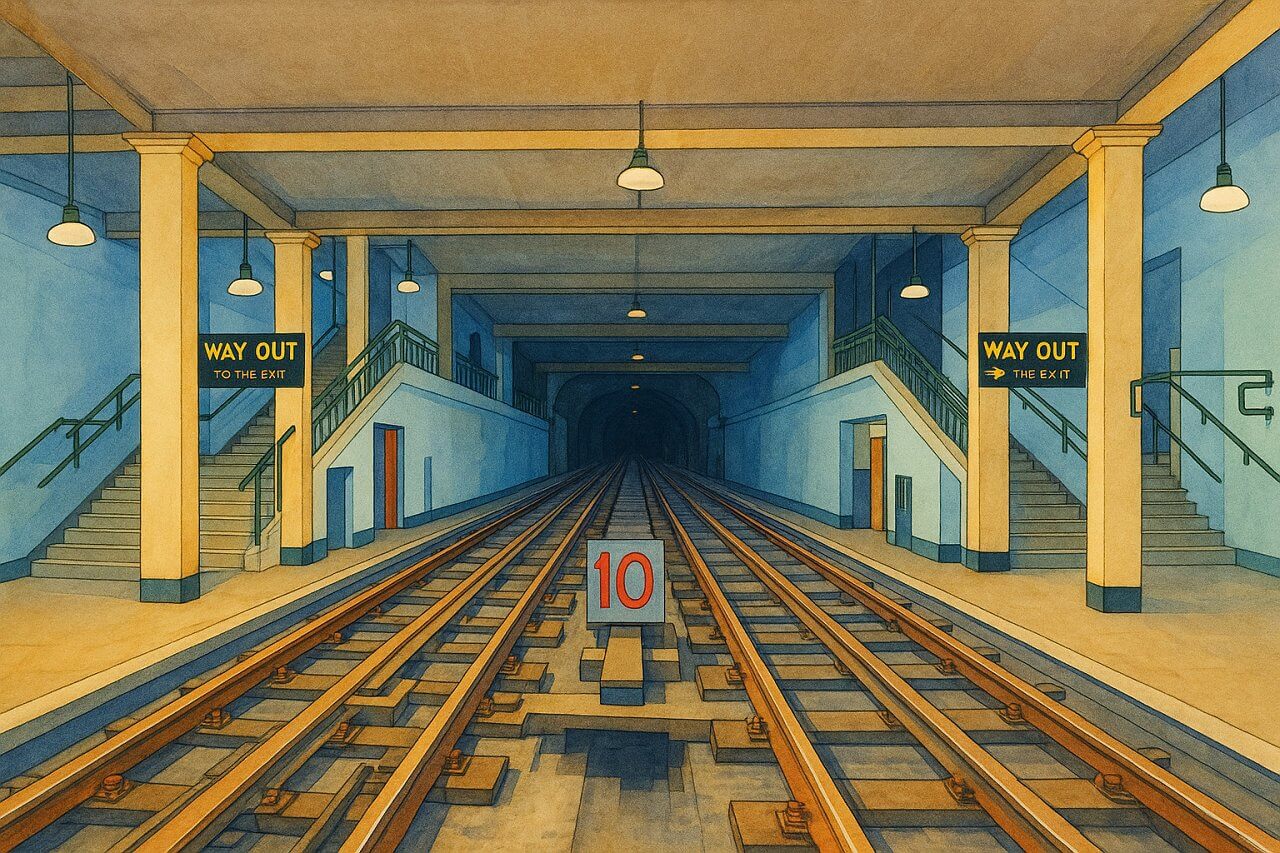
Painting of the London Underground based on period photograph (View image in full size)
Page Details
This page was created/modified on 7 May 2025. Hi, my name is Timothy and created it from my research, for my own entertainment, knowledge and to satisfy my curiosity. I am providing the information to you in good faith and hope it is useful. I try to get the details as accurate as possible. I also try to update the page whenever I stumble on new details. So this and all my other pages are perpetual work in progress. If you discover any error, please politely inform me, pointing out where the error lies, and I will correct it as soon as possible. Your helpfulness will keep this page accurate, relevant and helpful to those who need the information.Return to London Underground or London Streets & Sights Guide mainpages
Want to share your London travel experiences or get tips from fellow travellers?
Join the London Travel Tips Facebook GroupMore information for visiting London
Here are some related articles to help you get to know London better.- Cost of Living in London: Discover the true cost of living in London, including housing, transport, groceries, and more - plus tips for budgeting in one of the world's most expensive cities.
- Driving in London: Planning to drive in London? Learn about roads, car rentals, parking, tolls, and key tips for tourists and visitors from outside the capital.
- Driving Tips for Visiting London: Thinking of driving to London? Discover the best times to travel, congestion tips, parking apps, breakdown help, and petrol advice for a smoother journey.
- Evolution of London's Streets: Discover the fascinating history of how London's streets developed from ancient footpaths to today's complex network of roads across the capital.
- History of Immigration to London: Discover the rich history of immigration to London, from Huguenots to Bangladeshis, and how diverse communities have shaped the city's vibrant identity.
- How Big Is London Compared to Other World Cities?
- How London's Streets Measure Up: A Global Comparison of Road Widths
- How Streets of London are Named: Discover how London streets get their names, who decides them, and how historic, political, and public influences shape street naming in the capital.
- How the Grosvenor Family Came to Own Much of Mayfair, Belgravia and Pimlico: Explore how the Grosvenor family came to own much of Mayfair, Belgravia, and Pimlico, and learn about their historical connection (or lack thereof) with the British royal family and government.
- Living and working in London
- London's Quiet Collapse: How Living Standards Fell as Costs Skyrockted (1975-2025): Explore how London residents endured rising costs and falling living standards from 1975 to 2025 - from rocketing rents to wage stagnation and inflation.
- Marvel of the London Underground: Discover the history, challenges, and triumphs of the London Underground - the world's first underground railway and a vital transport lifeline for the UK capital since 1863.
- Moving to London: Expat Tips for Settling in Westminster: Essential advice for expats moving to London's Westminster: neighborhood insights, cost of living, transportation, housing, healthcare, schools, and tips to help you feel at home in the heart of the city.
- Places in London that aren't pronounced the way they're spelled
- Shopping in London: Discover London's diverse shopping scene
- Taking the bus in London: This is your complete guide to taking the bus when in London.
- The Anglican Faith: A Visitor's Guide to the Church of England: Learn about the Anglican faith and its deep ties to London's landmarks like Westminster Abbey and St Paul's Cathedral.
- Top 10 London Streets Every Visitor Must See: Discover London through its most iconic thoroughfares - 10 streets every visitor must experience. From historic Abbey Road to vibrant Camden High Street, explore culture, shopping, and hidden gems.
- Why are most roads in Central London so narrow? Learn why there are so few multi-lane roads and elevated highways in the heart of the city.
 Latest Pages & Updates
Buy Me A Coffee
If you enjoy the information I provide and want to support the work I do, please buy me a coffee! I appreciate it immensely, thank you so much!
