
Chelsea Embankment, London
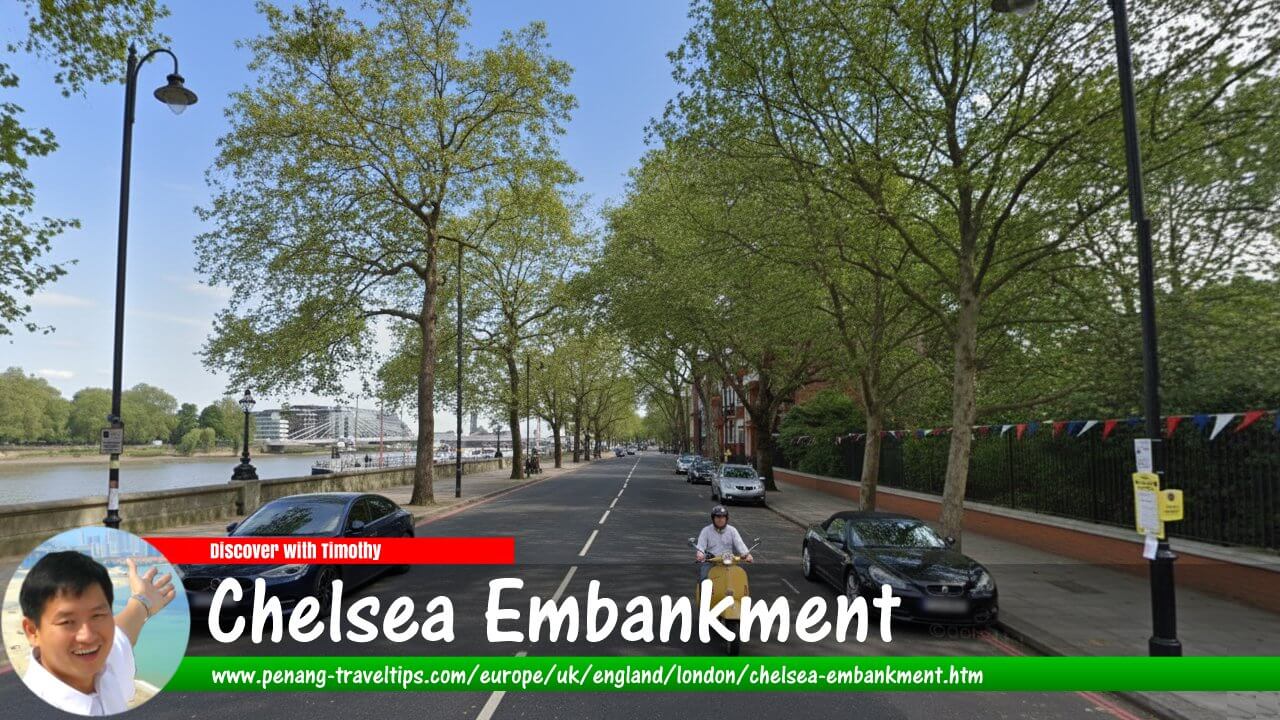 Chelsea Embankment, London (AI Generated on 14 April 2026)
Chelsea Embankment is a riverside road in the Royal Borough of Kensington and Chelsea, running along the north bank of the River Thames from Chelsea Bridge in the west towards Battersea Bridge in the east. Renowned for its elegant Victorian architecture, ornamental gardens, and sweeping river views, it forms one of London’s most attractive embankments and a key part of the historic Chelsea waterfront 1.
Quick Facts
- Location: Royal Borough of Kensington and Chelsea, London
- Length: approx. 1.69 km
- Direction: One-way (eastbound)
- Runs: Chelsea Bridge to Battersea Bridge
- Nearest Underground station: Sloane Square
- Character: Riverside boulevard with historic buildings and gardens
Overview and Street Character
Chelsea Embankment is one of London’s most picturesque riverside roads, combining a broad carriageway with tree-lined pavements and a landscaped promenade overlooking the Thames. Ornamental lampposts, benches, and small gardens create a refined public space that is popular with walkers, joggers, and residents 2.
The architecture along the embankment is predominantly late Victorian, featuring grand mansion blocks and townhouses with river-facing façades. These buildings offer uninterrupted views of the Thames, contributing to the area’s prestige and desirability.
Surrounding Streets and Area
Chelsea Embankment runs parallel to Cheyne Walk, one of Chelsea’s most historic residential streets. Inland, it is connected to streets such as Royal Hospital Road, Oakley Street, and Flood Street, linking it to the wider Chelsea neighbourhood 3.
The embankment is situated within a highly desirable part of west London, known for its artistic heritage, affluent residential character, and proximity to landmarks such as the Royal Hospital Chelsea and Battersea Park across the river.
History and Development
Chelsea Embankment was constructed in the 1870s as part of the Thames Embankment project led by Sir Joseph Bazalgette. The project aimed to modernise London’s sewer system while reclaiming land from the river and creating new roadways 4.
The embankment significantly altered the natural shoreline of the Thames, replacing muddy banks with a structured river wall and roadway. It also enabled the development of new residential buildings along the riverfront, transforming Chelsea into a more desirable and prestigious area.
Over time, the embankment became associated with artists, writers, and intellectuals, many of whom were drawn to its scenic views and tranquil atmosphere.
Origin and Pronunciation of the Name
The name “Chelsea Embankment” reflects both its location within Chelsea and its function as part of the engineered embankment along the River Thames. The term “embankment” refers to the raised river wall constructed to contain the Thames and create usable land 5.
Chelsea Embankment is pronounced “CHEL-see Em-bank-ment.” In International Phonetic Alphabet notation, it is /ˈtʃɛlsi ɪmˈbæŋkmənt/.
Architecture and Notable Buildings
The embankment is lined with impressive Victorian mansion blocks and townhouses, many of which are listed buildings. These properties often feature ornate detailing, balconies, and large windows designed to maximise river views 6.
Notable landmarks in the vicinity include the Royal Hospital Chelsea, home of the Chelsea Pensioners, and several historic churches and institutions. The nearby Albert Bridge adds a distinctive visual element to the area, particularly when illuminated at night.
Transport and Accessibility
The nearest Underground station is Sloane Square, served by the District and Circle lines, providing convenient access to central London destinations such as Victoria, Westminster, and the City 7.
Bus routes operate along nearby roads including Royal Hospital Road and King’s Road, offering connections across west and central London. The embankment is also popular for cycling, forming part of riverside cycling routes.
Property and Real Estate
Properties along Chelsea Embankment are among the most desirable in London, reflecting their prime riverside location. Residential units range from apartments of approximately 600 square feet (56 sq m) to large flats exceeding 2,000 square feet (186 sq m) within mansion blocks 8.
As of early 2025, smaller flats typically sell for £1.2–£1.8 million, while larger river-facing apartments can exceed £5 million. Rental prices range from £3,000–£4,500 per month for smaller units and £6,000–£10,000 for premium properties.
These values place Chelsea Embankment well above the London average, reflecting its prestigious location, historic architecture, and scenic views.
Nearby Sights and Amenities
- Royal Hospital Chelsea and its grounds
- Albert Bridge and riverside views
- Battersea Park across the Thames
- King’s Road shopping, dining, and boutiques
Fun Facts
Chelsea Embankment was built using land reclaimed from the River Thames, meaning that much of the area did not exist in its current form before the 19th century. The embankment also concealed major sewer infrastructure designed by Bazalgette, helping to eliminate the “Great Stink” of London. Today, it remains one of the capital’s most scenic walking routes, especially at sunset when the river reflects the city skyline 4.
Chelsea Embankment on the Map of London Streets
References
- Chelsea Embankment – Google Maps
- Chelsea Embankment – Wikipedia
- Survey of London – Chelsea
- Thames Embankment Project – Wikipedia
- Historic England – Listed Buildings
- London Property Prices – Rightmove
- Sloane Square Underground – Transport for London
- London Rentals – Rightmove
Page Details
This page was created on 14 April 2026. Hi, my name is Timothy and created it from my research, for my own entertainment, knowledge and to satisfy my curiosity. I am providing the information to you in good faith and hope it is useful. I try to get the details as accurate as possible. I also try to update the page whenever I stumble on new details. So this and all my other pages are perpetual work in progress. If you discover any error, please politely inform me, pointing out where the error lies, and I will correct it as soon as possible. Your helpfulness will keep this page accurate, relevant and helpful to those who need the information.Moving to London?
New to London and need a place to live? Read our Renting A Flat Guide. This guide covers everything you need to know about renting a flat in London, from viewing to signing.Streets of London
Come, let's explore and discover the streets of London together! Listed here afre the Streets of London that I have documented. Dive in and discover!Map of Streets in London
View all the streets that I have documented on Google Maps in this Map of Streets in London.Want to share your London travel experiences or get tips from fellow travellers?
Join the London Travel Tips Facebook GroupMore information for visiting London
Here are some related articles to help you get to know London better.- Cost of Living in London: Discover the true cost of living in London, including housing, transport, groceries, and more - plus tips for budgeting in one of the world's most expensive cities.
- Driving in London: Planning to drive in London? Learn about roads, car rentals, parking, tolls, and key tips for tourists and visitors from outside the capital.
- Driving Tips for Visiting London: Thinking of driving to London? Discover the best times to travel, congestion tips, parking apps, breakdown help, and petrol advice for a smoother journey.
- Evolution of London's Streets: Discover the fascinating history of how London's streets developed from ancient footpaths to today's complex network of roads across the capital.
- History of Immigration to London: Discover the rich history of immigration to London, from Huguenots to Bangladeshis, and how diverse communities have shaped the city's vibrant identity.
- How Big Is London Compared to Other World Cities?
- How London's Streets Measure Up: A Global Comparison of Road Widths
- How Streets of London are Named: Discover how London streets get their names, who decides them, and how historic, political, and public influences shape street naming in the capital.
- How the Grosvenor Family Came to Own Much of Mayfair, Belgravia and Pimlico: Explore how the Grosvenor family came to own much of Mayfair, Belgravia, and Pimlico, and learn about their historical connection (or lack thereof) with the British royal family and government.
- Living and working in London
- London's Quiet Collapse: How Living Standards Fell as Costs Skyrockted (1975-2025): Explore how London residents endured rising costs and falling living standards from 1975 to 2025 - from rocketing rents to wage stagnation and inflation.
- Marvel of the London Underground: Discover the history, challenges, and triumphs of the London Underground - the world's first underground railway and a vital transport lifeline for the UK capital since 1863.
- Moving to London: Expat Tips for Settling in Westminster: Essential advice for expats moving to London's Westminster: neighborhood insights, cost of living, transportation, housing, healthcare, schools, and tips to help you feel at home in the heart of the city.
- Places in London that aren't pronounced the way they're spelled
- Shopping in London: Discover London's diverse shopping scene
- Taking the bus in London: This is your complete guide to taking the bus when in London.
- The Anglican Faith: A Visitor's Guide to the Church of England: Learn about the Anglican faith and its deep ties to London's landmarks like Westminster Abbey and St Paul's Cathedral.
- Top 10 London Streets Every Visitor Must See: Discover London through its most iconic thoroughfares - 10 streets every visitor must experience. From historic Abbey Road to vibrant Camden High Street, explore culture, shopping, and hidden gems.
- Why are most roads in Central London so narrow? Learn why there are so few multi-lane roads and elevated highways in the heart of the city.
 Latest Pages & Updates
Buy Me A Coffee
If you enjoy the information I provide and want to support the work I do, please buy me a coffee! I appreciate it immensely, thank you so much!
