
Bishan Travel Guide
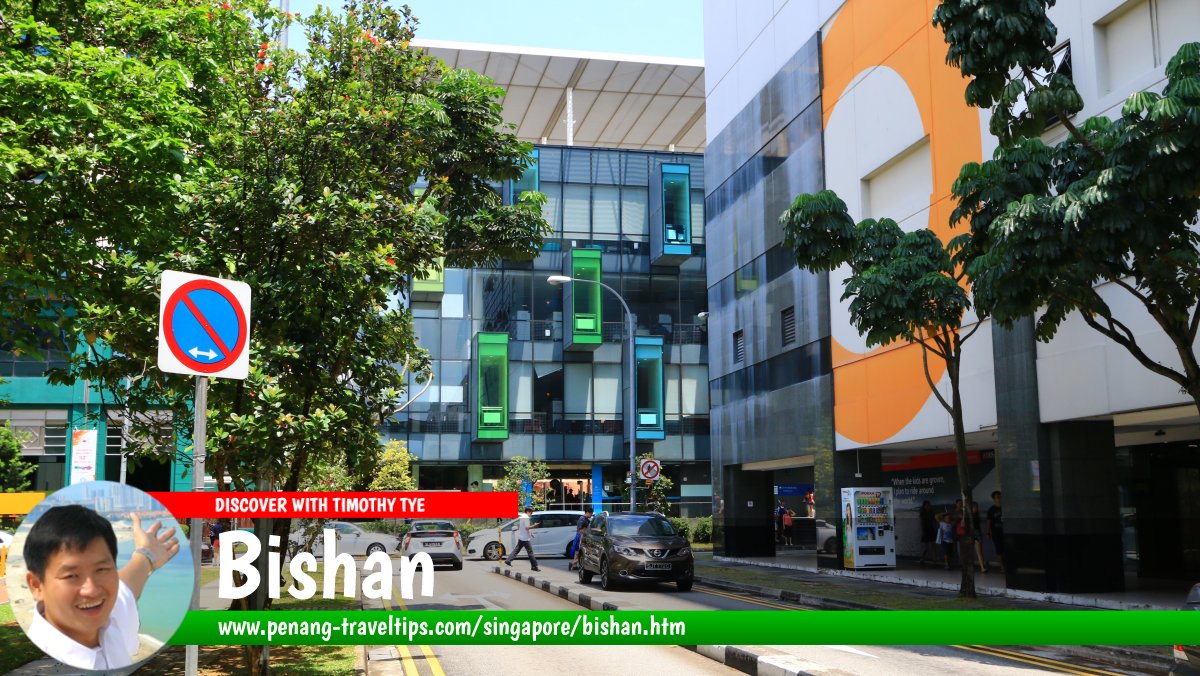 Bishan, Singapore (29 July 2017)
The Bishan Planning Area (Simplified Chinese: 碧山, Traditional Chinese: 碧山, Pinyin: Bì Shān, Malay: Bishan, Tamil: பிஷான்) is one of the key urban planning regions of Singapore, located in the central part of the island. Known for its balance of residential, commercial, and recreational spaces, Bishan is a vibrant yet tranquil part of the city. Covering an area of approximately 7.62 square kilometres, it has a population of around 91,300 residents as of 2020, translating to a population density of roughly 12,000 people per square kilometre1. Most of Bishan (or possibly all) is within postal district 20. This makes it a moderately dense region compared to other planning areas in Singapore, offering both connectivity and liveability.
History of Bishan
The area we now know as Bishan has a unique history. Prior to its modern development, Bishan was the site of the Peck San Theng cemetery, which was one of the largest Chinese burial grounds in Singapore. In the late 1970s and early 1980s, the land was cleared for redevelopment into a new town, in line with Singapore’s urban planning vision. Bishan New Town was officially developed in 1983 and rapidly transformed into a modern residential estate with excellent amenities and transport links2.
Origin and Pronunciation of the Name
The name “Bishan” is derived from the Cantonese name “Peck San” (碧山), meaning “jade hill.” The pronunciation of Bishan in modern English spelling is Bee-shan, while in the International Phonetic Alphabet (IPA), it is represented as /ˈbiːʃɑːn/.
Geography and Boundaries
Bishan is strategically located in the central region of Singapore, surrounded by several other planning areas. To the north lies the Ang Mo Kio Planning Area, while Serangoon Planning Area is to the east. The south is bordered by the Toa Payoh Planning Area, and to the west lies the expansive Central Water Catchment. This positioning makes Bishan both an important transit hub and a desirable residential neighbourhood.
Subzones of Bishan
Transport and Accessibility
Bishan enjoys excellent connectivity to the rest of Singapore. It is served by major expressways such as the Central Expressway (CTE) and the upcoming North-South Corridor, ensuring smooth vehicular travel. Several arterial roads, including Upper Thomson Road and Bartley Road, pass near or through Bishan, linking it seamlessly to neighbouring towns.
MRT Connectivity
The MRT system is a vital part of Bishan’s accessibility. The area is anchored by Bishan MRT Station, an interchange between the North South Line and the Circle Line. Other nearby MRT stations include Marymount (on the Circle Line) and the future Bright Hill Station, which will serve both the Thomson-East Coast Line and the Cross Island Line3.
Residential Real Estate
As of 2024, Bishan remains one of the more desirable housing areas in Singapore, partly due to its central location and accessibility. Property prices here are higher than the national average. For instance:
- A typical 4-room HDB flat in Bishan (approx. 1,000 sq ft / 93 sq m) can cost between SGD 750,000 and SGD 950,000.
- Private condominiums, such as those around Bishan Street 22, are priced from around SGD 1,800 to SGD 2,200 per square foot, meaning a 1,200 sq ft (111 sq m) unit may fetch over SGD 2 million.
- Rental rates for a standard 3-bedroom condo average SGD 4,000–5,500 per month, depending on proximity to MRT stations and amenities4.
This puts Bishan firmly within the category of premium housing estates, though still somewhat more affordable than central areas like the Downtown Core or Rochor Planning Area.
Interesting Sights and Attractions
Bishan is more than just a residential district—it also offers green spaces, recreation, and cultural amenities. Some notable attractions include:
- Bishan-Ang Mo Kio Park: One of Singapore’s largest urban parks, featuring a meandering river, open lawns, and recreational facilities.
- Bishan Public Library: An iconic architectural landmark known for its striking façade and vibrant interior design.
- Bishan Sports Complex: A hub for fitness and sports activities, with swimming pools, stadium facilities, and gyms.
- Kong Meng San Phor Kark See Monastery: The largest Buddhist monastery in Singapore, offering visitors a serene spiritual experience.
Community and Lifestyle
Bishan offers residents a mix of convenience and comfort. Educational institutions such as Catholic High School, Raffles Institution, and Kuo Chuan Presbyterian School give the area strong appeal to families. Shopping malls like Junction 8 provide retail and dining options, while the nearby Serangoon Planning Area and Novena Planning Area add to the lifestyle amenities available within short reach.
Where to Stay
Bishan is primarily a residential planning area and does not have a mainstream hotel within the planning area itself. Visitors wishing to stay in Bishan will therefore find it more practical to choose accommodation in a neighbouring area and travel into Bishan by MRT or bus. This is not a major disadvantage, as Bishan MRT Station is an interchange on the North South Line and Circle Line, making the neighbourhood easy to reach from elsewhere in Singapore.
The most convenient nearby hotel area is Novena, immediately south of Bishan. Oasia Hotel Novena is a particularly practical choice for visitors who want a full-service hotel with excellent public transport connections. The hotel is directly connected to Novena MRT Station and Novena Square, and its location provides straightforward access to Bishan as well as Orchard Road and the city centre1.
Another possibility is to look around the wider Novena and Balestier area, where there are several hotels at different price levels. Current hotel listings around Bishan MRT Station include Oasia Hotel Novena, Aloft Singapore Novena, Value Hotel Balestier and other properties in the surrounding districts2.
For someone visiting Singapore specifically to experience its residential neighbourhoods, staying near Bishan can actually be an appealing alternative to staying in the city centre. You will be closer to local markets, coffee shops, parks and shopping centres, while the MRT makes the major attractions of central Singapore readily accessible.
What to Eat
Bishan is not one of Singapore's great destination food districts, but that does not mean it should be overlooked. Its food scene is primarily a heartland food scene, centred on neighbourhood coffee shops, small food centres and the larger dining choices at Junction 8. This makes Bishan particularly suitable for visitors who want to experience what local residents eat rather than simply following the most famous tourist food trails.
One of the best places to begin is Kim San Leng Food Centre at 511 Bishan Street 13. The centre has a broad selection of traditional food, including chicken rice, Teochew fish porridge, braised duck rice, Indian food, yong tau foo, chee cheong fun and other everyday dishes3. It is also home to Ming Kee Chicken Rice, a long-established Bishan favourite known particularly for its chilled Hainanese chicken4.
Another worthwhile destination is Shunfu Mart Food Centre at 320 Shunfu Road. The centre is slightly away from Bishan's main commercial centre but rewards visitors who make the effort to visit. Its stalls include traditional Hakka food, chicken rice, Malay dishes, noodles and other old-fashioned Singaporean favourites. Recent food guides have highlighted the centre's variety and several long-established stalls5.
Visitors looking for halal food will also find Bishan reasonably accommodating. Junction 8 has numerous halal-certified food outlets, including CRAVE Nasi Lemak, 4Fingers Crispy Chicken, Maki-San, Swensen's and other familiar brands. There are also halal restaurants and cafés elsewhere in the neighbourhood, including Good Bites at Bishan Sports Centre and Mata Thai6.
Where to Eat
These are some of the places worth considering when exploring Bishan's food scene:
- Kim San Leng Food Centre, 511 Bishan Street 13 – One of the best places to experience everyday Bishan food. The centre has a wide range of stalls and is particularly convenient because it is close to Bishan MRT Station and the bus interchange. It is a good choice for visitors looking for a traditional local meal without travelling far from the town centre3.
- Ming Kee Chicken Rice – Located within Kim San Leng Food Centre, this long-running stall is one of Bishan's better-known food names. It is particularly associated with its ice-chilled chicken, which gives the skin a distinctive texture. Chicken rice is one of Singapore's essential foods for first-time visitors, making this a worthwhile stop for anyone exploring Bishan4.
- Shunfu Mart Food Centre, 320 Shunfu Road – A traditional neighbourhood food centre with a distinctly local atmosphere. Recent recommendations include Leong Hainanese Chicken Rice, Hakka specialities and a range of Malay dishes. The centre is particularly good for visitors who want to explore beyond the better-known tourist hawker centres5.
- Shi Xiang Ge – Located at Bishan Bus Interchange, this stall is known for Shanxi-style noodles and braised meat noodles. It provides something different from the more familiar Hainanese and Cantonese dishes found around the neighbourhood7.
- Good Bites – A halal-certified Western-fusion café at Bishan Sports Centre. It has a substantial menu including pasta, seafood, burgers, salads and desserts, and is particularly useful for families and groups who want a sit-down meal. It also stays open very late, making it one of Bishan's useful options for supper8.
- CRAVE Nasi Lemak at Junction 8 – A convenient halal choice for visitors who want to try Singapore-style nasi lemak without making a special journey. Junction 8 has a substantial selection of halal-certified food outlets, making the shopping centre a useful fallback when members of a group have different dietary requirements6.
- Food Junction at Junction 8 – The refurbished food court offers a broad selection of Asian and international dishes in a more modern shopping-centre setting. It is particularly convenient for families and visitors who want plenty of choices under one roof9.
If you have only one meal to spare in Bishan, I would recommend going to Kim San Leng Food Centre and trying Ming Kee Chicken Rice, then exploring some of the other stalls. For a more adventurous excursion, make your way to Shunfu Mart Food Centre, where the food is more distinctly old-school and the surroundings provide a glimpse of everyday heartland Singapore.
Bishan's food scene is therefore less about a single famous restaurant and more about discovering the neighbourhood. A visitor who combines a meal at one of the food centres with a walk through the residential streets, Bishan-Ang Mo Kio Park or the area around Bishan MRT Station will get a much better sense of what makes this part of Singapore different from the central tourist districts.
Accommodation and Food References
- Oasia Hotel Novena – Official Website
- Booking.com – Hotels near Bishan MRT Station
- STAMPEDE – Kim San Leng Food Centre, Bishan
- Ming Kee Chicken Rice – Official Website
- Kopitiam – Shunfu Mart Food Centre
- HalalTag – Halal-certified Food in Bishan
- Reddit – Food recommendations for Bishan, Thomson and Toa Payoh
- Tripadvisor – Good Bites, Bishan
- Corner – Food Junction, Junction 8
Fun Facts
One fun fact about Bishan is that it is one of the few housing estates in Singapore where HDB flats regularly cross the million-dollar mark on the resale market5. Another interesting point is that Bishan MRT Station was the first underground station in Singapore to feature a naturally ventilated design when it opened in 1987.
Quick Facts
- Size: 7.62 sq km
- Population: ~91,300 (2020)
- Population Density: ~12,000 people per sq km
- Established: 1983 (redeveloped from Peck San Theng cemetery)
- Name Origin: From Cantonese “Peck San” (碧山), meaning jade hill
- Pronunciation: Bee-shan (/ˈbiːʃɑːn/)
- Main MRT Stations: Bishan (NSL, CCL), Marymount (CCL), Bright Hill (TEL, CRL)
- Main Expressways: CTE, upcoming North-South Corridor
- Highlights: Bishan-Ang Mo Kio Park, Bishan Public Library, Kong Meng San Monastery
- Average Housing Prices: HDB 4-room ~SGD 750k–950k; Condominiums ~SGD 1,800–2,200 psf
Map of Bishan, Singapore
MRT Stations in Bishan
- Bishan MRT Station (GPS: 1.35076, 103.84811)

- Bright Hill MRT Station (GPS: 1.3638, 103.83354)

- Upper Thomson MRT Station (GPS: 1.35452, 103.83296)

Sights in Bishan
- Bishan Bus Interchange (GPS: 1.35044, 103.84944)

- Bishan MRT Station (GPS: 1.35076, 103.84811)
- Junction 8 (GPS: 1.35072, 103.84883)

- Marymount MRT Station (GPS: 1.34913, 103.83946)

- Peck San Theng 碧山 (GPS: 1.34565, 103.84451)

References
- Singapore Department of Statistics – Population Trends
- Urban Redevelopment Authority – Bishan Planning Area
- Land Transport Authority – Rail Expansion Plans
- PropertyGuru Singapore – Bishan Property Listings
- The Straits Times – Million-dollar HDB flats in Bishan
Page Details
This page was created on 6 September 2025. Hi, my name is Timothy and created it from my research, for my own entertainment, knowledge and to satisfy my curiosity. I am providing the information to you in good faith and hope it is useful. I try to get the details as accurate as possible. I also try to update the page whenever I stumble on new details. So this and all my other pages are perpetual work in progress. If you discover any error, please politely inform me, pointing out where the error lies, and I will correct it as soon as possible. Your helpfulness will keep this page accurate, relevant and helpful to those who need the information.My videos of Singapore
Want to share your Singapore travel experiences or get tips from fellow travellers?
Join the Singapore Travel Tips Facebook GroupMore information for visiting and living in Singapore
Here are some related articles to help you get to know Singapore better.- Cost of Living in Different Singapore Neighbourhoods (2025 Guide)
- EZ-Link Card
- Owning a Car in Singapore
- Singapore MRT Map & Guide 2025
- Singapore Postal Districts and Postcodes
- Singapore Tourist Pass
- Taking the Bus in Singapore: A Visitor's Guide
- Understanding CCR, RCR and OCR in Singapore real estate
 Latest Pages & Updates
Buy Me A Coffee
If you enjoy the information I provide and want to support the work I do, please buy me a coffee! I appreciate it immensely, thank you so much!
