
Albemarle Street, London
Albemarle Street – Historic Heart of London's Literary and Artistic Life
Albemarle Street is located in the heart of the prestigious Mayfair district within the City of Westminster, central London.Running parallel to Old Bond Street, it stretches from Piccadilly at the southern end to Grafton Street in the north, placing it right in the midst of a highly sought-after and historically rich area of the capital.
How Long is Albemarle Street?
Albemarle Street is a relatively short road, measuring approximately 0.1 miles (around 160 metres) in length. Despite its modest size, it boasts a remarkable cultural and historical significance.History of Albemarle Street
Albemarle Street was laid out in the late 17th century, following the development boom of Mayfair during the Restoration and post-Great Fire of London era.Much of Mayfair was developed on the lands formerly belonging to the Crown or aristocracy, and Albemarle Street emerged as part of the Albemarle Ground, which was a key area within the Burlington Estate, owned by the Boyle family (Earls of Burlington).
By the early 19th century, the street had become known for its literary and scientific associations and was one of London's most fashionable addresses for intellectuals and society figures.
Origin of the Name: Who or What is Albemarle?
Albemarle Street was named after George Monck, 1st Duke of Albemarle, a prominent general and statesman instrumental in the Restoration of King Charles II in 1660.The title "Albemarle" itself refers to the Duchy of Albemarle, a title with Norman roots. It was conferred upon Monck in recognition of his services to the monarchy. The street was named shortly after his death in 1670, serving as a lasting tribute to his influence in shaping the course of British history.
Connecting Roads
Albemarle Street connects to or intersects with the following roads:- Piccadilly – to the south, one of London's most famous thoroughfares.
- Dover Street – runs parallel and provides a northern junction with Albemarle Street.
- Grafton Street – marks the northern end of Albemarle Street.
- Stafford Street – intersects near the northern end of the street.
Notable Buildings and Landmarks
Despite its short length, Albemarle Street is lined with significant and often historic buildings, many of which are now art galleries, luxury retailers, and private clubs. On the east side:- The Royal Institution of Great Britain – Probably the most famous building on the street, located at No. 21. It has hosted lectures by scientific legends like Michael Faraday and Humphry Davy, and is still an active centre for science communication.
- Richard Green Gallery – A prominent art gallery specialising in Old Masters and British paintings, housed in a classic Mayfair townhouse.
- Connaught Brown – A respected gallery for modern and contemporary art.
- Hazlitt's Hotel Group Offices – Part of the literary-themed hotel group known for its period style and quirky charm.
Nearest Underground Stations
Albemarle Street is well-served by several London Underground stations, providing easy access for both locals and tourists.- Green Park Station – about a 4-minute walk away, served by the Jubilee, Piccadilly, and Victoria lines.
- Piccadilly Circus Station – approximately 7 minutes away, served by the Bakerloo and Piccadilly lines.
- Bond Street Station – roughly 10 minutes on foot, served by the Central and Jubilee lines.
A Fun Fact About Albemarle Street
Albemarle Street holds the unique distinction of being London's first one-way street.In the early 19th century, crowds would gather outside Murray's Bookshop (run by John Murray, the publisher of Lord Byron and Jane Austen), creating such congestion that in 1817, local authorities made Albemarle Street one-way to ease the traffic. This was likely the first traffic regulation of its kind in the city.
This historical footnote connects the street forever to the evolution of London's urban planning.
Albemarle Street Today
In the 21st century, Albemarle Street retains its elegant, Georgian character while embracing its role in modern London's cultural and commercial life.It continues to be a prestigious location for fine art galleries, luxury boutiques, and scientific engagement through the Royal Institution. The street's intimate scale, rich history, and central location make it a hidden gem for those seeking a quieter slice of Mayfair, away from the bustling crowds of nearby Oxford and Regent Streets.
Why Visit Albemarle Street?
Albemarle Street appeals to a variety of visitors:- Art enthusiasts – will appreciate the high-quality galleries.
- Science lovers – can attend public lectures and exhibitions at the Royal Institution.
- Architecture admirers – will enjoy the Georgian façades and period details.
- Literary buffs – can soak in the atmosphere where Byron's poems and Austen's novels were first published.
Map of Albemarle Street, London
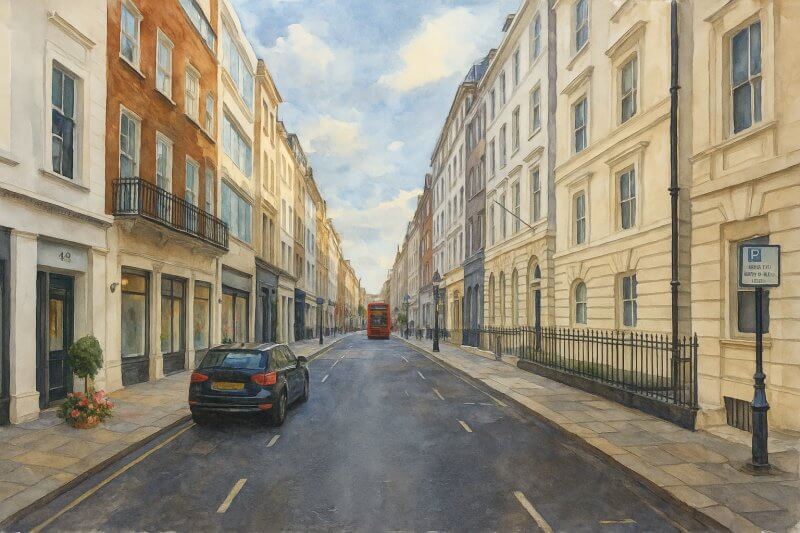
Painting of Albemarle Street (View full-size image here)
Moving to London?
New to London and need a place to live? Read our Renting A Flat Guide. This guide covers everything you need to know about renting a flat in London, from viewing to signing.Streets of London
Come, let's explore and discover the streets of London together! Listed here afre the Streets of London that I have documented. Dive in and discover!Map of Streets in London
View all the streets that I have documented on Google Maps in this Map of Streets in London.Want to share your London travel experiences or get tips from fellow travellers?
Join the London Travel Tips Facebook GroupMore information for visiting London
Here are some related articles to help you get to know London better.- Cost of Living in London: Discover the true cost of living in London, including housing, transport, groceries, and more - plus tips for budgeting in one of the world's most expensive cities.
- Driving in London: Planning to drive in London? Learn about roads, car rentals, parking, tolls, and key tips for tourists and visitors from outside the capital.
- Driving Tips for Visiting London: Thinking of driving to London? Discover the best times to travel, congestion tips, parking apps, breakdown help, and petrol advice for a smoother journey.
- Evolution of London's Streets: Discover the fascinating history of how London's streets developed from ancient footpaths to today's complex network of roads across the capital.
- History of Immigration to London: Discover the rich history of immigration to London, from Huguenots to Bangladeshis, and how diverse communities have shaped the city's vibrant identity.
- How Big Is London Compared to Other World Cities?
- How London's Streets Measure Up: A Global Comparison of Road Widths
- How Streets of London are Named: Discover how London streets get their names, who decides them, and how historic, political, and public influences shape street naming in the capital.
- How the Grosvenor Family Came to Own Much of Mayfair, Belgravia and Pimlico: Explore how the Grosvenor family came to own much of Mayfair, Belgravia, and Pimlico, and learn about their historical connection (or lack thereof) with the British royal family and government.
- Living and working in London
- London's Quiet Collapse: How Living Standards Fell as Costs Skyrockted (1975-2025): Explore how London residents endured rising costs and falling living standards from 1975 to 2025 - from rocketing rents to wage stagnation and inflation.
- Marvel of the London Underground: Discover the history, challenges, and triumphs of the London Underground - the world's first underground railway and a vital transport lifeline for the UK capital since 1863.
- Moving to London: Expat Tips for Settling in Westminster: Essential advice for expats moving to London's Westminster: neighborhood insights, cost of living, transportation, housing, healthcare, schools, and tips to help you feel at home in the heart of the city.
- Places in London that aren't pronounced the way they're spelled
- Shopping in London: Discover London's diverse shopping scene
- Taking the bus in London: This is your complete guide to taking the bus when in London.
- The Anglican Faith: A Visitor's Guide to the Church of England: Learn about the Anglican faith and its deep ties to London's landmarks like Westminster Abbey and St Paul's Cathedral.
- Top 10 London Streets Every Visitor Must See: Discover London through its most iconic thoroughfares - 10 streets every visitor must experience. From historic Abbey Road to vibrant Camden High Street, explore culture, shopping, and hidden gems.
- Why are most roads in Central London so narrow? Learn why there are so few multi-lane roads and elevated highways in the heart of the city.
 Latest Pages & Updates
Buy Me A Coffee
If you enjoy the information I provide and want to support the work I do, please buy me a coffee! I appreciate it immensely, thank you so much!
